Why the Orthodox Easter date moves and what it changes for you
Orthodox Easter is calculated on a different calendar from Western Easter, so the two only sometimes align. The practical fallout for a group lunch can be bigger than you'd expect: flights into Athens or Thessaloniki can fill up in the week before, short-term rentals get scarce, and popular tavernas may already be holding tables for regulars. You'll also run into Clean Monday, Lent and Holy Week as separate planning windows, not a single Easter weekend.
Here's what we'd confirm before committing to anything: the exact Orthodox Easter Sunday date for your year, the Saturday night service time at the parish your family attends or the nearest one, and how far your group is willing to travel after midnight. The service usually runs late into Saturday night, and Sunday lunch in Greece is often a slow, late, long affair as a result. If you're cooking at home, the fire and the spit need to be lit well before guests arrive, so the cook's start time is the real anchor of the day.
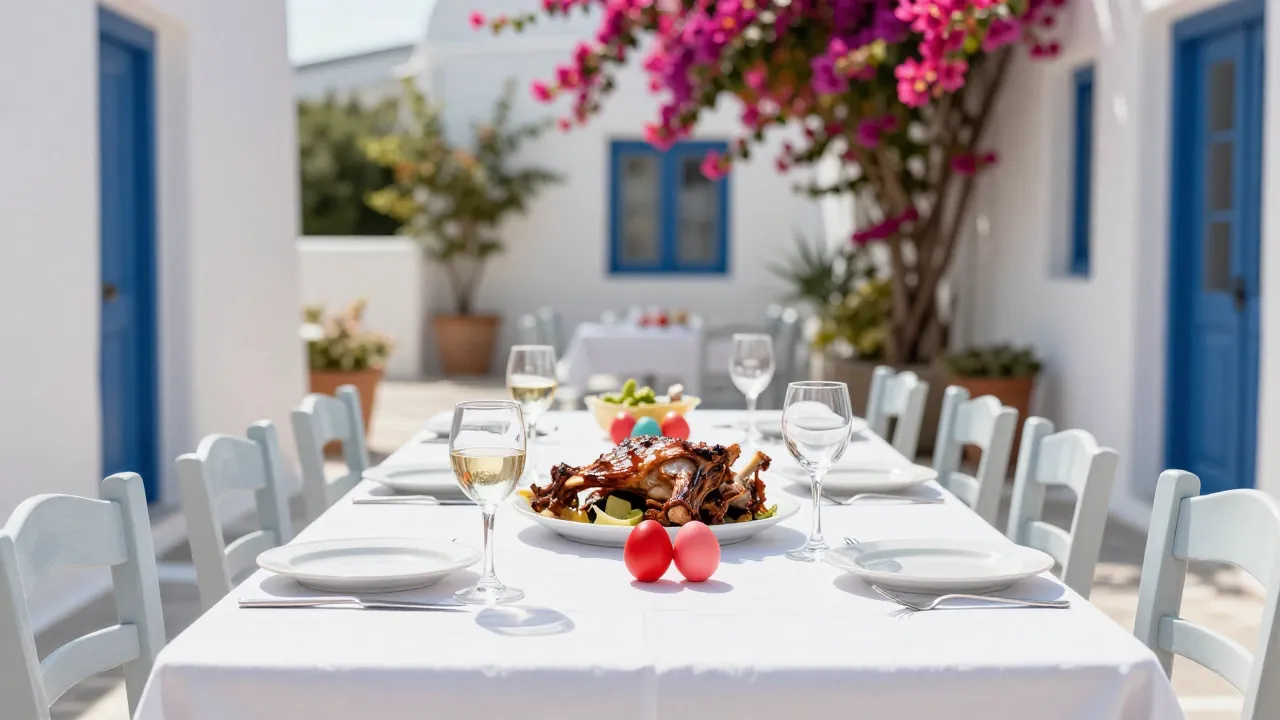
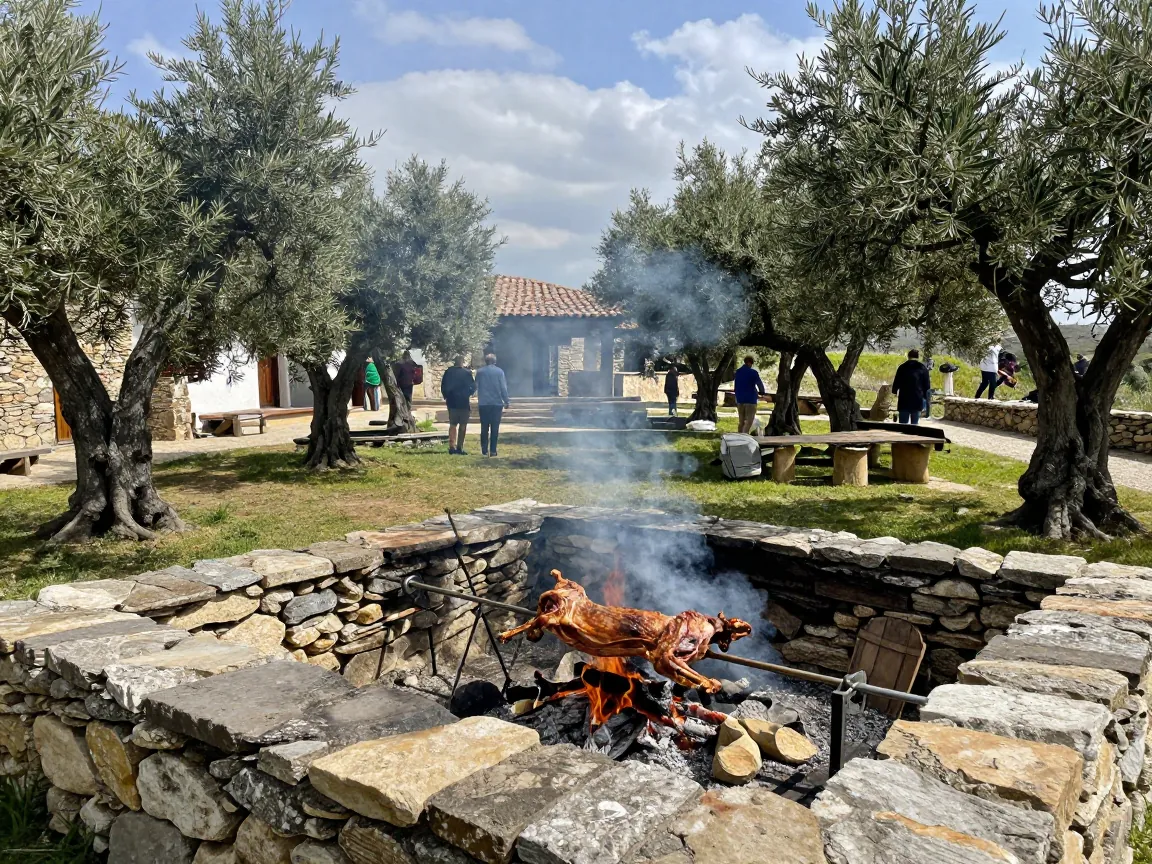
Visit Greece describes the Sunday morning scene plainly: eggs are dyed red for Easter, and lamb is skewered and cooked over charcoal in many parts of the country. That's the image many diaspora families are flying back for.
At home, at a taverna, or on an estate: the honest trade-offs
Roasting at home is cheaper and warmer, but it puts the work on one or two people who then miss their own lunch. Booking a taverna moves that workload off the family, usually adds a set menu and a fixed seating window, and can feel less personal if the room is shared with other parties. An estate or country venue sits between the two: space for children to run, room for a long table, but you'll be confirming fire rules, generator power and weather cover yourself.
We'd book rather than roast if the group is over about 25 people (an example only) or if more than a third are travelling from abroad. The logistics of a spit for that many, plus seating, shade and parking, are what tavernas and event venues already solve. For larger clan gatherings that spill over several days, our guide to family reunion venues in Greece covers the wider setup.
One concession: a home roast with 15 people in a village courtyard, with yiayia directing traffic, beats most rented rooms for atmosphere. If that's available to you, take it.
Start times after the Resurrection service
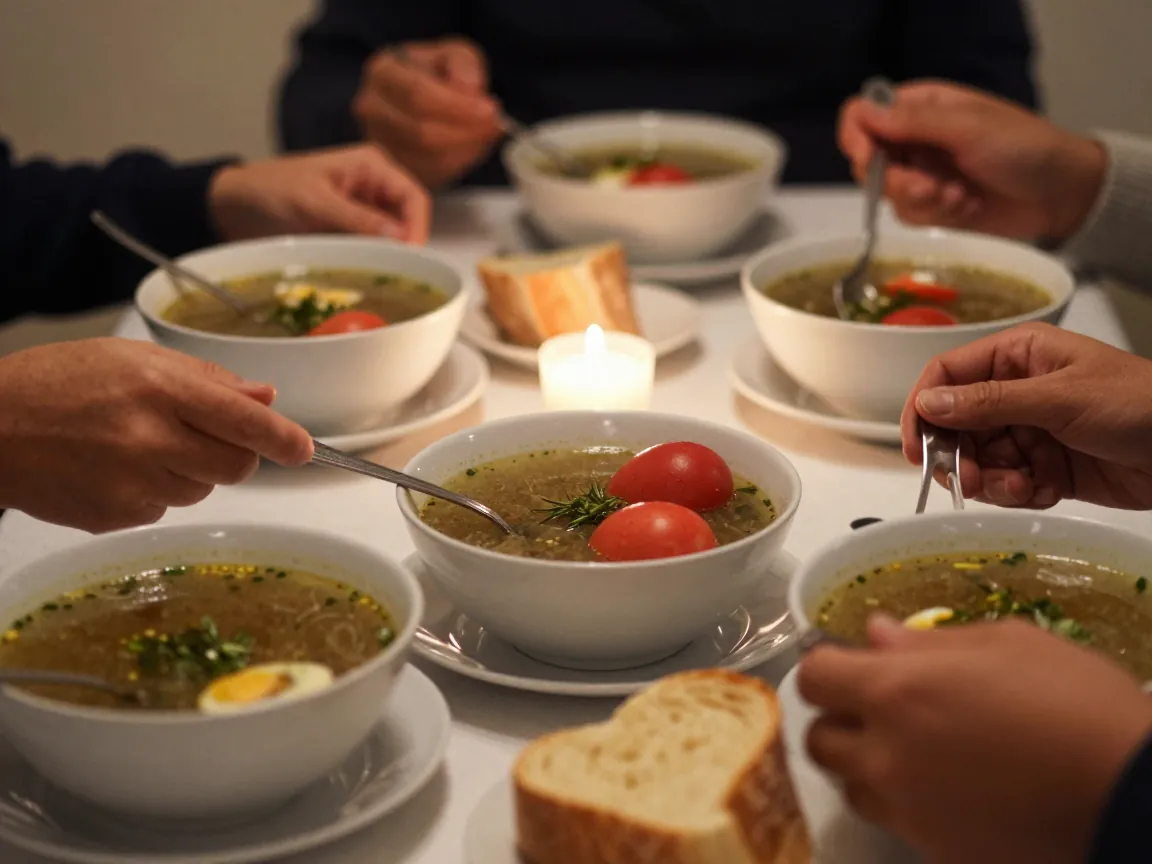
Saturday night changes Sunday's clock. The Resurrection service typically ends after midnight, families go home to break the fast with magiritsa, and Sunday lunch then starts later than a normal Greek Sunday. If you book a taverna for 13:00 (an example only) and half your group went to bed at 03:00, you'll eat with empty chairs.
Ask the venue directly: what time do you usually seat Easter Sunday groups, and is there a second sitting? Tavernas in tourist areas sometimes run two sittings on Easter Sunday, which compresses your lunch. Village tavernas often run one long sitting and let it stretch. We'd choose the single sitting every time for a family group, even if it means a later start.
If children are coming, plan the gap. A late Saturday night plus a long Sunday lunch is a hard combination for anyone under ten. Some families put the kids with grandparents for the morning and bring them to the table at the dessert stage. Confirm with the venue whether they can hold a table for a late-arriving branch of the family, because that request is easier to grant in advance than on the day.
Spit, fire and outdoor space: what to ask before you book
A taverna or estate advertising a spit-roasted lamb isn't the same as one that lets your family bring its own spit and turn it on site. These are separate permissions, and you need them in writing before the deposit.
Questions we'd put to any venue:
- Is the lamb roasted on your spit by your team, or can we bring our own and manage the fire?
- Where is the fire lit, how far from the seating, and who is responsible for it during the meal?
- Is there a backup if wind or rain makes an outdoor spit unworkable?
- Do you have indoor or covered seating for the same headcount if the weather turns?
- What time can we arrive to set up, and what time must the space be cleared?
- Are there restrictions on music, hours or amplified sound on Easter Sunday?
Rules on open fires, spit roasting and outdoor cooking vary by municipality and by venue, and they can change with fire risk conditions in spring. Never assume the answer carries over from last year. Confirm current requirements with the municipality, the venue and, if a churchyard or community space is involved, the parish.
For Orthodox families observing Lent up to the Saturday, the menu before Easter Sunday is a separate question. Our guide to fasting menus for events during Lent covers what to ask caterers and tavernas in that window.
A checklist you can actually use for an Easter Sunday group booking
| Item | What to confirm | Who confirms it |
|---|---|---|
| Orthodox Easter Sunday date | Exact date for your year | Church calendar or parish |
| Resurrection service time | Saturday night start and rough end | Parish |
| Lunch start time | After service, plus travel time | Venue |
| Sittings | One long sitting or two | Venue |
| Spit arrangement | Venue's spit, or yours, and who manages fire | Venue, municipality |
| Outdoor and indoor seating | Headcount covered both ways | Venue |
| Weather fallback | Covered space, marquee, indoor room | Venue |
| Children | High chairs, space to run, late arrival | Venue |
| Set menu and dietary needs | Fasting dishes, allergies, vegetarians | Venue |
| Deposit and cancellation | Amount, deadline, refund terms | Venue |
| Parking and access | For elderly guests and cars | Venue |
| Cleanup and curfew | When the space must be empty | Venue |
Print it, or keep it on your phone, and tick items off as you get written answers. Verbal assurances on spit and fire are the ones that get forgotten by the following spring.
Family numbers, diaspora arrivals and the seating question
Easter lunch in Greece is rarely one nuclear family. It's grandparents, aunts, cousins, and increasingly relatives flying in from Melbourne, Chicago or London for the week. That changes the booking conversation from "a table for twelve" to something closer to an event: a long table or several joined tables, a seating plan that respects who hasn't seen whom in years, and space for children who won't sit still.
If your group is mostly coming from abroad, our planning guide for family reunions with relatives abroad covers timing, arrivals and the logistics of gathering people who live in different time zones. For Easter specifically, we'd build the day around two anchors: the Saturday night service and the Sunday table. Everything else, beach trips, village visits, coffee with old neighbours, fits around those.
One more thing worth saying plainly. Easter Sunday is one of the busiest lunch dates of the Greek year, and sought-after tavernas and estates can be booked well ahead, sometimes by the same families every year. If you're set on a particular place, ask early, confirm in writing, and have a second choice ready.
Tell us your headcount, your Easter Sunday date and whether you need a spit or just a long table, and we'll point you toward venues that can answer.
Planning questions
Why does Orthodox Easter fall on a different Sunday from Western Easter?
Orthodox Easter is calculated on a different calendar, so the two dates often diverge. Sometimes they align. Always confirm the exact Sunday for your travel year before booking flights, rentals or a taverna table.
What time should we book Easter Sunday lunch if we attend the Saturday night service?
Book later than a normal Sunday. The Resurrection service usually ends after midnight and families eat magiritsa before sleeping. Ask the venue when it usually seats Easter groups and whether it runs one long sitting or two.
Can we bring our own spit to a taverna or estate?
Sometimes, but it is a separate permission from the venue's own roast. Ask who manages the fire, where it sits, and what the weather fallback is. Confirm fire and outdoor cooking rules with the municipality and venue.