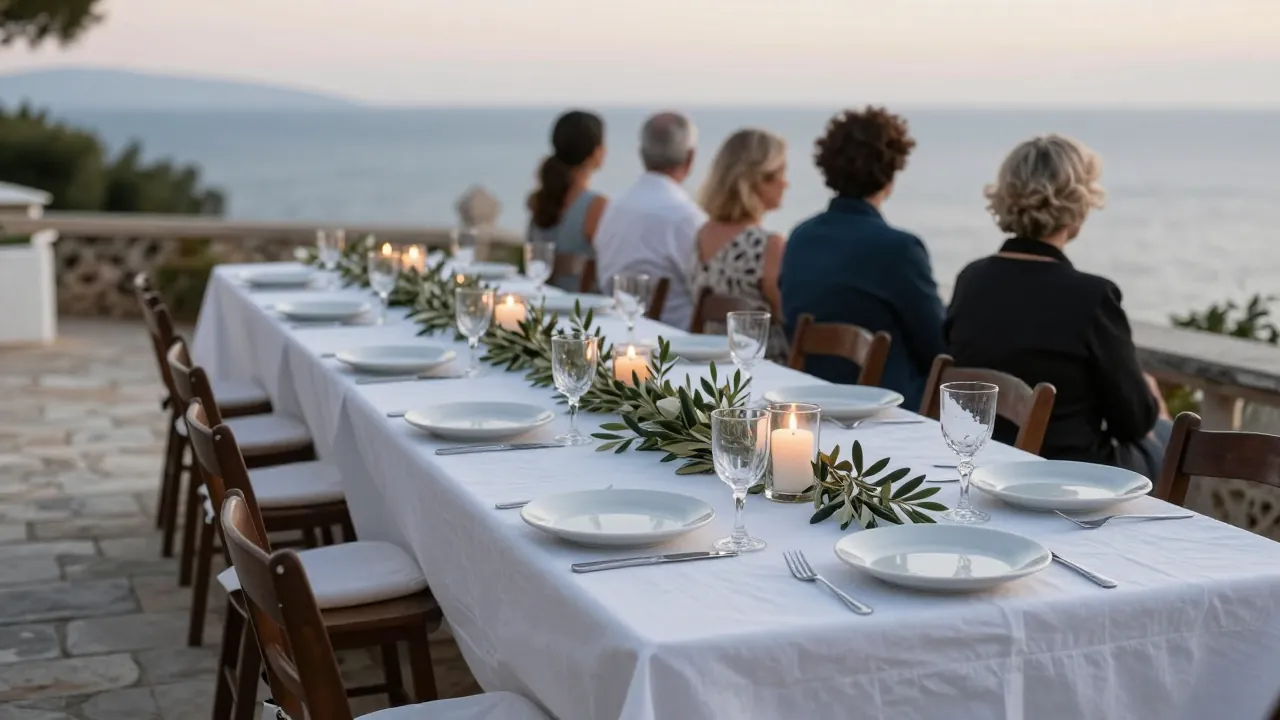
Start with the guest count, split into adults and children
Write two numbers, not one. Many venues price and lay out space by adult covers, and children often eat from a smaller menu or from the same plates at a reduced rate. Ask for a written quote that shows adults and children as separate lines; our guide to baptism reception quotes and counting adults and children separately explains why a single lump-sum figure hides the biggest cost variable. For example, a taverna with 60 adult seats and a courtyard could absorb 25 children without anyone eating standing up. An estate with a large hall can seat the same group indoors, but the children will end up in the garden anyway, so ask whether that garden is fenced and whether you can see it from the tables.
If your split is roughly even, or the children outnumber the adults, square metres per child matter more than the room's total capacity. Walk the space at the hour you'll actually use it, and count the tables you'd actually get, not the maximum the venue quotes. Ask, too, how the venue handles high chairs, and whether the children's tables sit near the adults or in a separate room.
Estate versus taverna: what changes in practice
| Question | Estate or ktima | Taverna |
|---|---|---|
| Who runs the food | In-house kitchen or a list of approved caterers | The taverna's own kitchen, almost always |
| Menu format | Set menu with choices per course, or a buffet | Shared plates to the middle of the table, usually fixed |
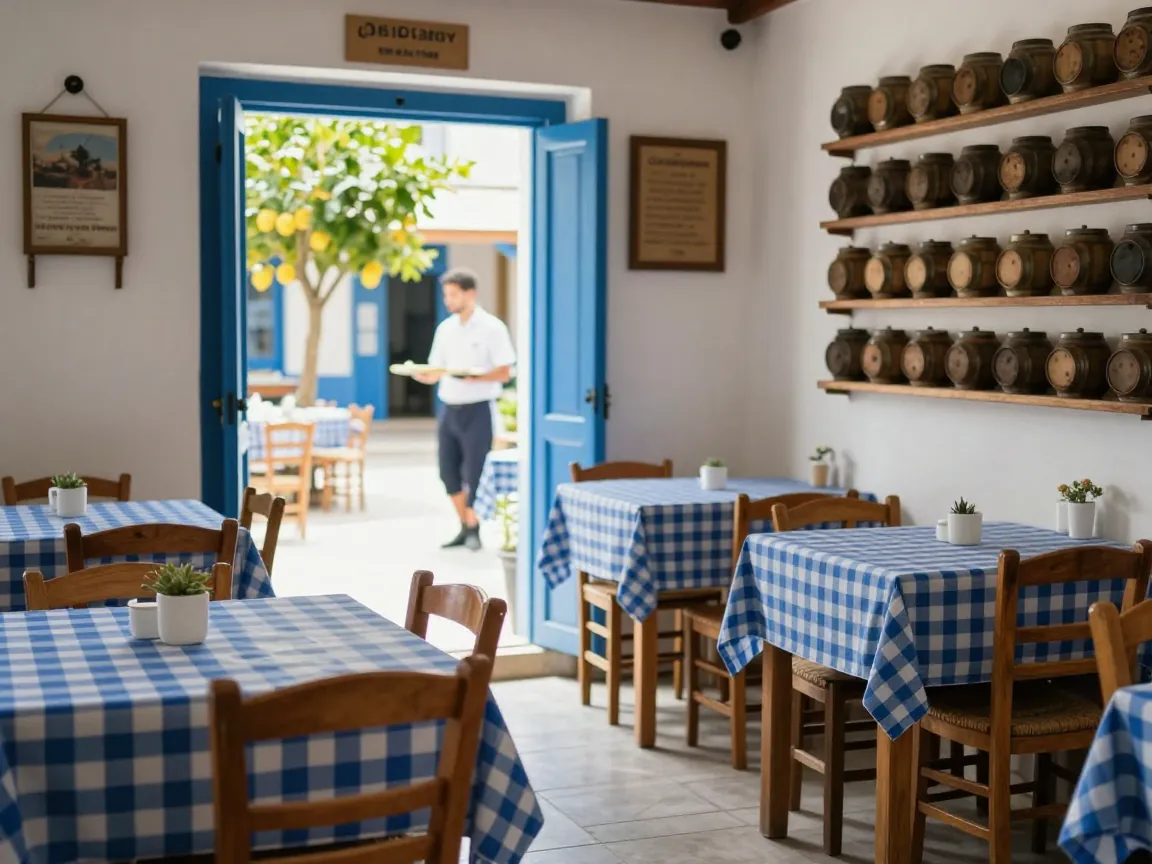
| Decoration | You bring in your own stylist and florist, or the venue has one | Table linens and what's already on the walls, plus your additions |
| Children's space | Garden, lawn or a separate room; ask about fencing | Pavement, courtyard or the street outside |
| How long the room is yours | Often booked exclusively for the day or the evening | Usually one sitting, with a second sitting after you |
| Sound | Depends on neighbours and the venue's own rules | Depends on the neighbourhood and the owner's tolerance |
| Realistic best fit | Larger groups, formal seating, live music | Smaller groups, relaxed, shared plates |
That last row is our opinion, not a rule. A small estate with one long table feels intimate; a large taverna with a private upper floor can host a formal baptism lunch. The format follows the room, not the label.
Estate logistics: exclusivity, decoration and the end of the night
An estate, a ktima in Greek usage, usually sells exclusivity: the grounds are yours for the agreed block, which makes decorating simpler because you aren't working around another party's setup. That's the trade. You'll likely bring in your own florist, rentals and possibly a lighting technician, and each supplier adds a coordination call. Ask the venue for the setup window the day before, the earliest access on the day and the latest hour for music. Get the last two in the contract, not in a WhatsApp message.
One working example from our directory is Ktima Aeithales in Kouvaras, Keratea, at the 39th kilometre of Lavriou Avenue. According to its listing, it operates daily from 9:00 AM to midnight, and from 9:30 AM on Fridays, and is listed for baptism receptions and weddings under event estates, banquet halls and dedicated event spaces. The listing doesn't state capacities or facilities, so ask directly about seating numbers, kitchen arrangements and whether the grounds are exclusive to your party. Note the listing's own caution: those are general opening hours, not event access times.
Another useful reference point for what Greek social-event venues cover: Ecali Club lists weddings, baptisms, birthday parties, anniversaries, reunions and galas among its social events, which is a reminder to ask any venue what else it does on the same weekend.

Taverna realities: shared plates, seating turns and sound
A taverna's strength is that the food is the event. Shared plates arrive, the kitchen decides the pace, and nobody negotiates a caterer. The weakness is control. You usually get a sitting, not a day. Ask what time the next booking starts and whether another party shares the courtyard or the floor above. Ask who controls the music volume after 11 PM, and whether the taverna has a house rule on live music or a DJ.
If you're planning a daytime baptism with older relatives, a taverna lunch that ends at 6 PM can be the better day; our notes on an anniversary lunch that leaves time to talk apply directly, because a long table with no fixed end time keeps people seated and talking. With children present, though, a taverna on a main road needs a plan: who watches the door, and where the prams go. Ask whether the taverna can close the front or rope off the pavement for your hours, and whether that changes the price.
The questions to ask both venues before you decide
Ask every venue these, and get answers in writing:
- How many adults and how many children can sit at tables, not in total?
- Is the space exclusive to us, and for which hours exactly?
- What's the children's menu, and is it priced per child?
- Can we bring our own cake, sweets, florist and photographer without a fee?
- What time does music have to stop, and who decides?
- What's the deposit, when is the balance due, and what happens if the baptism date moves?
- Who is our contact on the day, with a phone number?
- For anything touching the church, the municipality, noise rules or the beach, confirm current requirements with the competent authority (parish, municipality or registry office) and with the venue. Rules change, and a venue's assurance is not a permit.
Our default advice: visit both at the hour of your event, not at 11 AM on a Tuesday. An estate at 8 PM with the lights on and a taverna at 3 PM with plates moving tell you more than any brochure. Bring your two numbers, adults and children, and ask each venue to seat them on paper before you sign anything. Tell us your headcount, your date and the split between adults and children, and we'll point you to venues that can actually answer for that room.
Planning questions
How do I choose between an estate and a taverna if children outnumber adults?
Prioritise enclosed outdoor space and sightlines from the tables. Ask both venues for adult seating numbers separately from children's, whether the garden is fenced, and where prams can park. A taverna may suit a shorter daytime lunch; an estate usually gives you exclusive grounds and more room to spread.
Can we bring our own caterer, florist and cake to either type of venue?
Ask before you assume. Estates often allow outside suppliers, sometimes from an approved list, while tavernas usually cook in-house and may charge for outside food. List every supplier in the contract, including the cake and sweets, and confirm setup access times and any fees in writing.
What should we fix in the contract about how long the room is ours?
Get exclusive-use hours, setup access the day before, the music cut-off, and the balance and deposit dates in writing. Also record what happens if the baptism date moves. Verbal assurances about extra hours tend to disappear once the next booking arrives.