Why a long lunch works better than a full programme
A lunch has natural momentum: people arrive, settle, eat, talk, and leave before the evening gets complicated. Adding speeches, games, a video montage and a live band can fill the hours, but it also fills the silence that makes conversation possible. The tradeoff is real. If you cut entertainment, some guests may feel unsure what to do at first. That is why the run sheet below gives a few gentle anchors without turning the meal into a show.
A taverna setting often helps because the food arrives in courses, giving people something to do with their hands while they talk. The guide identifies pastitsada and sofrito as Corfiot dishes; a venue's actual menu needs separate confirmation. Corfiot delicacies are one example, not a promise. Ask the kitchen what it cooks well for a group and whether it can serve dishes family-style.
Seating that keeps everyone in the conversation
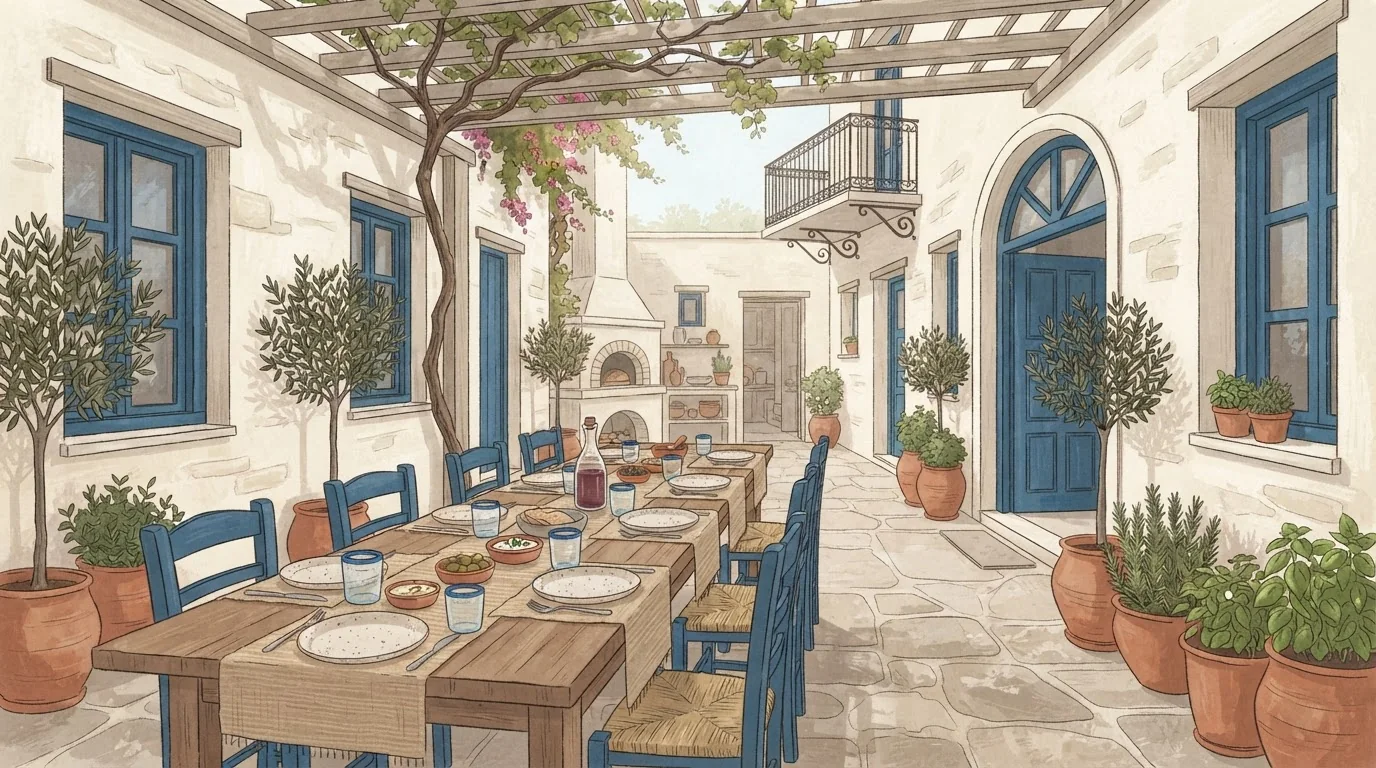
Long tables look impressive but split conversation into two ends. If the priority is talk, consider a mix: one long table for the core group, or several round tables of six to eight. For a 30th anniversary, the couple might sit at a central table with siblings and close friends, while other tables hold extended family and neighbours. This is an example arrangement, not a rule.
Think about who has not met. Put them next to someone who listens more than performs. Avoid seating all the loudest voices together. If there are children, place them near a parent or at a table with a clear route to the outside. If older guests are coming, choose seats away from speakers and doors. Ask the venue for a floor plan before you decide. A simple sketch of tables and doorways is more useful than a mood board.
Access matters more than decoration. Check the entrance, toilets, and path to the table. Ask whether there are steps, narrow doors, or gravel. If anyone uses a wheelchair or walks slowly, confirm the route in daylight, not just in photos. A venue that suits a standing party may not suit a seated lunch.
Menu pacing: courses as conversation breaks
A lunch that lasts three hours needs rhythm. Too many courses and people get restless. Too few and the table empties early. The goal is not a tasting menu. It is food that arrives when the table is ready for the next thing.
Ask the kitchen to serve in stages: bread and small plates, then a main course, then fruit or a simple sweet. A shared starter works better than individual plates because it gives people a reason to pass dishes and talk. For a main, a single well-cooked dish with two sides is easier to serve than a choice of five. If there are dietary needs, flag them early and ask how the kitchen handles them.
Drinks deserve the same thought. A long lunch with continuous wine service can tire people out. Consider water on the table, a few bottles of wine, and a clear non-alcoholic option. Ask about corkage if you bring your own. Ask what the quote includes: food, drinks, service, and tax as quoted. Which amount does tax apply to? Get that in writing.
A sample run sheet for a relaxed anniversary lunch
The table below is an example for a 1 pm lunch with 18 guests. Adjust times to your own venue and appetite. Treat it as a starting point, not a schedule to follow exactly.
| Time | What happens | Who leads | Notes |
|---|---|---|---|
| 12:45 | Doors open, welcome drinks | Host or venue staff | Keep it simple: water, juice, one wine |
| 1:00 | Guests seated | Host | Use place cards if you want mixed tables |
| 1:15 | Shared starters arrive | Kitchen | Bread, dips, small plates |
| 1:45 | Short welcome (2-3 minutes) | Host or couple | Thank people for coming, no long speech |
| 2:00 | Main course served | Kitchen | One main, two sides |
| 2:45 | Open table time | Nobody | No programme; let people talk |
| 3:15 | Fruit or sweet | Kitchen | Keep it light |
| 3:45 | Coffee and goodbye | Host | No formal end; people leave when ready |
| 4:00 | Venue clear | Host and venue | Check lost items and leftovers |
This run sheet leaves space for the thing you actually want: conversation. It also gives the kitchen clear moments to serve. If you want a photographer, ask them to work for 45 minutes during the starter and main, then leave. That keeps the mood relaxed.
What to ask the venue before you commit
A taverna that hosts parties may not have a written lunch package. Ask directly. Questions that get useful answers:
- Can we have the room for a seated lunch, and what time does it need to end?
- Is there a minimum spend, a room hire fee, or a per-person price?
- What is included in the quote: food, drinks, service, tax as quoted?
- Can we serve family-style or shared plates?
- How many staff will be on the floor for our group size?
- What is the access route from the street to the table?
- Are there other bookings before or after us?
- Can we visit at the same time of day as our lunch?
- What is the cancellation and payment schedule?
Get answers in writing. A verbal yes is not a quote. If the venue cannot answer, ask who can.
Keep the guest list honest
A smaller lunch is easier to pace and easier to talk across. If you are unsure about numbers, start with the people who would notice if they were not invited. Add others only if the room and budget allow. This is not about excluding people; it is about protecting the conversation you want.
If you are planning a larger event with a ceremony, the same principles apply but the logistics grow. Keep the lunch separate if you can. A meal that starts after the formalities often runs late and tired. A lunch that starts on time and ends on time leaves everyone with energy.
Send this to venues
When you contact tavernas, send a short message with the facts they need to quote. Include: your preferred date and time, the number of guests, whether you want a seated lunch, any access needs, dietary requirements, whether you want shared plates, and your budget range if you have one. Ask for availability and a written quote together. Ask what the quote includes and what is extra. Ask for a sample menu for a group your size.
That message gives a venue enough to say yes or no quickly. It also gives you a fair basis to compare replies. The best anniversary lunch is not the one with the most entertainment. It is the one where people leave saying they actually talked.
Two useful next steps: Private dining in Athens: how private is the room? and Ask about the whole accessible route, not one ramp.
Planning questions
How should we arrange seating so conversation isn't split between the two ends of the table?
Long tables look impressive but split talk. Consider one long table for the core group, or several round tables of six to eight. Place people who haven't met beside someone who listens, and keep the loudest voices apart.
How can we pace the courses so a three-hour lunch keeps people talking without filling every silence?
Ask the kitchen to serve in stages: bread and shared small plates, then one main with two sides, then fruit or a simple sweet. Shared plates give people a reason to pass dishes and talk.