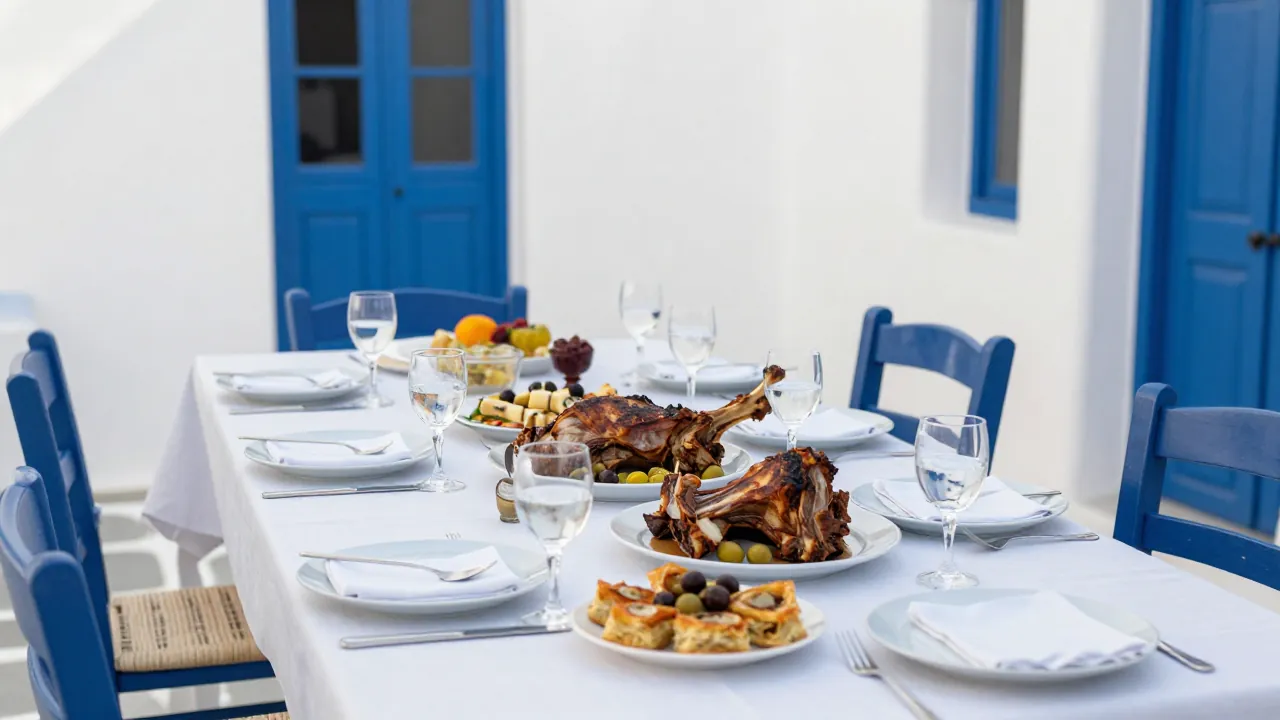
Why the name day date can't move
Your name day is fixed. A birthday can be celebrated on the nearest Saturday; a giorti cannot, because the calendar of saints sets it. If your saint's feast falls on a Wednesday in Lent, that's the Wednesday you're hosting. This single fact drives every other decision you'll make, from food to staffing to whether you cook at all.
We'd start by writing the date and weekday at the top of a single page, then filling in the rest. Weekday giortes behave differently from weekend ones. Guests arrive later, after work, often between eight and ten at night. They eat less at the table and more standing up. Some bring children; many leave before midnight because the next day is a workday.
If the feast falls on a fasting day, the menu changes. Ask your family what they expect before you ask a venue. It's an easy thing to get wrong and a hard one to fix on the night.
Open house at home, or a booked room
An open house suits a giorti where you can't name every guest. The door stays open, the table stays set, and people come and go. The cost is your own evening: you'll spend most of it refilling glasses and reheating trays, and you won't sit down once.
A booked room changes who does the work. A taverna or restaurant room gives you staff, a fixed space and a closing time, but it also gives you a number to defend. That's the trade. For the full range of rooms with a kitchen built for groups, see the tavernas for events across Greece.
Our honest concession: if the guest count is genuinely unknown, an open house is usually the better answer. Restaurants plan on covers. An open house plans on goodwill.
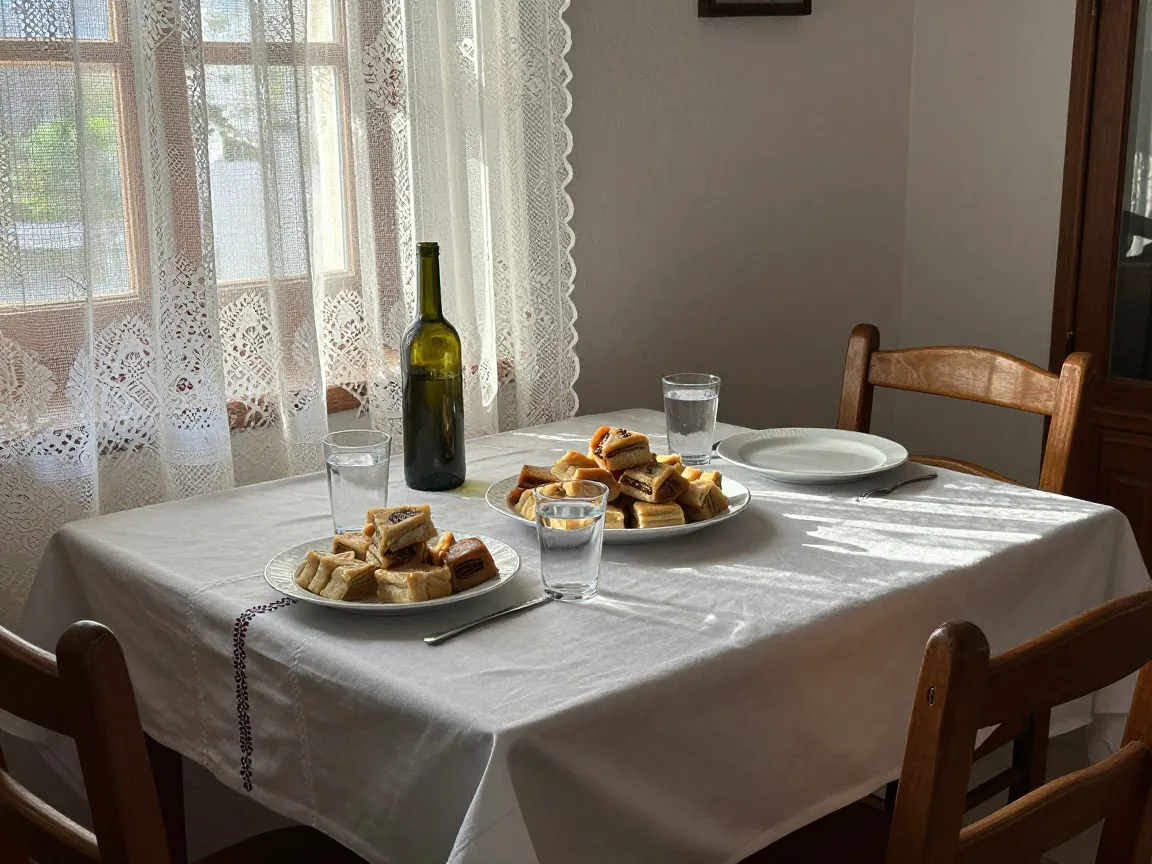
What a weekday feast does to the plan
A fixed feast date that lands Monday to Thursday compresses the evening. Guests arrive after work, eat standing, and leave early. Weekend name days stretch: lunch becomes dinner, children stay later, and the last guests may still be there at one in the morning.
For a weekday giorti in a venue, ask about a start time that matches Greek evening habits. A room booked from seven may sit empty until nine. Ask whether the kitchen can serve a set menu at a fixed hour rather than on demand, because on a Tuesday your guests may arrive in separate waves.
For a weekend giorti at home, the opposite applies. You can cook a main dish, serve it at a normal hour, and let the evening run. If music matters more than the table, the questions in our guide to choosing a room around conversation and music apply here too, even though the occasion is different.
Two kinds of gathering, two different rooms
There's a second shape to these celebrations that's worth naming. A giorti can be a drop-in open house or a seated gathering with a printed list. They need different rooms and different agreements, and mixing them up is what produces awkward evenings.
If you're planning a seated, slower meal, the structure we set out for an anniversary lunch that leaves time to talk transfers well: fewer courses, a single long table, and a stated end time. A seated name day lunch suits godparents, close family and elderly guests who won't stand for three hours.
A drop-in giorti needs the opposite: high tables, food that survives an hour on a tray, and a door that stays open. Don't book a seated menu for a drop-in crowd. You'll pay for covers nobody occupies.
The agreement to make when guests arrive uninvited
This is the clause that decides the evening. In an open house, nobody counts. In a venue, somebody has to. Before you sign or leave a deposit, put the following on the table with the person who runs the room.
- How the venue counts: by guaranteed minimum or by actual plates served.
- The latest hour you can revise the number, and who confirms it, by phone or message.
- What happens if more guests arrive than the agreed figure, and how extra covers are charged.
- Whether there's a per-person minimum spend, and whether children count toward it.
- Whether outside food, such as a tray of sweets or a vasilopita, is allowed, and any charge for serving it.
- A stated end time and the music cut-off, in writing.
- Whether the space is exclusive to your group or shared with regular diners.
Get the revised-number deadline in writing. A verbal "call us the day before" is not an agreement.
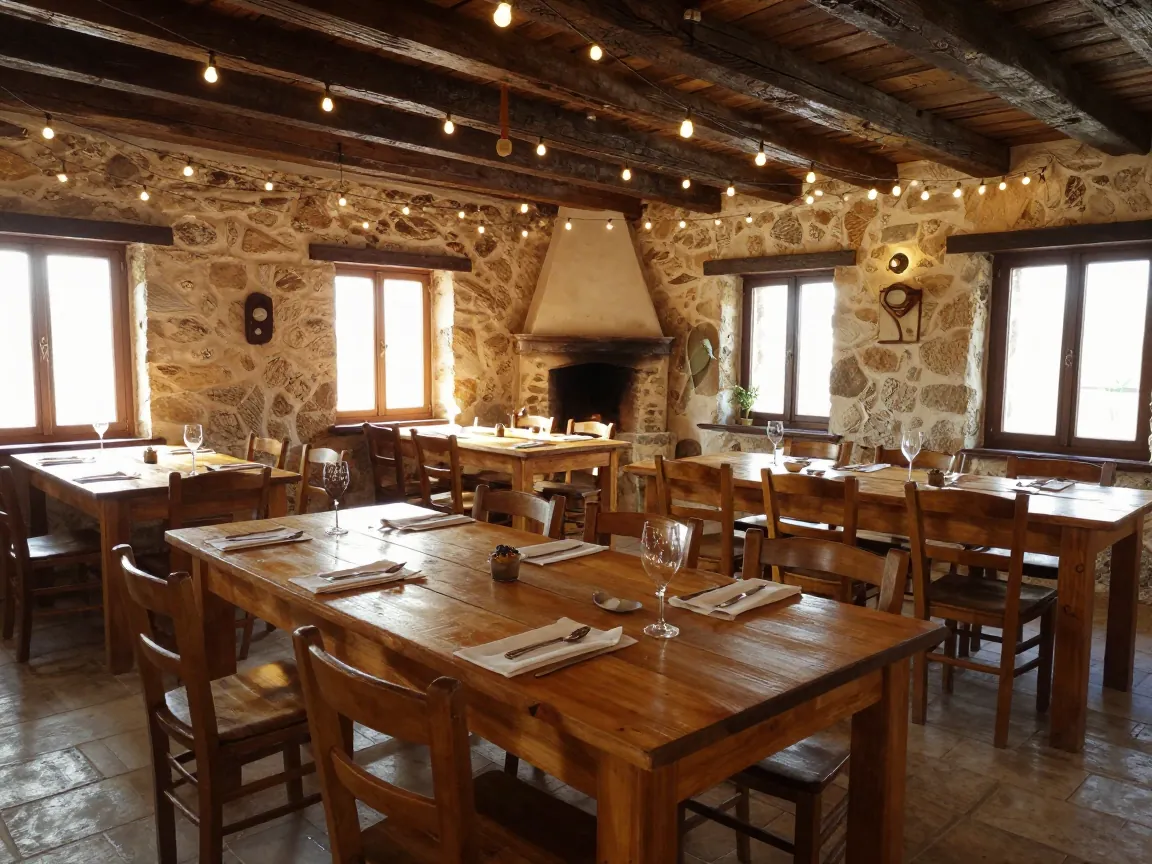
A planner table you can fill in this week
Use one row per giorti. Fill the date and weekday first, then work left to right.
| Date | Weekday | Home or venue | Invited or open house | Food format | Who confirms numbers |
|---|---|---|---|---|---|
If the weekday is Monday to Thursday, expect a later start and a shorter evening. If the format is open house, the last column reads "nobody"; that's the point of the format, not a gap in the plan. If the format is invited, name one person, not a couple, and give that name to the venue.
What to confirm before the date arrives
For anything touching religious practice, dates that move with the Orthodox calendar, or local custom in a specific village or town, confirm with the parish. For anything touching a venue agreement, confirm with the venue. For anything touching a town square, a beach or a listed building, confirm with the municipality. We say this plainly because name day customs vary by region, and a practice normal in one place may not be normal in another.
One caution on the saint's date itself. Fixed feasts are fixed, but the movable cycle around Pascha shifts a whole block of the calendar. Check the year's date against an Orthodox calendar, then confirm the current requirements with the competent authority, your parish or your municipality, before you commit money to a room.
If you already have a date, a headcount range and a preferred format, send them to us. A brief with a weekday, an approximate number and an open-house or seated format is far easier for a venue to answer than a general enquiry.
Planning questions
Should a name day be an open house or a booked room?
If you cannot name every guest, choose the open house. A booked room works when you can give the venue a firm range and a format, invited or drop-in, and accept a stated end time.
Does a weekday name day need a different plan from a weekend one?
Yes. Guests arrive after work and leave earlier, often in separate waves. Ask a venue for a set menu served at one fixed hour rather than on demand, and expect a later real start.
What should we agree with a venue when guests may drop in uninvited?
Agree how the venue counts covers, the deadline for revising the number, who confirms it, how extra guests are charged, whether outside food is allowed, and the end time, all in writing.