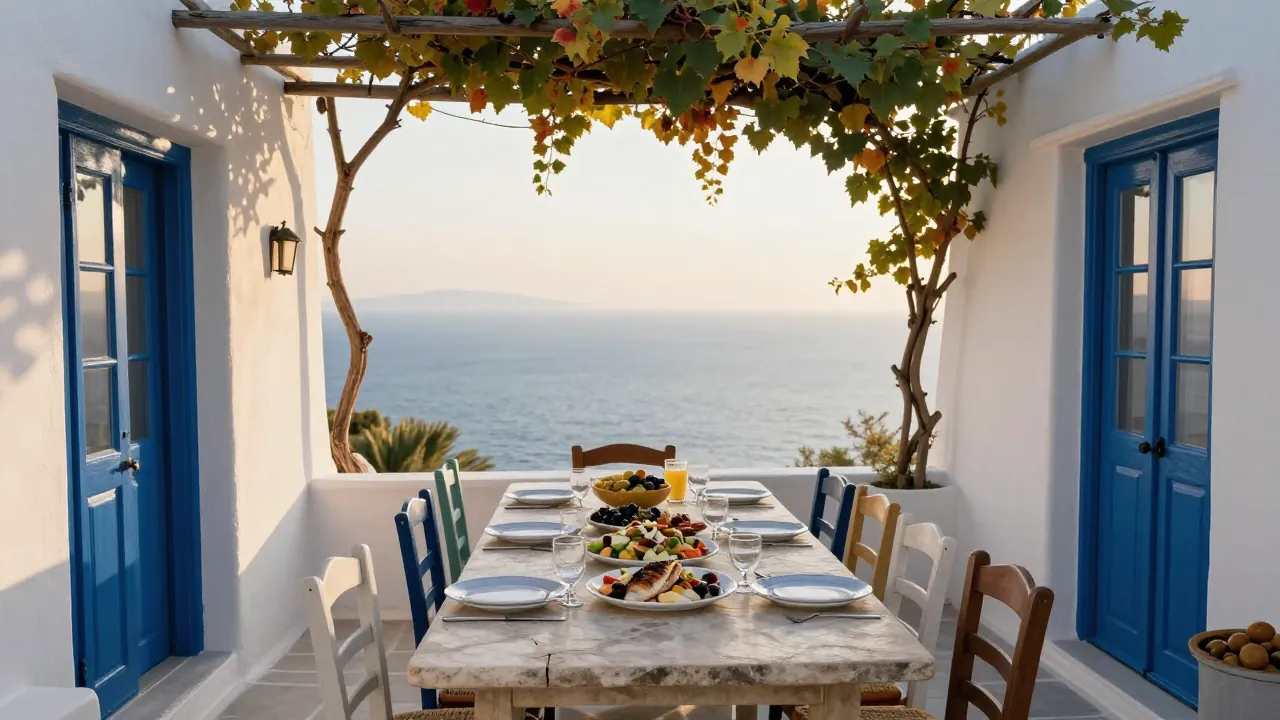
Village house or city hotel: pick the base before the menu
The village option works when a grandparent's house, a parish church and a taverna sit within walking distance of each other, so nobody needs a car after the first evening. It fails when the nearest beds are a thirty-minute drive away and half the group arrives jet-lagged. The city option works when relatives land at different times across two days, when some need accessible rooms, and when the group is large enough that one restaurant cannot seat everyone. We lean toward the village for reunions with a christening, a memorial or a name-day attached, and toward the city when more than half the guests are flying in and out on different schedules. Our own view: choose the base first, then the meal, then the music. Reverse that order and you'll spend the weekend fixing problems the base should have solved. If the family is spread across islands, one clear base with easy transport links matters more than a scenic split. The Ionian planning guide sets out that argument for island-based gatherings.
The planning sheet for mixed-language families
This is the sheet we'd use. Fill it in before any venue gets a deposit, and keep one copy per household.
| Field | What goes in it | Example (hypothetical) |
|---|---|---|
| Headcount by household | Adults, children under twelve, infants | Household A: two adults, one child |
| Languages spoken | Who speaks what, who is learning | Greek, English, German |
| Arrival windows | Date, rough time, mode | Thursday afternoon, ferry |
| Mobility needs | Steps, walking distance, seating | One guest needs step-free access |
| Meal format | Sit-down, buffet, two long tables | Sit-down, one long table |
| Who translates what | One named person per table | Cousin M. handles the toast |
| Quiet space | Where children and older guests rest | A side room or shaded terrace |
| Money plan | Who pays for what, and how | Split per household, one collector |
Add a column for the person who will answer questions in Greek on the day, and one for the person who will answer in English. Two named people, not a committee. Print the sheet twice: once for the households and once for the venue.
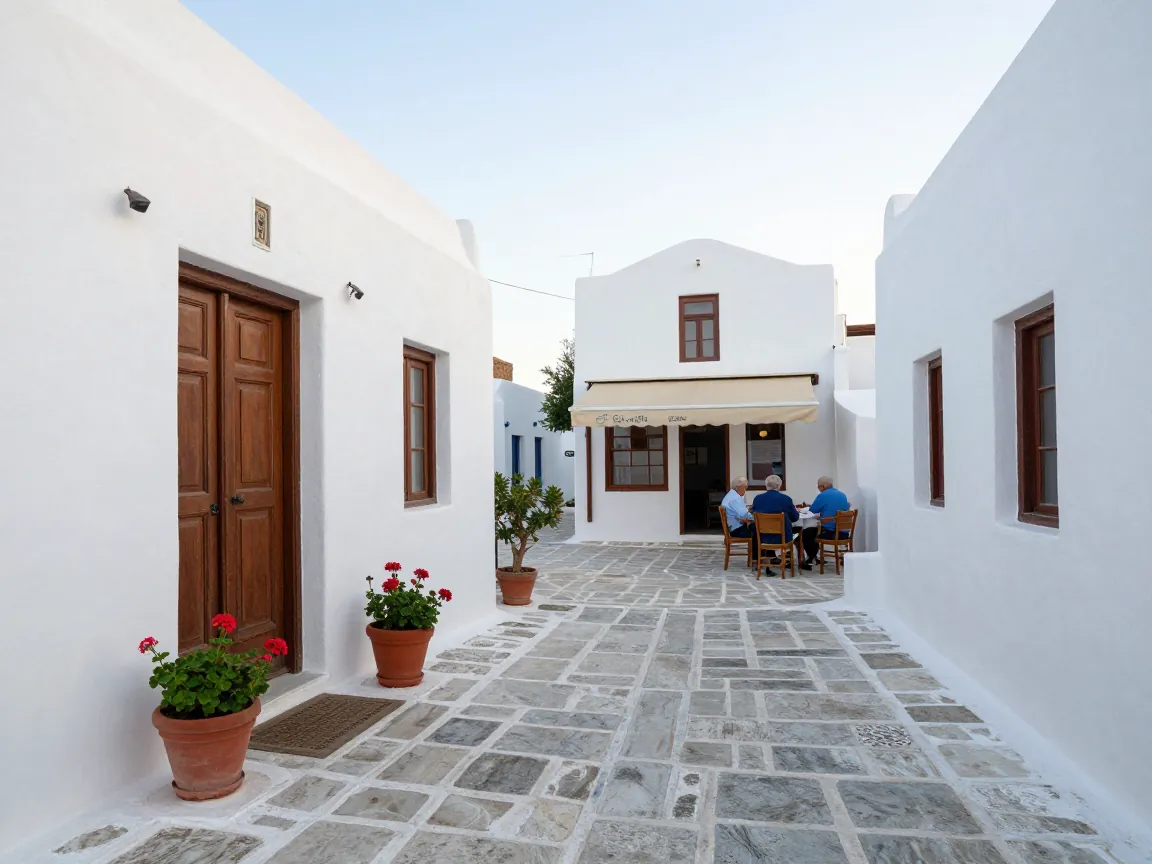
A translation plan that survives the first toast
The toast is where mixed-language reunions either land or don't. Our rule of thumb: ask the person giving it to speak for about three minutes in their own language, then have one relative give the short version in the other language, not word for word. Let the whole thing run much longer and you risk losing the room. For the meal itself, we'd print a single-page menu in two languages with dish names in Greek and English, because reading and speaking ability in each language often differs across the generations at the same table. Assign one translator per table rather than one for the whole room; a single interpreter running between tables is exhausted by the first course. This is also where the older generation can do the work themselves, if they want to. Ask them first. Keep a written note of who is covering which table, because on the day people drift. Write the plan down and hand it to whoever is holding the microphone.

Choosing the meal, seating the generations, and the venue questions
Long tables beat rounds of ten. Seat the older guests at one end and the children at the other end of the same table, not in a separate room. Lunch, not dinner, suits reunions with small children and guests still on a foreign time zone. On the venue side, ask where the listing sits relative to the group's beds, how many hours the room is yours, and what happens if the headcount moves by ten in either direction. Also ask whether the venue can print menus in two languages and whether there is a shaded area for the youngest guests. A restaurant with a private-events page may be a good fit without being a banquet hall. Seaside Santorini, for example, according to its listing, is a restaurant in Agios Georgios with a Cosmo-Mediterranean menu and a website that mentions wedding ceremonies. Hold that against your own checklist. The listing says what it says; availability and suitability are yours to confirm.
For island reunions, check the transport chain before anything else. Visit Greece notes that Lefkada is connected to the mainland by a floating bridge, which changes the logistics for relatives arriving by car or coach. The same logic applies elsewhere: one bridge, one ferry timetable, or one airport transfer decides whether the group can stay together. Ask the venue or the local tourist office which route is realistic for a coach, and confirm ferry times for the exact dates rather than the season in general. The Peloponnese estate guide covers the mainland version of the same question.
Where a reunion can quietly fall apart
Money first. Decide per household contributions and one collector before the reunion, not after the meal. Second, don't schedule every day. Two structured events, one free afternoon, and one meal that nobody has to organise is a good shape for a long weekend. Third, check the calendar against local feast days and school holidays, because a village taverna may be fully committed on a name-day weekend. Fourth, if the reunion touches a church service, a cemetery visit or a legal matter, confirm current requirements and opening hours with the competent authority, whether that's the parish, the municipality or a consulate, before you commit anyone to a date. Fifth, write down who is bringing the photographs, the family records and the contact list for the next generation, because that is usually the part people regret leaving to memory. Sixth, agree on a shared photo album and a single group chat before arrival, so nobody misses the change of plan on the day.
One last practical point: name a single person on each side of the family as the contact for travel questions, so the organiser isn't answering the same message forty times.
Send us the headcount, the month, and whether the group is staying in one place or several. With those three details, venues can tell you honestly whether they fit.
Planning questions
Should we choose the family's village or a city for a reunion with relatives from abroad?
Choose the village when walking distance links the house, church and taverna. Choose a city when arrivals are spread over two days, several guests need accessible rooms, or the group is too large for one local restaurant.
How do we handle two languages during toasts and long meals?
Name one translator per table and keep toasts short, spoken in one language and summarised in the other. Print a two-language menu, because reading and speaking ability often differ across generations.
What should we ask a restaurant before paying a deposit?
Ask how many hours the room is yours, how close it is to the group's beds, whether menus can be printed in two languages, and what happens if the headcount moves by around ten either way.