
The godparent's package: what arrives in the bag
In Greek practice the godparent (nounos or nouna) is the sponsor who makes the baptismal promises on the child's behalf and, in the same gesture, takes on the material side of the day. In many families the godparent's items include a set of new clothes for the baby to wear after the immersion, a white towel or linen sheet, a large decorated candle (lambatha), olive oil soap, a small bottle of olive oil, and the martyrika, the witness pins or ribbons given to guests. Our guide to who brings what to a Greek baptism sets these out as a checklist you can hand to the nounos, which is more useful than a phone call the week before.
The towel matters more than it looks. The Greek Orthodox Archdiocese of America, describing the service of holy baptism, notes that after the immersion the priest places the child in a linen sheet held by the godparent and later dresses the newly baptised in a clean new robe. In Greece the parish may follow slightly different local customs, so confirm the sequence and the exact items with the priest beforehand.
We would put the godparent's bag in the car the night before, not the morning of. Candles get forgotten in hallways.
The parents' side: venue, guest list, oil and photograph permissions
The parents book the church, invite the guests, arrange the photographer and pay for the reception. In some families the parents also buy the small bottle of olive oil, in others the godparent brings it, so ask the priest. The parents also confirm whether the church allows a photographer inside the nave and where the video camera may stand. Ask about that in the same conversation as the date.
Greek baptism customs vary by region, island and family, and no single list fits every parish. Use a checklist as a starting point, then correct it with the priest and the nounos.
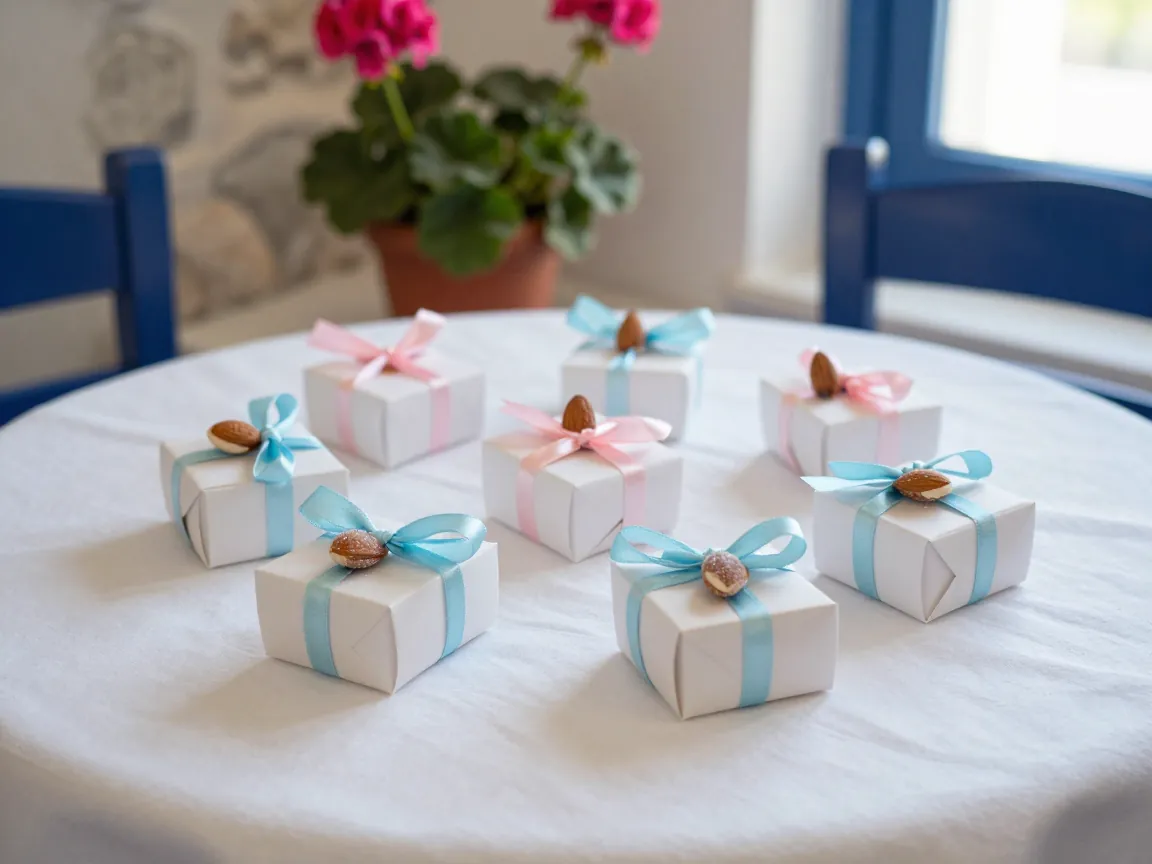
Martyrika and the table question
Martyrika are the favours that mark who witnessed the baptism: pins, ribbons or small keepsakes, usually bought by the godparent, distributed to guests as they leave the church or as they arrive at the reception. They are not a Greek wedding bomboniera, and the count is not the same as the guest count. Some families order one per adult guest, some one per household, some add a child's version. Decide the rule early, because the order has a lead time.
That decision shapes your venue brief. If the martyrika are handed out at the church door, the venue needs nothing. If they sit on a table at the reception, you are asking for a surface near the entrance, before guests sit down. Tell the venue which one you mean.
Reception timing after a morning service
Ask the priest how long the service runs; either way, the church portion of the day is only the beginning. Guests linger outside for photographs, and the couple or parents may greet people in the courtyard before anyone drives to the venue. If your service starts at eleven in the morning, a reception for, say, 80 guests can realistically begin around one. That is an example only, and the gap depends on your parish and how far the venue is.
Build in a cushion between the church and the meal. Venues handle this better when you give them a start window rather than a fixed minute, because photograph sessions run long. If your reception is a lunch, say so plainly; a lunch that slips to three o'clock changes the kitchen's plan.
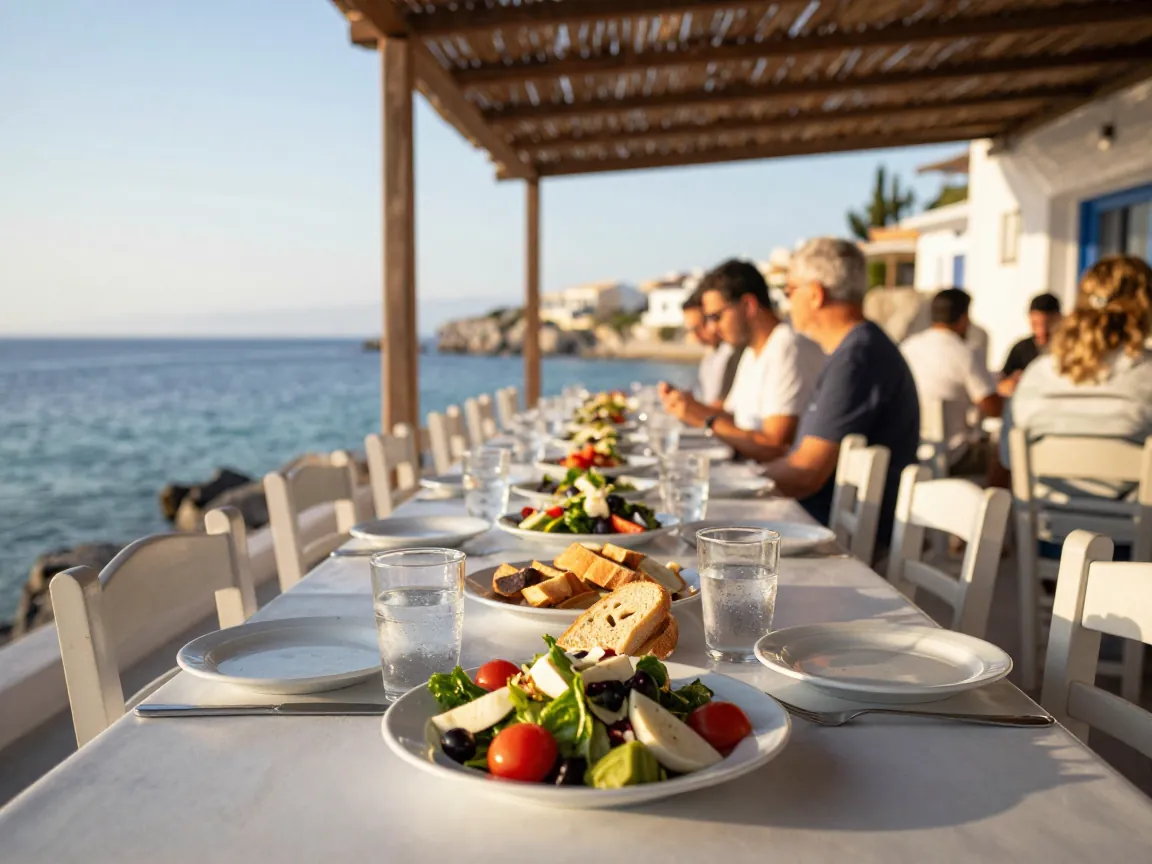
Photographs, the church hall and food rules
Greek baptism photographs often follow a sequence like this: the parents and godparent with the child inside the church, the guests outside, then the arrival at the venue. The godparent is in many of the frames, so brief the photographer on who that is. For a fuller guest-facing explanation of what happens inside the church, the guide to a Greek Orthodox baptism explained for guests covers the order of the service.
Food rules belong in the same conversation. Greek Orthodox practice includes fasting periods, and some families keep a lenten menu for a baptism that falls inside one. Confirm with the priest and the family whether the date is inside a fasting period, then tell the caterer. Confirm current requirements with the competent authority, meaning the parish, the municipality or the venue, before you commit to a date.
For a reception with a seated meal and a martyrika table, browse the baptism reception venues we list in Greece and filter by whether the venue can set a greeting surface near the entrance.
The quick table: who provides what, and when
Use this as the brief you send to the godparent and the venue coordinator. The middle column is where family disagreements tend to start, so settle it in writing.
| Item or custom | Who usually provides it | When it appears | What to tell the reception venue |
|---|---|---|---|
| New clothes and white towel or sheet | Godparent | Used during the service | Nothing, but keep a spare set of clothes in the car |
| Decorated candle (lambatha) | Godparent | Carried into church | Nothing |
| Olive oil, soap, small bottle | Godparent or parents, confirm with the priest | Before the immersion | Nothing |
| Martyrika (witness pins or ribbons) | Godparent | Church exit or arrival at the reception | Say whether you need a table near the entrance, and how many guests |
| Church booking and priest's schedule | Parents | Weeks or months ahead | Give the venue the service start time as a window |
| Guest list and seating | Parents | Before the reception | Headcount and any children's table |
| Photography and video | Parents | Church and venue | Where the photographer may stand and when the meal should hold |
| Fasting-period menu | Caterer, on the family's instruction | The reception meal | Confirm the date's fasting status with the priest first |
Print it, annotate it, then send the final version to both the venue and the godparent. A baptism runs on a short service and a long list, and everybody does better with the list on paper.
Tell us your headcount, your date and your preferred region, and we will point you to venues that can answer for the martyrika table, the seating and the lunch service on the day.
Planning questions
Who pays for the baptism clothes and candle in Greek tradition?
The godparent usually covers the new clothes, the white towel or sheet, the decorated candle, the soap and the martyrika. Parents normally book the church and pay for the reception. Because regional customs differ, confirm the split with the godparent and the priest early.
How soon after the church service should the reception start?
Allow a cushion for photographs and greetings in the church courtyard before guests drive to the venue. Give the venue a start window rather than an exact minute, and tell the kitchen whether the meal is a lunch, since a late start changes their plan.
Do martyrika need a table at the reception venue?
Only if you plan to hand them out there rather than at the church door. If so, ask the venue for a surface near the entrance, and decide whether the count is per adult guest, per household or includes a children's version before you order.