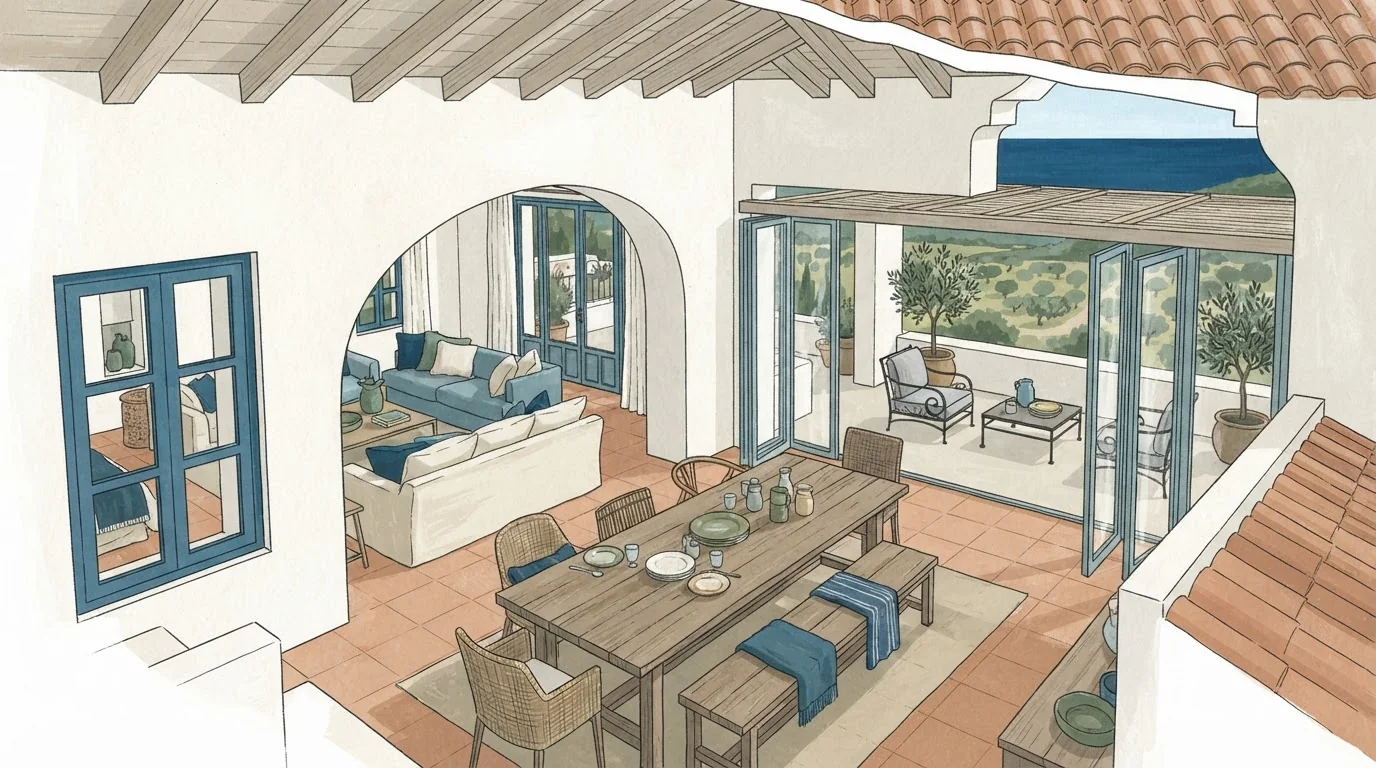
Start with the island, not the villa
Most reunion planning fails at the first step because the shortlist mixes islands. Each Ionian island has its own character, ferry connections and internal distances, and swapping one for another changes the whole trip. The official Ionian Islands guide distinguishes Corfu, Kefalonia, Lefkada and Zakynthos as separate destinations. That sounds obvious, but a villa on Lefkada is not a substitute for one on Corfu, even with the same bedroom count and a pool.
So the first question is not "which villa" but "which island fits the way this family moves." Before you open any listing, answer three things in writing: how people will arrive, how far they will drive after arriving, and whether anyone needs to be within a short walk of a pharmacy or a beach. If half the group flies into one airport and half takes a ferry from the mainland, the island choice decides whether that is a minor detail or a daily logistics problem.
Room allocation for a multi-generation group
A villa with eight bedrooms is not automatically a good fit for twenty people. Room allocation is where reunions quietly succeed or fail, and the awkward conversation belongs early, not at midnight on arrival.
List every household or solo traveller, then note what each one needs to sleep well. A couple with a baby may need space for a cot and a door that closes. Teenagers may be happy in a shared room but miserable next to the living room. Grandparents may want a ground-floor room with a bathroom they do not share with four children. This is not about status. It is about the difference between a week that works and one where people retreat to their rooms.
A useful rule: count the people who need a door they can close, not just the beds. If that number is higher than the bedroom count, the villa is wrong for your group, or you need two properties. That is an honest tradeoff. Two smaller villas solve privacy but complicate shared meals and evening gatherings. One large villa keeps everyone together but may push some people into spaces they will not enjoy.
When you enquire, ask for a floor plan or a room-by-room description. Ask which rooms share bathrooms, which have air conditioning, and whether any bedroom is a passage room. A vague answer is a sign to keep looking.
Shared meals: the daily rhythm that makes or breaks the week
Shared meals are usually why people want a villa instead of a hotel. They are also where expectations collide. One household wants to cook every night. Another wants to eat out. A third assumes there will be a rota.
Decide before you book how many meals will actually be shared. A realistic plan might be: breakfast self-service, lunch flexible, dinner together on four or five evenings, the rest open. Write that down and share it. Adjusting a written plan beats negotiating at 7pm with hungry children.
Then look at the kitchen and dining space. Can the table seat everyone at once, or will you eat in shifts? Is there enough fridge space for a large shop? Is there a second fridge or a cool box? These belong in your enquiry, not in a group chat debate about whether the villa "looks nice."
If your group includes people with different dietary needs, ask how the kitchen handles separate preparation. That is not a catering question. It is about whether the space lets you cook the way you need to.
Mobility, quiet time and the shape of the day
A reunion week has two currencies: energy and quiet. Both run out. Plan for both.
Mobility first. Ask each household, in private, what a normal day looks like for them. Some will want to walk to a beach and back. Others will drive to a different spot each day. Some will stay at the villa and read. None of these is wrong, but they require different locations. A hillside villa with a view may suit the readers and be difficult for anyone with knee problems. A flat coastal property may be easy for everyone but less private.
Quiet time is the other half. In a large group, people need permission to disappear: a shaded corner of the garden, a bedroom with a balcony, a walk alone after lunch. If the villa offers no space for that, the week feels longer than it is. Ask whether there is a separate living area or an outdoor space beyond the main pool terrace. If not, agree on quiet hours.
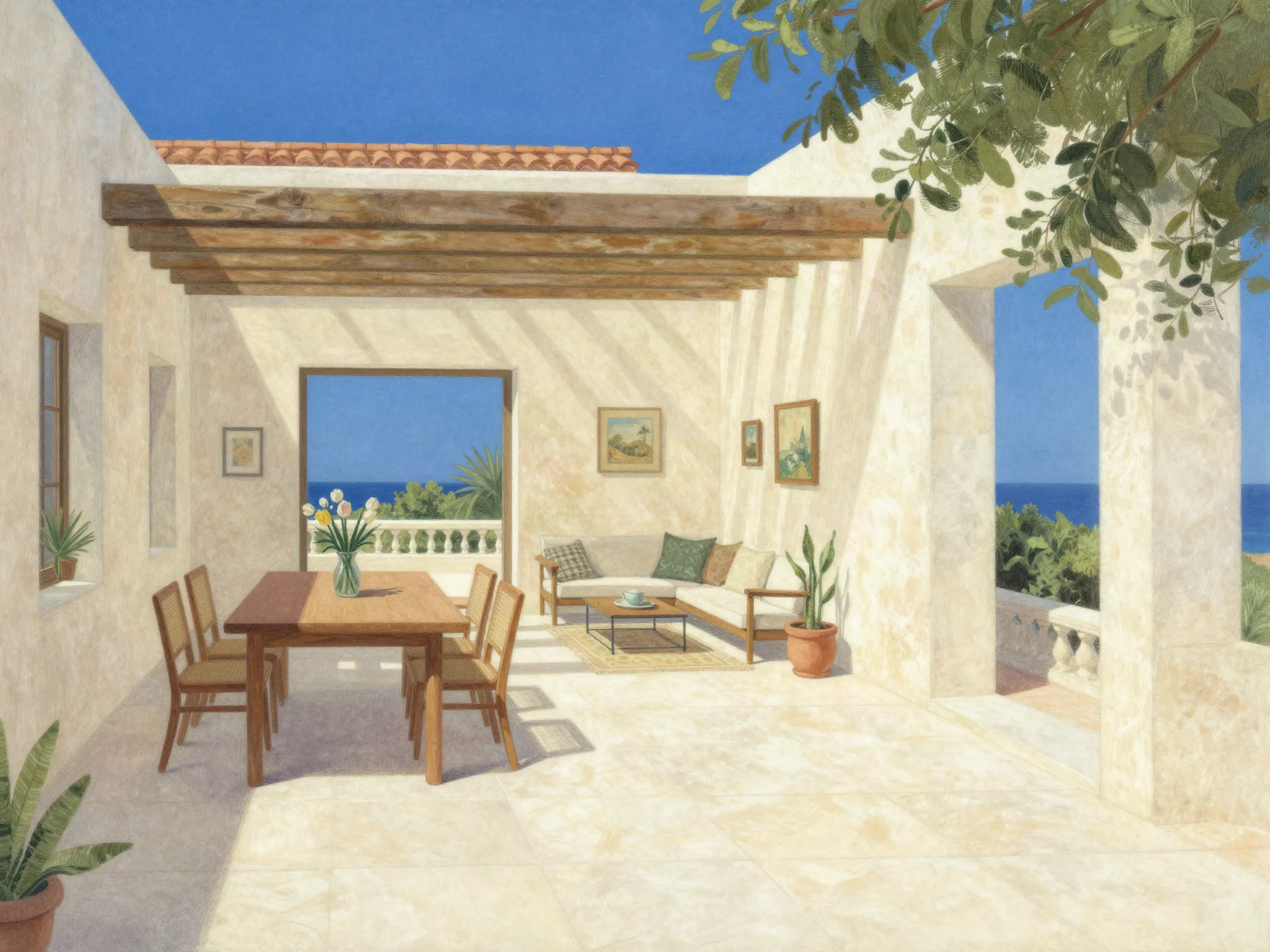
What to ask before you shortlist a villa
Once you have chosen an island and sketched the room plan, your questions get sharper. Here is a checklist you can send to any villa or agency. It avoids private details and focuses on what the property can actually provide.
| Topic | What to ask | Why it matters |
|---|---|---|
| Bedrooms | Can you send a floor plan showing beds, bathrooms and doors? | Prevents allocation surprises |
| Bathrooms | How many are en-suite, and how many are shared? | Reduces morning queues |
| Kitchen | What is the fridge and freezer capacity? Is there a second fridge? | Matters for large shops |
| Dining | How many people can sit at the table at once? | Determines shared meal logistics |
| Outdoor space | Is there shade, and is the pool fenced or gated? | Safety and comfort |
| Mobility | Are there steps between parking, entrance and bedrooms? | Affects daily ease |
| Quiet | Is there a separate living area or a second terrace? | Gives people room to recharge |
| Terms | What is included in the quote, and what is charged separately? | Avoids budget surprises |
Use this as a starting point, not a script. Add your own questions about arrival times, parking and local shops. Keep the answers in one document so you can compare like with like.
Budget without inventing numbers
Villa pricing depends on the specific property, the dates, the guest count and what is included. There is no honest universal figure. Build your own comparison from the written quotes you recieve.
For each villa, ask for a quote that separates accommodation, cleaning, any heating or air-conditioning surcharge, and any refundable deposit. Ask whether tax is included or added, and which amount it applies to. Do not assume one villa is cheaper until you compare the total for the same dates and guest count. Use blank fields and formulas, not invented averages. For an example, imagine twenty guests over seven nights: divide the quoted total by twenty for a per-person figure, then compare it with a hotel where everyone has a private room. That calculation is yours to run with real quotes, not a market norm.
Send the right information to the right villas
Once your island is chosen and your worksheet is filled in, contact villas. Skip the long story. Send a short, clear enquiry that lets a manager answer accurately.
Include these details:
- Your preferred island and dates, with a note if they are flexible.
- The total number of guests, including children and infants.
- The number of bedrooms needed and any accessibility requirements.
- Whether you need a cot, a high chair or a ground-floor room.
- Your rough meal plan: how many dinners you expect at the villa.
- Any quiet-space or separate-living-area needs.
- A written quote that separates accommodation, cleaning, taxes and deposits.
Ask for availability and a written quote together, so you can compare responses side by side. If a villa cannot answer clearly, that is useful information. Keep your worksheet private: no medical details, no financial information, nothing a family member would not want shared. Just the facts that help everyone sleep, eat and relax in the same place for a week.
Two useful next steps: Ask about the whole accessible route, not one ramp and Keep the room block and the event-space quote together.
Planning questions
Why should the island be settled before anyone compares villas?
Each Ionian island has its own character, ferry connections and internal distances, so swapping one changes the whole trip. A villa elsewhere is not a substitute even with the same bedroom count and pool.
How do we decide if a villa suits a multi-generation group?
Count the people who need a door they can close, not just the beds. If that number exceeds the bedrooms, the villa is wrong for your group or you need two properties.