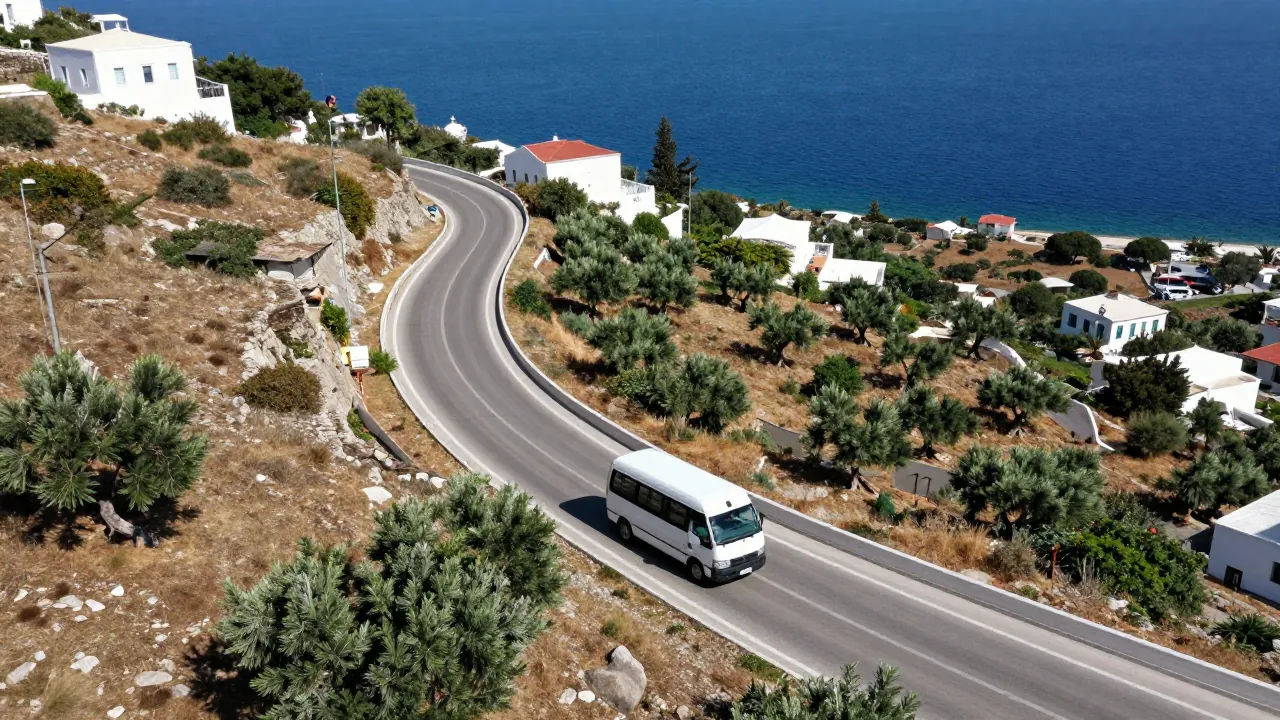
When a private coach beats taxis and the bus
Taxis work for small groups, but supply is the problem. On a Saturday night in August, twenty taxis converging on one remote taverna is a scheduling fiction. A single fifty-seater does the same job in one movement, and the driver waits.
Public transport is a different calculation. Visit Greece notes that the country has an extensive intercity bus network (KTEL) linking major regional hubs and even the smallest villages. That network is genuinely useful for guests arriving independently on a weekday. It is not built for a wedding that ends at two in the morning, so check the timetable for your exact route and date before you count on it. For a company offsite with a fixed 09:00 start, a coach removes the guesswork entirely. Our rule: if more than thirty guests share one origin and one destination, book the coach.
Briefing the transport company: the seven fields we fill in first
The transport company can only quote accurately if you give it a structured brief. Send this as a table, not a paragraph. The seven fields we complete before requesting any price:
| Field | What to write | Why it matters |
|---|---|---|
| Pick-up point | Named hotel entrance, not "the centre" | Coaches cannot stop on narrow streets |
| Pick-up time | Exact clock time plus a five-minute buffer | Guests arrive late; the coach should not |
| Guest count per run | Seated count, not an estimate range | Insurance and seatbelts are per person |
| Venue drop-off point | Gate name or nearest road access | Some venues have one vehicle entrance |
| Return runs | Number of departures and times | One coach rarely suits everyone |
| On-the-night contact | A named person with a Greek mobile number | The driver needs a human, not an email |
| Luggage or equipment | Boxes, prams, instruments, AV cases | Affects vehicle size and loading time |
Coaches are not cheap, and for a twenty-person lunch they are the wrong tool. We would rather tell you that than sell you a vehicle you do not need. For larger corporate movements, the corporate event venues in Greece page is the better starting point, and you can ask each venue about coach parking before you shortlist it.

What the venue must confirm about coach access
This is where a coach plan can fall apart, and the fix usually sits with the venue rather than the transport company. Before you sign the coach contract, ask the venue five specific questions and get the answers in writing:
- Can a full-size coach enter the property, or does it stop on the public road?
- Where does it turn around, and is reversing required?
- Is there a designated waiting area for the driver during the event?
- Are there time restrictions on vehicle movements, for example during siesta hours or after a certain point at night?
- Who at the venue directs the driver on the night, by name and phone number?
Turning space is the question people forget. A full-size coach needs far more room to turn than a rental car. If the venue's access road is a switchback with a low wall, the driver may refuse, and rightly so. Ask for a photo of the access route if you cannot visit, or ask the venue to confirm the turning circle in writing.
Timing the runs so guests are not left standing
Build the schedule backwards from the ceremony or the start time, then add a buffer. For a 17:00 ceremony at a venue twenty minutes from the hotel, an example only, we would load at 16:15 and depart at 16:20. That gives ten minutes of settling time and a margin if a guest is late.
Return runs are the harder half. Guests tend to leave in waves, for example the older relatives at 23:00, the main group at 01:00 and the last few whenever the bar closes. We brief two scheduled returns plus one on-call vehicle if the budget allows. The on-call coach waits at a fixed point and leaves when the last named person boards. The driver does not chase guests around a dance floor.
For guests flying in, the airport leg is a separate problem. The Athens airport group transfers for event venues guide covers how to sequence arrivals against a coach timetable.
Get the guest manifest right before you book anything; the wedding guest travel guide walks through arrival windows and who needs picking up where.
What goes in the written coach contract
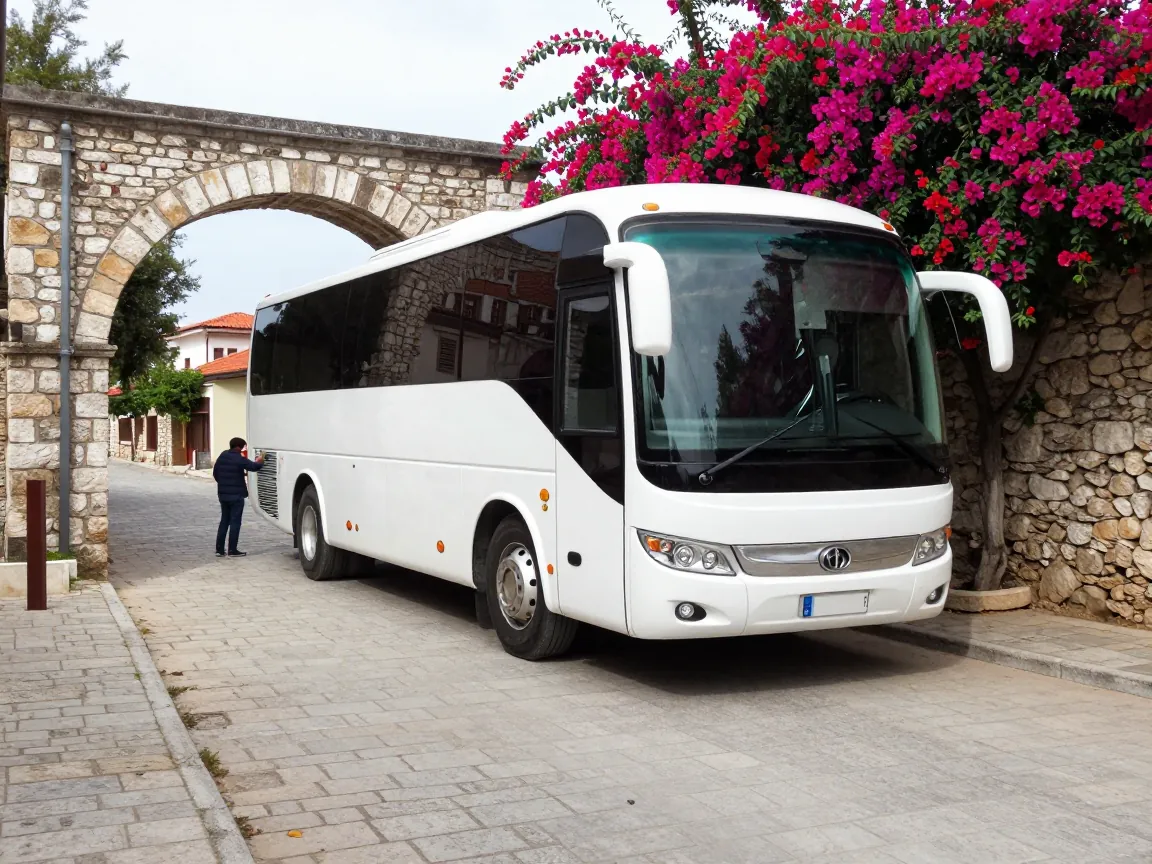
The contract should name the vehicle type, the seated capacity, the driver's hours, the waiting policy and the cancellation terms. Ask specifically about the driver's legal driving hours: a driver who starts at 15:00 may not legally drive a return run at 03:00. The transport company will know the rules; make them put the schedule in writing and confirm it is compliant.
Also agree what happens if the coach breaks down. A reputable operator should send a replacement or a second vehicle. Get that commitment in the contract, not in a phone call. And confirm whether the price includes tolls, parking at the venue and the driver's overnight stay if the event is far from the depot.
One regulatory point: rules on vehicle access, parking and night-time noise vary by municipality and by venue, and they change. Confirm current requirements with the venue management and, where relevant, the local municipality before you sign. We are planners, not lawyers, and the venue's written confirmation is the document that protects you.
The one-page coach brief we hand to the driver
On the day, the driver should receive a single sheet containing: the pick-up point with a pin or address, the exact departure times, the guest count per run, the venue access instructions, the return schedule, and two phone numbers (yours and the venue's). Print it. A driver scrolling through messages at a hotel entrance at midnight is not a plan.
Tell your guests the same information the night before, in the group chat: where to stand, what time the coach leaves, and what happens if they miss it. The coach leaves on time. That is the whole point of booking it.
Tell us your headcount, your date and the rough hotel-to-venue route, and we will shortlist venues where a coach can actually reach the door.
Planning questions
How many guests justify a private coach in Greece?
As a working rule, if more than thirty guests share one hotel and one venue, a coach beats a fleet of taxis. Below that number, taxis or a minibus can cost less and stay flexible.
What should I ask the venue about coach access?
Ask whether a full-size coach can enter, where it turns around, where the driver waits, any time restrictions on vehicle movements, and which staff member directs the driver on the night. Get the answers in writing.
How do I handle return runs when guests leave at different times?
Schedule two fixed return departures and, if the budget allows, keep one on-call vehicle waiting at a set point. The driver leaves when the last named guest boards, not before.