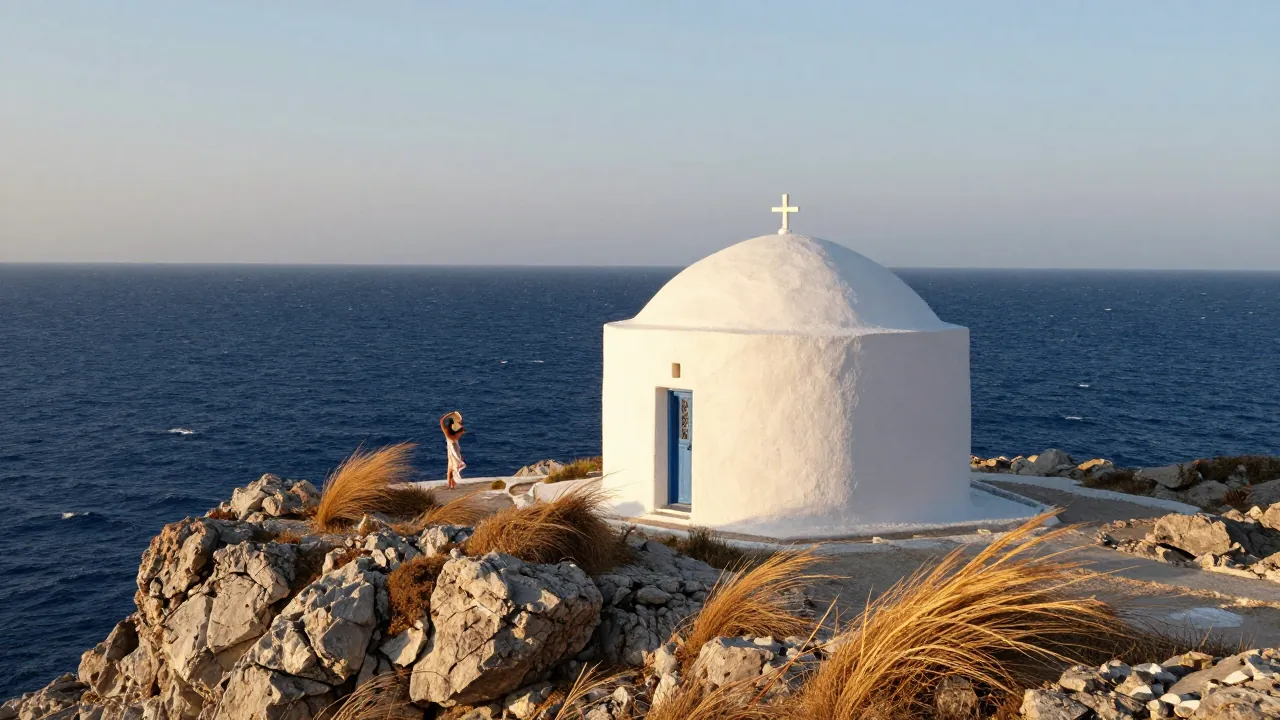
What the meltemi does to an arch and flowers
Even a small courtyard needs this conversation. Secret Kitchen Santorini, a restaurant in Baxedes, Oia, lists private events in its garden courtyard for up to 20 guests; at a venue that size, ask how the courtyard behaves when the wind picks up. An open arch in an exposed position catches wind like a sail; a low, wide arch with solid anchor points stands up better. Ask your florist which stems hold in moving air and which shatter. Ask whether the arch is weighed, pinned or strapped, and to what. Tall arrangements can lose their top tier before the ceremony starts.
Flowers are not the only casualty. Card stock blows off tables, signage tips, and name cards migrate. On an exposed terrace, that is normal.
Maybe the most practical question is the simplest: which direction does the prevailing summer wind hit this terrace at the hour you've chosen? A venue that has hosted weddings there should be able to point at the corner where the wind curls in. If nobody can tell you, that's information too.
Sound, candles and veils in moving air
Sound is where wind stops being atmospheric and becomes audible. Ribbon microphones and unshielded lavaliers pick up gusts; a celebrant on a handheld mic, facing away from the wind, usually survives better. Ask who owns the backup plan if the wireless channel drops mid-vow. Ask whether the ceremony can be moved ten steps sideways without moving the guests.
Candles on an open terrace are a coin toss. Glass hurricanes, deep vessels or battery alternatives are the honest answer, and we'd rather say that than sell you a taper fantasy. Veils, capes and loose fabric behave the same way: pin them, weight them, or choose a length that reads as deliberate when it moves. A veil that flies is only romantic for about four seconds.
A related planning guide, what a Greece wedding package actually includes, is worth reading before you assume a florist or a sound engineer is already covered inside the package.

A wind-ready set-up checklist
Use this at the site visit, not in the abstract. Write the answers down and photograph the terrace.
| Item | Question to ask | What a workable answer looks like |
|---|---|---|
| Arch | How is it anchored, and to what? | Weights or fixed points named, not "it's fine" |
| Flowers | Which blooms survive moving air? | Specific stems, and a plan for the top tier |
| Sound | Wired or wireless, and who owns the backup? | A named person and a spare channel |
| Candles | Glass, vessel or battery? | A decision per table, not per mood |
| Veil and fabric | Pinned, weighted or shortened? | A plan you've seen tested |
| Paper goods | Weighted or fixed? | Clips, weights or a lidded tray |
| Shelter | Where does your full guest list go if the wind builds? | A named indoor or covered space, with capacity |
| Timings | Which hour is typically calmest here? | A time range from someone who has worked the site |
The shelter line is the easiest one to skip. Ask the venue to show you the indoor or covered alternative, walk it, and check capacity against your own headcount. Then ask what access times apply and whether they differ from normal opening hours. If the venue also runs as a restaurant with listed lunch and dinner service, event access needs confirming directly, and that applies to small venues and large ones alike.
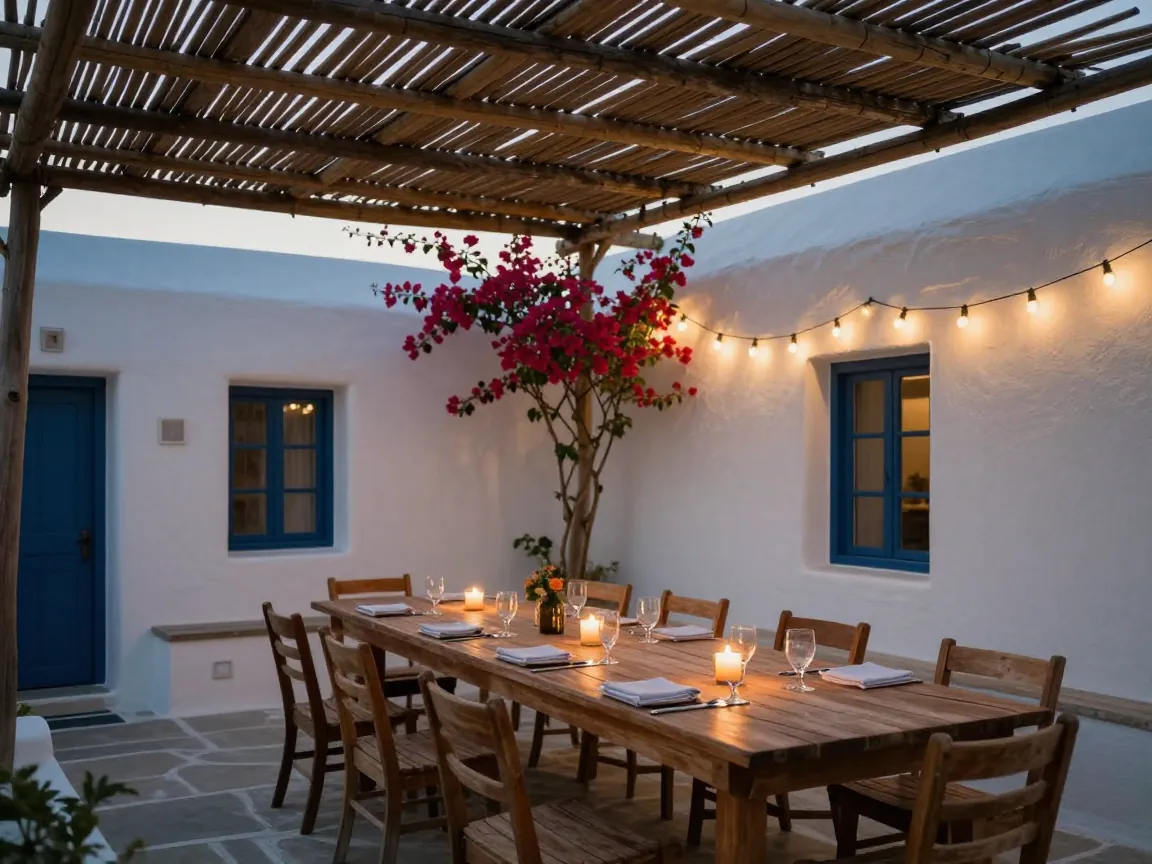
What to ask about access, noise and the sheltered alternative
Wind decisions often collide with two other questions: noise and access. If the ceremony moves indoors, does the amplified sound change what the venue can permit? Who confirms the current rules: the municipality, the venue, or both? Confirm current requirements with the competent authority, meaning the municipality, the parish or the venue, before you print anything.
Also ask about the walk between the sheltered space and the outdoor one. A move that takes four minutes and two staff members is a plan; a move that takes twenty and a trolley is not. And ask what the venue does with a structure that has to come down quickly, because insurance and staffing usually sit behind that answer.
Budget follows wind too. A second sound setup, extra weights, a covered area and a florist who can rebuild an arch all appear in the quote somewhere. Greece wedding venue costs: compare the whole quote is the right place to check whether those lines are already included or waiting to surprise you.
What we'd accept, and what we wouldn't
We'd accept that some Cycladic terraces can be windy on many afternoons in high summer. We'd accept that the best ceremony photos often come from that same wind. We wouldn't accept a venue that can't name its sheltered alternative, and we wouldn't accept a florist who says not to worry about the arch.
One honest concession: a fully wind-proof outdoor ceremony is close to impossible on an exposed caldera terrace. What you can get is a ceremony designed to be flexible, with a short move to shelter, redundant sound and flowers chosen for the conditions. That is a good outcome. Perfect stillness is not on the menu.
Before you sign anything, ask the venue to write the wind plan into the contract: the sheltered space by name, the access times, and who decides when the move happens. A verbal promise about the indoor room is worth very little in August. Ask too whether the same staff who set up the terrace will handle the move, and how long they need. If the answer is vague, that vagueness will show up on the day, in front of your guests, at the exact moment you least want it.
We'd also ask the photographer and the celebrant the same question separately. If either has watched a ceremony move indoors at that venue, or somewhere like it, they'll remember how long it took. If their answer differs from the venue's, build your timeline around the slower one, then add a buffer you never mention to anyone.
Tell us your headcount, date and rough location, and we'll point you toward Cycladic venues whose listings match the way you actually want to handle the wind.
Planning questions
Which month should we avoid for a Cycladic outdoor ceremony?
We don't quote wind statistics, because they vary by island and year. Ask your venue which weeks have historically been windiest at that specific terrace, what time of day the wind usually builds, and how often ceremonies have moved indoors.
Can candles work on a windy terrace?
Open-flame tapers rarely survive moving air. Glass hurricanes, deep vessels and battery alternatives are the practical options. Ask your venue and planner which they have used at that exact spot, and test one arrangement before committing to a full table scheme.
What does a sheltered alternative actually mean in practice?
It means a named indoor or covered space at the same venue, with capacity for your headcount, reachable in a short walk. Ask to see it, check access times, and confirm whether amplified sound rules change once the ceremony moves inside.