What the coast guard can do, and what that means for your date
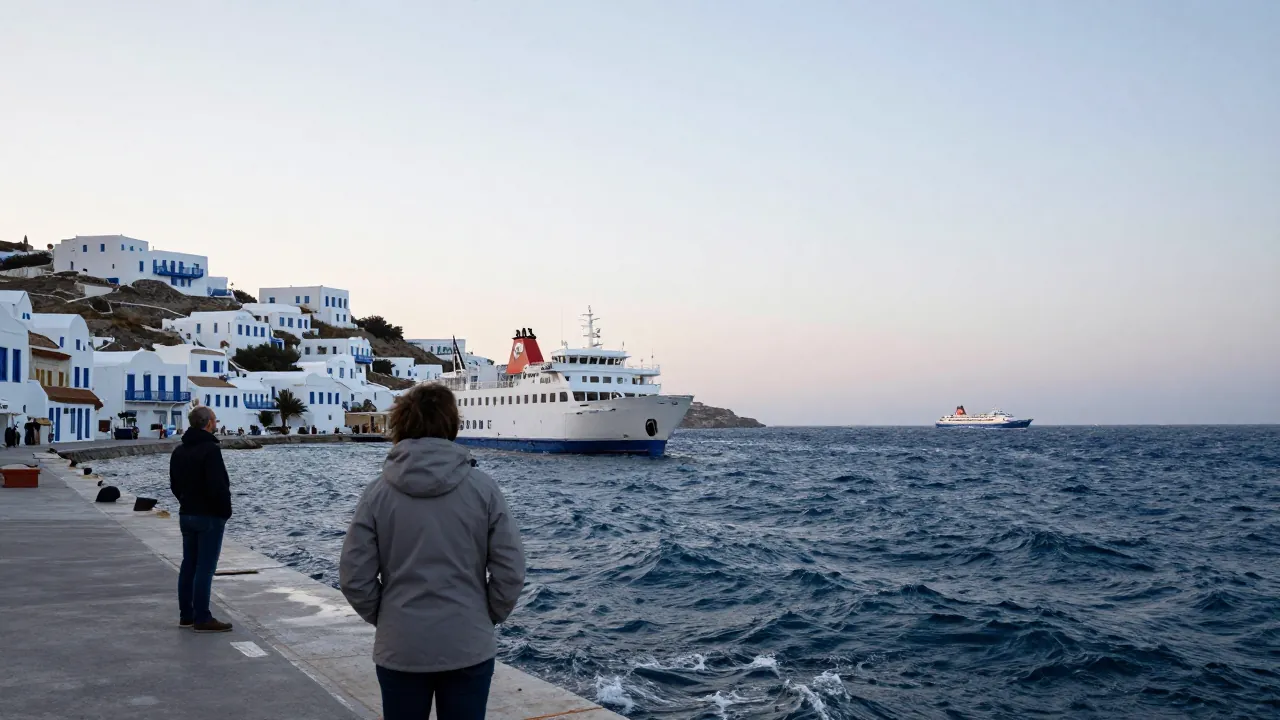
Greece's ferry network is regulated and safety-led. The Hellenic Coast Guard's safety-of-navigation functions include issuing maritime safety instructions in cooperation with other domestic competent authorities, which is a formal way of saying sailings can be paused for reasons no planner can negotiate around. Your job is not to predict these pauses. Your job is to know who on your side gets the call, what they are authorised to change, and how fast they can move.
Two practical consequences. First, build in a buffer day on the arrival side: if the ceremony is Saturday, most of your guests should aim to be on the island by Thursday, not Friday evening. Second, never plan a same-day arrival for anyone essential, including the officiant, the photographer, the band and the couple's own paperwork.
The contingency tree for a cancelled sailing
The tree below is written to be copied into a shared document. Assign one name per branch before you travel. If two people share a branch, you have no owner.
| Trigger | Who decides | Who tells guests | What changes at the venue |
|---|---|---|---|
| Sailing cancelled, next sailing within 24 hours | Lead planner, in consultation with the couple | Guest coordinator, via a single group message | Start time shifts; catering holds hot dishes; ceremony order trimmed |
| Sailing cancelled, no sailing for 48 hours or more | Couple, jointly, on a pre-agreed call | Guest coordinator plus two named relatives calling older guests individually | Venue asked to hold the date or move to a mainland option |
| Guests stranded on a different island | Guest coordinator | Guest coordinator, direct calls only | Seating plan reworked; headcount adjusted with caterer |
| Supplier stranded (band, photographer, officiant) | Lead planner | Lead planner, direct to the couple | Local backup contacted; programme cut or reordered |
| Couple stranded | Best man or maid of honour, with written authority | Same person | Officiant and venue informed; legal ceremony separated from celebration if necessary |
The last row deserves its own sentence. If the couple cannot reach the island, the celebration and the legal ceremony may need to be treated as two separate events, and that is a decision for the officiant and the local registry office, not for a planner on a group chat.
Who calls whom, and in what order
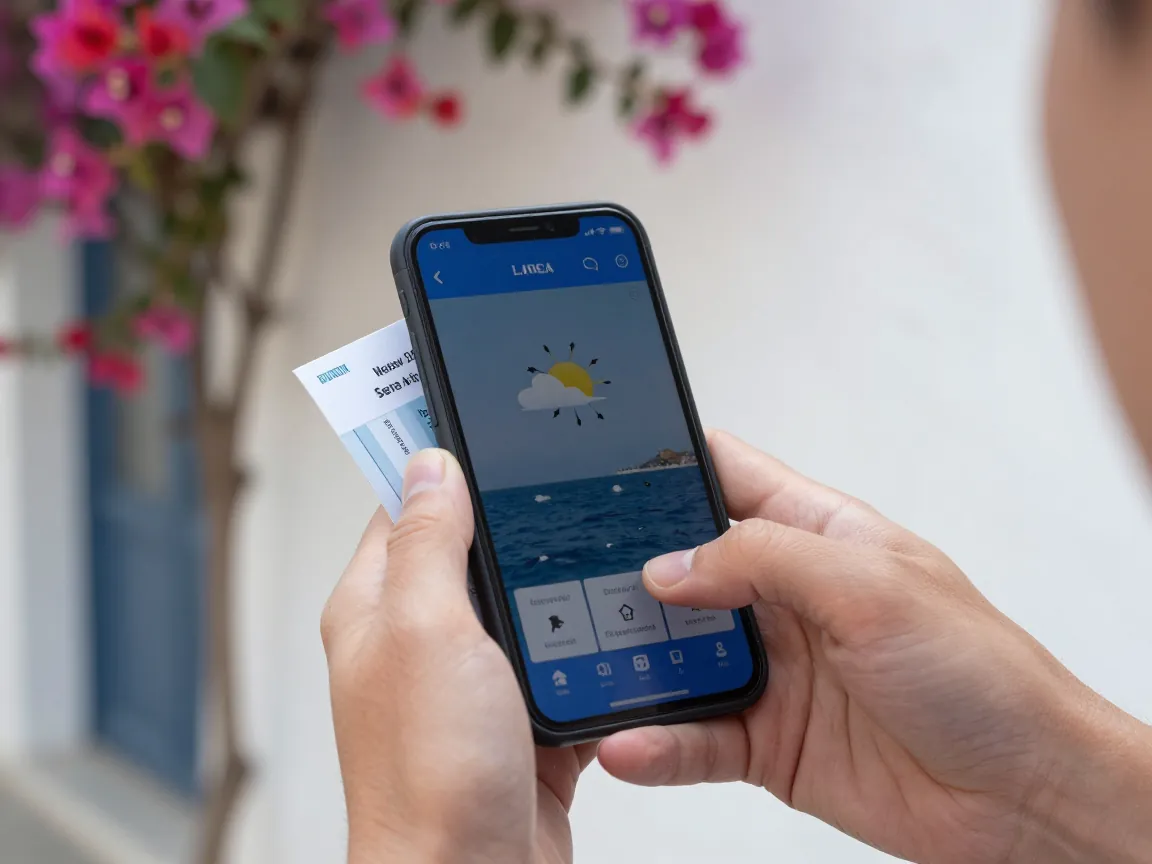
Order matters more than wording. Call the venue first, because it holds the deposit and the date. Call the officiant second, because their availability constrains everything else. Call suppliers third. Tell guests last, once you have something concrete to say. A group message that says "the ferry is cancelled, we are working on it" generates forty replies and zero useful information.
Prepare three short messages in advance, one for a delay, one for a move to a later date, one for a change of island. Keep each under sixty words. Include the new instruction and nothing else. If guests ask questions the message does not answer, they call the named coordinator, not the couple.
If the venue has to change
A mainland venue solves the ferry problem but creates a different one: guests who booked flights into an island airport, and suppliers who were contracted for island work. Read our guide to Rhodes wedding logistics before you assume a mainland pivot is simple, because one address is rarely enough even in a good week. The same logic applies to any island with more than one arrival point.
If you are moving the celebration to a city instead, a hotel with real event facilities is often the fastest workable answer. The Antigon Urban Chic Hotel on Antigonidon Street in central Thessaloniki, a five-star hotel according to its listing, has a meeting room and facilities, a bar restaurant in a glazed atrium above excavated Macedonian and Roman remains, and secured parking on request. Its listing frames it around business meetings rather than weddings, so treat it as a workable small-scale fallback rather than a like-for-like swap. Whatever venue you consider, ask the same three questions: can you hold our date, what is the notice period, and what does your contract say about a change caused by transport disruption?

The backup plan needs its own floor plan
A second venue is not a backup until it has a layout, a supplier list and a run sheet. Our planning guide on island weather backup plans makes the same point about rain: the substitute is only real when its floor plan exists on paper. Ferry disruption deserves identical treatment. Sketch the second room, name the second caterer, and write the second timeline. Then rehearse the switch once, out loud, with the people who own each branch.
Two honest concessions. First, holding two venues or two dates usually costs something, and many couples will decide a single buffer day is the cheaper insurance. Second, no contingency tree survives contact with a determined storm, so build in a willingness to postpone rather than a determination to proceed.
Documents, deposits and the questions to ask before you sign
Before you sign anything, ask the venue and each supplier what their contract says about a change of date caused by transport disruption, and get the answer in the contract, not in an email. Ask who confirms whether a sailing will run, and accept that the answer is the ferry operator and the coast guard, not a venue. For anything touching marriage law, permits, noise or access to beaches and archaeological sites, confirm current requirements with the competent authority: the municipality, the parish, the consulate or the registry office, as applicable. Those rules change, and nobody at a venue can waive them.
Keep a printed folder with every contract, deposit receipt and supplier phone number, because power and phone signal can fail on exactly the days you need them. Give one copy to the coordinator and one to the best man or maid of honour. If the sailing is cancelled while you are still abroad, that folder is the only thing that lets someone else act on your behalf without waking you at four in the morning.
Send us your headcount, your date and a two-line brief, and we will point you to venues that can actually answer for that week.
Planning questions
Who should decide whether an island wedding moves to the mainland?
The couple decides jointly, on a pre-agreed call, not the planner and not a group chat. Name a stand-in with written authority in case the couple themselves are stranded and cannot reach the island in time.
How early should guests arrive before an island ceremony?
Build in a buffer day. If the ceremony is Saturday, aim for most guests to be on the island by Thursday, and never plan a same-day arrival for anyone essential, including the officiant, photographer or band.
What should we ask a venue about transport disruption?
Ask whether they can hold your date, what notice period applies, and what the contract says about a change of date caused by cancelled sailings. Get the answer written into the contract, not just an email.