What to ask your videographer before you sign
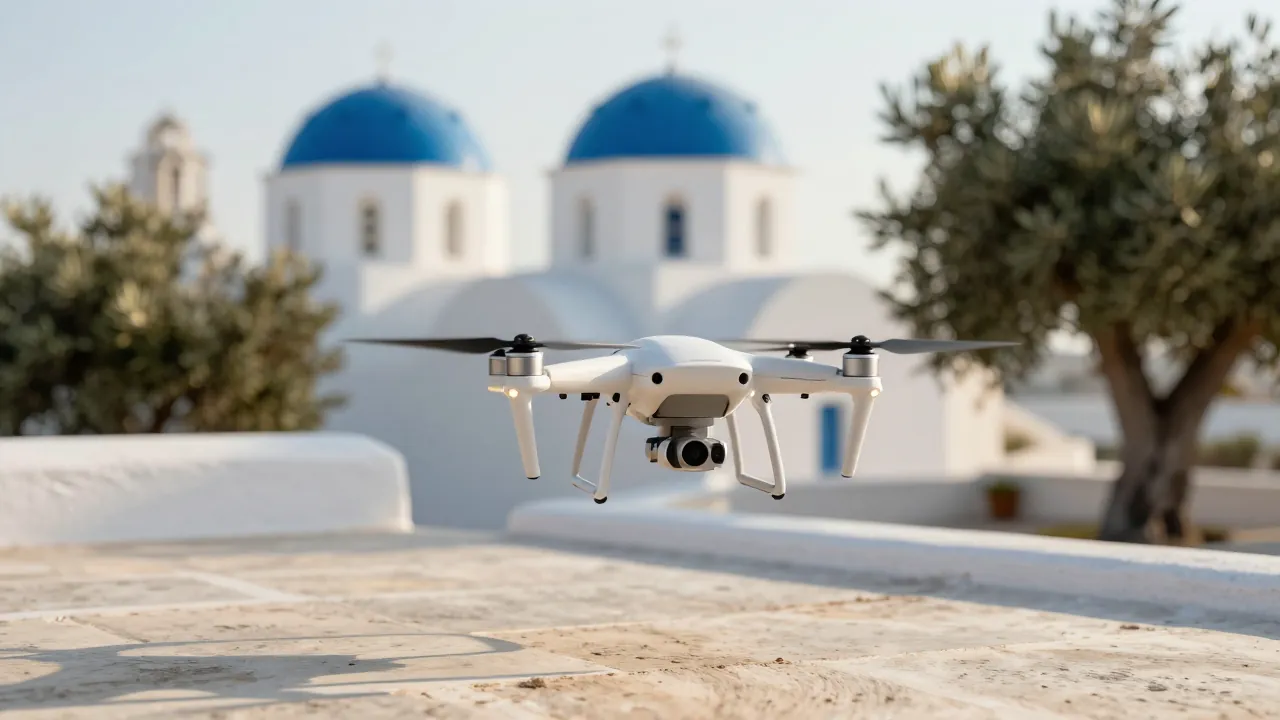
The drone is the easy part. The operator is the question. Ask for the registration certificate and the remote pilot competency document, and ask whose name is on each. A videographer who subcontracts a drone pilot should show you the pilot's documents, not just their own insurance. Ask which drone model they plan to fly and its takeoff weight, because that can affect which rules apply, and then ask them to describe the exact flight path they intend, in plain words: over the beach, over the olive trees, up to a stated height and back. If they can't describe it without looking at a map, they haven't planned it. Ask what they do if the wind picks up or a neighbour objects. Ask whether they carry third-party liability insurance and for what amount. None of these questions require technical knowledge from you; they require the operator to have done the work.
We'd add one more: ask who owns the footage and whether the raw files survive the edit. Some studios keep the originals, some delete them, and you want to know before the wedding, not after.
The venue's consent is a separate permission
A registered operator with a clean plan still needs the owner's yes. Venues differ: a hotel with a rooftop terrace, a private estate outside Athens, a beach bar with a lease, a monastery courtyard. The person who can say yes is the one who controls the property, and that is often not the person answering your first email. Ask the venue coordinator directly whether drones are allowed, where they may launch, what time window applies and whether the venue charges a fee for aerial filming. Get the answer in writing, even by email. If the venue says no to drones but yes to a handheld camera, that changes your shot list, not your wedding. Ask early, because a venue that says no in writing three months out is far easier to plan around than a venue that says yes on the day and changes its mind at golden hour.
For stills and video on the ground, our photo shoot locations in Greece page covers the kinds of settings where a camera crew works without airspace questions.
If your venue is close to an archaeological site or a listed monument, read our guide on photos at archaeological sites, because aerial filming near protected areas raises a second layer of permission, and the competent authority for that layer is not the venue.
Neighbours, guests and the noise nobody plans for
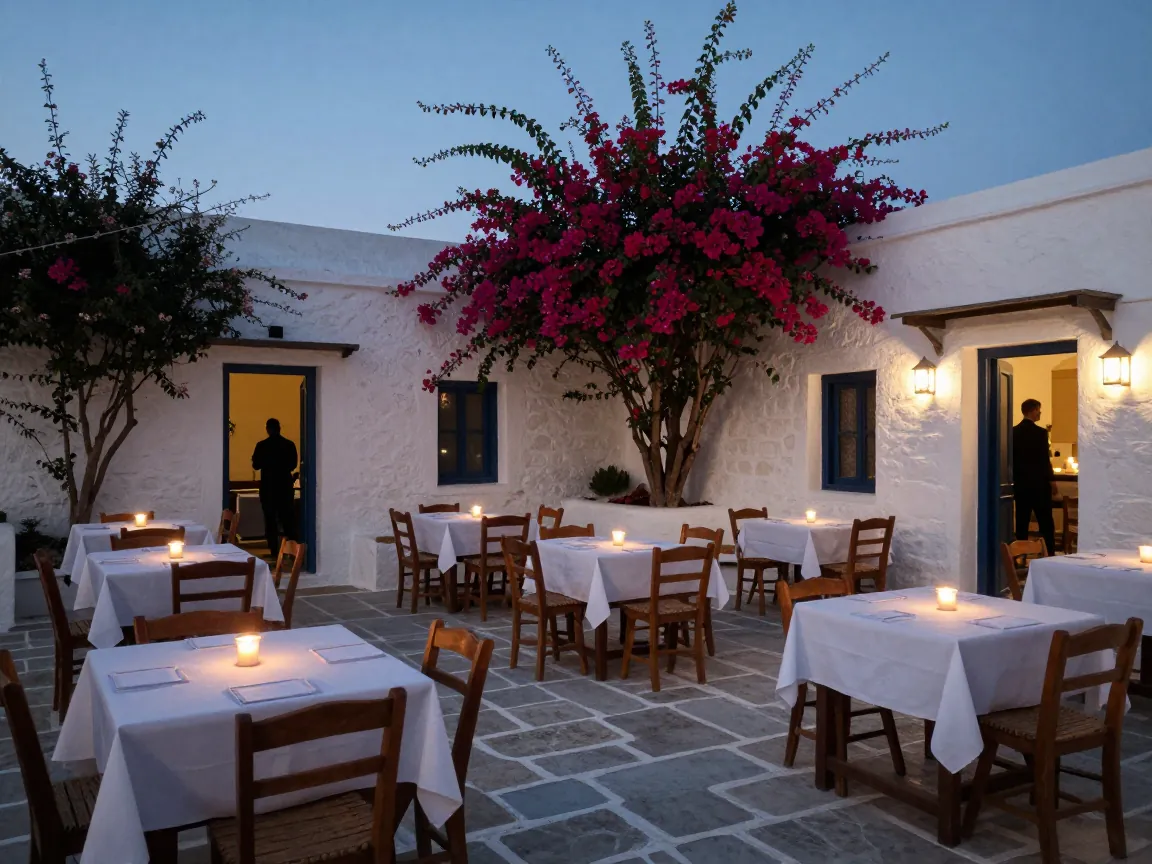
A drone at 7pm is a small aircraft hovering above a dinner. At a private villa, the nearest neighbour may be fifty metres away, so ask the venue whether neighbours have objected to drones before and whether the venue has a buffer rule, such as no flight over adjoining property. At a hotel, the neighbour is a paying guest on a sun lounger. Ask whether the venue will notify guests or whether you should, and if you should, add a line to the welcome note or the ceremony programme.
Guests are the other variable. Some guests will find the drone intrusive, some will duck, some will wave. A short announcement before the flight, made by the MC or the best man, solves most of it. Ask your videographer to keep the drone at a distance that doesn't put it in the faces of people eating, and ask for a single, defined flight rather than a drone that hovers through the whole reception. If you have elderly guests or small children, tell the pilot in advance.
The timing question ties into the rest of the day. Our Greek wedding timeline from church to last dance guide is useful here, because the gap between the ceremony and the reception is usually the cleanest window for an aerial pass, before the light drops and before the dancing starts.
Airspace, restricted areas and who confirms what
Around airports, military zones, ports, archaeological areas and border regions, flying may be restricted or banned. You do not need to memorise the map. You need the operator to confirm the specific location against current restrictions and to tell you, in writing, what they checked. Ask them to name the nearest airport and to state whether the venue falls inside any restricted zone, and ask what their contingency is if the answer is yes: a different launch point, a different time, or no flight.
This is the point where we tell you plainly: confirm current requirements with the HCAA or the competent civil aviation authority, and with the venue, before the day. Rules, zones and registration requirements change, and a blog post, including this one, is not the authority. The HCAA is the body that can confirm what applies to your operator and your location.
A drone pre-check list for the couple or organiser
Print this or paste it into your planning doc. Each line has an owner, because a check with no name attached is a check that doesn't happen.
| Item | Who confirms | What to hold |
|---|---|---|
| Operator registration | Videographer | Certificate or registration number, name matching the pilot |
| Remote pilot competency | Videographer | Document for the person flying on the day |
| Third-party liability insurance | Videographer | Policy summary and amount |
| Venue consent to fly | Venue coordinator | Written confirmation, email is fine |
| Launch and landing point | Venue plus pilot | Named spot, agreed in advance |
| Flight window | You plus pilot | Start and end time, one flight or two |
| Neighbour and guest notice | Venue or you | Welcome note line, MC announcement |
| Restricted area check | Pilot | Written note of what was checked and when |
| Backup plan if grounded | You plus pilot | Handheld shots and a second camera position |
| Raw footage and delivery | Videographer | Who keeps files, for how long, in what format |
Two of these lines deserve more weight than the others. The backup plan is the one that saves the day, because wind, a no-fly call or a last-minute venue objection all end the same way: no drone. Decide now what the aerial shot is replaced with, whether that's a rooftop still, a wide from a balcony or a short walk to higher ground with a long lens. And the restricted area check is the one only the pilot can do properly; your job is to ask for it in writing.
We'd also say this honestly: for many weddings in Greece, the drone is the least important camera in the bag. A good operator with a handheld and a second shooter will often give you more usable footage than a nervous pilot flying over a crowd. If the drone is a nice-to-have, say so to your videographer and let them price it separately. If it's central to your vision, give it the planning time it deserves.
What to send us
Tell us your headcount, your date and the region, and whether aerial footage is essential or a bonus, and we'll point you to venues whose coordinators can answer the drone question directly instead of forwarding your email three times.
Planning questions
Does my videographer need to register in Greece to fly a drone at my wedding?
That depends on where they are already registered. The civil aviation authority's guidance says operators registered in another EASA member state need no extra Greek registration, while those not already registered must register in Greece before flying. Ask for the certificate and confirm current requirements with the authority.
Can the venue stop a drone flight even if the operator is registered?
Yes. Registration is a national matter; permission to fly over private property is the owner's. Get the venue's yes in writing, with a named launch point and time window, and treat a refusal as a shot-list change rather than a crisis.
What should we do if the drone cannot fly on the day?
Fall back to the plan you agreed in advance: handheld footage from a second angle, a still from a balcony or rooftop, or a short walk to higher ground with a long lens. Decide this before the wedding so nobody is improvising during the reception.