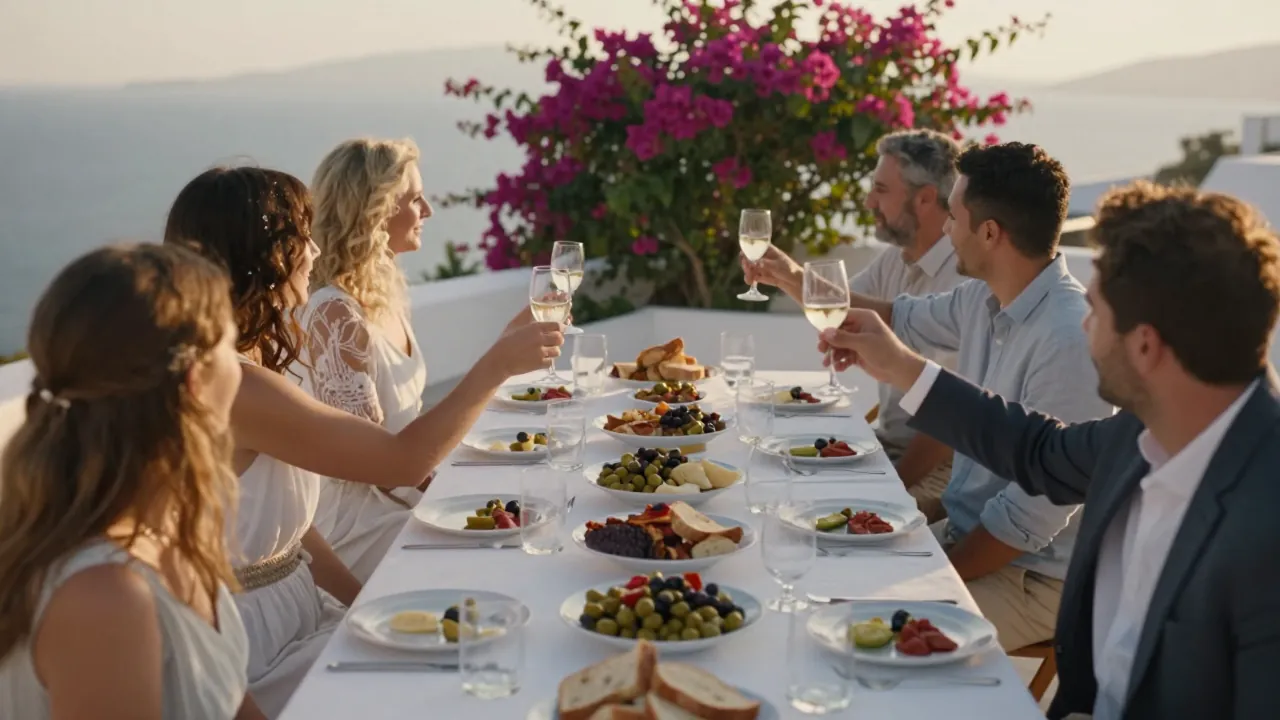
Seated, family-style or buffet: what each one asks of your guests
A seated menu, sometimes called plated service, gives every guest their own portions in a fixed order. It suits a reception where speeches and timing matter, and where you want to know exactly when dessert arrives. The cost is formality: guests stay in their seats, and the room's energy follows the waitstaff.
Family-style service brings large platters to each table and lets guests serve themselves from the middle. It's the closest thing to a Sunday meal at home, and it works when tables are round and eight to ten people can actually reach the dishes. It fails at long rectangular tables, where the far end never sees the lamb.
A buffet is the most flexible and the hardest to time. Guests eat in waves, which is fine when the room has space to move and a bar to absorb the queue. It's the wrong choice when you've booked a tight schedule with a live band starting at a fixed hour.
Our editorial view: buffets are where wedding food is most likely to disappoint. Not because the cooking is worse, but because dishes sit under heat lamps while the last tables queue. If you want buffet service, ask how the venue refreshes hot dishes during service.
Briefing the venue on meze, mains and the Greek dishes you actually want
Meze are the opening negotiation. Ask how many cold and how many hot meze come per table, whether they're served simultaneously or in rounds, and whether the platters are replenished or counted. A venue that answers "as much as you like" without a number is telling you it hasn't costed your menu. Write the counts into the contract: cold meze items per table, hot meze items per table, and the point at which service switches to mains.
For the main course, be specific about what Greek dishes mean to you. Visit Greece describes seafood meze, grilled fish and fish soups served with white wine, ouzo or tsipouro as flavours tied to Greek cultural tradition. If you want that seafood thread running through the reception, say so at the briefing stage, because fish can change kitchen logistics and the price per head.
Ask where the meat comes from, how the lamb or goat is cooked (spit, oven, casserole) and whether the same dish appears at both the meze and the main stage. Repetition is an easy trap, and it happens when nobody wrote the full menu in one document.
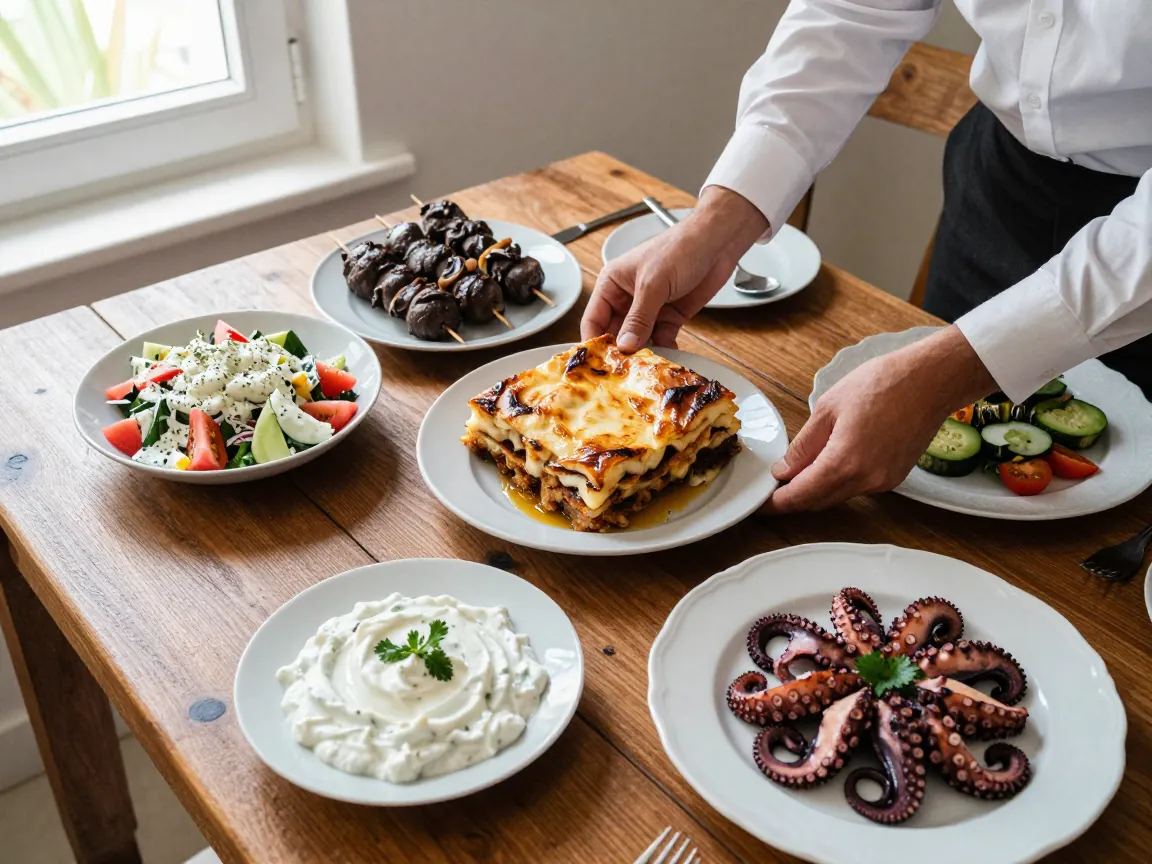
Fasting guests, vegetarians and the Lent calendar
Greek wedding food planning has to answer a question that planners elsewhere may never face: which guests are fasting, and on which days. Fasting practice varies by person and by parish, so don't guess. Ask guests directly on the RSVP, with a line like "Do you fast? If yes, which foods should we avoid for you?" That single question prevents the worst outcome, which is a fasting guest eating bread and olives while everyone else has lamb.
If your date falls in Lent or another fasting period, send the venue your guest count for fasting meals at the same time as the main count. For a fuller picture of what Lent means for event catering, our guide to fasting menus for events during Lent walks through the calendar and the questions to ask.
Build the vegetarian and vegan count from the same RSVP question rather than sending a second one, but keep it as its own number. Ask how the venue plates a fasting main: as a composed dish, or as side dishes assembled on a plate. The first reads as a choice; the second reads as an apology. On religious practice, confirm current requirements locally with the parish, municipality or the venue, since fasting norms aren't uniform across Greece.
Children at the table and food after midnight
If a meaningful share of your guests are parents, the children's menu deserves its own brief. Ask for a smaller portion of the adult main rather than a separate fried-food list, set the serving time earlier than the adult courses, and decide whether children eat at the table or at a separate setup. Our planning notes on children at a Greek wedding cover the table logistics in more detail.
Late-night food needs its own line in the brief. The question to put to the venue is simple: what is served after the cake, at what hour, and is it included or added? Possible answers include a tray passed on the dance floor or a station set up at the side. Confirm the timing against your band's last set, because food that arrives after guests have started leaving is money spent on nothing.
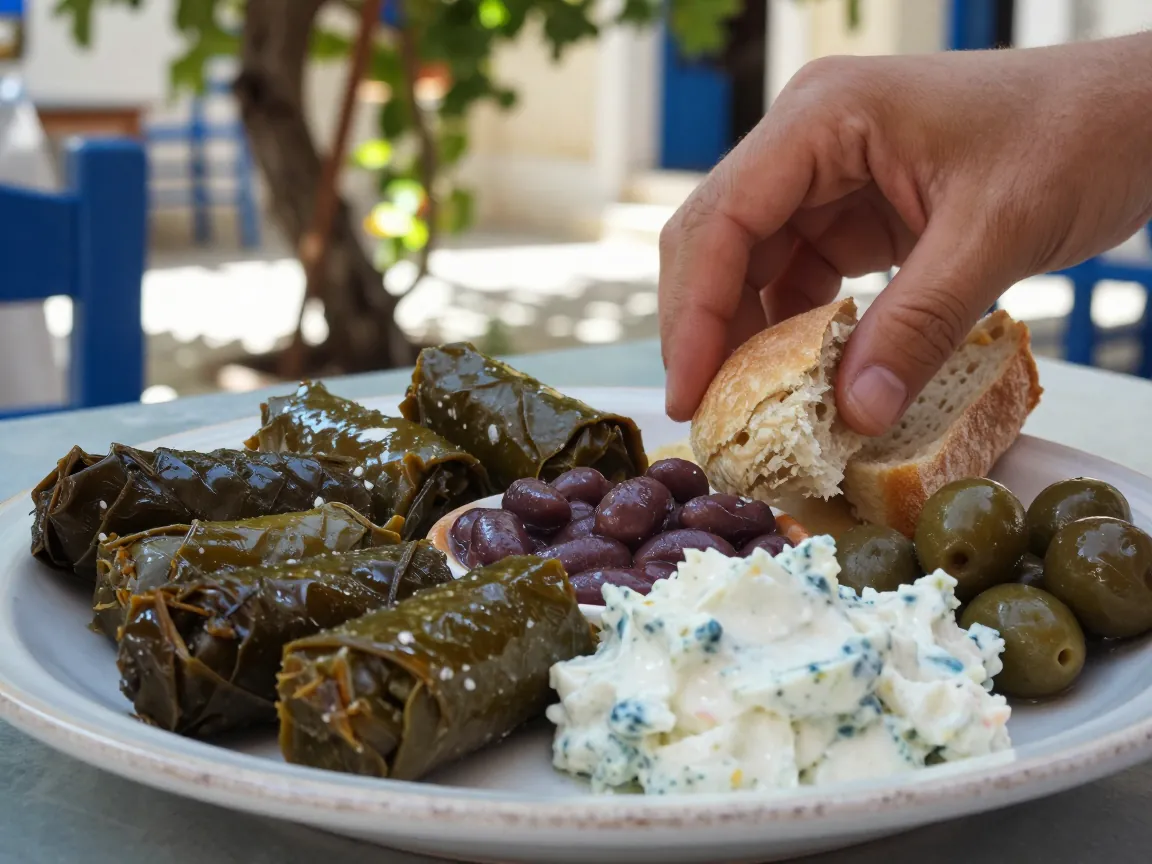
What a tasting must settle before you sign
A tasting isn't a nice dinner. It's a working session with a list of decisions that must be closed before you sign. Book it for a weekday if the venue offers the choice, since you'll get the chef's attention rather than a Saturday-night kitchen in full service.
Bring your own brief to the tasting, not just an appetite. Taste the dishes you've actually chosen, in the service style you've actually booked, and ask what changes between the tasting portion and the wedding portion. Then use the table below as your menu brief, and take the completed version to any reception and banquet halls in Greece you're still comparing. We'd fill this out before the tasting and amend it during, so the venue leaves the room with one signed page rather than a conversation.
| Menu brief item | What to write |
|---|---|
| Service style | Seated, family-style or buffet, plus the reason in one line |
| Meze stage | Cold items per table, hot items per table, served in how many rounds |
| Main course | Protein, cooking method, whether it repeats a meze dish |
| Fasting count | Number of fasting guests, and the plated fasting main |
| Vegetarian count | Number, kept separate from the fasting count |
| Children | Number, portion style, serving time |
| Late food | Dish, hour, included or added, service point |
| Drinks | Wine, ouzo or tsipouro brands, and what is poured at the table |
| Tasting date | Date, time, attendees, dishes to be tasted |
The brief doubles as your negotiation document. If the venue proposes a substitution after the tasting, you can point to the line it changes and ask what else moves with it.
Questions to send the venue before the tasting
Send these in writing and ask for written answers, because verbal menu promises dissolve between the sales meeting and the kitchen.
- How many meze items per table, cold and hot, and are they replenished?
- What's the plated fasting main, described as a dish rather than a list of sides?
- When is children's food served relative to the adult courses?
- What late food is included, at what hour, and where is it served?
- Which dishes are prepared on site and which are brought in?
- Who is the chef on our date, and will they be at the tasting?
If you want to compare venues on these answers, tell us your guest count, date and the service style you're leaning toward, and suitable venues can respond with a menu proposal built around your brief.
Planning questions
Which service style works best for a Greek wedding reception?
It depends on your room and your schedule. Round tables and a relaxed pace suit family-style platters. Speeches and fixed timings suit seated service. Choose buffet only if the venue can refresh hot dishes and you have space for guests to queue.
How do we handle fasting guests without a separate menu fuss?
Ask on the RSVP whether each guest fasts and which foods to avoid, then send the venue the fasting and vegetarian counts together with the main count. Ask how the fasting main is plated as a composed dish, so it reads as a choice rather than an afterthought.
What should we bring to a menu tasting?
Bring the completed menu brief: service style, meze counts, main course, fasting and vegetarian counts, children, late food and drinks. Taste the dishes you booked, ask what changes for the wedding portion, and amend the brief before you sign.