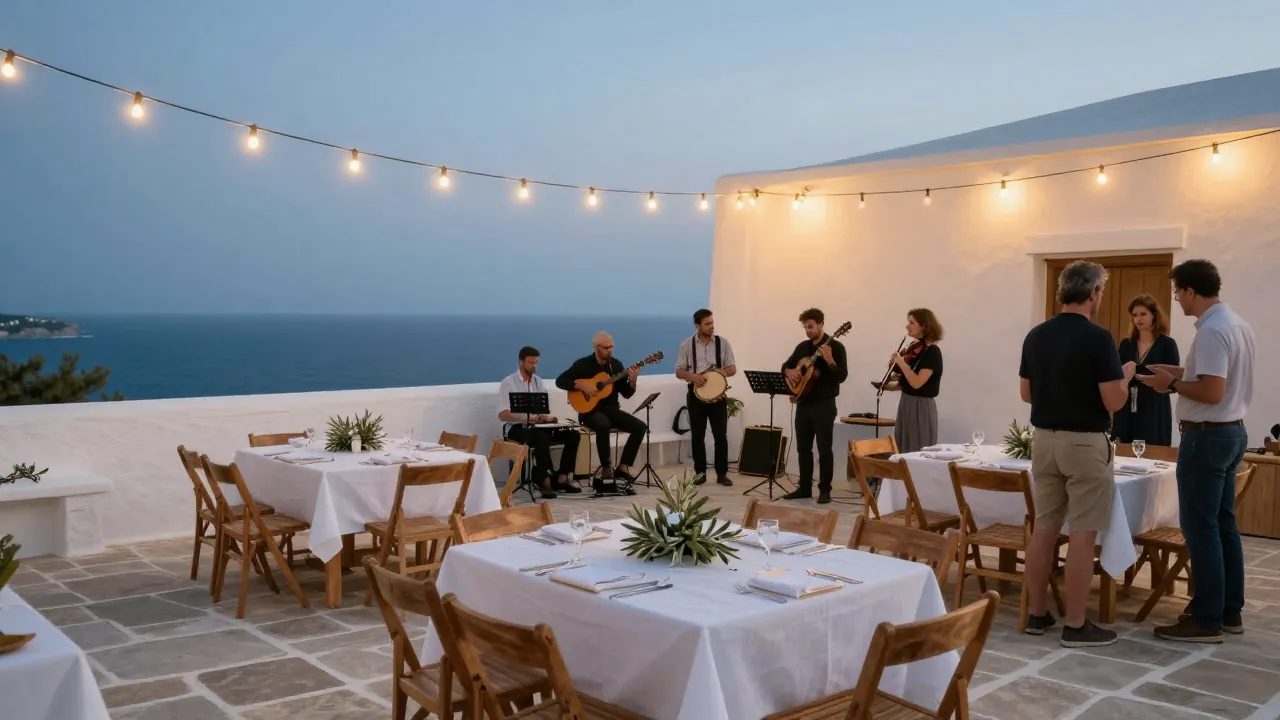
Why the music hour varies from one address to the next
Music hours are not uniform across Greece. They can depend on the municipality, the venue's own licence, zoning and how close the nearest homes are, so two neighbouring venues may work under different conditions. Add a listed church next door, or a neighbour who calls the police at midnight, and the same band contract can produce two very different evenings.
There's a cultural layer too. Some island towns treat summer music as an economic engine and a nuisance at once. Syros is the capital of the Cyclades, and Visit Greece notes that Ermoupoli hosts the International Classical Music Festival of the Cyclades. Music is part of island life, but a private wedding party is its own case. Don't assume a beach club's licence covers a private party on the sand; ask what it actually covers.
One honest concession: no directory, ours included, can tell you what your specific municipality will permit on your date. The listing descriptions in our directory state what a venue offers, not what its licence allows at 1 a.m. That question belongs to the venue and the municipality, which we come to below.
The three numbers to put in writing before you sign
When you tour a venue, ask for these in the contract itself, not in a WhatsApp reply:
- Amplified music cut-off, outdoors. The exact hour, per day of the week if it changes on Fridays and Saturdays.
- Sound limit. Whether the venue's licence caps decibels at the property line, and who measures it.
- The indoor move. The time by which the party must physically relocate inside, and whether the indoor space has a different cut-off.
If the answer is "we'll see on the night", treat it as no. Bands, DJs, and sound engineers need a hard stop to plan set lists; your guests need to know whether to book a late taxi. A clause that reads "amplified music outdoors until 23:00, thereafter indoors until 02:00, sound limited per the venue's current licence" is worth more than any verbal reassurance.
What the clause should say, and who confirms the hours
A workable clause names five things: the hour, the location (outdoor terrace, pool deck, beach), the sound limit and its measurement point, the indoor fallback with its own end time, and the consequence if the venue's licence is suspended or amended before your date. That last point matters, because licences get reviewed. If the venue can't guarantee the same terms after a renewal, you want the option to renegotiate or walk.
For the regulatory side, confirm current requirements with the competent authority, which for music and noise usually means the municipality, and check the venue's own permit conditions. If the ceremony is at a church near the venue, ask the parish about timing too. We keep this deliberately vague on numbers, because statutory thresholds and penalties change and vary by place; anyone quoting you a precise decibel figure as national law is guessing.
A venue that already plans for the indoor move
Ktima Vlachogianni Estate, in the Paiania area of Attica, is a useful example of how the indoor option shapes the programme. According to its listing, the estate includes an indoor event hall, The Seasons Lounge, seating 300 guests, and audiovisual planning and production at the estate are handled by Pulse Audio Visual, a specialist production company. For a couple planning a late finish, that matters: the Ktima Vlachogianni Estate listing shows a dedicated indoor hall and one named production company, the structure you want if the party may need to move inside without changing suppliers mid-evening. We're not calling it recommended or verified; we're pointing out the structure to look for.
When you shortlist, ask each venue the same way: where does the band play at nine, where at midnight, and who decides. Then ask the practical follow-ups for any indoor move: who carries the band's equipment, whether the indoor room is already set when guests walk in, and who tells the guests it's time to move, so the party doesn't stall while chairs are carried.
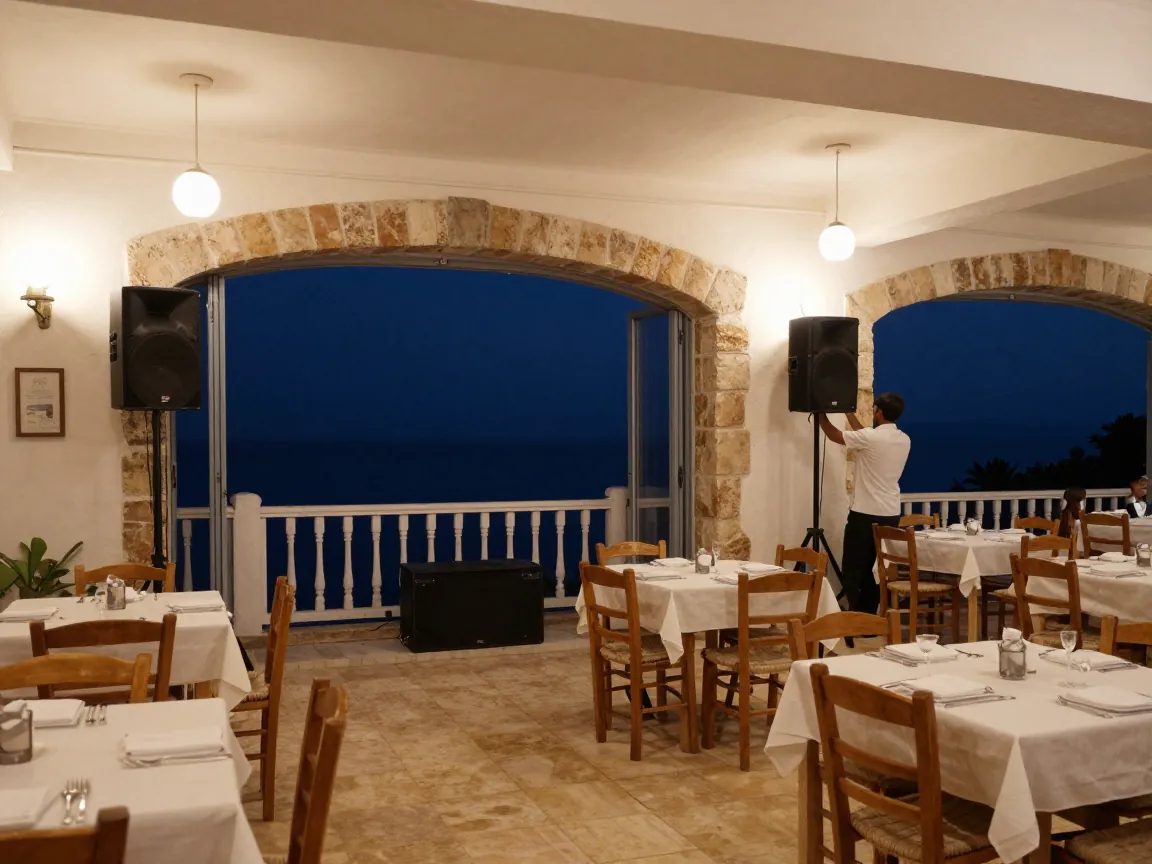
Music and noise clause checklist
| Item | What to ask | What good looks like in the contract |
|---|---|---|
| Outdoor amplified cut-off | Exact hour, weekends vs weekdays | A stated time, per day, with no "subject to" |
| Sound limit | Decibel cap and measurement point | The licence reference and who measures |
| Indoor fallback | Time of move and indoor end time | Both times named, indoor space identified |
| Live band vs DJ | Whether limits differ by setup | Same clause covers both, or both are listed |
| Licence change | What happens if the permit is amended | Renegotiation or exit right for you |
| Confirmation | Who confirms current rules | Municipality licensing office and venue, in writing |
Two adjacent planning decisions usually sit alongside this one. If your reception includes a seated dinner, the menu has to work across dietary requirements and service pace, which we cover in our guide to making a Corfu reception menu function for every table.
Where your guests sleep shapes how late the party can realistically run. That's the argument in our note on choosing a Crete wedding guest base before you fix the venue.
What to send us with your enquiry
When you write to venues, lead with the facts that decide the music question. Give your headcount, your date, and the shape of the evening you want: dinner and dancing until two, or vows at sunset and everyone in bed by midnight. Add whether you want a live band, a DJ, or both, because some licences treat them differently. Say whether the ceremony is in a church or at the venue, since that changes the parish conversation and the timing of the reception. Mention if you need the indoor space regardless of weather, and whether you'd accept an earlier outdoor cut-off in exchange for a better setting. A specific enquiry is easier to answer honestly than a general request for availability, and you'll spot the ones who can't name their own cut-off hour before you've paid a deposit. Send us your headcount, your date and the style of evening you want, and we'll point you to venues whose listings match that shape.
Planning questions
Can the venue change the music cut-off after we book?
Only if your contract allows it. Ask for the outdoor cut-off, the indoor fallback and the sound limit written as fixed terms, plus a clause covering what happens if the venue's licence is amended before your date.
Do we need a separate permit for a live band?
Sometimes. It depends on the municipality, the venue's existing licence and the setup. Ask the venue what its permit covers and confirm current requirements with the municipal licensing office before you finalise the band contract.
How do we plan the evening around an early music stop?
Front-load the programme. Put speeches, first dance and the band's loudest sets before the cut-off, then move indoors for the late hours. Confirm the indoor space's own end time and whether your suppliers can work there.