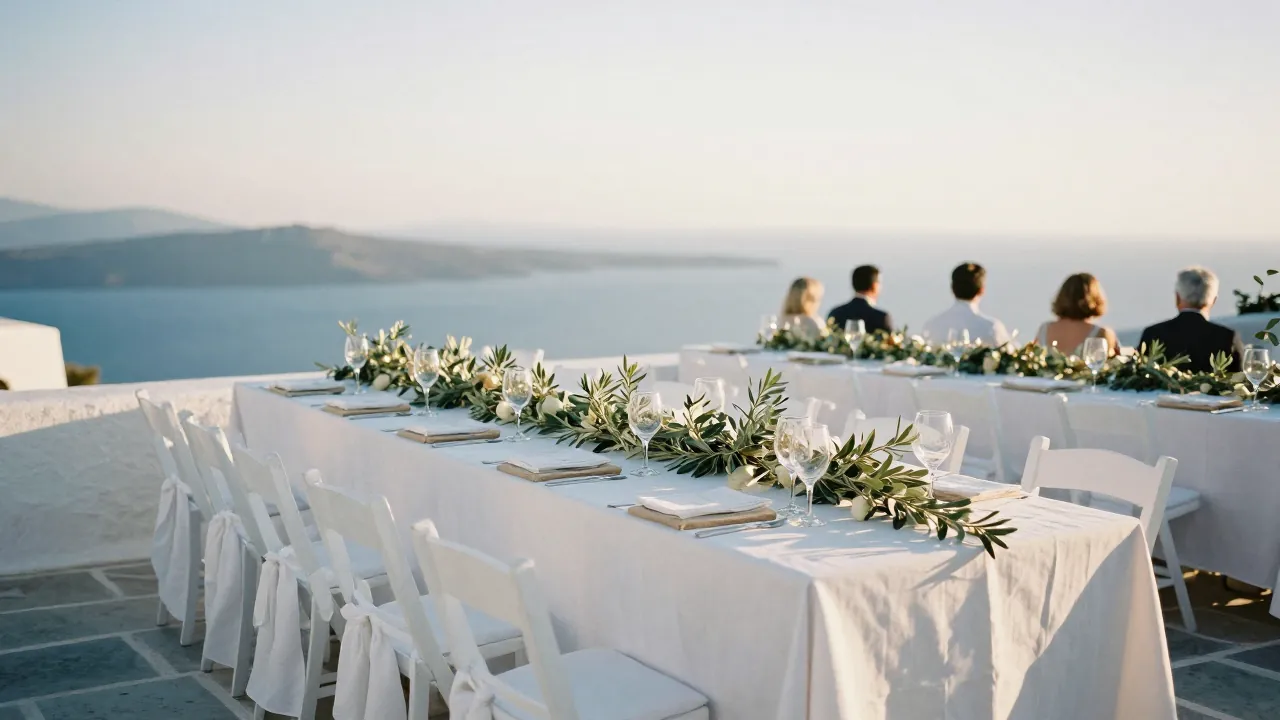
Start with the church, because it sets the clock
Everything downstream depends on when the service ends, not when it starts. Greek Orthodox wedding services commonly run longer than the printed invitation suggests once you count the procession, the readings, the crowning and the greetings afterwards. Guests linger in the church yard, photographs happen, and the couple's car leaves last. Build in a gap you can defend.
One detail worth confirming with your priest early: the Greek Orthodox Archdiocese of America explains that non-Orthodox guests may stand in the wedding party but do not exchange the rings or crowns. If you're marrying in Greece and some of your party isn't Orthodox, ask your parish how that practice applies locally. Same rule for timing: parish, priest and registry office confirm what's possible, so don't treat any online schedule as settled.
If a baptism is being folded into the same weekend, the sequencing gets tighter still. Our guide to one celebration, two ceremonies walks through how to brief a venue when the guest list is doing double duty. Keep the church-to-venue gap short on paper and long in practice. Guests who drive themselves need parking, and guests who don't need a coach that leaves when you say it will. Ask the priest for a realistic end time in writing, and ask the venue what happens if you arrive late.
Arrival, welcome drinks and the first hour at the venue
The arrival hour is where venues and couples most often disagree, because it's the hour nobody has costed. Ask the venue three things before the wedding: when their clock starts (arrival of the first guest, or the contracted start time), whether welcome drinks are served inside or outside, and who decides when the music can begin.
If your venue runs 24 hours, this is mostly a non-issue. The Kozani caterer Catering To Koutouki is open every day around the clock according to its listing, which removes the classic risk of an arrival that eats into paid hours. Most venues aren't like that, so get the closing time in writing, along with the last hour for amplified music.
Welcome drinks overlap with the photographs, and that stretch is when the couple is least available to make decisions. Nominate someone else to confirm with the kitchen that dinner can be delayed by fifteen minutes if the church ran late. Give that person the venue manager's mobile number, not the planner's.
Dinner service, speeches and the order of the tables
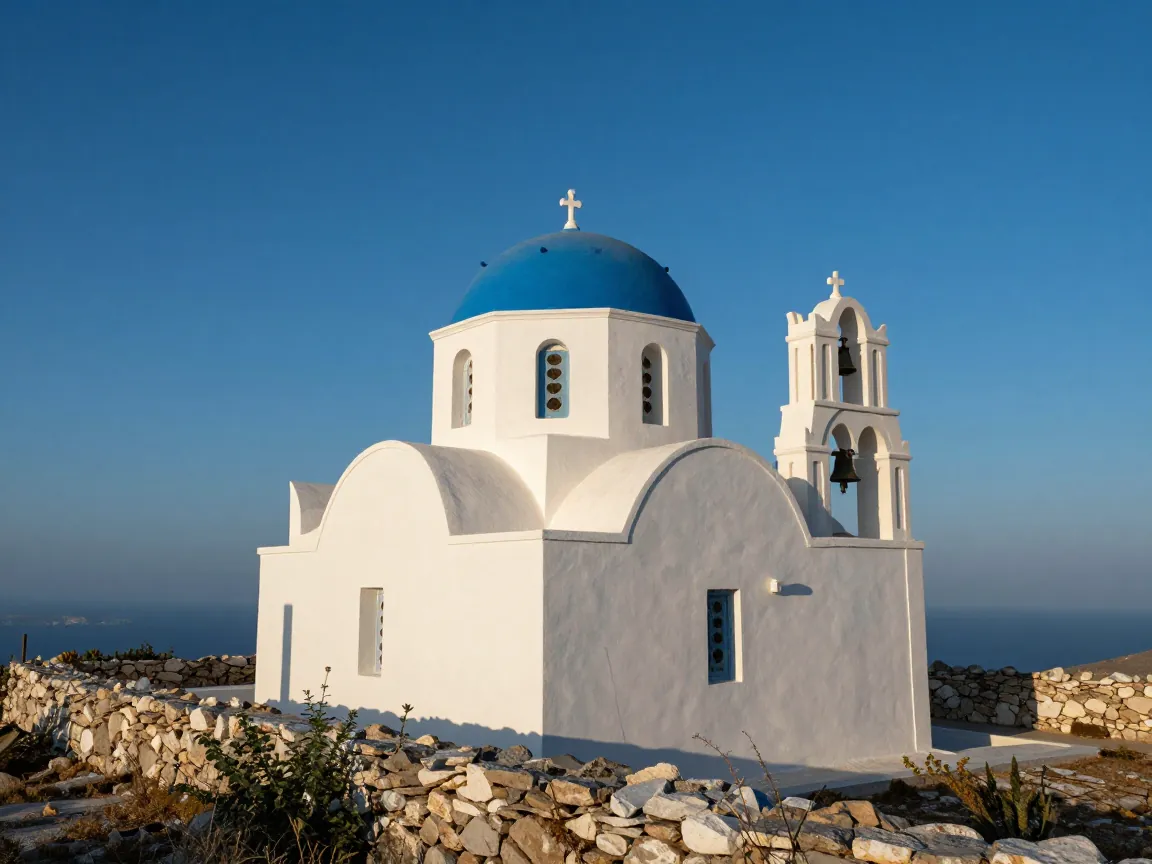
Sit-down dinner is the part of the night with the least flex. A plated service for 120 guests takes time whatever anyone promises, and speeches placed between courses stretch it further. Our view: put the speeches after the main course and before dessert, not during it. Guests eat, then listen, then eat again.
Buffet changes the shape of the evening rather than shortening it. Guests queue, the queue becomes a social event, and the second sitting overlaps with the first round of dancing. If you want dancing to start at a fixed time, plated service gives you more control. If you want a looser night, buffet suits that better.
The menu itself can quietly wreck the timeline. A dish that needs last-minute assembly for every table can push dessert well past the plan. Our piece on how a Corfu reception menu should work for every table sets out the test we'd apply anywhere in Greece: can the kitchen deliver the same plate to table one and table twelve at the same temperature? Ask the caterer that question directly, and ask which dishes they'd drop if the service runs late.
A run-of-night template you can fill in
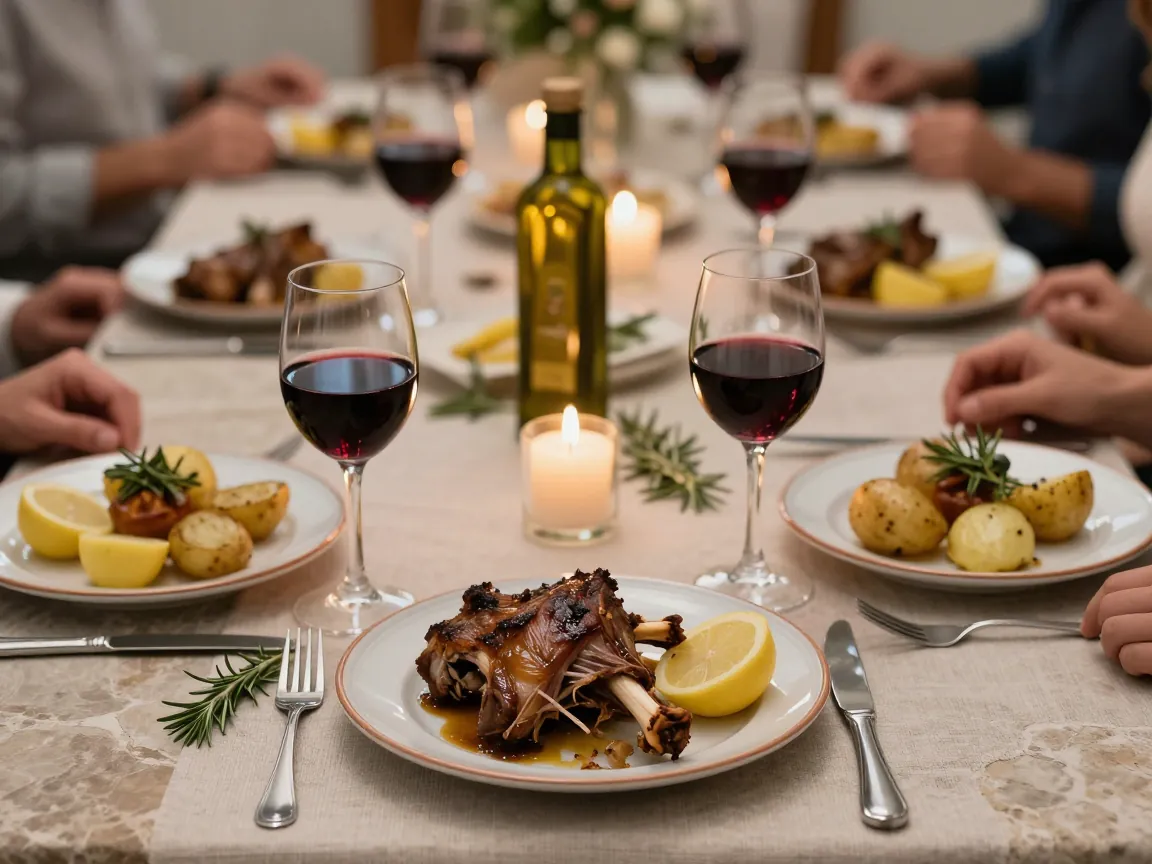
Use this as a working draft, not a schedule. Every time in the fourth column is a blank to be completed from the venue's contract, and the guest count is an example only.
| Phase | What happens | Who owns it | Venue's actual time |
|---|---|---|---|
| Church | Service, crowning, greetings, photographs | Couple and priest | ______ to ______ |
| Transfer | Guests move to venue, parking or coach | Best man or planner | ______ to ______ |
| Welcome | Drinks, canapes, couple's arrival photos | Venue front of house | ______ to ______ |
| Dinner | Guests seated, starter, main | Banquet manager | ______ to ______ |
| Speeches | Father of the bride, best man, couple | MC | ______ to ______ |
| Cake | Cutting, dessert service | Venue and couple | ______ to ______ |
| Dancing | DJ or band, first set | Band leader | ______ to ______ |
| Last orders | Bar closes, music ends | Venue manager | ______ |
| Departure | Guests leave, suppliers strike | Planner | ______ |
Two blanks cause the most trouble. "Music ends" is not the same as "venue closes," and "bar closes" is not the same as "last orders." Write all three into the contract and check them against what the venue actually does at other events. Fill the sheet in with the venue manager present, not by email afterwards.
Cake, dancing and the hours that quietly run out
Cake cutting usually happens after the speeches and before the dancing properly starts, though some couples cut it late and serve it with the coffee. Decide which you want, because it changes when the kitchen needs the cake ready and whether the band plays through it or pauses.
The end of the night has three separate clocks: amplified music, alcohol service, and the venue's own closing time. They rarely fall at the same hour. Ask for all three in writing, and ask what the venue's practice is if guests are still dancing at the music cut-off. Some venues extend, some don't, and you want to know which before you've promised your guests a party until dawn.
Be realistic: no template survives a Greek wedding intact. A late priest, a coach stuck in traffic, a band that plays well past its agreed set, and the tidy run sheet becomes a set of intentions. That's fine. What matters is that you know which parts can move and which can't, and that the venue manager knows it too. Print the sheet, hand copies to the MC, the band and the banquet manager, and agree who calls each change on the night.
Tell us your date, your headcount and your church time, and venues on our directory can come back with what their hours allow rather than what a generic package assumes.
Planning questions
How long after the church service should the reception start?
Leave a generous gap between the end of the service and the guests' arrival at the venue. That covers greetings, photographs and the transfer. Confirm the gap with your priest and your venue manager, since both affect when dinner can realistically be served.
When should we cut the cake during a Greek wedding reception?
Many couples cut it after the speeches and before dancing begins, so the kitchen can serve dessert alongside coffee. If you prefer a later cut, tell the venue in advance so the cake is stored and the service staff are briefed.
What venue hours should we get in writing for the reception?
Ask for three separate times: when amplified music must stop, when the bar closes, and when the venue itself closes. These rarely fall at the same hour, so having all three written into the contract prevents end-of-night surprises.