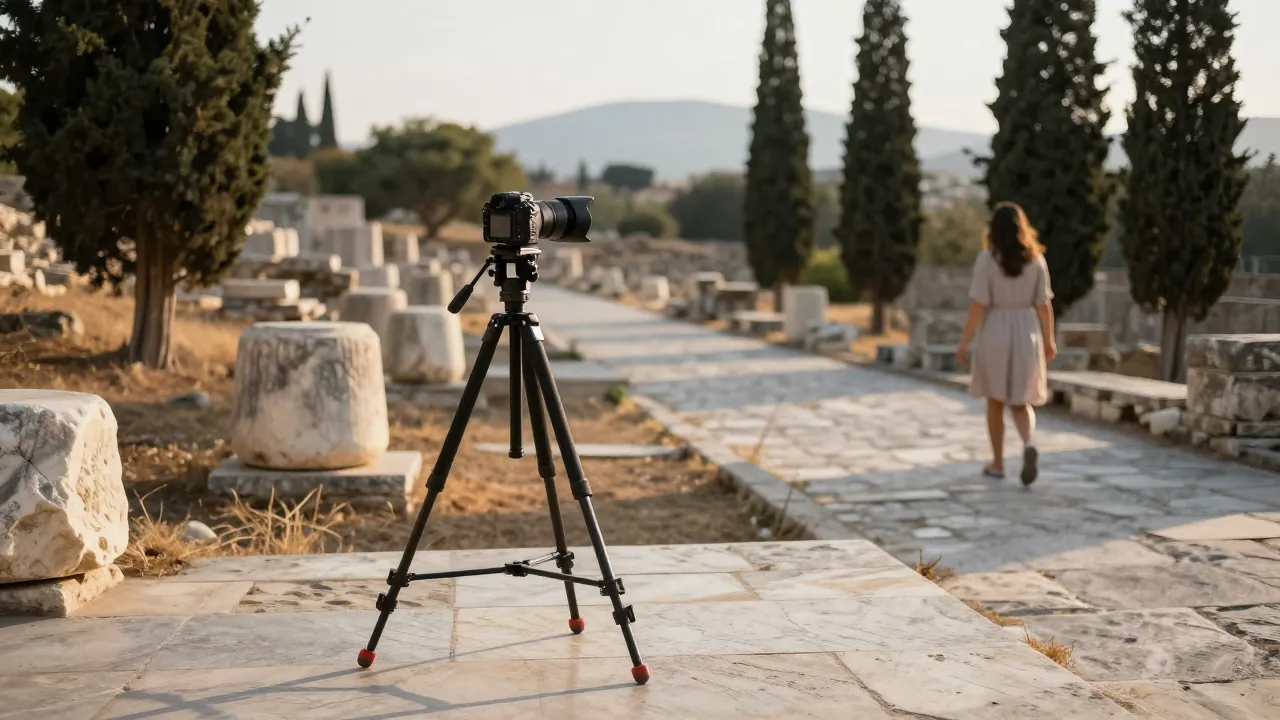
Who actually grants permission for a shoot on a monument
The Hellenic Ministry of Culture publishes the application forms for permission to photograph, and to film or video record, in museums, monuments and archaeological sites (Hellenic Ministry of Culture). That is the starting point. The Ministry is the competent authority for state-run sites, but the office that handles your particular site may be a regional ephorate, and the form you need may depend on the nature and purpose of the shoot. A wedding portrait session with a paid photographer is not the same category as a tourist taking a phone snapshot. Ask the site's own office which category applies, what the current fee schedule is, and how many working days before the shoot the file must arrive. We can't quote a deadline or a fee here because those change and we don't publish numbers we can't verify. One plain rule: confirm current requirements with the competent authority before you print a single invitation with a location on it.
If the site sits inside a municipality with its own rules on tripods, drones or after-hours access, the municipality confirms that layer. If it's a church or monastery, the parish or the metropolitis confirms it. When a foreign body such as an embassy or the Greek Orthodox Archdiocese of America describes a practice, treat that as useful context and still confirm locally with the parish, municipality or registry office.
The location sheet we hand to couples and producers
We use a one-page sheet with the permission column as the spine. Fill it in before you finalise the schedule, and keep a scanned copy with the photographer's contract.
| Location | Site status | Who grants permission | Application filed on | Approval received | Fallback location | Shoot window |
|---|---|---|---|---|---|---|
| Acropolis / Parthenon area | State archaeological site | Ministry of Culture or regional ephorate | ||||
| Ancient agora or temple site | State archaeological site | Ministry of Culture or regional ephorate | ||||
| Byzantine church or monastery | Religious site | Parish or metropolitis, plus any state layer | ||||
| Municipal square or promenade | Municipal public space | Municipality | ||||
| Private venue terrace | Private property | Venue management | ||||
| Hotel rooftop or garden | Private property | Hotel management |
The column that tends to stay empty longest is "application filed on." That's the one to deal with first. A shoot window without a filed application is a wish, not a plan.
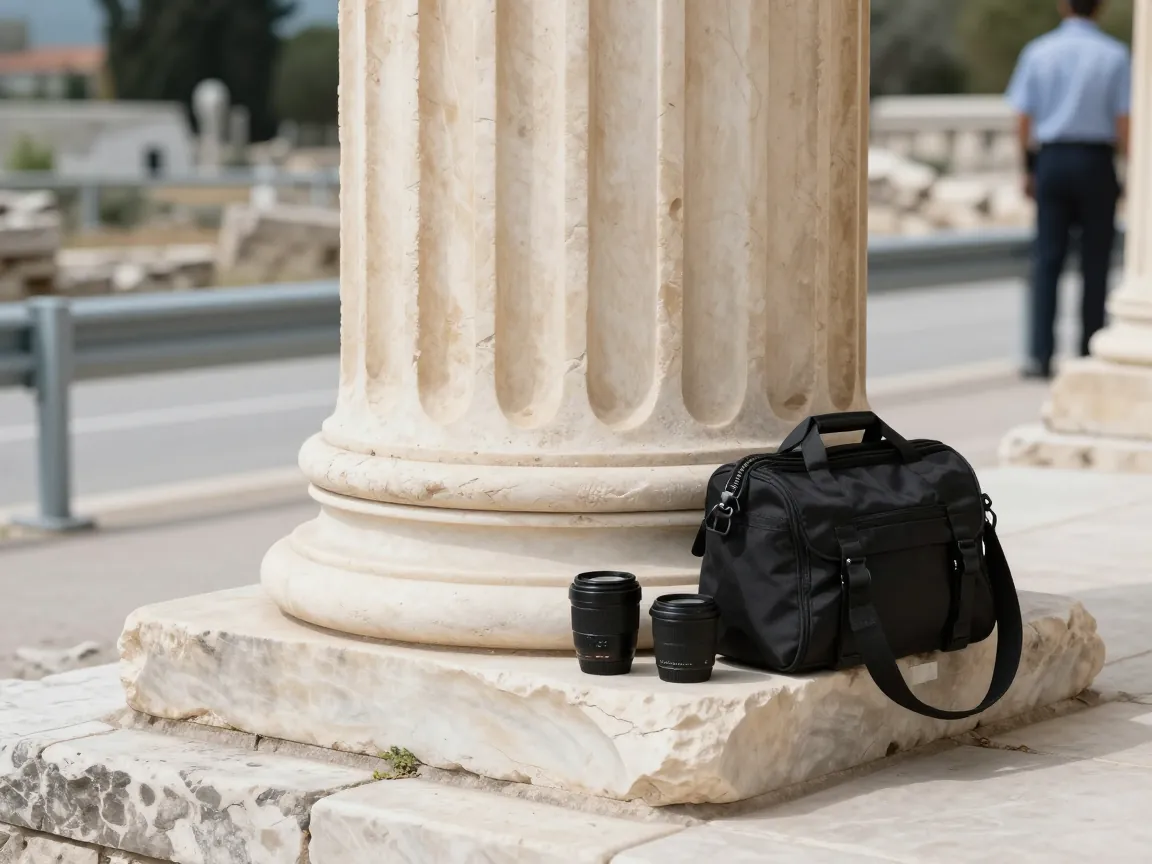
Alternatives near the site that don't need a state permit
Not every photograph has to be taken inside the fence. The neighbourhood around a major monument often gives you the same visual signature with a far shorter permission path. Rooftop bars, hotel terraces, pedestrian streets, and private gardens can all frame a monument in the background. The trade-off is honest: you'll get context, not the close-up on the marble. For couples who want the close-up, the answer is the permit, filed early. For couples who want a calm, unhurried shoot without paperwork, the alternative is often the better wedding day.
Hireable historic venues inside Athens can carry their own photographic value. Zappeion Megaron is listed as a conference center and tourist attraction on Vasilissis Olgas Avenue in Athens, built in the 1880s for the first modern Olympic Games. Its listing says opening hours are Monday to Friday, nine to five, closed on weekends. Check the record directly for what a shoot there would require, because the listing does not state photography terms. A mansion-style building with historical rooms is a different proposition from a rocky archaeological hill, and it comes with a venue contact rather than a ministry form.
What a corporate or brand shoot adds to the checklist
A brand shoot introduces variables a wedding doesn't. Models, assistants, reflectors, a client watching on a monitor, and sometimes a generator. Each of those is a reason a site office will ask more questions. If your shoot is part of a larger event, the production-day logic in our guide to a winery event's production-day plan applies here too: one document, one owner, one filing date.
For summer shoots, the heat and shade planning in our note on a summer company party's shade plan is worth reading before you pick a call time. Midday on a marble site in July is a working condition, not a backdrop. When you brief a photographer, ask three questions in writing. Who files the permit, us or you? What happens to the deposit if the permit isn't granted in time? What is the fallback location, already scouted? A photographer who has shot on Greek archaeological sites before will have a standard answer. A photographer who hasn't may assume tripods and reflectors are fine. Don't assume anything; ask the site office, because discovering a restriction on the morning costs the shoot.
Matching the shoot plan to the reception plan
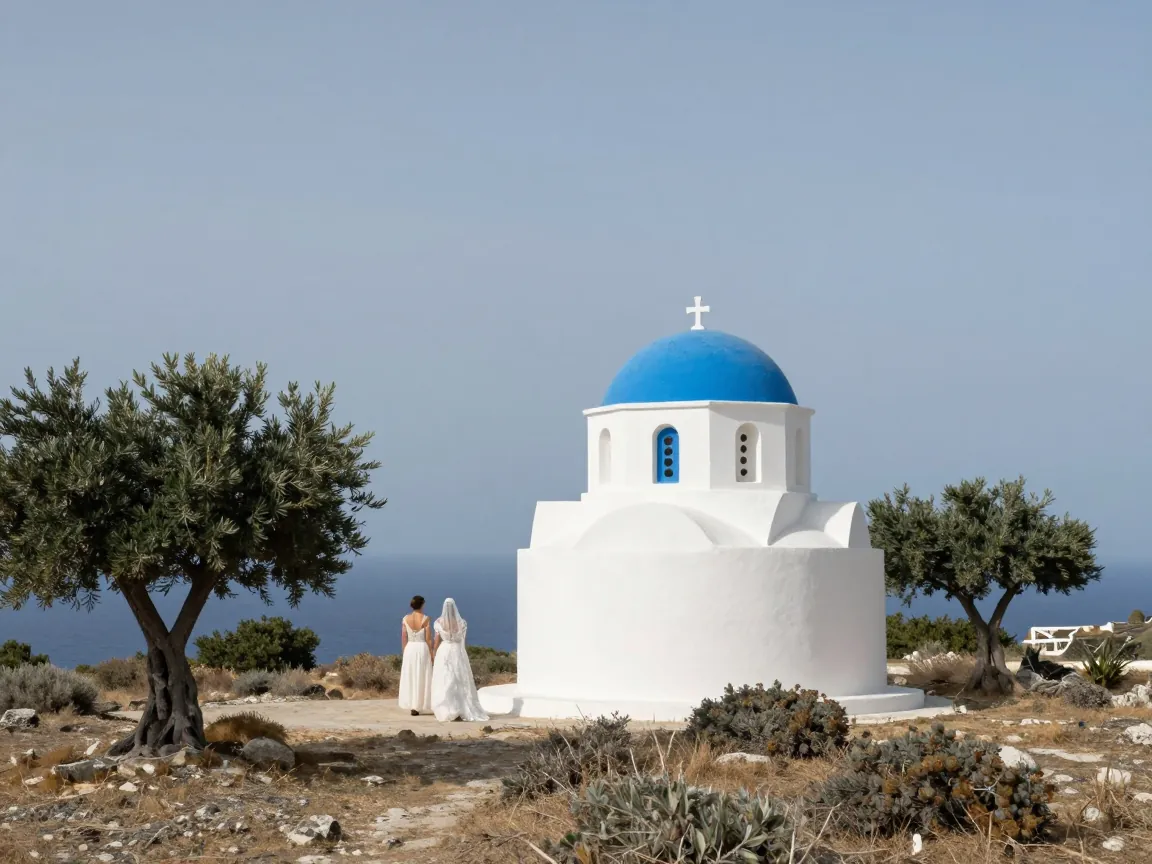
The reception venue and the photo location should be decided together, not in sequence. If your ceremony is at a church with a marble courtyard, that courtyard may already be your best photo location, with the parish's agreement rather than a state permit. If your reception venue has a terrace with a view of a monument, that terrace may carry the shot. Build the day so the photographs happen where you already have permission, and treat the archaeological site as a bonus if the paperwork lands in time. That way a delayed permit doesn't undo the wedding album. It just changes one page of it.
Before you lock the timeline, check whether the shoot depends on a monument interior or only a view of one. The first needs the ministry file. The second usually needs a venue contact and a scouted street corner. Decide which one your album actually requires, and put the permission column in front of the photographer before the deposit clears. Ask the photographer to sign off on the fallback location in the same email that confirms the booking, so nobody is improvising on the morning.
Tell us your headcount, date and whether the plan depends on a monument interior or a view of one, and we'll point you to venues and locations that fit the plan you can actually execute.
Planning questions
Do we need permission for wedding photos at the Acropolis?
Yes. State archaeological sites are managed by the Ministry of Culture, which publishes application forms for photography and filming. Contact the site office or regional ephorate to confirm the current category, fee and filing deadline before you commit the shoot to your schedule.
What if the permit doesn't arrive before the wedding day?
Have a scouted fallback location ready. A church courtyard, private terrace or pedestrian street with the monument in the background usually needs no state permit, though the parish, municipality or owner may still need to agree. Decide the fallback before the wedding, so the photographer knows where to go if approval is delayed.
Can a private venue replace the archaeological site for photos?
Often yes. A hireable historic building such as Zappeion Megaron gives you period architecture and a venue contact to deal with. Its listing doesn't state photography terms, so ask the venue directly what a shoot there would require before you plan around it.