Corfu Town: ceremony, photos and the walk between them
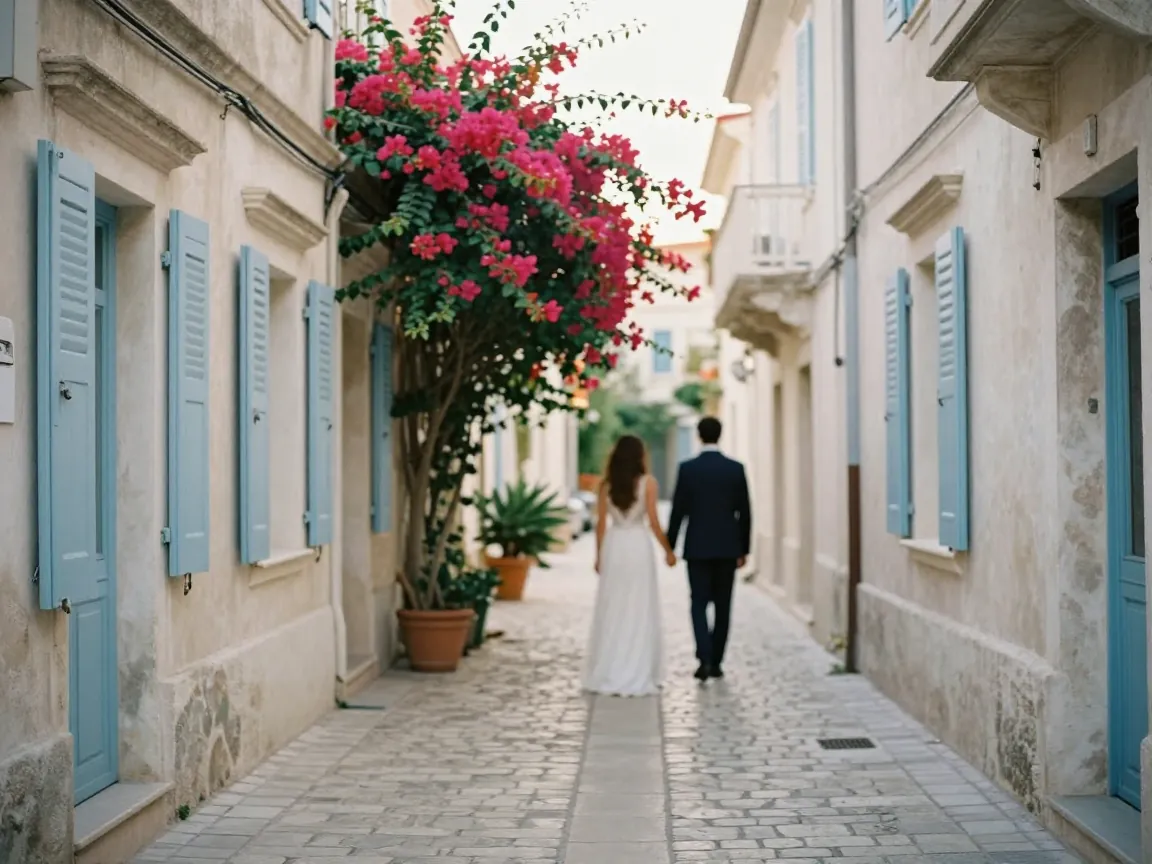
A town wedding is the easiest to sell to guests and the hardest to schedule tightly. The old town rewards a couple who wants architecture, a short walk to dinner, and a bar for the after-party that does not need a minibus. It punishes anyone who schedules a tight car transfer between two points in the centre on a summer Saturday evening.
So build the day around walking distance. Pick a ceremony point, a photo route, and a reception room inside one compact area, then give guests a written note with three named landmarks rather than a pin drop. Ask the venue or your planner what the parking situation is on your date, whether the street outside has any restriction, and from what hour the music has to come down. Ask too whether the bride's car can reach the ceremony door at your chosen time, or whether the last stretch is on foot.
The upside is real. Guests can sleep, eat and dance without a vehicle, which matters if, say, a quarter of your list is over seventy. The downside is that a town setting usually comes with a fixed room, a fixed finish time, and neighbours who were there before you were.
Coastal hotels: the one-contract option and its clock
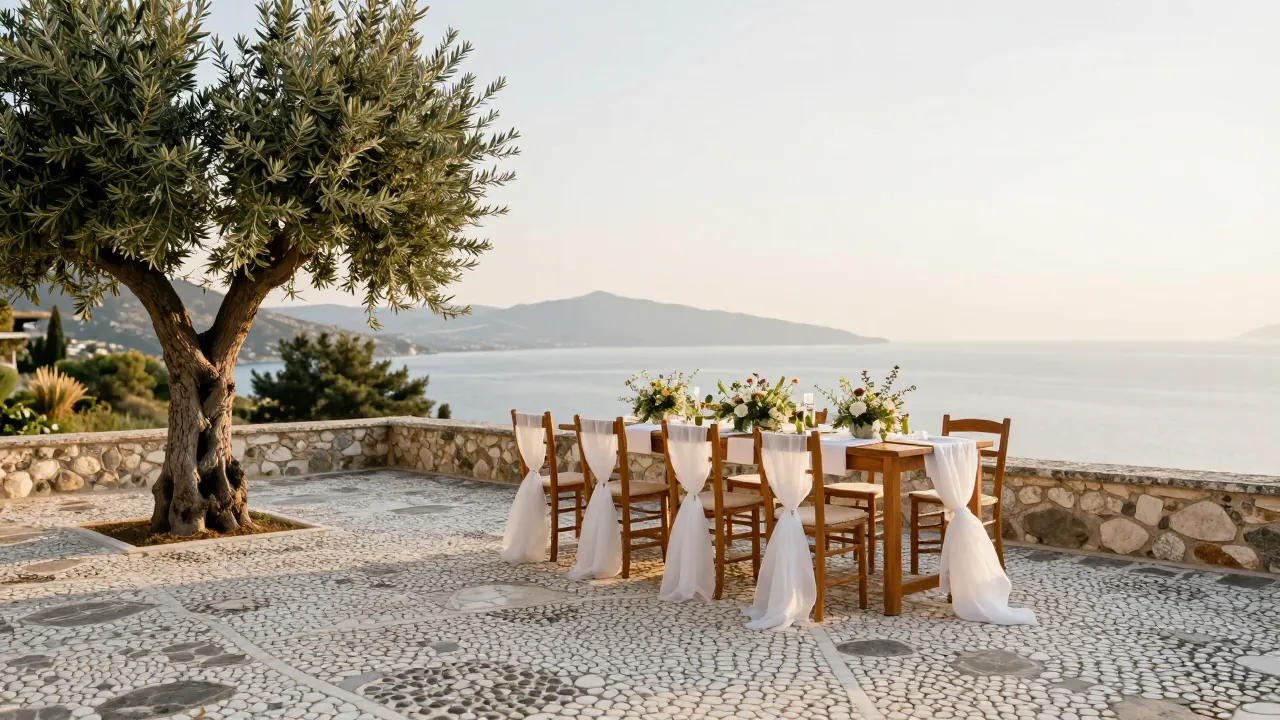
A coastal hotel is the setting most international couples picture: ceremony on the property, dinner on the property, rooms upstairs. It reduces the number of suppliers you have to manage and reduces the number of surprises, which is why we'd lean towards it for a first wedding abroad and for guest lists that include children.
The trade is control and time. Ask the hotel three specific questions. Who is the contact on the day itself, by name and role? What is the latest hour for amplified music, and does that change by month? And what happens to your outdoor ceremony if the wind or rain arrives, in writing, with a named alternative room and the guest capacity it holds?
That last question is where coastal plans go wrong, because the indoor backup can be smaller than the outdoor plan. If your answer is a room for 60 when you have 90, you have a decision to make in February, not in June. Also ask how the hotel handles guests who are not staying in-house, since they will need to arrive, park and find the ceremony point without a host at the gate.
Countryside estates and ktimata: the setting you have to move people to
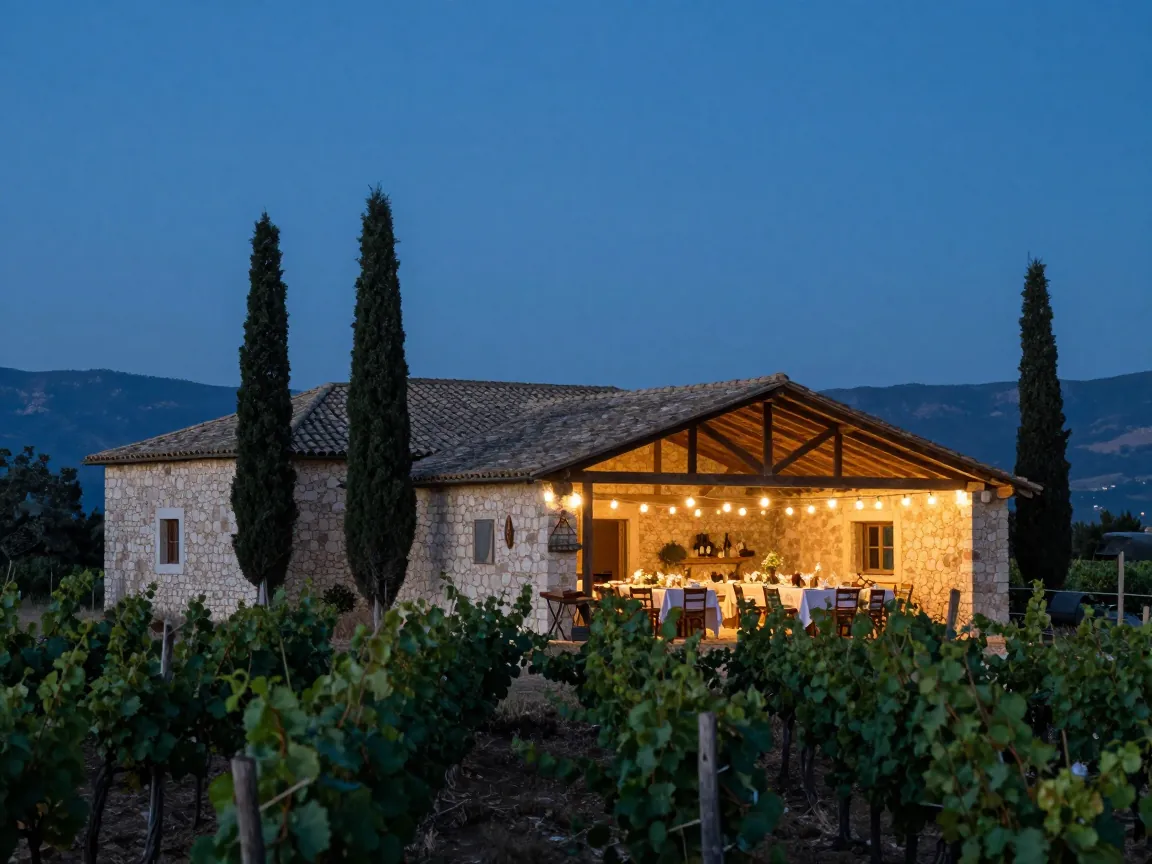
An estate outside the town buys you privacy, space and a longer evening. It costs you a transport plan, and the transport plan is the whole project. A venue like Villa Sylva in Kanoni, listed as a wedding venue, wedding hall and country house, shows the pattern: a name, a location and a category, and the rest is a set of questions you have to ask directly. The listing says it is suitable for wedding celebrations and related events. Whether it suits yours depends on numbers you confirm with the venue.
For any estate or ktima, settle these before you sign: the exact address and the type of road leading to it, because the last stretch can be the slowest; whether coaches can reach the entrance or stop on a main road; the maximum seated number indoors and outdoors separately; the cut-off hour for music; whether there is a generator or a backup for power; and what the venue provides in-house versus what you must bring in as catering, tables, glassware or staff.
Then do the arithmetic that nobody enjoys. If you have 90 guests and coaches of 45, that is two departures each way, an example only, and you need to decide who leaves when and who is still dancing. In our view a single late coach back to town makes for a better evening than three staggered ones, but it ties your finish time to the coach company's schedule. Ask about that first, and read our notes on what a Greece wedding package actually includes so you can tell which line items belong to the venue and which belong to you.
The three-setting comparison, with the questions that decide it
Use this table as a script for your venue calls. Every answer goes in writing, in the same document, so you can compare settings fairly.
| Setting | What it gives you | Questions to ask the venue |
|---|---|---|
| Corfu Town | Walkability, architecture, an easy guest day, a built-in after-party area | From what hour must the music come down? Where do cars stop, and who directs guests on foot? What is the exact room capacity seated, not standing? |
| Coastal hotel | One contract, rooms on site, indoor backup, family-friendly | Who is the day-of contact? Until what hour is amplified music allowed on our date? What is the wet-weather room and its seated capacity? |
| Countryside estate or ktima | Privacy, space, a longer evening, your own suppliers | Can coaches reach the gate? What is the last stretch of road like? What is the music cut-off? What must we bring in ourselves? |
Two more questions belong in every column. What deposit is required and is it refundable, on what terms? And what is included in the stated hire versus billed separately, itemised?
Food, drink and the timing that makes a long evening work
On Corfu the menu does a lot of the hosting, and a long table changes the shape of the night. If dinner runs from nine to eleven, dancing starts at eleven and the coach leaves at one, you have built a short evening around a long meal. That can be exactly right, or exactly wrong.
The fix is usually to move the substantial food earlier and keep something small for later. Ask any caterer how they handle guests with different requirements at the same table, and whether the kitchen can serve a table of ten without one plate arriving cold. Our piece on why a Corfu reception menu should work for every table sets out the questions we would put to a kitchen before signing. If you are using a hotel, ask whether the menu is fixed or whether you can swap courses; if you are using an estate and an outside caterer, ask where the kitchen is, how far it is from the dining area, and what power and water it needs.
Our opinion: it's easy to over-invest in the ceremony and under-plan the two hours after dinner. That second half of the evening is, to us, the part that makes the day, and it's mostly a logistics decision.
Before you sign: what to confirm and with whom
For anything touching marriage paperwork, ceremony permissions, noise rules, beach use or archaeological sites, confirm current requirements with the competent authority, whether that is the municipality, the parish, the registry office or your consulate. Ask the venue what documentation they have supported before, and ask your own consulate what it needs from you, in writing, with a processing window.
We also suggest testing the plan on paper with a hypothetical run-through. Write the day as a timeline with named times, named transport and named responsible people, then read it aloud to someone who is not involved. The gaps show up fast.
Whichever setting wins, it should win on the transport sheet first and the photographs second.
Planning questions
How does choosing Corfu Town over a coastal hotel change my guest transport?
A town setting lets most guests walk between ceremony, dinner and the after-party, so you may need no coaches at all. A coastal hotel usually needs transport only for guests staying elsewhere. Ask each venue where cars stop and who directs arrivals on foot.
What should I ask a countryside estate before booking a Corfu wedding there?
Ask whether coaches can reach the gate, what the last stretch of road is like, the seated capacity indoors and outdoors separately, the music cut-off hour, and what you must bring in yourself such as catering, tables or staff.
When should I settle the wet-weather plan for an outdoor Corfu ceremony?
Before signing, not in the final month. Ask for the named indoor alternative room and its seated capacity in writing. If that room holds fewer guests than your list, you have a real decision to make early rather than on the day.