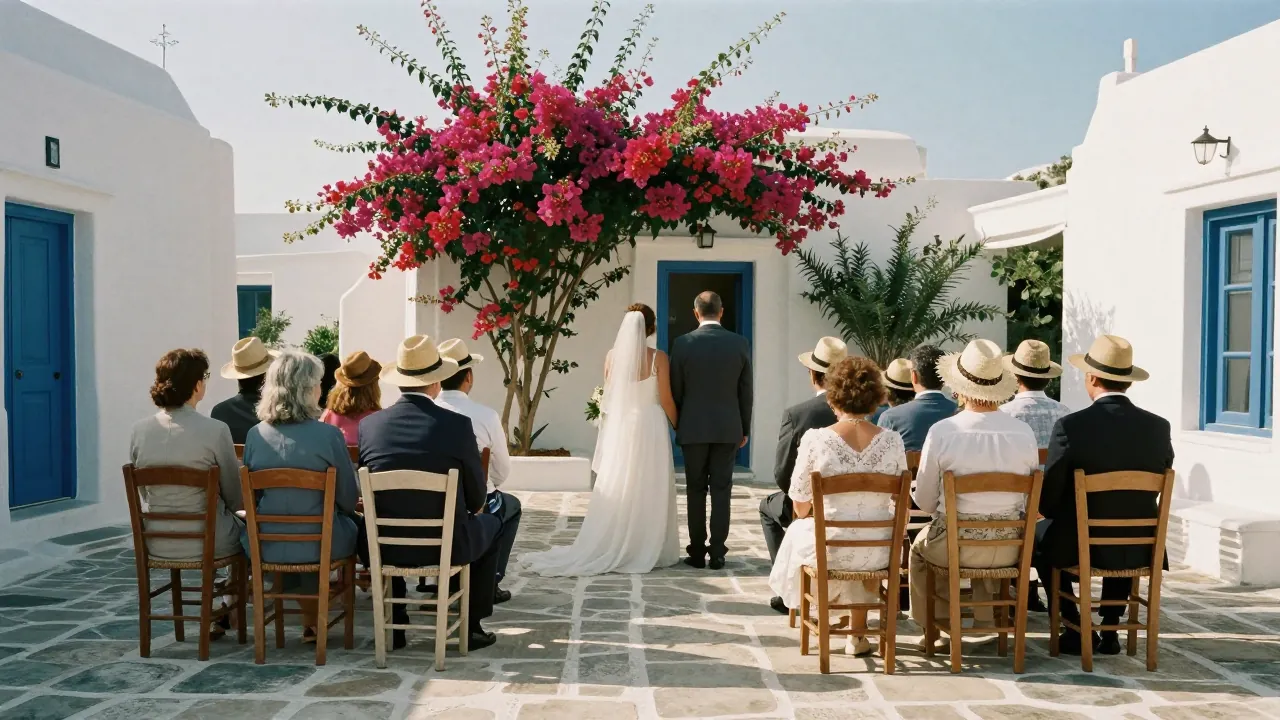
Timing the ceremony: the case for a late start
Plan around the hottest part of the day, not through it.
We push for a ceremony no earlier than seven in the evening in July, with photographs before it rather than after. A 7 p.m. start gives you the soft light photographers want, it drops the heat load on older guests, and it means the cocktail hour lands after the worst of the day. If your ceremony must be earlier, say 11 a.m., keep it under 25 minutes and hold it somewhere with real cover, not a token parasol.
Ask the venue directly: what time does this exact courtyard or terrace sit in full sun, and where does the shadow fall at 11 a.m. versus 7 p.m.? Ask them to walk the space with you at that hour, or send a photo from that hour. A venue that cannot answer this may not have hosted many July weddings, or may not have been paying attention.
Shade is a floor plan, not a decoration
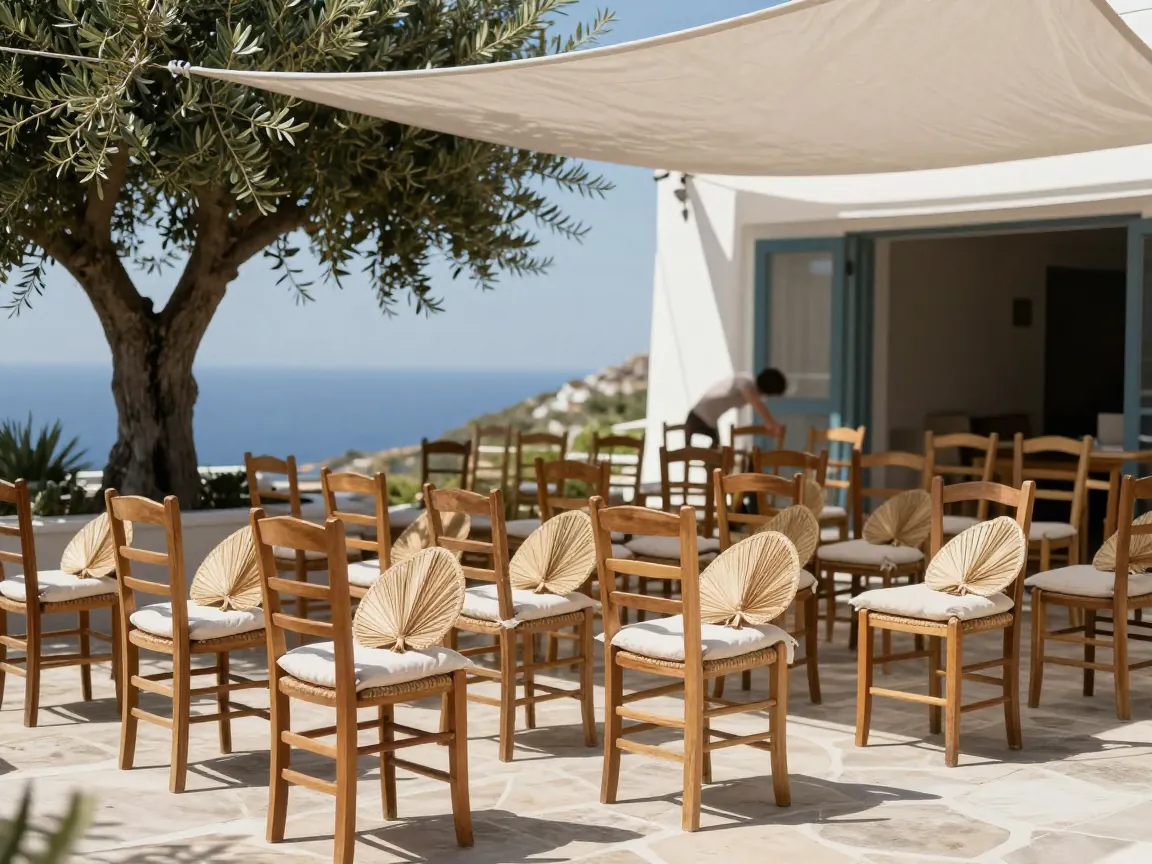
Shade gets treated as an aesthetic choice. It's infrastructure. A July guest list of any size needs three separate shaded zones, not one canopy over the ceremony chairs.
- Ceremony zone: full shade for any guest who wants it. Rows of umbrellas at the back, a covered colonnade, or a tree line that actually blocks the sun at your start time, not a tree that blocks it at six.
- Cocktail zone: shade plus air movement. Still air under a canopy in July is worse than sun with a breeze.
- Dining zone: shaded or indoor, and this is where older guests and children will spend most of the evening.
Ask whether the venue can add fans or misting, who supplies them, and whether there is any power or noise constraint on running them during toasts. Confirm what the venue provides in writing and what you rent separately. Shade can be a line item, not a courtesy.
Water, menus and the alcohol question
The ministry's guidance is blunt about alcohol in heat, and your bar plan has to reflect that even at a celebration.
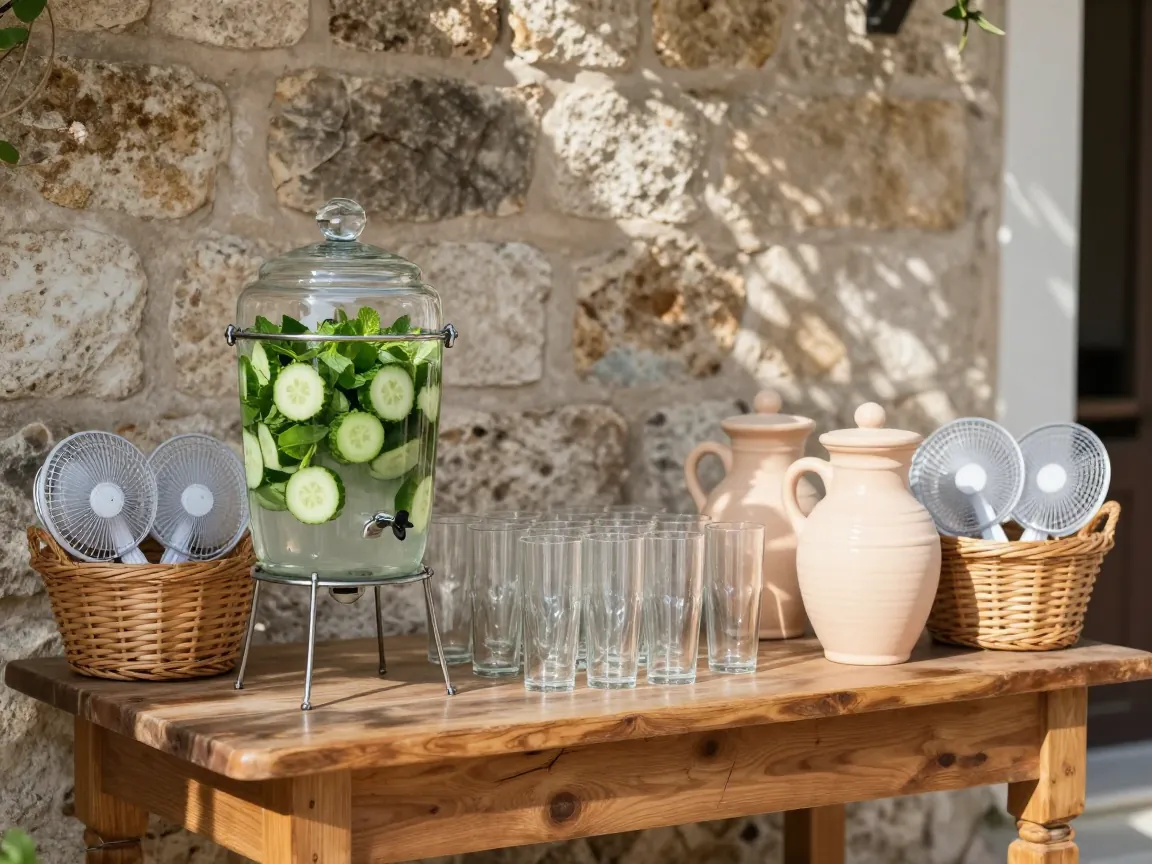
Water should be everywhere before the ceremony, not only at the bar. We ask for a water station at the entrance to the ceremony space, water passed during the ceremony itself if it runs past 20 minutes, and water on every table at dinner before guests sit down. For a July wedding, we plan roughly one litre of chilled still water per guest across the ceremony and cocktail hour, an example figure only, and we tell the venue we expect it to be restocked without being asked.
On the menu, we lean toward cold and light: chilled soups, grilled fish, salads, fruit, and fewer heavy braised dishes that sit warmly on a hot evening. Ask the kitchen to hold the cheese course until after sunset. On alcohol, we don't assume anyone wants a dry wedding, and we don't push for one. What we do push for is a proper alcohol-free option that isn't an afterthought, water poured alongside every glass of wine, and a bartender briefed to slow the pace rather than match it.
Planning for older guests, children and staff
Three groups need their own line in the plan, because they feel heat differently and they often won't say so.
Older guests: seat them closest to shade and to the easiest route indoors, and check that route is step-free. Ask about air-conditioned indoor space the venue can open at short notice if someone needs to sit down.
Children: a shaded, supervised play spot away from the bar, with water and fruit. If the venue has a pool, confirm its rules and supervision expectations in writing.
Staff: photographers, musicians, planners and waiting staff are working in the heat while your guests are sitting in it. Ask the venue what break and water provision exists for its team, and build in a shaded spot for your photographer to rest between shots. This is also worth checking on the contract side, and our guide to comparing the whole venue quote is a useful companion when you ask who pays for extra fans, water or an indoor switch.
A heat-alert plan, written down before the week
Your plan should assume a heatwave may force a change at short notice. Decide in advance who has authority to move the ceremony indoors, and set a trigger, such as a forecast that crosses the alert level you've agreed with the venue. Write the plan as a short document and share it with the venue, the planner and the photographer.
One practical note on venue type: a purpose-built conference space such as Polis Conference Center in Thermi, Thessaloniki, which according to its listing operates around the clock and is designed for conferences, shows how an indoor, purpose-built space can back up an outdoor plan; ask any such venue about cooling in writing. Its listing includes wedding receptions among its occasions, though it is a conference center rather than a wedding venue.
For smaller guest lists, our guide to planning a small wedding covers how minimum spends and indoor options interact.
Whatever you plan, confirm current heat-alert advice and any venue requirements with the competent authority, the municipality or the venue itself, because requirements change.
Heat plan checklist by time of day
| Time | What happens | Who owns it |
|---|---|---|
| Morning | Check the day's heat forecast and alert level; confirm indoor backup is open | Planner |
| Two hours before | Water stations set up; shade structures checked; fans and misting tested | Venue |
| Ceremony minus 30 min | Chilled water at the entrance; ushers briefed to seat older guests in shade | Planner |
| Ceremony | Water passed if it runs past 20 minutes; alcohol-free options visible at the bar | Venue |
| Cocktail hour | Shade plus airflow; water restocked without prompting; children's area supervised | Venue and planner |
| Dinner | Indoor or shaded dining; water on tables before guests sit; light menu course order | Kitchen |
| After sunset | Cheese and heavier courses served; pace of alcohol managed by bar staff | Venue |
| Throughout | Staff breaks, water and shade for photographers, musicians and waiting staff | Planner |
Tell us your headcount, your date and whether your ceremony is indoors or out, and we'll point you toward venues whose July logistics actually match your guest list.
Planning questions
What time should a July wedding ceremony start in Greece?
We advise a start no earlier than seven in the evening where possible, with photographs taken beforehand. This avoids the worst midday heat, gives softer light, and eases the load on older guests and children.
How much shade does a summer wedding need?
Plan three separate shaded zones: ceremony, cocktail hour and dining. Each needs real cover at your actual start time, plus air movement, because still air under a canopy in July can feel worse than open sun.
What should go in a heat-alert plan for a Greek wedding?
Name who can move the ceremony indoors, agree a forecast trigger with the venue, and share the plan with planner, photographer and venue. Include water stations, shaded rest spots and staff breaks.