
Assume the standard rate applies until your finance team says otherwise
Greece's normal VAT rate is twenty-four percent, as the Ministry of Economy and Finance states in its VAT guide. Treat that as the default assumption for venue hire, catering, audiovisual and staffing, then let your finance team confirm what actually applies to your event and your buyer. The Ministry of Economy and Finance publishes the official VAT guidance that your finance team can read against your own registration and invoicing situation. We are not the ones to sign off on tax treatment, and neither is the venue's sales manager.
Here is the trap. A venue that quotes gross can look pricier than one that quotes net, even when it is actually cheaper. A single line for the room could be gross or net, and nobody writing the email has to say which. Ask, in writing, for every quote to show the net amount, the VAT amount and the gross total as three separate figures. If a vendor can only give one number, that is your first red flag, not your last.
Why the invoice entity matters more than the logo on the proposal
The company that sends the proposal is not always the company that issues the invoice. Hotels, for instance, may bill through a different entity than the one named on the events brochure. That difference affects who your finance team pays, which VAT number appears on the document, and whether your own accounting system accepts the invoice at all. Before you sign anything, ask for the exact legal name, the Greek tax number and the address that will appear on the invoice. Put those three details in the contract itself, not in a covering email that gets lost by the time the deposit is due.
Venues listed in our conference venue directory for Greece each carry their own invoicing setup, and the listing says nothing about tax treatment. We do not treat a listing as a confirmation of invoicing practice, and you should not either. The only confirmation that counts is the one your finance team receives in writing from the entity that will bill you.
A line-by-line template for comparing a Greek venue quote
Fill one column per vendor and the real ranking shows up quickly. Keep the same row order for every vendor, because a sheet where one quote has eight rows and another has eleven is a sheet that hides the difference.
| Line | What to record | Why it matters |
|---|---|---|
| Venue hire | Net amount, VAT shown separately, gross total | Exposes quotes that mix net and gross on one page |
| Catering | Per person net, minimum numbers, service charge treatment | Per-person lines are an easy place for net and gross to blur |
| AV and production | Net or gross, plus equipment list | A gross AV line can hide the largest single swing |
| Staffing | Hours, overtime rate, net or gross | Overtime may be quoted in a different format to the day rate |
| Invoice entity | Legal name and Greek tax number | Determines whether your finance team can process the invoice |
| Payment schedule | Deposit share, balance date, currency | A deposit due before the invoice entity is confirmed is a problem |
| Cancellation terms | Dates, notice periods, what counts as notice | Read this before the deposit, not after |
Two rules keep the sheet honest. First, convert every line to the same basis before you rank vendors, which usually means asking for net figures from everyone. Second, mark anything you had to assume with a question mark. An assumed figure is not a compared figure. Send the finished sheet to whoever approves spend, because a comparison your finance team has already seen is a comparison nobody reopens at the deposit stage.
It's worth adding two columns that aren't amounts: who signed the quote and when it expires. A quote with no expiry date can change after the budget is approved, and then the comparison you showed your director no longer holds. Keep a copy of the final version of every quote, too, because revisions often arrive as attachments with the same file name.
Turning the venue day rate into a budget you can defend
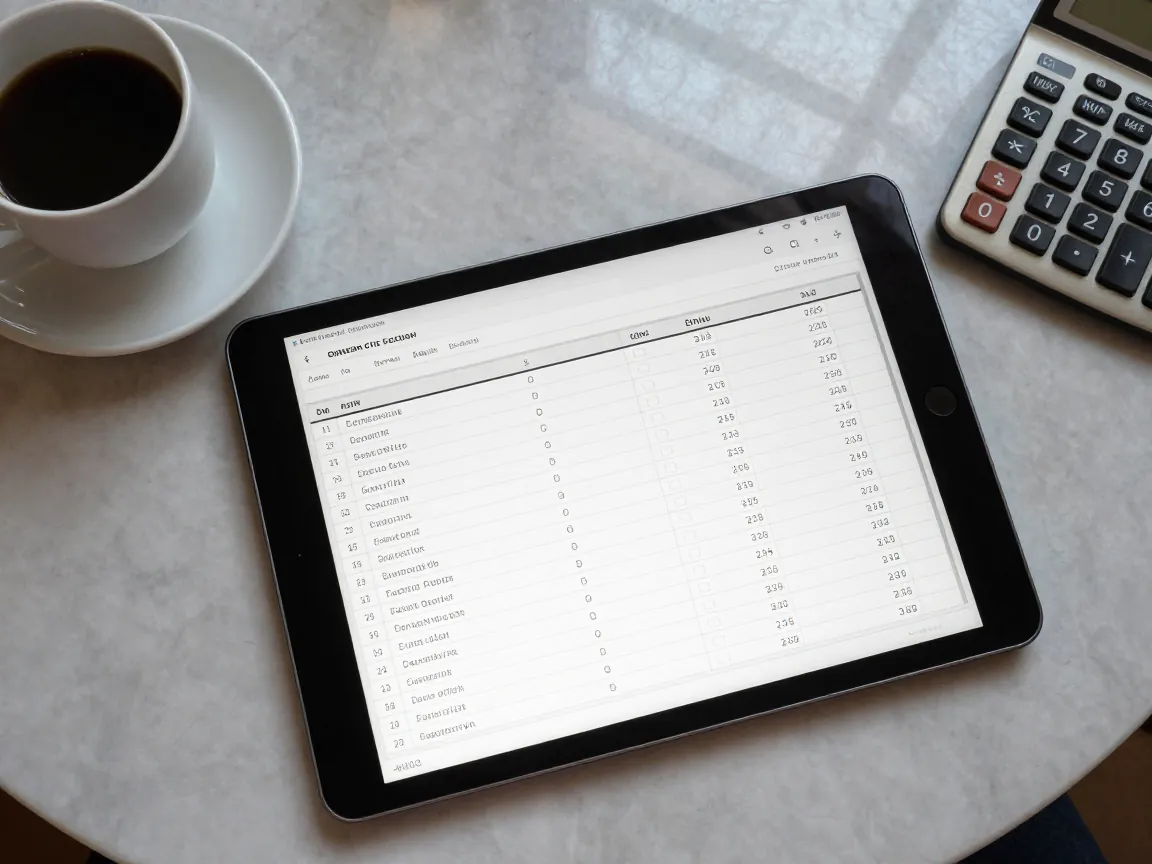
The room day rate is the number everyone remembers and the number that misleads most. Our guide to turning an Athens meeting room day rate into a full brief walks through the extras that sit outside the headline figure, and most of them arrive as separate lines with their own VAT treatment. When you build the internal budget for approval, add a contingency line and label it as a contingency, because a finance director who sees an unlabelled buffer will cut it.
If your event has a fundraising or sponsor-funded element, the accounting gets another layer, and the venue bill should be kept separate from programme spending from the first draft. Our notes on separating a venue bill from programme costs apply to that split even when the event itself is corporate. Sponsors may want their contribution tied to a named line, so decide early which lines sponsorship covers and which come from your own budget.
What to agree with the venue before the deposit leaves your account
Get four things in writing. The net and gross figure for every line. The invoicing entity with its Greek tax number. The payment schedule with dates and currency. The cancellation terms with notice periods. We would send one email that lists all four as numbered questions and ask for answers in the same format, so nothing gets answered halfway. If a venue answers three of four, send the list again. It is a boring email. It is also the cheapest risk reduction available to you.
One caveat: some venues genuinely cannot give you a fully itemised net quote at the proposal stage, because catering numbers or AV requirements are still open. That is reasonable. In that case, ask for the invoice entity and the VAT treatment in writing now, and leave the figures to be itemised once the brief is locked. The structure can be agreed before the numbers exist, and agreeing it first means nobody has to renegotiate the invoice format after the deposit has gone.
Requirements change, so confirm current VAT and invoicing rules with the competent authority or your own tax adviser before you sign. Send us your headcount, dates and a short brief, and the venues that fit can answer with quotes in a format your finance team can compare line by line.
Planning questions
Should I ask every Greek venue for net or gross figures?
Ask for both, on every line. A quote showing net, tax and total as separate figures is comparable to any other quote. If a vendor offers only one number, ask which basis it uses before you rank anyone.
Who confirms the tax treatment of our corporate event?
Your finance team or tax adviser, not the venue. The venue can tell you which entity invoices you and how it presents the amount. Whether that treatment is correct for your company depends on your own registration and circumstances.
What invoice details should be in the contract before signing?
The legal name, Greek tax number and address of the entity that will bill you. Add the payment schedule with dates, the currency, and the cancellation terms. An email promise is weaker than a clause in the signed document.