What an official heat warning actually changes
The Greek Ministry of Climate Crisis and Civil Protection publishes heatwave protection guidelines advising people to avoid heavy physical work, drink large amounts of liquids, avoid alcohol, and avoid long public-transport journeys when heat is very high. Read that list again as an event organiser and it maps almost one-to-one onto a bad summer programme: the setup crew, the bar, the coach transfer. Your plan isn't about cancelling fun; it's about moving the physical work into the early morning, keeping water within arm's reach, and not loading a group onto a bus at the worst hour.
We treat the warning level as a trigger, not a verdict. The venue's management decides what happens on its own property, within whatever the authorities require, so the wording in your contract should say who calls the change and by what time.
The heat-warning action plan
This is the table we'd bring to any venue negotiation. Fill the right-hand column with the venue's actual answers, in writing, before you sign.
| Trigger or item | What to agree | Venue's answer |
|---|---|---|
| Warning issued | Who monitors official alerts, and who contacts whom | |
| Timing shift | Earliest and latest start times the venue can staff, per month | |
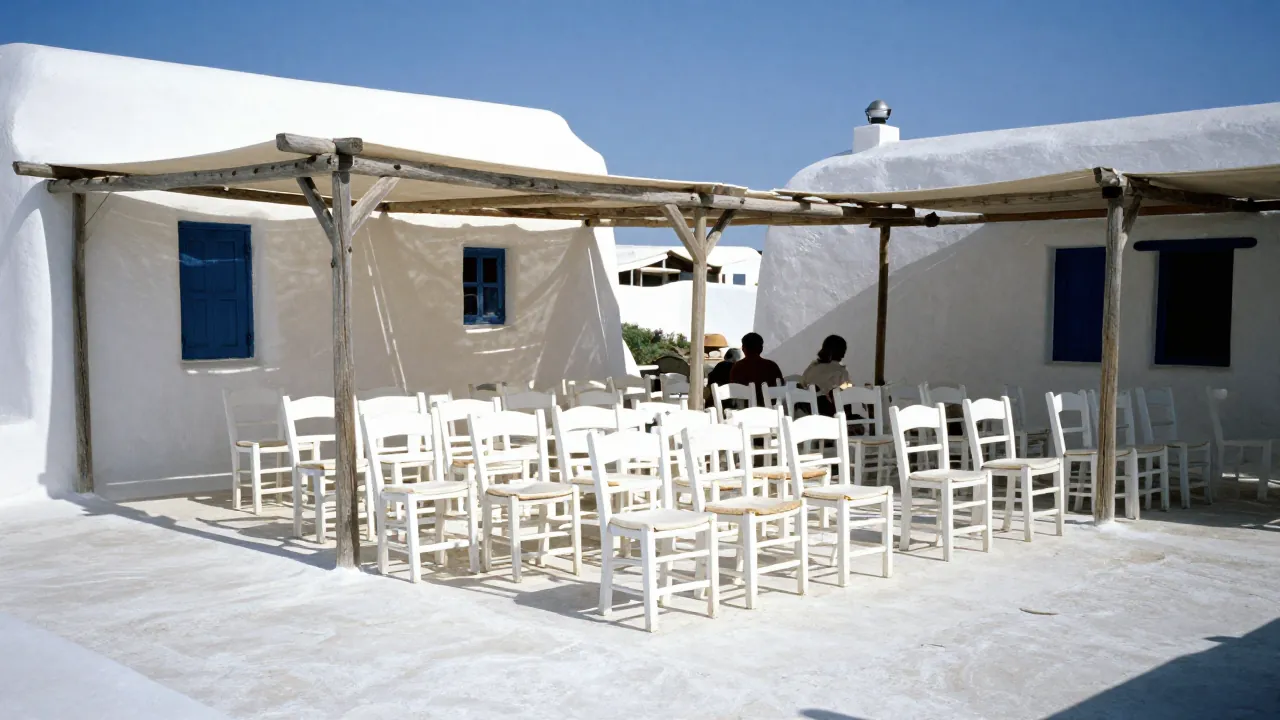
| Shade | How much covered or shaded area exists, and who sets it up | |
| Water | Free still water at all times, refill stations, no queue at the bar | |
| Alcohol | Whether the bar can switch to low-alcohol or diluted options by default | |
| Staff | Extra hands for water, shade and first aid, and who pays | |
| Transfers | Latest hour for coach departures, and air conditioning confirmed | |
| Cancellation | What counts as a warning, and what proportion of the fee moves to a new date | |
| Accessibility | Shaded rest points on the full route, not one ramp |
A note on the last row: heat hits guests with mobility needs, older guests and anyone on medication first. Our guide to the whole accessible route at an event explains why a single shaded corner isn't a plan.
Timing, shade and water, in that order
Timing is the cheapest fix and the hardest to negotiate, because venues often run two events in one day. Ask for the earliest realistic ceremony or keynote slot and the latest realistic dinner slot, and put both in the contract with the month attached. A June start and an August start are different animals.
Shade comes second. Count the shaded square metres you've actually been shown, not the ones described to you. If the venue says "plenty of shade", ask for a site visit at the same hour as your event; our site visit checklist is built for exactly this, bringing the same brief to every space so you can compare rooms honestly.
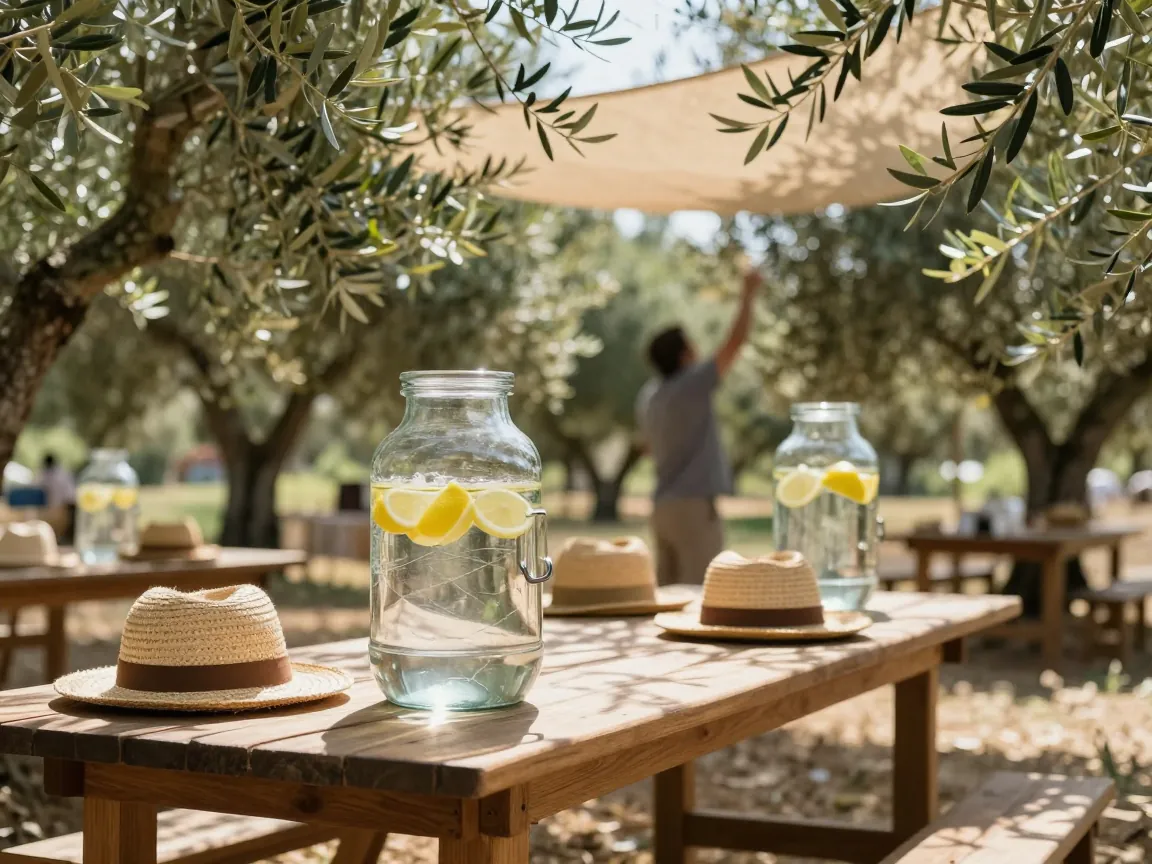
Water is third, and it's the one item where we push hardest. A jug on each table is not enough at a summer lunch. We ask for a free still-water station that guests can find without asking staff, plus water available before the welcome drinks, because the first hour is when people forget to drink.
Staffing, alcohol and the coach question
Every extra measure has a person attached. Shade doesn't appear; someone erects it. Water doesn't refill itself; someone checks it. Agree how many additional staff hours a warning day requires and whether those hours sit in the base fee or appear as an extra line. Get the hourly figure in the contract, not in an email.
Alcohol deserves a straight conversation. The ministry guidance says to avoid alcohol during a heatwave, and a wedding or corporate dinner with an open bar runs against that by default. Practical middle ground: the bar opens later, offers longer spritz-style serves and low-alcohol options at the same price, and the water station stays outside the bar queue. If your event is a wedding rather than a corporate one, the same logic applies, and our wedding reception venue comparison covers how to weigh shaded ceremony space against evening capacity.
Then there's transport. If your group arrives by coach, agree a latest departure hour with the venue and confirm the air conditioning before the day. Walking transfers between a car park and the main space matter too; count the minutes in full sun.

Cancellation terms and the honest concession
We'll concede one thing: a heat clause in the contract won't make a venue flexible if it has already turned down another booking for your date. In our view, a full weather-based refund is a hard ask, and pushing for one can stall a deal. What you can usually get is a defined trigger, meaning an official warning level rather than a subjective "too hot", a decision deadline, for example by noon two days before, and a move of the deposit to a new date within the same season. Agree the trigger wording with reference to the official alert, and let the venue confirm how it applies its own policy.
One thing to keep in mind: heat rules, warning levels and any local restrictions must be confirmed with the competent authority, the municipality, or the venue itself, because requirements change. We don't publish thresholds or penalties for that reason.
What to put in the brief you send venues
Send three things and you'll get useful answers instead of brochures: your headcount, your date or date range, and your heat-warning requirements as a short list. Attach the action plan table above with the right-hand column empty and ask each venue to complete it. Venues that answer it properly are the ones that have thought about August before you asked.
We're an editorial team, not a booking platform, and we can't verify that any venue will accept a particular heat clause. The listing says what the listing says; your contract says the rest.
Before you shortlist anything, send us your headcount, your date or date range, and the heat-warning items you can't compromise on, and we'll help you frame the brief so suitable venues can answer it properly the first time.
Planning questions
When should we raise heat planning with a Greek venue?
At the booking stage, before you sign. Ask who monitors official warnings, when a decision is taken, and what changes on a warning day. Venues that answer in writing during negotiations are easier to work with in August than venues that promise flexibility verbally.
What should a heat clause in the contract actually say?
Name the trigger, ideally the official warning rather than a subjective judgement, set a decision deadline such as noon two days before, and state what happens to the deposit and the date. Ask the venue how it applies its own policy.
Should we cancel or move our summer event indoors?
Usually neither. The practical fixes are to shift the programme earlier, add shade and water stations, delay the bar and shorten transfers. If your guest list includes older guests or anyone with mobility needs, treat shaded rest points as a requirement rather than an upgrade.