
What actually makes a Greek gift travel well
The gift fails in transit before it fails in taste. A jar of spoon sweet is a beautiful object in a Nafplio shop and a liability in a checked suitcase. Our rule of thumb: if it can't sit in checked baggage for the whole trip home without leaking, crushing, or setting off a customs conversation, it isn't a delegate gift, it's a souvenir the delegate buys themselves.
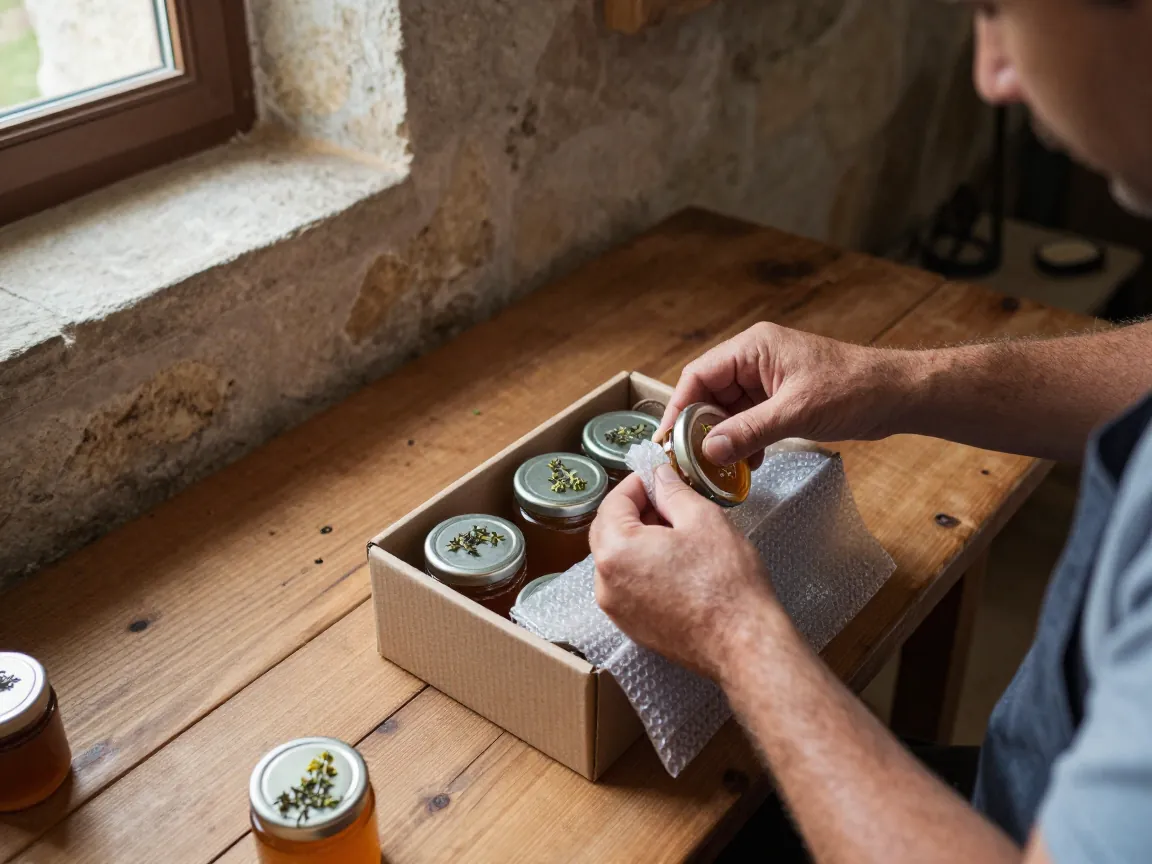
Prioritise, in this order: dry and sealed (olive oil soap, beeswax products, herbs in tins), then dry and fragile ( ceramics, but only foam-wrapped), then perishable (nothing). Edible gifts should have a shelf life long enough to survive the trip home plus a week, because delegates don't eat the gift on the plane.
Label everything in English. A delegate who can't read what's in the tin doesn't take it home, and a gift that gets left in the hotel room is money spent for zero recall.
Greek products with a protected designation, and when the paperwork is worth it
Some Greek products are tied to a single place of origin, and some carry a protected designation. Chios mastic is a clear case of the first: Visit Greece says the mastic tree, the schinos, thrives and yields its resin only in the southern part of Chios island. That single fact is why a mastic-based gift reads as more specific than a generic "Greek" hamper, and it's also why it can be hard to source in volume at short notice.
Our view: a protected designation matters when your delegate list is small and senior, say 40 people, an example only, and the gift is doing real relationship work. It matters much less when you're handing 500 tote bags to a trade-show floor. In that second case, buy a well-made product and skip the provenance lecture.
If you do buy protected-designation products, ask the supplier for the batch documentation in writing, and ask what happens if the shipment arrives short. Verbal assurances about "authentic Chios" mean nothing in a purchase order.
Delivery to the venue: dates, docks, and who signs
The failure we'd plan against first isn't the product, it's the delivery window. Venues tend to run their own loading schedules, and a pallet arriving during a lunch service or a wedding setup can end up sitting outside.
Ask the venue, in writing, for four things: the delivery date and time window, the exact door or dock, the name and mobile number of the person who signs, and whether there's a lift or only stairs to the storage room. Get the storage room dimensions too. A coordinator can answer that in one email; a surprise pallet is a much harder conversation.
If your programme includes reward time before or after the conference, the same logistics apply, and it's worth reading how we structure that in our guide to planning incentive travel in Greece so the gift handover doesn't collide with an excursion departure.
Storage on site, and the moment you hand it over
Storage is where gifts go missing, not where they get stolen. A box gets moved, a label falls off, and a few units vanish into a service corridor.
Count in, count out. Have someone from your team, not venue staff, receive the delivery and sign the count sheet. Photograph the pallet as delivered. Then split the stock by distribution moment before the event starts: closing-session gifts stay sealed, welcome-desk gifts get opened early.
The distribution moment is a programme decision, not a logistics one. We would put the gift at the closing session, or in the delegate's room on arrival if the hotel handles it, and never in the middle of a working session, because delegates leave mid-session and the table becomes a free-for-all.
If your delegate numbers are still moving, settle the room layout first; our notes on conference capacity and layout explain why a seating number and a gift number are rarely the same figure.
A gift logistics table you can copy into your brief
Use this as the working document; the quantities and lead days in it are examples only. Fill the columns with the supplier's and venue's answers, not your assumptions.
| Product type | Packaging for flights | Delivery date to venue | Storage | Distribution moment | Who signs |
|---|---|---|---|---|---|
| Sealed dry goods (soap, herbs, tins) | Cartons, 12 per box, taped | 2 days before first session | Dry room, off floor | Closing session | Your ops lead |
| Mastic or protected-designation items | Individual boxes, foam | 3 days before, batch docs attached | Locked room | Closing session | Your ops lead |
| Ceramics or glass | Foam wrap, double carton | 3 days before | Low shelf, marked fragile | Welcome desk | Your ops lead |
| Textiles (towels, aprons) | Vacuum bags | 2 days before | Any dry room | In delegate room | Hotel, signed list |
| Perishables | Do not ship | Not applicable | Not applicable | Not applicable | Not applicable |
One note on the last row: if a supplier proposes fresh food as a delegate gift, ask them to write down the cold-chain plan. If no clear plan comes back, treat that as your answer.

Matching the gift to a programme that isn't only a conference
Some conference programmes add a half-day or full-day reward element, and the gift should match the whole programme rather than the meeting alone. If delegates are spending an afternoon at a winery or a sailing trip, a heavy gift becomes a burden they leave in the minibus.
For those programmes, compare the room and the reward together. Our incentive travel venues in Greece listings are the right starting point when the trip is as much about the reward day as the sessions, and the gift budget should be set after that decision, not before.
A practical split we'd recommend: a small, light item for everyone (something that fits in a jacket pocket), plus a larger gift only for speakers and senior guests, handed over in person. It reduces shipping, reduces storage, and makes the larger gift mean something.
Questions to ask before you sign the purchase order
Ten minutes of questions saves a pallet. Ask the supplier: what's the minimum order, what's the lead time in weeks, can they deliver to a specific venue address with a named contact, what's the packaging per carton, and what's their policy if units arrive damaged. Ask the venue: which door, what time, who signs, where it's stored, and whether they charge for handling.
Finally, confirm the current rules that apply to your shipment's contents with the competent authority, whether that's Greek customs, the supplier's export adviser, or your own freight forwarder, because food, alcohol and plant material all carry their own requirements and these change.
Send us your delegate headcount, your conference dates, and the venue you're considering, and we'll point you to venues whose teams can answer on delivery, storage and handover.
Planning questions
Should I choose a protected designation product like Chios mastic for delegate gifts?
It depends on the guest list. For a small group of senior delegates where the gift builds relationships, the provenance is worth the sourcing effort. For large trade-show volumes, a well-made generic Greek product works and is far easier to deliver on time.
When should gifts be delivered to the conference venue?
We'd aim for two or three days before the first session, as an example, inside a time window agreed in writing with the venue coordinator. Confirm the exact dock, the signing contact, and the storage room before the supplier dispatches anything.
Who should receive and count the gift delivery on site?
Someone from your own team, not venue staff. Count the units against the delivery note, photograph the pallet as received, and split stock by distribution moment before the event begins.