Two guest groups, one room
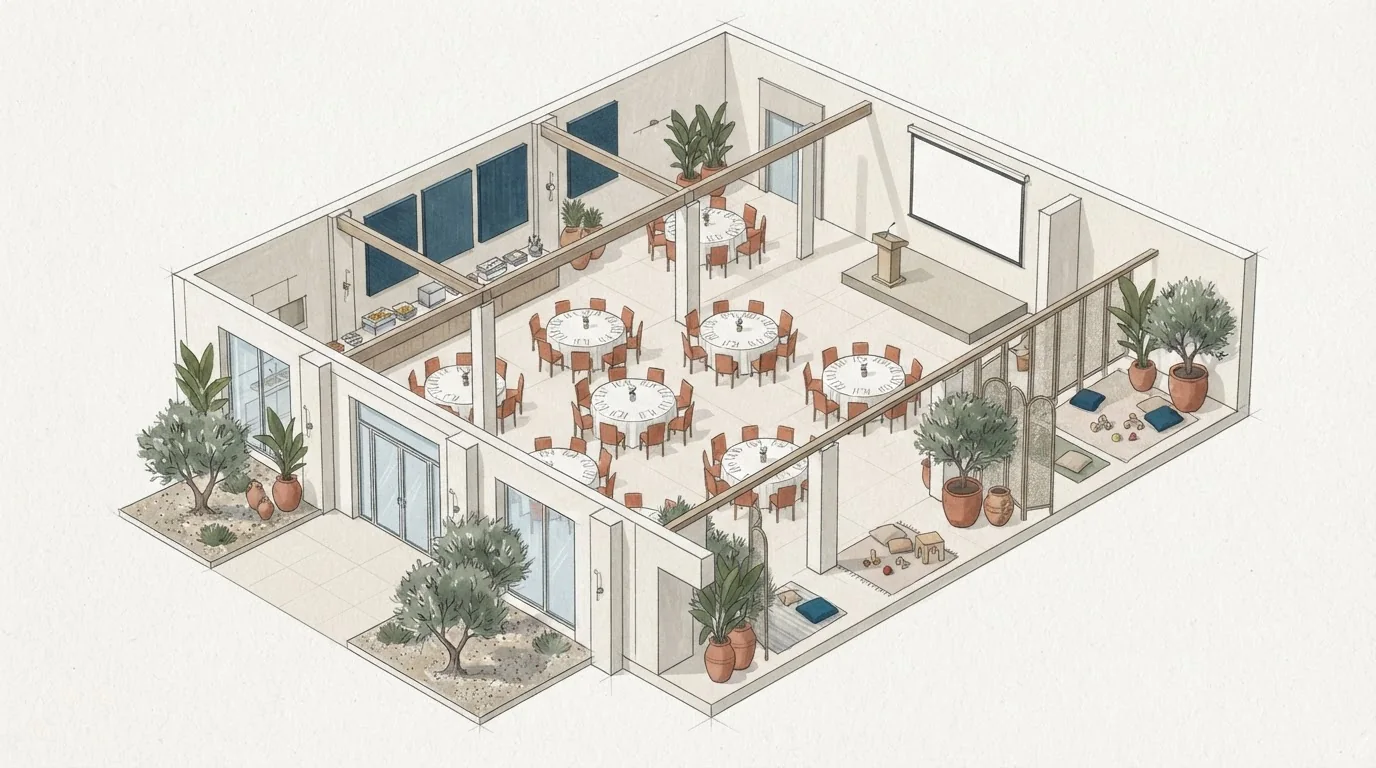
A baptism often brings older relatives, godparents, and parents with young children. A wedding reception might include friends who arrive later and stay for dancing. The reception hall needs to know about both groups before you sign anything. Ask yourself: who needs a seat near the aisle or the exit, who needs a high chair, and who will leave early. Don't assume the venue knows. State it in the brief. The same room can work for both if you separate quiet zones from louder ones. For example, a table plan that places families with toddlers near a side room or terrace helps. That is a layout decision, not a request for a special favour. The venue should tell you what it can do with the space you are hiring.
Child care and family needs
Children change the timing and the budget. A baptism might finish by early afternoon, while a wedding dinner can run late. If you have a joint event, decide whether children stay for the whole reception or leave after the meal. This is not about excluding them. It is about giving parents a clear choice. Ask the venue: can you provide a quiet room for naps or feeding? Is there space for a pram? Can you serve smaller portions? These are practical questions, not demands. The answers will shape your responsibility sheet. One honest tradeoff: a separate children's area can reduce stress for parents, but it may also mean someone has to supervise it. Decide who that person is before the day, not during the toast.
Timing and service without assumptions
Ceremony permissions and schedules are not something to guess. Whether a religious or civil ceremony can happen at a certain time depends on the officiant, the church, and local rules. Your venue may host the reception, but it does not control the ceremony. So keep the ceremony timing separate in your brief. Tell the reception hall when guests will arrive, when you want the meal served, and when you expect the event to end. Do not assume the kitchen can shift dinner by an hour because the ceremony ran late. Ask what flexibility exists and what deadline you must meet. For a joint event, a simple rule works: build a 30-minute buffer between the ceremony and the reception start. That buffer is not a market norm. It is a planning suggestion you can adjust.
The responsibility and timing sheet
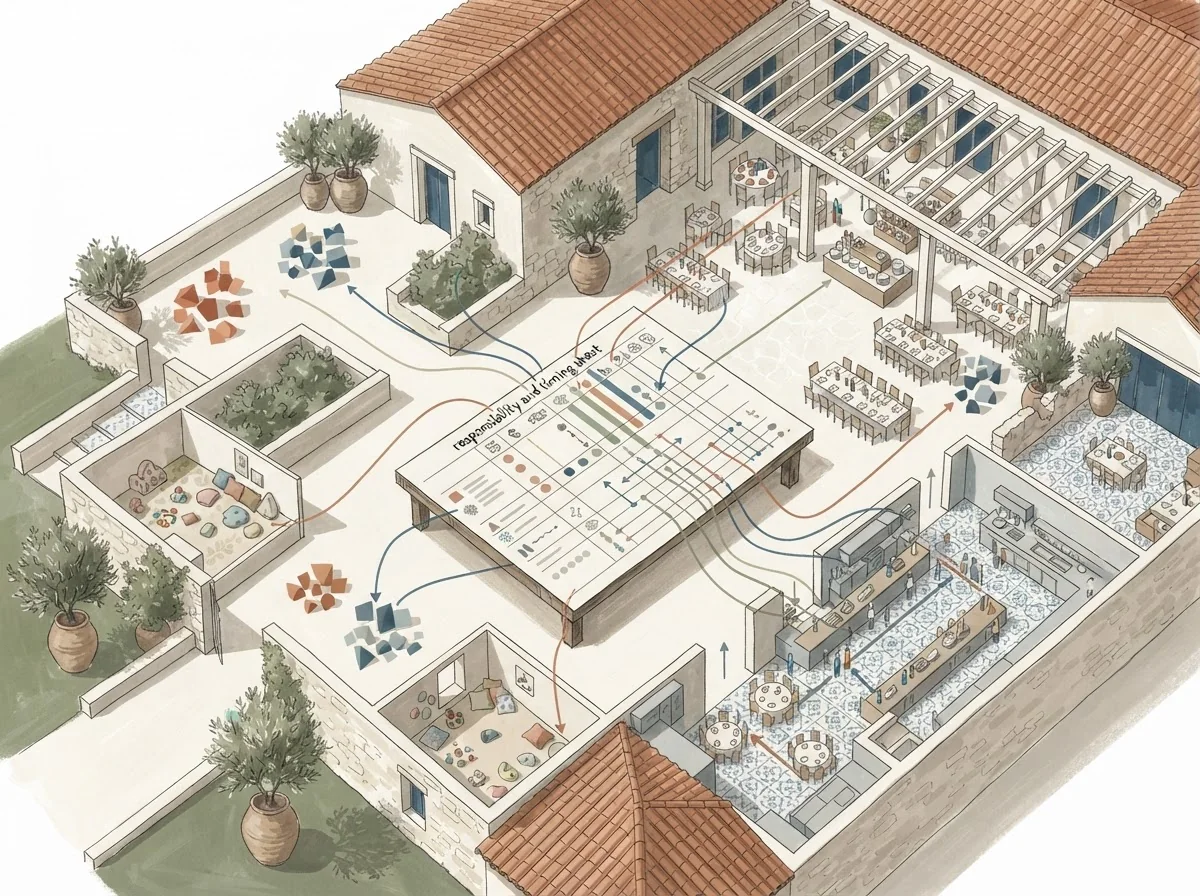
Use this table as a working document. Fill it in with your own information, then share it with the venue and your key helpers. The example rows below are clearly hypothetical and show how to format it.
| Time | Activity | Who is responsible | Notes for the venue |
|---|---|---|---|
| 15:00 (example) | Ceremony ends | Officiant / couple | No venue action needed |
| 15:30 (example) | Guests arrive at reception | Venue host / ushers | Welcome drinks for early arrivals |
| 16:00 (example) | Children's meal served | Catering team | High chairs at tables 4 and 5 |
| 17:00 (example) | Main meal service begins | Venue coordinator | Vegetarian options for three guests |
| 19:00 (example) | Speeches and cake | Best man / venue AV | Microphone check at 18:45 |
| 21:00 (example) | Dancing begins | DJ / band | Volume control after 22:00 |
A table like this does not replace a contract. It gives the venue a single page to work from. Update it after every meeting and send the final version at least a week before the event.
What to send to reception halls
When you contact a reception hall in Greece, send a short brief. Include the date, the number of guests, and the two ceremonies. Say how many children will attend and whether you need child care. List your must-have start and end times. Do not ask for a price without a written quote. Instead, write: "Please provide a quote for the venue hire, catering, and any service charges. State what is included, what is excluded, and how tax is applied to each amount." That is a request for a written quote, not a negotiation. It also tells the venue you are organised. A venue like Ecali Club lists weddings and baptisms among its social events. See the source. But every venue has its own terms, so read each quote carefully.
Questions to ask before you commit
Use these questions to fill gaps in your brief. They are not a script. They are a checklist.
- Can we hold both ceremonies on the same day without moving guests?
- What is the earliest and latest time we can serve a full meal?
- Is there a quiet room for children or nursing parents?
- How many power sockets are near the dance floor for a DJ?
- What is the cancellation policy if one ceremony changes date?
- Can we bring our own cake or do you provide it?
- Who is our main contact on the day?
- What time do we need to confirm final numbers?
- Are there any restrictions on music or noise after a certain hour?
- What is the deposit and when is the balance due?
These questions help you compare venues on facts, not on atmosphere. If a venue cannot answer, ask for it in writing. If the answer is vague, that is useful information too.
Build the brief, then share it
A joint wedding and baptism reception works when the venue knows exactly what each group needs. The responsibility and timing sheet is your tool. Fill it in with real names and times, mark the example rows as examples, and keep it updated. Send the final version to the venue, your helpers, and the officiant. That way, no one is guessing. And if you are still choosing between venues, revisit the wedding and baptism planning guide to set your priorities before you visit. The clearer your brief, the better the quotes you will get. When you are ready, send the sheet and a written request for a quote to each shortlisted reception hall. Ask for availability and a quote together, so you can compare full offers without a second round of emails. That is the practical path to one celebration with two ceremonies, handled with care.
Two useful next steps: Baptism reception quotes: count adults and children separately and A chapel at the estate: which questions belong to whom?.
Planning questions
How can we arrange one reception room for both the baptism's older guests and the wedding's late-night dancers?
State both guest groups in the brief before signing. Separate quiet zones from louder ones, for example placing families with toddlers near a side room or terrace. Ask what the venue can do with the space you hire.
Why does a timing buffer between ceremony and reception matter in a joint wedding and baptism, and how is it decided?
It is a planning suggestion, not a market norm, and you can adjust it. Keep ceremony timing separate because the venue does not control it. Ask what kitchen flexibility exists and which deadline you must meet.