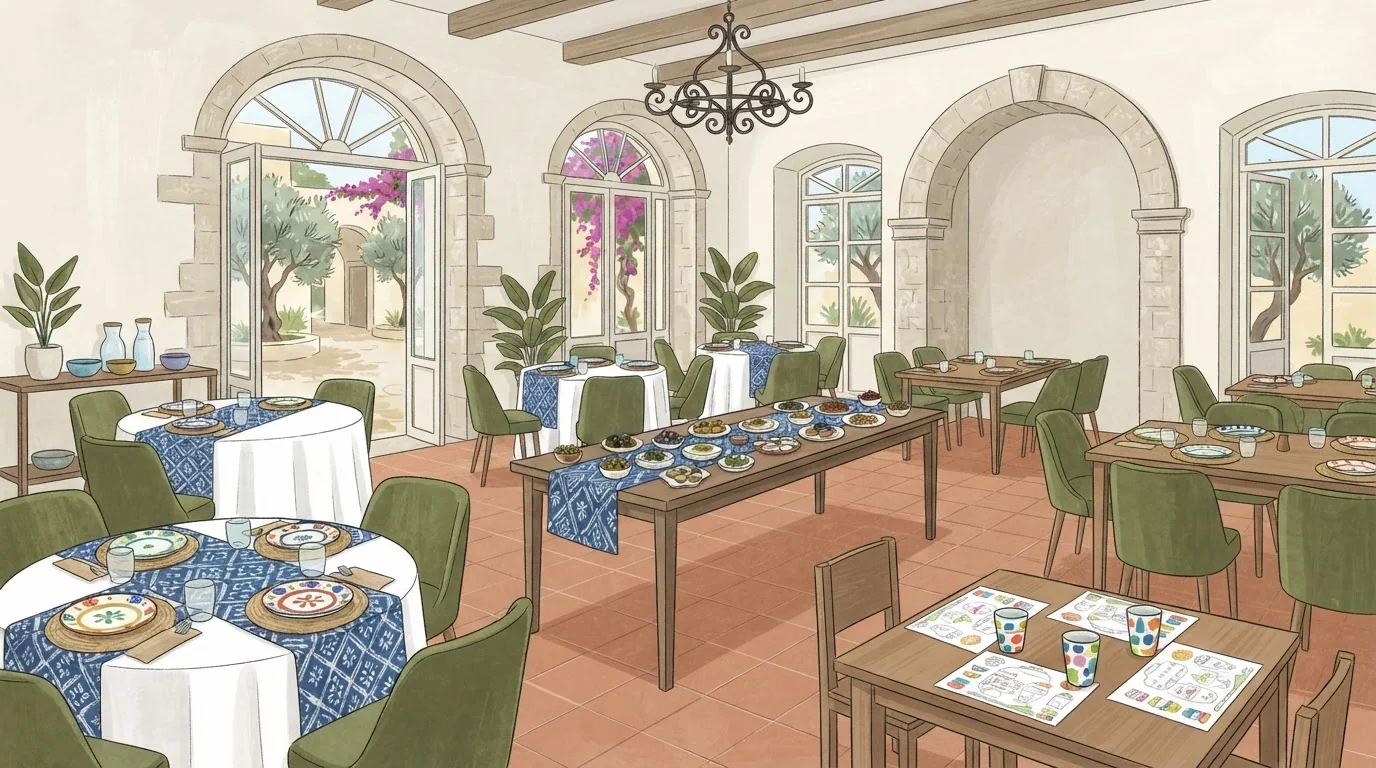
Picture a wedding reception in Corfu with 120 guests. Two are vegetarian, one avoids gluten, four are children under eight, and three relatives have food allergies that need clear answers. You have a shortlist of restaurants in Corfu and a tasting booked for Saturday. What should you actually ask, taste and write down? A menu is not just a list of dishes. It is a service plan for the whole room.
Corfu has its own food identity. The Visit Greece guide identifies pastitsada and sofrito as Corfiot dishes. A venue's actual menu needs separate confirmation, so treat that as context, not a promise. The island's cooking tradition is useful because it gives you a concrete reference point at the tasting. You can ask whether a dish on the proposed menu is a local recipe, a version of one, or something unrelated that simply fits the format.
Dietary information: what to collect and what to avoid
You do not need medical details. You need enough information for the kitchen to cook safely and for guests to recognise their plate. Ask each guest for one of these labels, plus a free-text note if they want one:
- No restrictions
- Vegetarian
- Vegan
- No gluten
- No dairy
- No nuts
- Allergy: specify the ingredient
- Child portion
- Other: write it
Then ask the venue two separate questions. First, can the kitchen prepare these plates without cross-contact with the ingredients in question? Second, will the plate be identifiable when it reaches the table? A coloured marker, a named place card or a server with a printed list all work. What does not work is a vague promise that the kitchen will handle it.
Ask whether the dietary plates are included in the per-person quote or priced separately. For any pricing question, use blank fields: total quote, what it includes, what it excludes, and tax as quoted. Ask which amount the tax applies to. Do not assume a standard practice. A written quote is the only thing you can compare across venues, and it should state clearly whether dietary plates, child portions and service staff are inside the total or added later.
Children at the table
Children change the arithmetic of a reception. They may eat earlier, leave earlier and need a plate that arrives fast. A separate children's menu is useful, but only if it is genuinely simpler to serve. Ask:
- Is there a child portion, and is it priced differently?
- Can the children be served before the adults?
- Is there a high chair or a low table?
- Can the kitchen keep one plain option ready, such as pasta or rice with a simple topping?
If the answer to the last question is no, ask what the kitchen can hold back. A reception with 12 children does not need a second full menu, but it does need one reliable plate that arrives without a long wait. Think about timing too. If the children eat at the same moment as everyone else, the kitchen has to produce every plate at once. An earlier, simpler service for younger guests can smooth the whole evening.
Service style: plated, buffet or family style
Service style decides how the room feels and how the kitchen behaves. Plated service gives you control over portions and presentation, but it needs enough staff and a clear seating plan. Buffet service moves faster and lets guests choose, but it creates queues and makes dietary plates harder to spot. Family-style service puts large dishes on the table, which suits a long, social meal, but it needs table space and guests who are happy to pass plates.
Ask the venue which style they recommend for your guest count and room layout. Then ask what changes if the guest count moves by 10 in either direction. A menu that only works at exactly 120 people is fragile.
The tasting should look like the event
A tasting with four people at a quiet table is not the same as a reception with 120. Ask for the tasting to include at least one dish from each course you are considering, one dietary plate and one child plate. If the venue can only show you the standard menu, ask how they will handle the other plates on the day.
Bring your own questions and take notes. Taste for seasoning, texture and temperature, but also watch how the plates are described. If the server cannot explain what is in a dish, the kitchen may not be able to answer a guest's question either. Do not ask for a full rehearsal dinner. Ask for a representative sample. If possible, taste at the same time of day as the reception, because a kitchen that performs at lunch may run differently in the evening.
A menu-tasting scorecard without medical advice
Use this table at the tasting. Fill it in yourself. It is not a medical checklist and it does not replace advice from a qualified professional.
| Item to check | What to write | Score 1-5 | Follow-up question |
|---|---|---|---|
| Corfiot dish on the menu | Name and course | Is it available for our date? | |
| Vegetarian plate | Name and main ingredient | Is it included in the quote? | |
| Vegan plate | Name and main ingredient | How is it kept separate? | |
| Gluten-free plate | Name and main ingredient | What is the cross-contact plan? | |
| Allergy plate | Ingredient to avoid | Who confirms the plate at service? | |
| Child plate | Name and portion size | Can it be served early? | |
| Service style | Plated, buffet or family | How does it change with guest count? | |
| Dietary plate identification | Marker or system | Who checks the plate before it leaves? | |
| Quote clarity | Included and excluded items | Which amount does tax apply to? | |
| Timing | Course order and gaps | What happens if speeches run long? |
Score each line from 1 to 5. A low score is not a rejection. It is a question you have not answered yet. Add a short note next to any line that needs a second conversation with the venue, and keep the completed table with your other planning documents.
What to send to suitable venues
Once you have your shortlist, send one message with the facts that let a venue quote and plan properly. Include your preferred date or date range, an estimated guest count, the number of children, the dietary labels you have collected, your preferred service style, and whether you want a tasting before you decide. Add your budget framework as blank fields: total target, deposit amount, balance due date and tax as quoted. Ask for a written quote and availability together.
That message does two things. It lets the venue answer with real numbers instead of a rough guess, and it shows you which venues read your email carefully. If a reply ignores the dietary notes or the child count, that is useful information before you book anything.
Two useful next steps: What a Greece wedding package actually includes and An anniversary lunch that leaves time to talk.
Planning questions
How can we ensure every guest with dietary needs gets the right plate at our Corfu reception?
Collect clear labels like vegetarian or gluten-free, then ask the venue two separate questions: can the kitchen prepare these without cross-contact, and will each plate be identifiable at the table?
What should we look for at a menu tasting to know it matches our actual event?
Ask the tasting to include one dish from each course you are considering, one dietary plate and one child plate. Taste for seasoning, texture and temperature, and watch how plates are described.