Fewer sessions, chosen for a reason
A working retreat earns its keep through output: workshops, sprints, a final presentation. An incentive trip earns its keep through how people talk about it in February. The session count drops, and the ones that survive get a job that free time cannot do.
In our view, two sessions across a four-day programme is the ceiling. One at the start to frame the trip and set the next quarter's targets, delivered by a senior person who has flown in specifically for it. One at the end, short, with a single decision to make. Everything between those two belongs to the guests.
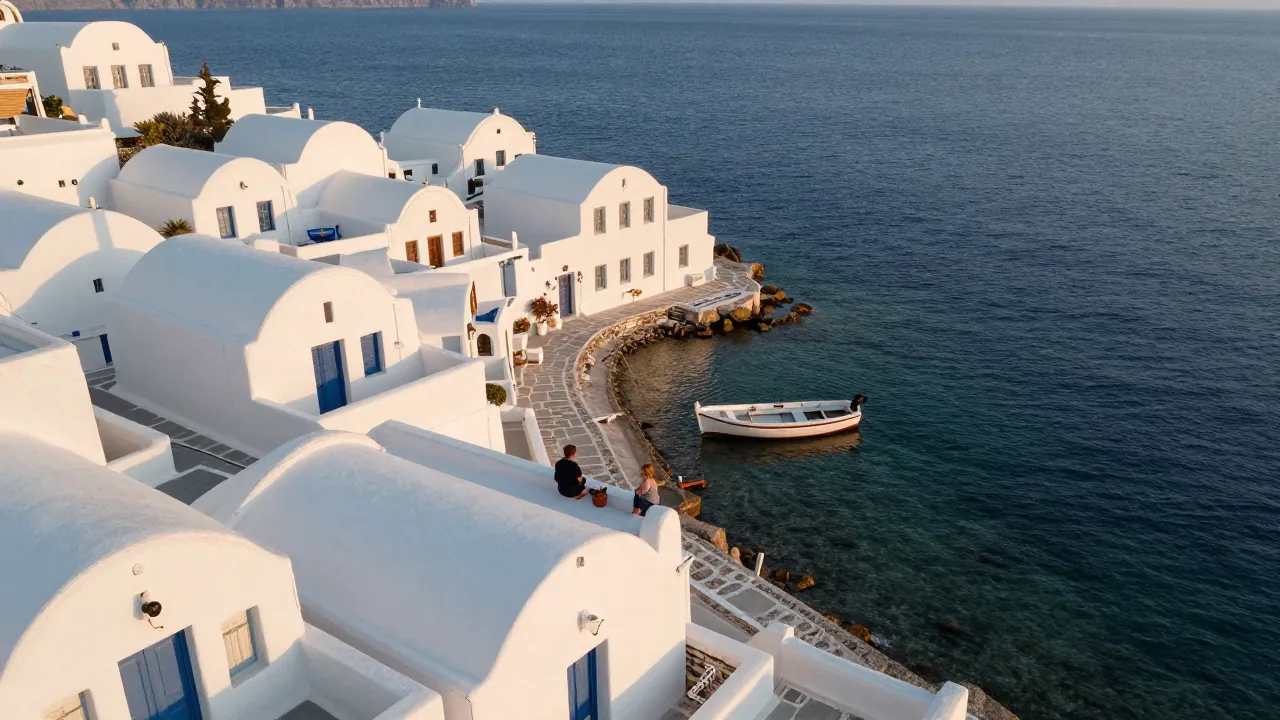
The room matters less than you'd think, but its position matters more. You want a space that can be reset from meeting to dinner without moving the group to another building. Santo Miramare Resort, a seasonal hotel-resort in Perivolos on Santorini's south coast, illustrates the shape we mean: the listing says it runs a conference centre and event services alongside outdoor swimming pools, a private beach area, a restaurant and a wellness centre. That combination is the practical test. If the conference centre sits far from the pool and the beach, your coffee break turns into a walk.
What qualifies as reward time here
Reward time is not a gap in the schedule. It is a block with its own logistics: a named activity, a stated meeting point, a time, and an optional alternative for the person who wants none of it.
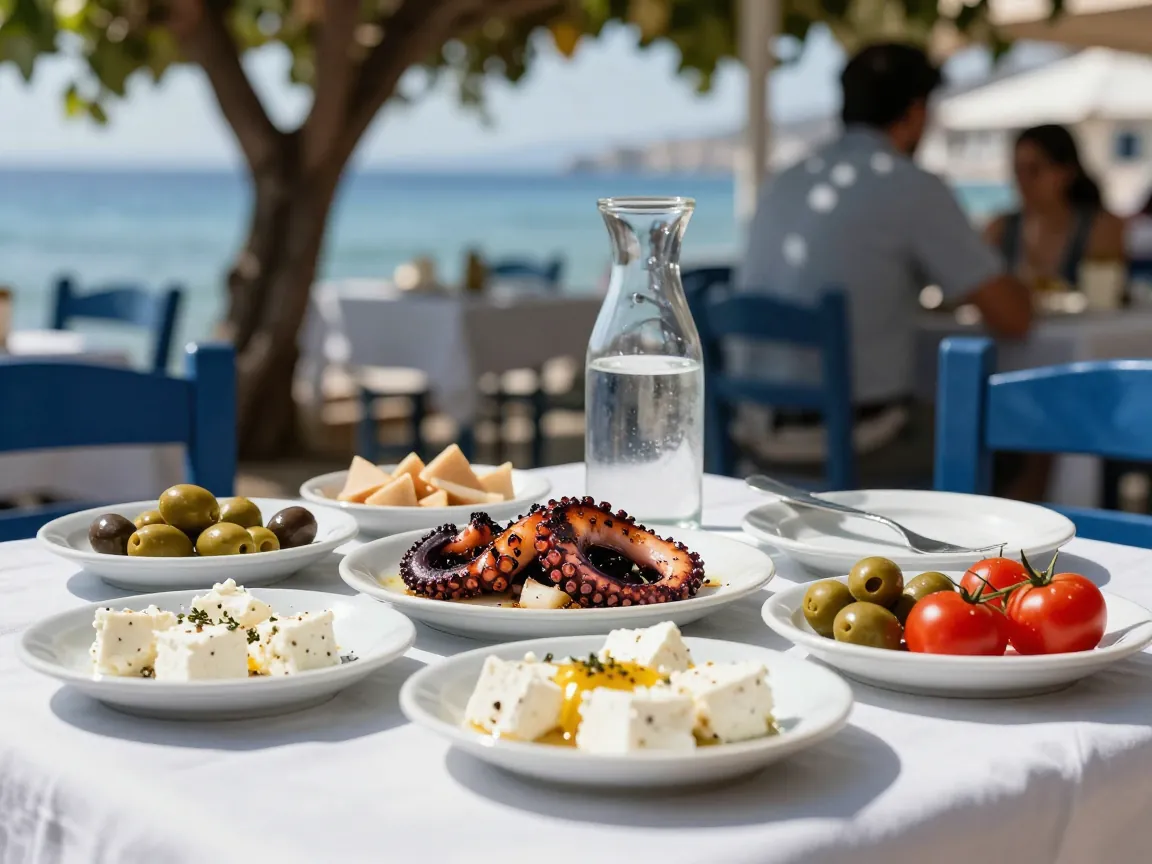
We'd write it as half-day blocks. A morning boat with a fixed departure at nine. An afternoon at the pool with nothing organised at all. A dinner that starts at eight and has an end time, because a table that runs to one in the morning ruins the next day's optional excursion.
The Athens convention bureau's venue directory groups historic, contemporary, coastal and open-air settings, which is a useful reminder that in Greece the setting itself can carry a whole afternoon with no programme attached. When the location is doing the work, add nothing to it.
Briefing the venue when the ratio is inverted
Standard venue briefs assume meetings dominate. Yours does not, and the questions change accordingly.
Ask what time the pool area closes to guests and whether your group can use it outside those hours. Ask how the restaurant handles a single long table for the whole party, and whether the menu can be set in advance rather than ordered on the night. Ask where the group assembles before an excursion leaves, because thirty people waiting in a lobby is the fastest way to lose the reward feeling.
Budget for the leisure side as its own line. Meeting-room costs are usually quoted in isolation, and turning a day rate into a full brief is a different exercise from costing a boat, a transfers block and a private dinner, which is why we'd keep the two conversations separate.
One honest concession: if your group is small, an incentive trip can cost more per head than a retreat in the same venue, because the free-time logistics don't scale down. Boats and private dinners often carry minimum charges that ignore your headcount.
A programme grid that works
We'd plan an incentive trip on a grid: days down the side, four columns across. Sessions, reward time, logistics, and the one thing people will remember. Fill the last column first, then protect it.
| Day | Sessions | Reward time | Logistics | The memory |
|---|---|---|---|---|
| Arrival | None | Unstructured, pool or beach | Transfers, room keys, welcome note | First swim before dinner |
| Day two | One, ninety minutes, morning | Half-day boat or coastal excursion | Departure point and return time fixed | The photograph on the water |
| Day three | None | Free day, two optional add-ons offered | No group transport; taxis arranged on request | Dinner at a table for the whole group |
| Day four | One, forty-five minutes, morning | Nothing scheduled before noon | Departure transfers staggered by flight | The short closing session, then the airport |
Three rules hold the grid together. Never schedule a session on arrival day. Never put a session after a long dinner. Never let logistics occupy a reward block; transfers are transfers.
Location precision matters as much for an incentive as for a working trip, and the same discipline applies: name the beach, name the taverna, name the departure point. A guide to running an offsite with a precise location explains why vague meeting points cost the most time on the ground.
Choosing between island and mainland
Island venues raise the reward ceiling and the logistics floor. A Santorini or Cyclades programme delivers the setting guests picture when they hear the word incentive, and it makes the free-time blocks easy to fill without spending anything. It can also add a connection for many guests, and weather can move ferries.
Mainland coastal options keep arrivals simple and let you spend the budget on the programme instead of the transfers. For a first incentive trip with a mixed group of frequent and nervous flyers, we'd lean mainland. For a group that has earned something they couldn't book themselves, the island wins.
Either way, confirm the practicalities directly. Permit, noise and beach rules can vary by place, so for an event on a beach or a late dinner on a terrace, confirm current requirements with the venue and the competent authority before you commit.
What to put in the invitation
The invitation does more work on an incentive trip than on any other programme. It sets expectations about how little work there will be.
List the two sessions with their times. State that everything else is optional and genuinely optional. Give the dress code for the dinner, the departure time for the excursion, and one sentence on what the trip is rewarding. Then stop writing. The people who receive it should be able to read it in ninety seconds and feel the difference between this and a quarterly review.
If you're building one, send us the headcount, the month you're travelling and the outcome you're rewarding, and we'll point you to venues whose listings match the shape of the trip: event space that doesn't dominate, leisure facilities that can absorb a whole afternoon, and a location that guests will describe accurately when they get home. Send the brief, not a wish list.
Planning questions
How many working sessions should an incentive trip include?
Fewer than a retreat, and each should have a job free time cannot do. We treat two sessions across a four-day programme as the ceiling: one opening session to frame the trip, one short closing session with a single decision.
What venue features matter most for an incentive programme?
Leisure facilities and event space close together, so a coffee break is not a walk. Ask where the group assembles before an excursion, how the restaurant handles one long table, and when the pool area is available to your party.
Should an incentive trip be on an island or the mainland?
Islands raise the reward ceiling and the logistics floor, adding flight connections and weather risk on ferries. The mainland keeps arrivals simple and leave more budget for the programme. Choose based on how well your group travels.