
What the town hall actually receives, and from whom
The core instruction is simple. The U.S. Embassy in Greece says that for a civil marriage, documents are presented in person at the City Hall, the Demarchio, or to the President of the Community where the marriage will take place. That single sentence decides a lot: you don't post your file, and a planner can't hand it over on your behalf unless the municipality allows it.
A typical folder holds, for each person: a passport, a birth certificate, a certificate of no impediment or equivalent (some consulates issue an affidavit of single status instead), and proof of divorce, dissolution or death of a spouse if either of you was married before. The Greek side issues the marriage licence and registers the marriage. Anything you bring from home has to be recent enough and in the right form for the municipality to accept it.
Who checks what? The registry office at the demarchio checks the set as a whole. Your own consulate checks nothing about the wedding; it witnesses or certifies a declaration, or issues a certificate of no impediment, depending on the country. Those are different jobs, and mixing them up costs time.
Apostilles, translations and certified copies: match each to its issuer
An apostille is issued by the competent authority in the country that issued the underlying document, not by Greece. For a US birth certificate, that's typically a state authority; for a federal document, a federal authority. If your country isn't part of the Hague Apostille Convention, expect legalisation through the Greek consulate instead. Our advice: order extra certified copies at the start. It's the cheapest insurance in the whole process.
Translations are the quieter trap. A translation is only as good as its certification: who translated it, whether the translator is recognised by the Greek authorities, and whether the translation itself is stamped and attached to a copy of the original. Ask the municipality which translators or translation services it accepts before you pay anyone. If your reception is on Corfu, translating the menu for guests is a separate job, which we cover in a Corfu reception menu should work for every table.
One more distinction worth holding: a certified copy is not the same as a notarised copy, and neither is the same as an apostilled original. Municipalities differ on which they want, and a consulate can only tell you what it can issue, not what the registry will accept.
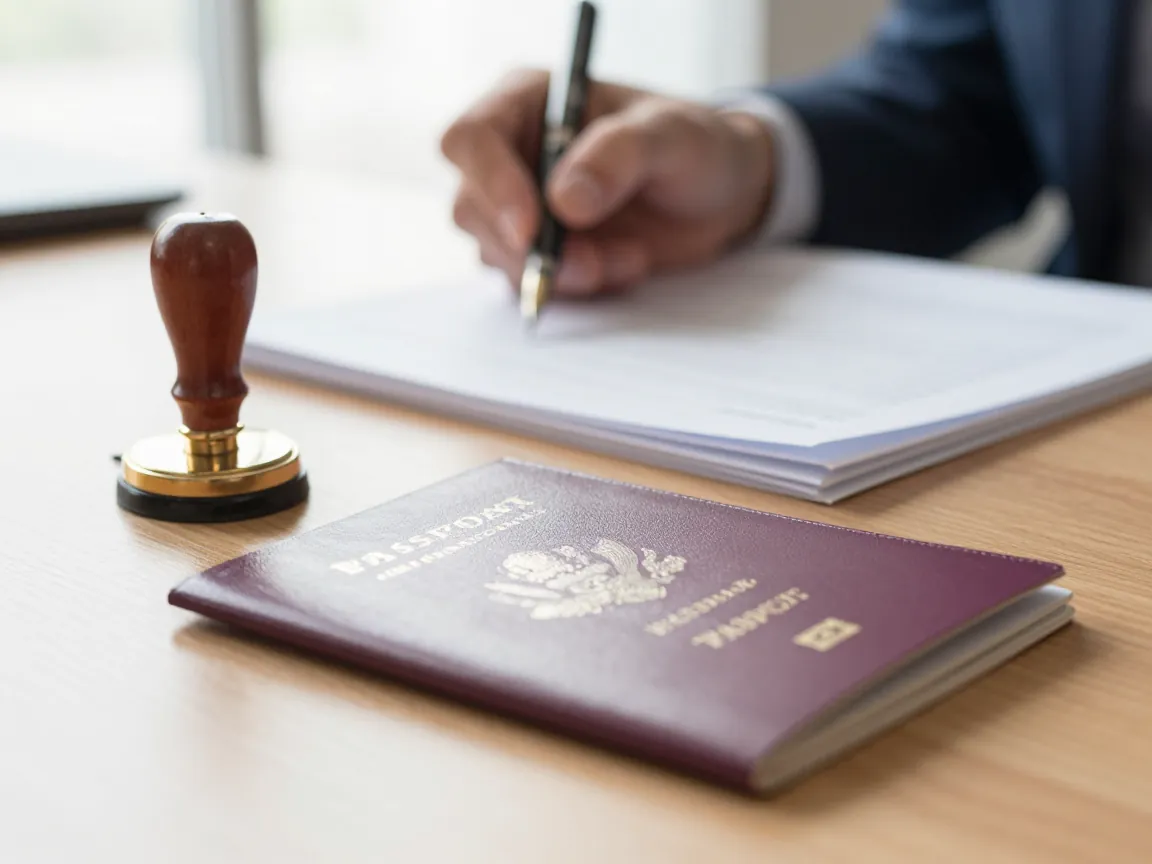
A document tracker you can fill in before you travel
Use this table as a working checklist. The columns on the right are the ones that cause the trouble, because each document has a different issuer and a different checker. Fill in the status column as you go, and keep scans in one shared folder with clear filenames.
| Document | Who issues it | Apostille needed? | Translation needed? | Who checks it | Status |
|---|---|---|---|---|---|
| Passport (each person) | Your national passport authority | No | No | Demarchio registry, on the day | |
| Full birth certificate | Civil registry of your birthplace | Confirm with the municipality | Usually yes, certified | Demarchio registry | |
| Certificate of no impediment or single-status affidavit | Your consulate or home registry | Depends on issuing country | Usually yes, certified | Demarchio registry | |
| Decree absolute or death certificate (if applicable) | Court or civil registry | Confirm with the municipality | Usually yes, certified | Demarchio registry | |
| Certified translations | Recognised translator or service | Not applicable | Not applicable | Demarchio registry | |
| Marriage licence and registration | Greek municipality | Not applicable | Not applicable | Issued at the Demarchio |
Two notes on the table. "Confirm with the municipality" means exactly that: some registries want an apostille on a birth certificate, some accept it only on the certificate of no impediment, and some want it on everything. And the certificate of no impediment deserves extra attention, because consulates may issue it with a validity window, so ask about validity before you book flights around it.
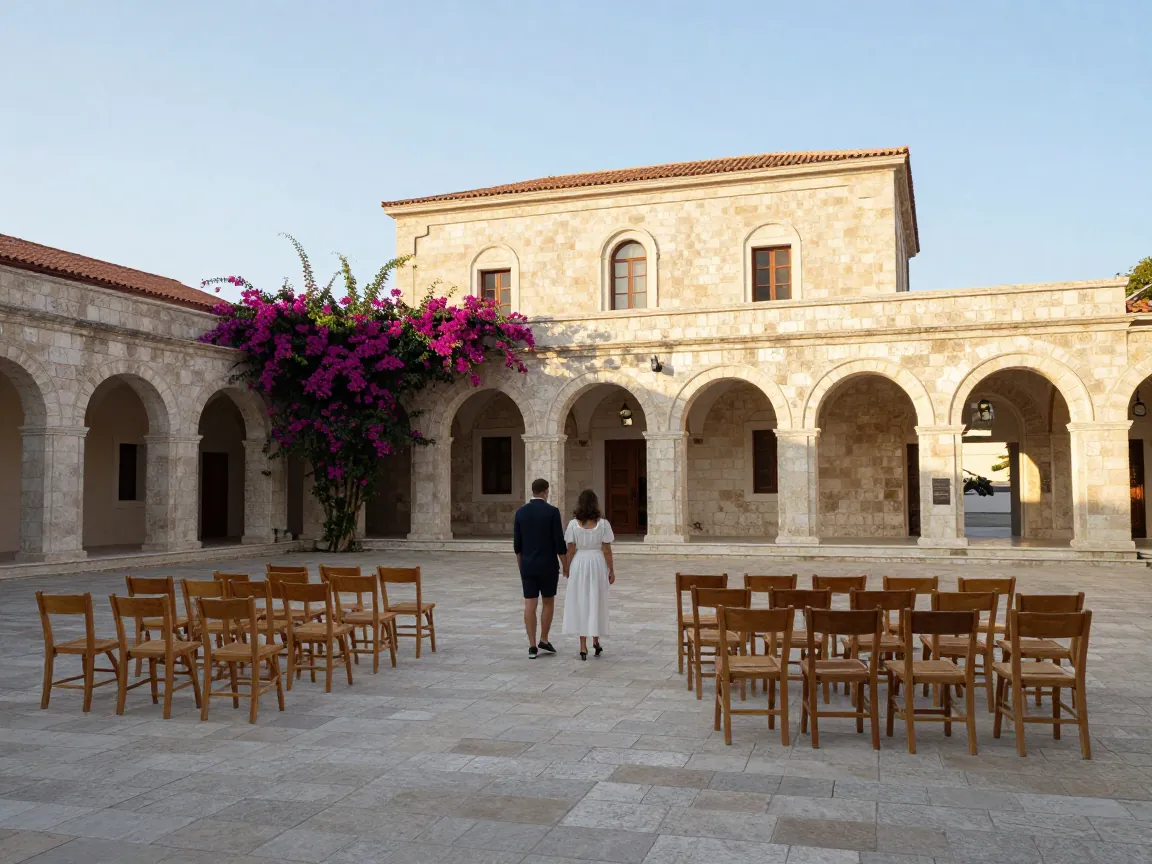
Ceremony day at the demarchio, and the venue question afterward
Where the ceremony can be held and who officiates are questions for the municipality, not for us. Treat every procedural detail as something to verify in writing with the specific office where your marriage will be registered, not as something a blog, ours included, can settle for you.
Two practical habits help. First, ask the registry, in writing, for the list of documents it requires, and keep the reply. Second, ask whether both of you must appear in person to present documents, or whether one of you can, and whether an appointment is needed. The embassy's wording points to in-person presentation, but the office you're dealing with sets its own practice.
Now the reception. Some couples hold a lunch or dinner at a hotel or taverna near the town hall; others book a private club. As one example of the latter kind of listing, Thessaloniki Garrison Officers' Club (LAFTH) sits at 1 Eth. Amynis St., Thessaloniki 546 21, and according to its listing it operates as a restaurant and club whose facilities are available for third-party events under specific conditions, with availability subject to its capabilities at any given time and, for many event types, approval from the 3rd Army Corps. The listing says it's open Monday to Thursday and Sunday from 1:00 PM to 10:45 PM, and Friday and Saturday from 1:00 PM to 12:00 AM. We're not calling it suitable or available for your date; we're saying the record is specific enough to start a real conversation.
If your Greek ceremony is a wedding and a baptism in one trip, brief the reception venue on both ceremonies separately, which is the argument in one celebration, two ceremonies: brief the reception clearly. Photographers, caterers and the registry all work from different schedules, and a single timeline handed to everyone saves a lot of phone calls.
Questions to send the municipality before you book anything
Email or call the demarchio where the ceremony will take place and ask these, in this order. Save the answers.
- Which documents must each of us present, and in what form (original, certified copy, apostilled)?
- Which documents need a certified translation, and do you accept the translator we've chosen?
- Must we present the documents in person, and does that require an appointment?
- Is there a validity window on any document, particularly a certificate of no impediment?
- What does the ceremony itself involve, who officiates, and where can it be held?
- What do you need from us after the ceremony, and what do you issue to us?
Repeat a version of this with your own consulate: which document can it issue, how long does it take, and does it need to be legalised for use in Greece. Then confirm current requirements with the competent authority, whether that's the municipality, your consulate or the registry office, because procedures and accepted document formats change, and no guide can tell you what your local office will accept next month.
Once the paperwork is moving, send us your headcount, date and ceremony location, and we'll suggest venues whose listings fit the day you're planning.
Planning questions
Can our wedding planner present our documents at the demarchio instead of us?
The published guidance points to in-person presentation at the City Hall or to the President of the Community. Some municipalities may allow a representative for part of the process, but that is local practice, so ask the specific registry office in writing before relying on it.
Which document needs the closest eye on its validity?
The certificate of no impediment, because it comes from your consulate or home registry and may carry a validity window. Order it close to your travel date, confirm the window with the issuer, and ask the municipality how recent it must be.
Do we need translations even if everything is in English?
Usually yes for civil registry use, and the translation must be certified in a form the municipality accepts. Ask which translators it recognises before paying, and request the translated text be attached to a copy of the original document.