
What the one-page brief actually contains
The brief answers four questions in this order: purpose, working sessions, free time, travel tolerance. Purpose is one sentence. "Align the regional leads on next year's account plan" is a purpose. "Team building" is not, and it will cost you a venue deposit.
Working sessions need a count and a shape. How many hours of led work per day, how many rooms running at once, and whether anyone needs to join remotely. A boardroom for ten is a different booking from four breakout rooms for forty.
Free time is where retreats quietly fail. Write down what people are expected to do with an unstructured afternoon. If the answer is "relax", you haven't written anything, and you'll get a group that scatters to their rooms and reconvenes at dinner.
Travel tolerance is the number that kills destinations. Ask each attendee, in writing, for their maximum door-to-door time from leaving home to arriving at the accommodation. Plan around the lowest number, not the average. The person with the tightest tolerance is the one who arrives resentful.
A quick checklist for the page:
- One-sentence purpose, with a named decision-maker
- Headcount, plus how many rooms and how many single occupancies
- Hours of working time per day and room configuration
- What free time is for, specifically
- Maximum door-to-door travel time, per attendee
- Date window and any immovable dates
- Budget owner and approval route
- Accessibility, dietary and medical needs flagged early
Island, mainland resort or Athens: what the brief decides
Athens is the answer when the brief says travel tolerance is low and the working day is dense. Staying where the flights land cuts out onward transfers, and the Athens convention bureau presents historic, contemporary, coastal and open-air settings, according to This is Athens Convention Bureau. If half your group is flying in from outside Greece, Athens also removes a domestic connection from the itinerary.
A mainland resort wins when the brief says the group needs to be in one place for three days with no logistics decisions. Pelion is a good example of a mainland region where the geography rewards a compact plan, and we've written about keeping the working day close together there.
An island wins when the brief says the destination itself is doing work for the group, and when travel tolerance is genuinely high. The honest concession: for a two-day retreat with a full working agenda, an island is usually the wrong call. The travel eats the working time and nobody admits it until the feedback form.
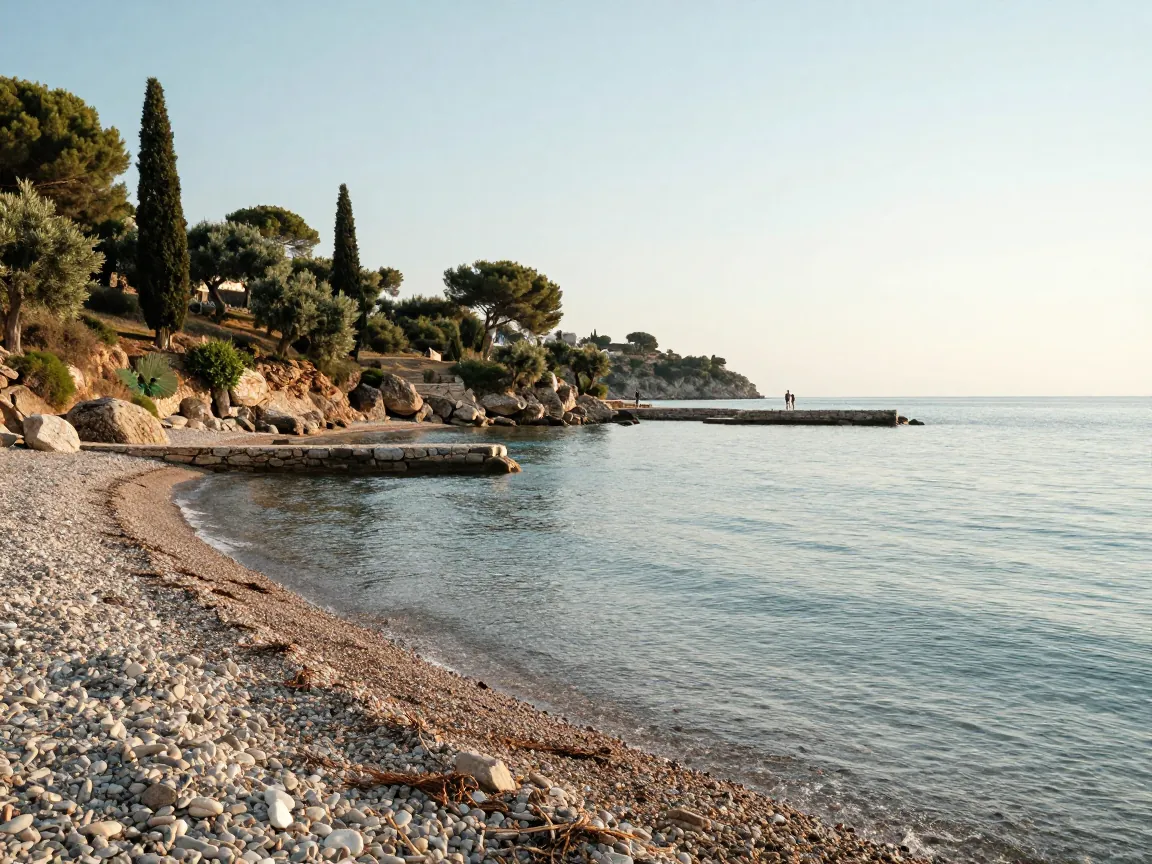
The brief tells you whether you need a venue or a charter
Some retreats don't want four walls. Cyanos Yachting, listed in our directory at Cyanos Yachting, provides private yacht charters in Greece and is based at 42-44 Trivonianou in Athens, with tailored trips across the Cyclades, Saronic Gulf and Dodecanese and charters for corporate and personal events, according to its listing. The listing also shows team retreats among the occasions it covers. Whether a yacht works for your sessions depends entirely on the brief: a half-day of led discussion on deck with no breakouts is plausible; a forty-person workshop with a projector and a whiteboard is not.
If your brief includes a press or media element, the same discipline applies. A press breakfast needs clear sound and a quick exit, and the room layout decisions follow from that, not from how the space photographs.

Questions to put to any venue before you shortlist it
Ask these in writing and keep the answers. They separate a venue that fits your brief from one that fits your budget.
| Question | What a useful answer looks like |
|---|---|
| Can we hold a working session in the room we'd sleep in, or is there a separate meeting space? | Named room, with a capacity figure you can check against your headcount |
| What is the noise situation at the hours we'd actually be working? | A description of what else happens on site at that time |
| Who is our single point of contact on the day? | A named person or role, not a front desk |
| What happens if our headcount changes by ten percent? | A written policy, not a verbal reassurance |
| Can you hold a block of rooms, and until when? | A date in writing |
| What's included in the meeting room rate? | An itemised list: AV, flipcharts, breaks |
| How do transfers work for the whole group? | Who books, who pays, how many vehicles |
Anything touching permits, licences or local rules needs a named authority. Confirm current requirements with the competent authority and the venue before you commit, because these change and we don't state them as fixed.
Writing the brief before the site visit saves the second visit
Take the brief on the site visit. Walk the working room with your session plan in hand and check the sightlines from the back row. Count the power sockets. Ask where the group will gather for the free-time block and whether that's actually within the property.
We'd rather you over-specify the working day than over-specify the destination. A brief that says "three hours of workshops each morning, one joint dinner, no group activity on the final afternoon" gives a venue something to answer. A brief that says "somewhere nice in Greece" gives it nothing, and you'll get ten proposals that all look the same.
One more thing. Put the budget owner's name on the page. Retreats stall when the brief is written by one person and approved by another who has never read it. Add the approval date too, so nobody reopens the brief a week before travel. If the group is arriving from several countries, add a line on who meets whom at the airport and who holds the rooming list, because that detail is the first thing to go missing when the brief lives only in someone's inbox.
Send us your headcount, your date window and your one-sentence purpose, and we'll point you to venues whose listings match the shape of your working day.
Planning questions
Should the retreat brief come before or after we shortlist venues?
Before. Purpose, session hours, free-time plans and per-person travel tolerance determine whether you need Athens, a mainland resort or an island. Shortlisting first means you compare venues against no fixed criteria and end up choosing on price or photographs.
How do we decide between an island and Athens for a short retreat?
Use the lowest realistic travel tolerance in the group. If several attendees can only spare short door-to-door journeys, Athens or a mainland resort keeps the working hours intact. Islands suit groups with genuinely high travel tolerance and lighter agendas.
Can a yacht charter serve as the meeting space for a retreat?
Sometimes, but only if the brief allows it. A half-day discussion with no breakouts can work on deck. Multi-room workshops needing projectors and whiteboards usually cannot. Check the listing's stated coverage and ask the operator directly about your session format.