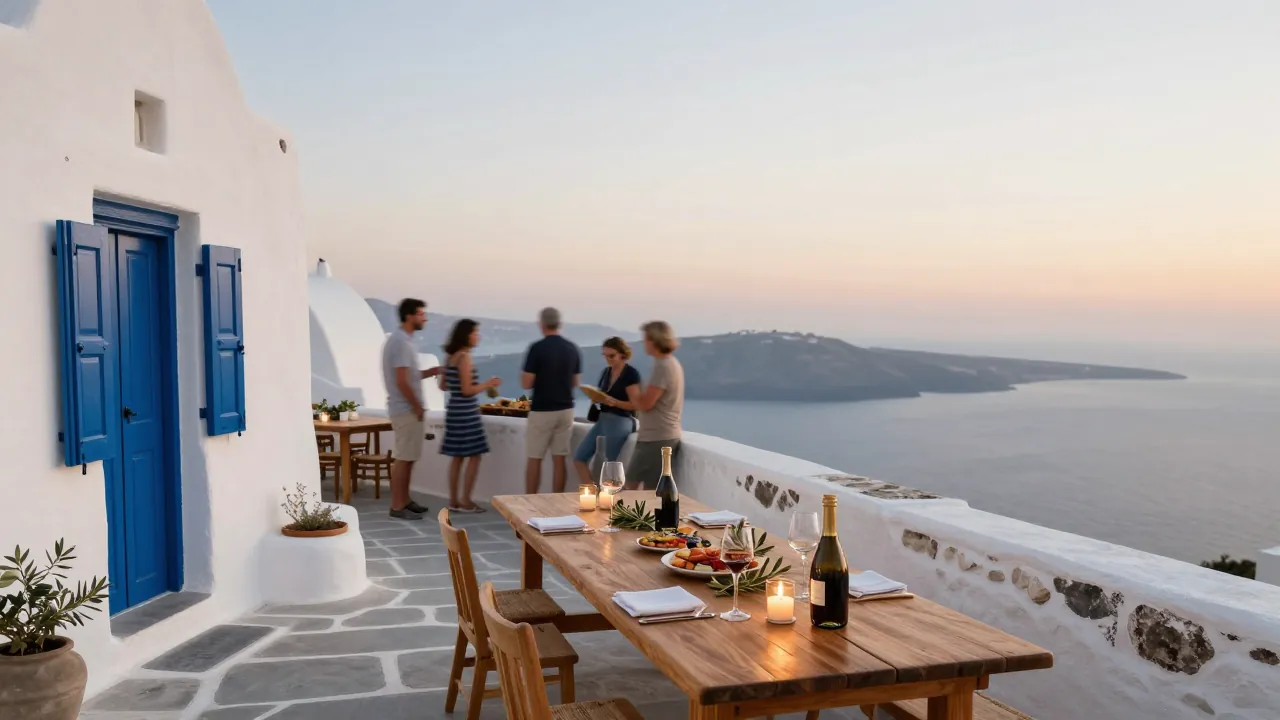
Should you host a welcome party at all
The case for it is strongest when your guest list is a patchwork. If a third of your guests are flying in from Melbourne, a third from London and a third are Greek relatives who already know each other, the welcome party does work no other event can do: it lets strangers meet while nobody is in formalwear and nobody is watching the couple's first dance. By the wedding day itself, your tables are already half-friends.
The case against is cost and energy. A second catered event can add a second venue fee, a second set of transport arrangements and a second late night. We'll admit it: a welcome party can drain a couple so thoroughly that the wedding day feels like a recovery session. If your budget or your nerves are tight, we'd take a two-hour drinks window over a four-course dinner.
One structural rule we'd hold to: the welcome party should never out-dress, out-spend or out-run the wedding. If guests talk about Friday more than Saturday, something went sideways.
Who to invite, and who to tell separately
The guest list question has a simple default: everyone invited to the wedding is invited to the welcome party. Splitting the list into A-guests and B-guests creates exactly the awkwardness the event is meant to dissolve. If the venue can't hold the full list, change the venue format rather than the list.
Where you can flex is plus-ones and children. A relaxed beach bar absorbs children better than a formal restaurant terrace, and parents on a destination trip may have no childcare with them. If you'd rather keep it adults-only, say so on the invitation itself, not in a whispered follow-up.
Wording matters. Call it welcome drinks, a welcome evening or a kalosorisma, and describe the dress code as relaxed. Anyone who reads "cocktail reception" will pack a second formal outfit they didn't need.
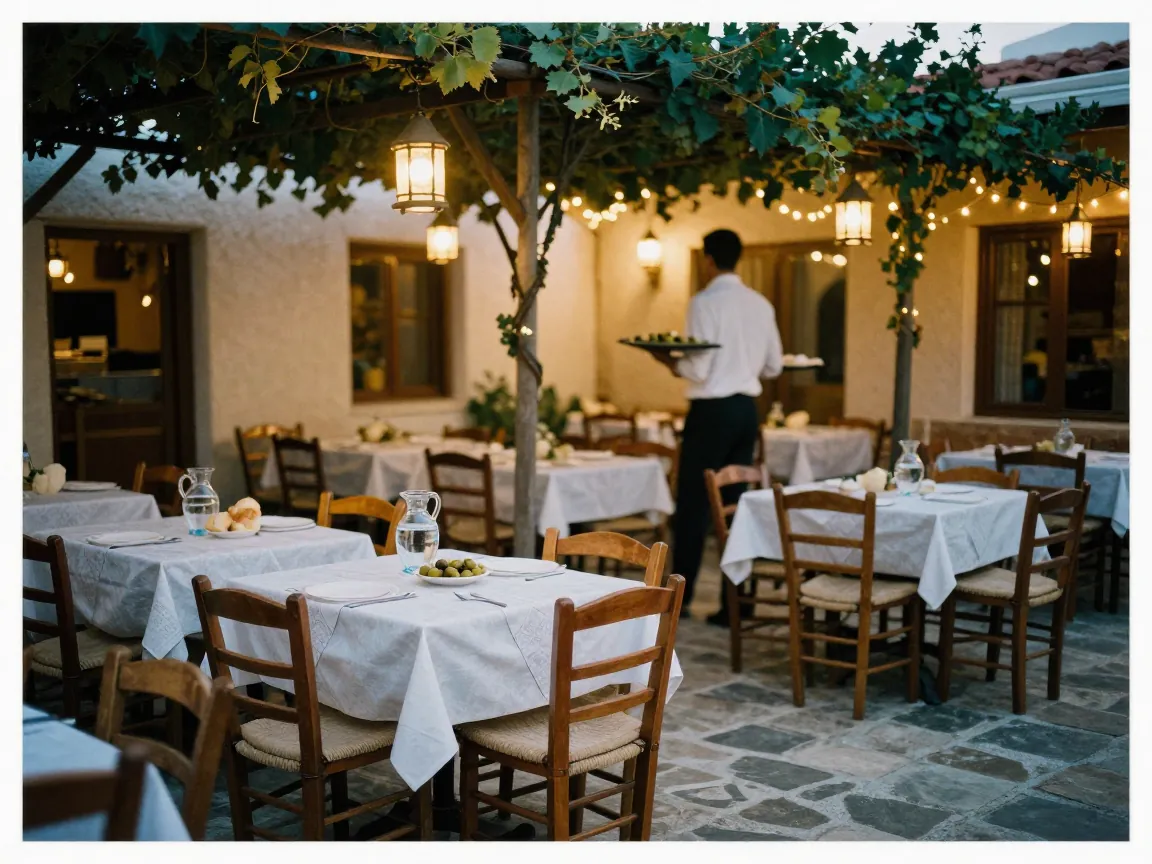
Timing, format and how formal to make it
Two nights before the wedding is our default. The night before belongs to rehearsal logistics, early nights and any last-minute ceremony arrangements, so don't spend it on a party.
On format, a standing event with passed bites and a bar moves faster than a seated dinner and lets people circulate. A seated taverna dinner is warmer and easier to plan but locks guests into a table plan for the whole evening.
On drinks, Greek wine regions give you a good story for free. The Visit Greece page on Naousa describes the area as famed for its red wines, foremost among them the Xinomavro varietal, which is a useful anchor if you'd rather pour regional bottles than a generic house list. If your welcome evening is on Corfu and the menu leans on local dishes, our guide to making a Corfu reception menu work for every table applies just as well to a welcome dinner, especially where dietary needs differ across a long guest list.
Smaller weddings change the arithmetic. When the whole party is thirty people, a welcome dinner and a wedding dinner can feel repetitive, so consider a beach picnic or a village square drinks hour instead. Our notes on how a small wedding handles venue minimums are worth reading before you commit to a second paid event.
A venue that suits a wine-led welcome evening
Kapari Wine Restaurant in Imerovigli, Santorini, is a dining venue with contemporary Mediterranean cuisine, a kitchen led by Executive Chef Mr. Nikolinakos, a curated wine cellar and a caldera-facing setting, according to its listing. The listing says it operates daily from 1:00 PM to midnight and includes a weddings and ceremonies section on its website, which makes it relevant for private dining and small celebrations. The same listing does not confirm capacity, accessibility, parking or event packages, so those are questions for the venue directly. If a wine-focused, sunset-anchored welcome dinner fits your weekend, Kapari Wine Restaurant is one example to weigh against tavernas and beach bars.
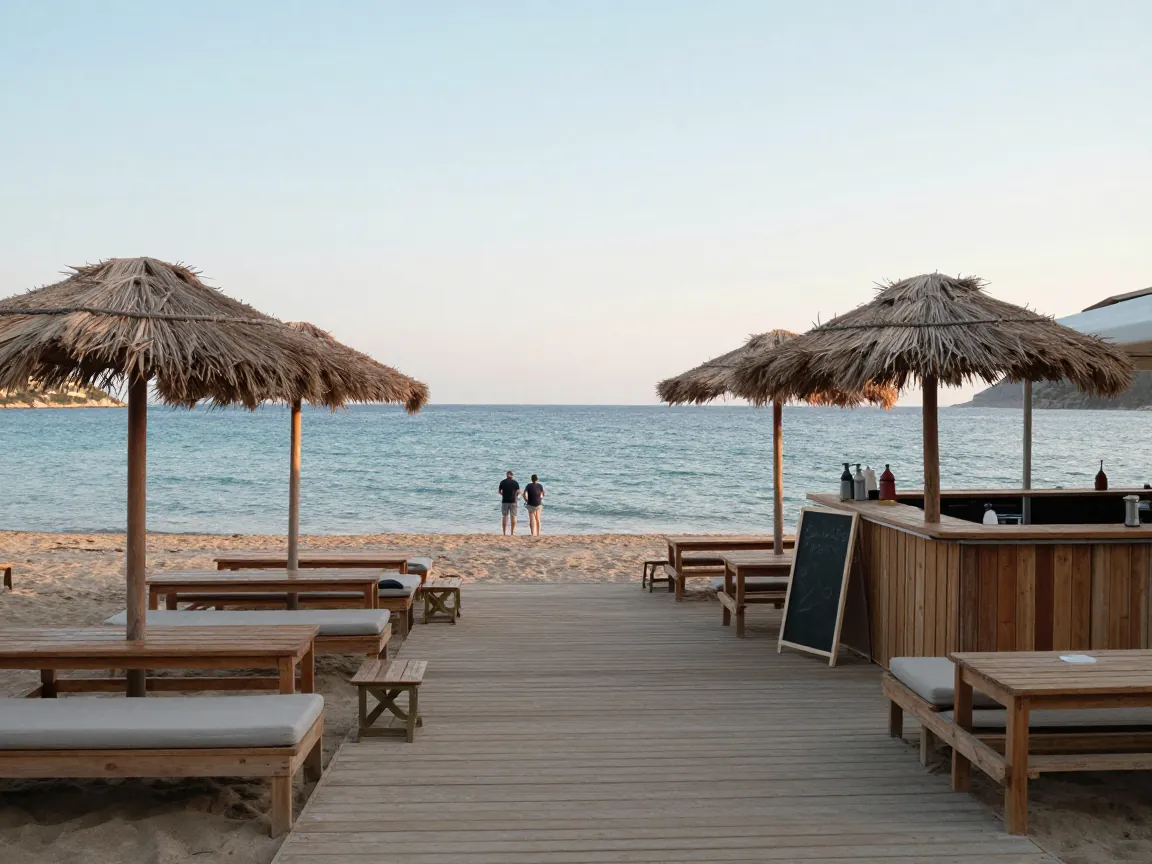
The welcome-party brief to send a taverna or beach bar
Send this as a one-page document. Tavernas and beach bars answer faster when the numbers are already on the page, and you avoid a week of back-and-forth.
| Field | What to write |
|---|---|
| Event and date | Welcome drinks ahead of a wedding, with weekday and date |
| Time window | Start and end, including setup access time |
| Headcount | Confirmed number plus a buffer, marked as an estimate |
| Format | Standing or seated, indoor or outdoor, weather fallback |
| Food | Passed bites, set menu or meze table; list dietary needs |
| Drinks | Welcome drink, wine list approach, non-alcoholic options |
| Sound | Amplified music, playlist only, or acoustic; who supplies equipment |
| Decor | Who brings signage, candles, florals, table linen |
| Space | Area held exclusively or shared with regular diners |
| Payment | Deposit, minimum spend, cancellation terms, final headcount date |
| Access | Step-free routes, toilets, parking or shuttle drop-off |
| Contact | Named person on the night, with a phone number |
Two clauses deserve your attention before signing. First, the final headcount date: ask what happens if your numbers drop after it. Second, the weather clause: for a beach bar, ask in writing where guests move if the wind picks up, because coastal evenings in Greece can change character after sunset.
On anything regulatory, including music levels, closing hours, beach use and permits, confirm current requirements with the competent authority rather than relying on a blog, ours included.
Questions that stop the welcome party competing with the wedding
Run through these before you sign:
- Does the venue host another wedding group that week, and will the spaces overlap?
- Can you hold the area exclusively, or will there be walk-in diners beside your guests?
- What time does music have to stop, and who confirms that?
- Is there a minimum spend, and does it apply to food, drinks or both?
- What is the deposit, and is any of it refundable if plans change?
- Can the kitchen handle your dietary spread at this headcount?
- Is there a wet-weather plan that keeps the same guest capacity?
- Who is the named contact on the night, and can you reach them by phone?
If the answers feel vague, the venue is telling you something. A taverna owner who can quote their own closing time and minimum spend without checking is a good sign.
Our bias, for what it's worth: keep the welcome party short, local and slightly undercooked. The wedding is the main event, and the welcome evening only has to get people talking.
Planning questions
How many nights before the wedding should a welcome party sit?
Two nights before is the practical default, because it keeps the night before free for rehearsal logistics and an early night. A welcome evening too close to the ceremony risks tired guests and a couple who peak too early.
Should everyone invited to the wedding come to the welcome party?
Yes, in our view. Splitting the list creates the exact awkwardness the event is meant to dissolve. If the venue cannot hold the full headcount, change the format rather than trimming the guest list.
What should a welcome party brief ask a taverna or beach bar to confirm?
Headcount with a buffer, time window and setup access, format and weather fallback, food and drinks, music limits, exclusivity of the space, deposit and minimum spend, final headcount date, and a named contact on the night.