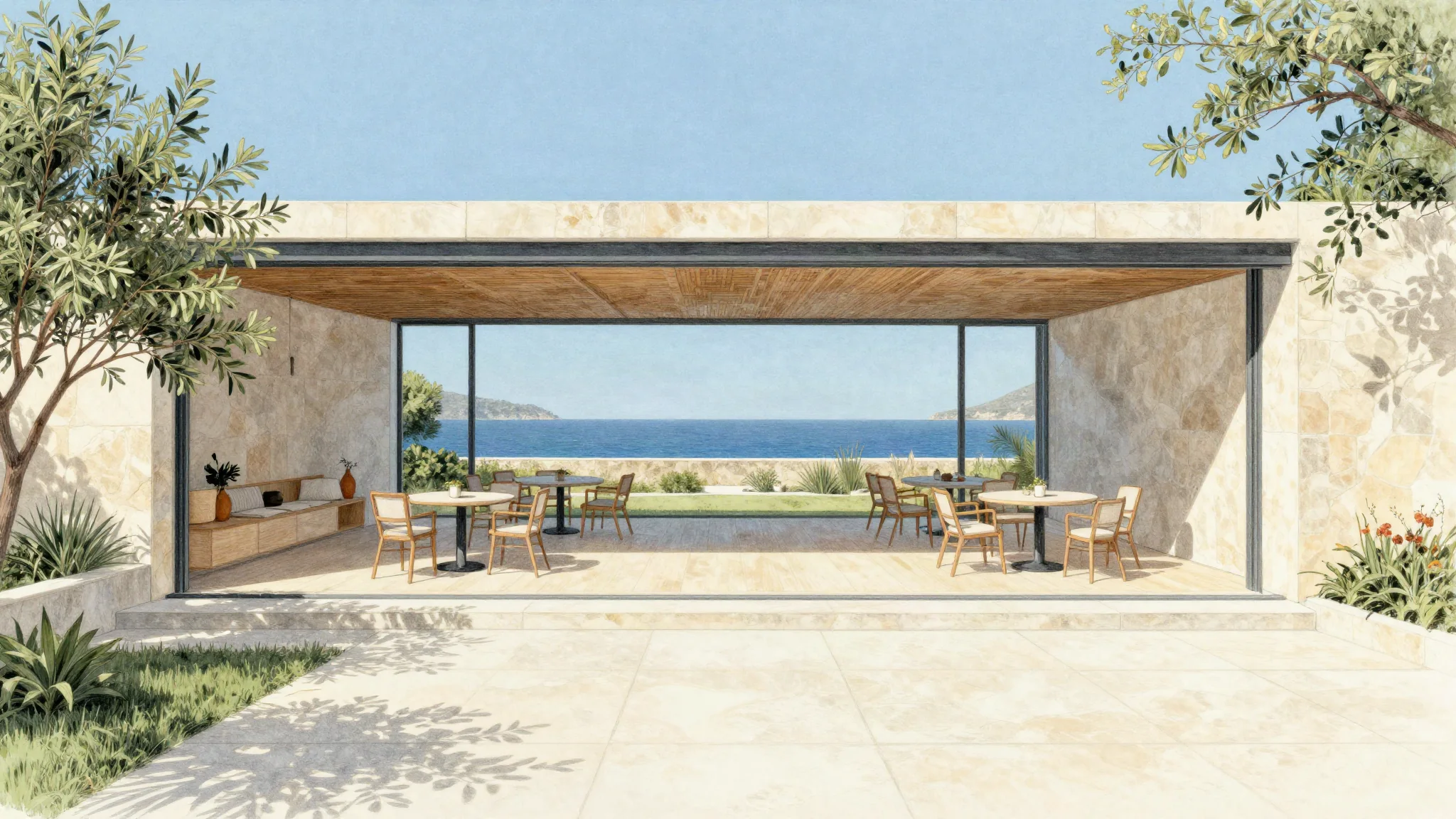
One photo is not a route
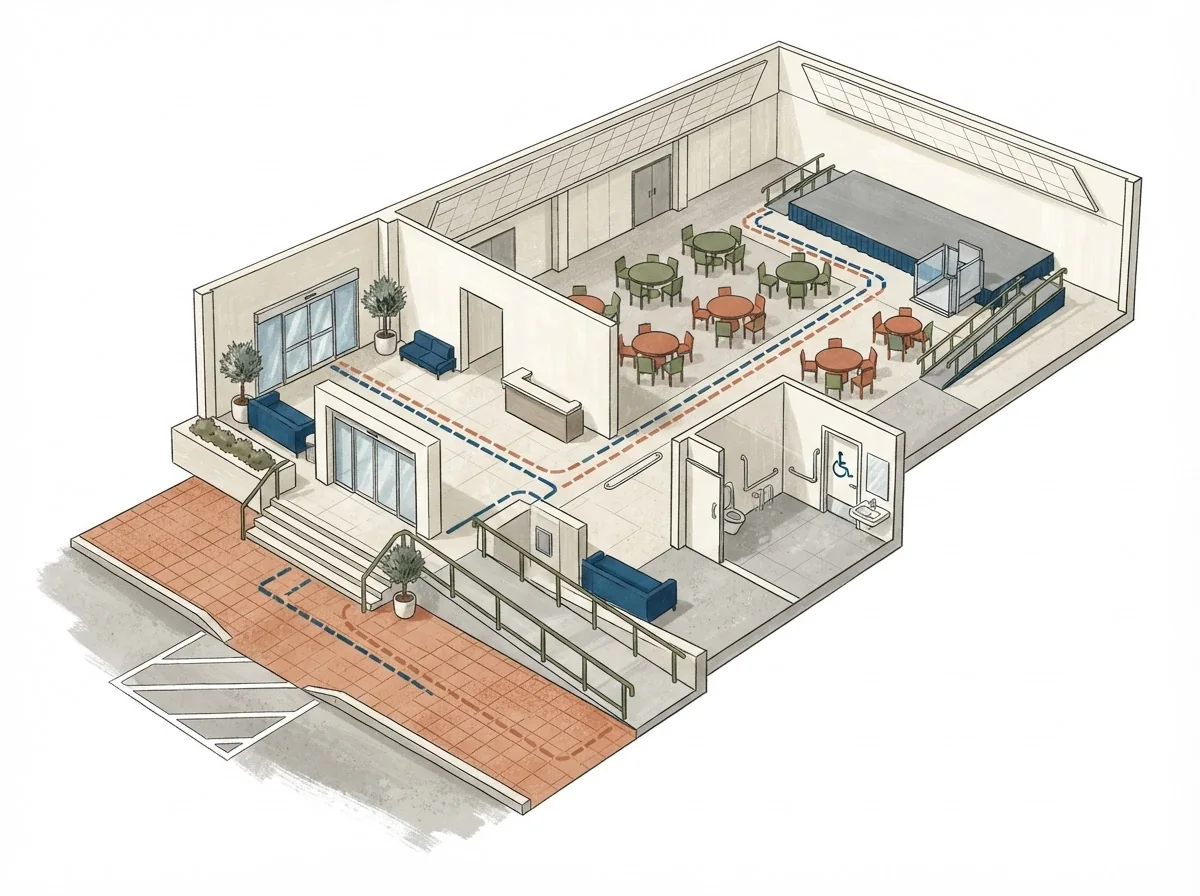
A ramp at the main entrance is a start. It is not the guest's day. The day is a sequence: vehicle arrival, kerb or forecourt, entrance door, lobby, lift or corridor, meeting room, accessible toilet, stage or presentation area, catering point, and departure. Each link can break the chain. A venue can have a ramp and still leave a guest waiting outside because the only step-free door is locked on weekends. A hotel can have a lift and still have no accessible toilet near the conference floor. You need route-specific information, not a general promise of accessibility.
In Athens, the city's official accessibility project separates mobility and visual-impairment itineraries and provides route-specific information, according to Accessible Athens official routes. That separation matters: a route that works for a wheelchair user may lack tactile paving or audible signals for a visually impaired guest. Ask for each guest's specific requirements before you request route details.
Start with each guest's actual requirements
Accessibility is not one checklist. A guest with a mobility disability may need a step-free route and a toilet with grab rails. A visually impaired guest may need clear wayfinding, tactile markers, or a guide. A Deaf guest may need a sign language interpreter, a hearing loop, or clear sightlines to a speaker. A guest with a chronic condition may need a quiet room, a place to sit, or a short walking distance. Ask privately and early. Then map those requirements onto the physical route.
A short written request works better than a phone call. It gives the venue a chance to check, not guess. It creates a record you can compare across venues. It also shows the guest that you are planning around them, not retrofitting after they arrive.
The access-information request
Send this to each venue before you sign. Adapt the wording, but keep the structure. Blank fields are for the venue to fill in. Do not accept 'fully accessible' as an answer.
| Section | What to ask | Venue answer |
|---|---|---|
| Arrival | Is there a step-free drop-off point? Is the route from vehicle to entrance level, firm and at least 1.2 m wide? Are there kerbs, gravel or cobbles? | |
| Entrance | Which entrance is step-free? Is it open at the event times? Is the door automatic or manual, and how heavy? Is there a bell or staff member to assist? | |
| Internal route | What is the step-free route from entrance to the main room? Are there any steps, thresholds or steep gradients? Are lifts large enough for a wheelchair and a companion? | |
| Meeting room | Is the room on the step-free route? Is there space for a wheelchair at tables and in aisles? Can the layout be changed? | |
| Toilet | Is there an accessible toilet on the same level as the meeting room? Is it unlocked and clear of storage? Does it have grab rails and space to transfer? | |
| Stage and speaking area | Is there a step-free route to the stage or presentation point? Is there a ramp, lift or level access? Can a speaker present from the floor level? | |
| Catering and networking | Are tables and serving points reachable? Is there seating available? Is the route to outdoor areas step-free? | |
| Departure | Is the step-free route back to the drop-off point lit and open after the event? Is there a staff member to assist if needed? | |
| Visual and hearing access | Are there tactile markers, audible signals or clear wayfinding? Is there a hearing loop or a quiet room? Can a sign language interpreter be arranged? | |
| Emergency | What is the evacuation plan for guests who cannot use stairs? Is there a refuge point and a named staff member? |
That table is a starting point. Add rows for any specific requirement a guest has shared with you. If the venue leaves cells blank, follow up. A blank cell is not a yes.
What to do with the answers
Once you have written answers, compare them against each guest's requirements. Do not average them. One missing link is enough to exclude a venue for that guest. If the venue cannot answer, ask for a site visit with the guest's requirements in hand. Take photos of the actual route, not the marketing shot. Measure door widths if you can. Check the toilet, the lift, the stage access and the exit route. If the guest can join the visit, that is better. If not, send them the photos and ask what is missing.
For a corporate event, you may also need to plan for a graduation celebration or a similar ceremony with a stage. The same route questions apply.
When the venue can't meet the requirement
Sometimes the honest answer is no. A historic building in Greece may have protected steps, narrow doorways or a lift that cannot be altered. That is a real constraint, not a failure of will. Your job is to find out early and decide. Options: change the venue, change the room, provide a temporary ramp where the venue and local rules allow, or arrange a different way for the guest to participate. Do not promise access you have not confirmed in writing. Do not tell the guest the venue is accessible because the venue's website says so. Verify the route.
If you are booking multiple event spaces for a corporate programme, you can compare options in the collection linked above. Neither page replaces a written access answer for your guest. Use them to shortlist, then send the request.
The tradeoff
Accessible routes sometimes cost more or limit your choice. A venue with a step-free stage may have a smaller capacity. A hotel with an accessible toilet on the meeting floor may charge more for the room. That is the tradeoff. Decide which matters more: the guest's full participation or a cheaper room. There is usually a way to make it work, but you have to ask before you book.
What to send to venues
Send a short email with: your event date and times, the number of guests with access requirements, a summary of each guest's specific needs, and the request table above. Ask for written answers and a named contact who will be on site. Ask whether the venue has hosted a guest with those requirements before, and what was done. Ask for photos of the actual route, not the entrance only. Ask for a site visit if answers are incomplete. Do not ask for a certification or a general statement. Ask for the route, link by link. That is the information you need to choose a venue that works for everyone on your list.
Two useful next steps: The venue site visit: bring the same brief to every room and Conference capacity: ask for the layout, not just the number.
Planning questions
Why should I trace the whole accessible route instead of accepting a single ramp photo?
A ramp photo does not show the full sequence from arrival to departure. The guest's day includes drop-off, entrance, room, toilet, stage and exit. One missing step-free link can exclude the venue.
How should I document each guest's specific access requirements before asking the venue?
Ask each guest privately and early, then map needs onto the physical route. A short written request gives the venue a chance to check, not guess, and creates a record for comparison.