
The villa-versus-hotel decision table
Run your own answers against this table before you book viewings. It is built from the questions that decide most villa weddings, not from any single property.
| Decision factor | Private villa | Hotel or dedicated venue |
|---|---|---|
| Exclusivity | Whole property for your group across several days | Your event space for the hours you book |
| Ceremony and reception in one place | Usually yes, garden or terrace | Depends on the property and any chapel arrangement |
| Staff on site | Often none beyond a caretaker | Duty manager, front desk, maintenance at night |
| Kitchen | Domestic kitchen unless a caterer brings equipment | Commercial kitchen |
| Noise limits | Set by the property, neighbours and local rules | Set by the hotel and local rules |
| Bad weather | You and your planner improvise | Indoor backup usually exists |
| Guest accommodation | Sleeps some guests, others need nearby hotels | Rooms on site or next door |
| Supplier access | You coordinate every arrival | Venue often coordinates |
To be fair to hotels, a villa is not automatically cheaper. Once you add rentals, staff, transport and a generator, a hotel package can come out level or lower, and it usually carries less admin.
Accessibility, power and the plumbing nobody photographs
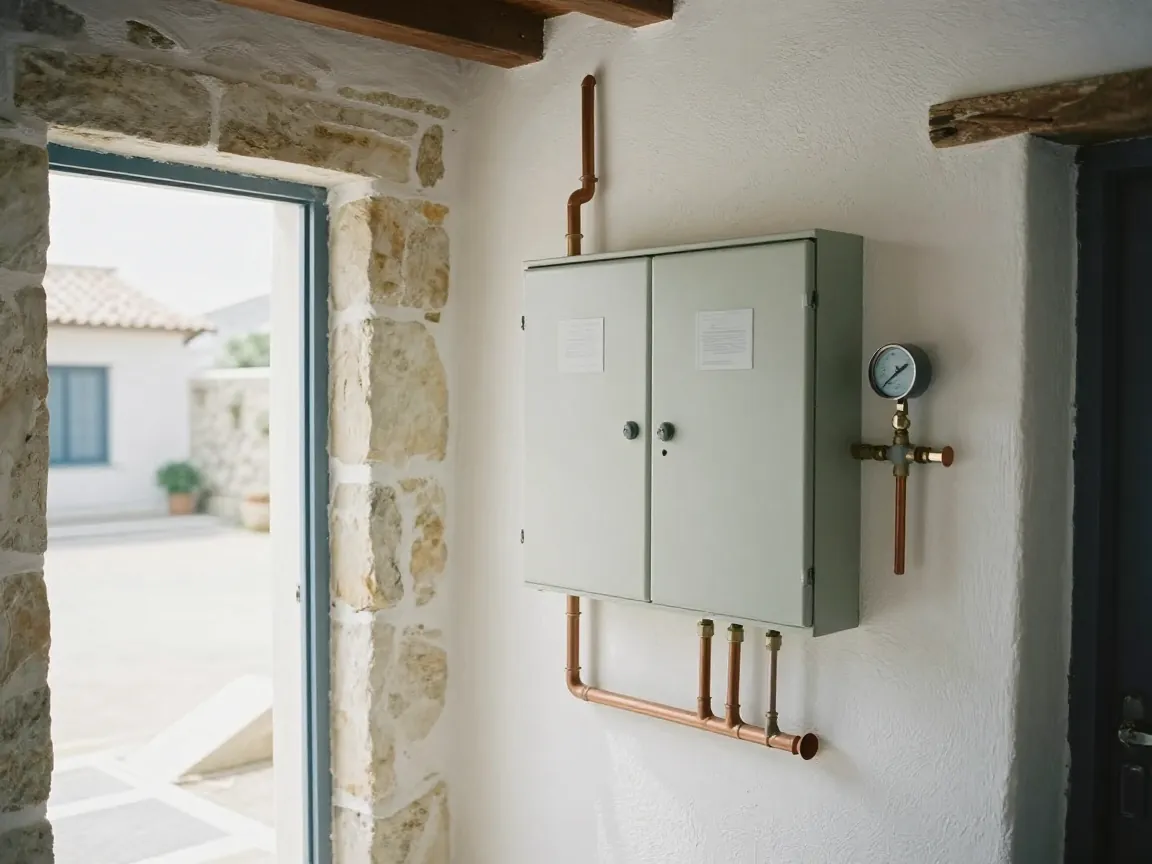
Walk the property as a supplier would. Can a catering van reach the kitchen door, or is the last stretch a stepped path? Where do fridges and ovens plug in, and will a caterer's equipment trip the circuit? Ask who resets a breaker at eleven at night.
Accessibility deserves a written answer, not a shrug. Ask how a guest using a wheelchair reaches the ceremony spot, the dinner table and a bathroom. If the answer involves gravel or three steps, you have your answer.
Water pressure matters on the day you host 40 showers before a ceremony. Ask the host whether the property has hosted groups of your size before, and whether water is heated per building or per room. This is the least glamorous question you will ask and one of the most useful.
What a villa listing tells you, and what it does not
The listing says a property is available to rent. It rarely tells you whether your event is welcome there. Some hosts take a quiet family gathering but refuse amplified music. Others host events happily and simply say so in the house rules.
Read the whole listing and the house rules twice, then ask in writing. A short email with your date, guest count and one sentence about the event gives a host something concrete to answer.
For an example of how differently venues describe themselves, look at the listing for Viewhall Multipurpose Venue - Wedding and Baptism Reception Hall - Catering, a multipurpose venue on Konstantinou Karamanli Avenue in Acharnes, Attica. Its listing presents it as a wedding and baptism reception hall with catering, open Tuesday to Sunday from ten in the morning to eleven at night and closed on Monday. That is a hall, not a villa, and the contrast is the point: the more specific a listing is about what it does, the fewer assumptions you have to make.
The clauses we would not sign a villa contract without
Treat the villa contract as the venue plan. These are the items we would want in writing, in plain language, before any deposit.
- Written permission for the event itself, including the ceremony, the reception and any rehearsal, with the exact dates and hours.
- A stated guest ceiling and whether daytime visitors count toward it.
- The music policy: amplified or acoustic, indoor or outdoor, until what hour.
- Supplier access windows, including load-in and load-out days, parking and any service lift or gate.
- Kitchen and refrigeration access, and whether a caterer may bring cooking equipment.
- Whether the host or an on-site manager is present during the event.
- Cleaning, waste removal and damage terms, with a clear inventory process and photos at handover.
- Insurance expectations of you and your suppliers, and what the host's own policy covers.
- A cancellation clause that names dates and refund steps rather than vague goodwill.
Whether you need a permit for a ceremony, an amplified music allowance, or a fee for using a beach or an archaeological setting is a question for the competent authority, so confirm current requirements directly with the municipality, the parish or registry office, or the venue itself.

Where the villa model really wins, and how it changes your guest plan
A villa wins when your group is self-contained and wants unhurried time together: a welcome dinner on Friday, a ceremony on Saturday, a slow brunch on Sunday. It wins when you have a planner or a capable family member who enjoys logistics, and when the property sleeps a good share of the guests.
It loses when most guests stay elsewhere and the villa becomes a venue with no accommodation attached. Then you are running transport for every movement, and your budget quietly shifts to coaches. If your guests are scattered, read our guide to choosing a Crete guest base before the venue shortlist; the logic applies far beyond Crete.
If the villa has a chapel on the grounds, you have two questions to keep separate: the ceremony and the reception. Our piece on which chapel questions belong to whom splits them cleanly, and it saves an awkward conversation later.
One more thing about island geography. Visit Greece describes Santorini as lying at the southernmost point of the Cyclades and comprising Thera, Thirasia, Aspronisi, Palea Kameni and Nea Kameni. If your villa is on an island like that, your transport plan starts with ferries and flights, not with minibuses.
Send us your brief and let suitable venues answer
Tell us your headcount, your date or rough month, whether you want the ceremony and reception in one place, and whether guests will sleep on site. Add one line about music and one about catering. That is enough for a villa owner or a venue team to give you a straight answer rather than a brochure.
A useful next step is to compare two or three properties side by side against the table above. Write your answers in one column, the property's answers in the next, and book viewings only where the two columns match.
Planning questions
When does a private villa make more sense than a hotel for a wedding in Greece?
When your group is self-contained, wants several days together, and values exclusive use over on-site staff. A villa also suits couples with a planner handling suppliers. If most guests stay elsewhere or you need indoor backup and night staff, a hotel or reception hall usually carries less risk.
What should we ask the villa owner before paying a deposit?
Ask for written permission for the event, the exact dates and hours, the guest ceiling, the music policy, supplier access windows, kitchen and refrigeration use, whether a manager is present, and the cancellation terms. Get each answer in writing, not over a phone call.
Do we need permits or insurance for a villa wedding?
Requirements vary by location, ceremony type and property, so ask the competent authority, such as the municipality, the parish or registry office, or the venue, and confirm current rules yourself. For insurance, check what the host's policy covers and what your suppliers are expected to hold.