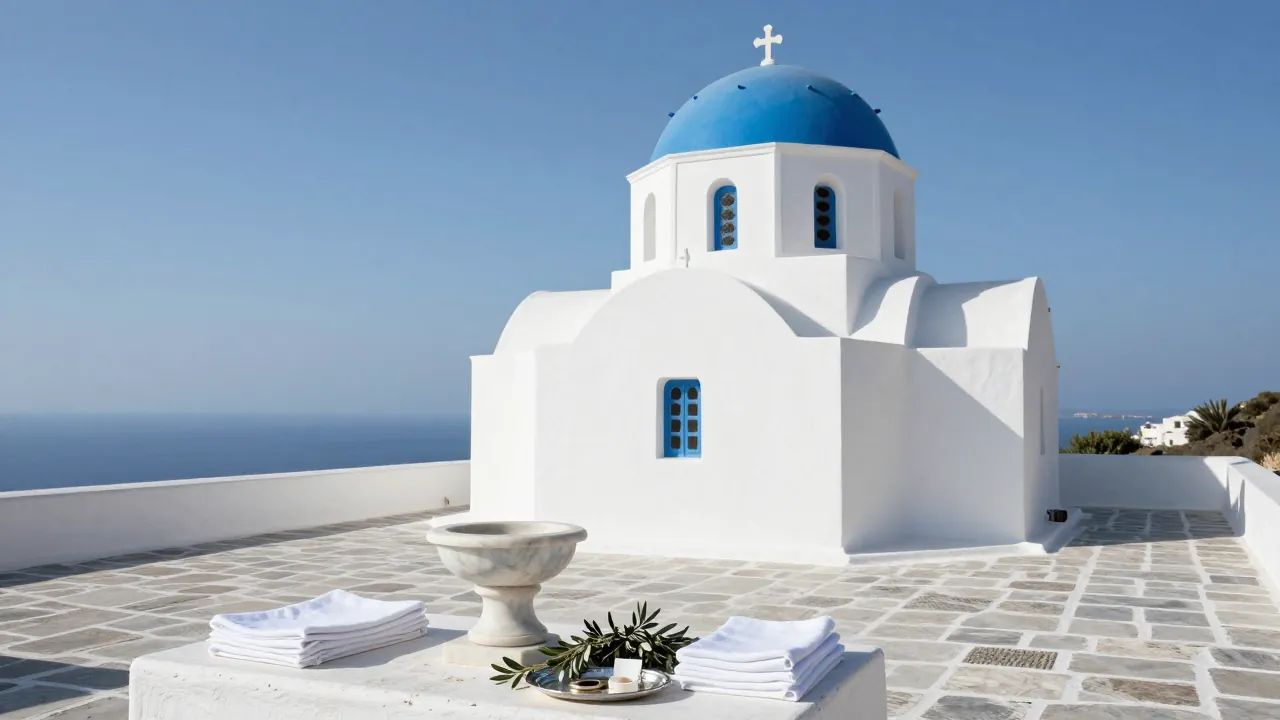
What the godparent traditionally brings to the church
In the Greek practice most families follow, the godparent (nounos or nouna) arrives with the items that touch the child during the sacrament, not just the ones that look good in photographs. Expect to provide:
- The candle (labatha), usually white and often decorated with ribbon, tulle or a name tag. Some parishes have rules on size or decoration, so ask before you buy.
- The ladopana set: the white cloth used to receive the child after the immersion, plus the towel and the sheet that wrap the baby afterwards.
- The baptismal cross on a chain, put on the child at the end of the service.
- The change of clothes, traditionally all white, including a cap and booties if the family wants them.
- The oil in some parishes and the soap, both small items that are easy to forget in a car boot.
- The martirika (witness pins or badges) if the family is handing them out, though in some families the parents buy these instead.
The Greek Orthodox Archdiocese of America, describing the service of Holy Baptism, notes that at each invocation of the Holy Trinity the priest immerses the child and raises him or her up again. Three immersions, three sets of hands nearby, one very slippery baby. That is why we tell godparents to wear something they can move in and to leave rings and loose bracelets at home. Confirm the exact item list with the parish in Greece; the Archdiocese describes the rite, but local custom and the individual priest's preferences decide the details.
Small favours, big arithmetic
Favours (boubounieres) are easy to under-order. The godparent traditionally pays for them, but the parents usually choose them, which is where the arguments start. Decide the number before the design. Count every adult guest, every child old enough to notice, plus the chanters, the altar servers and anyone who helped set up the church. Then add ten percent. If you order three hundred almond favours for a hundred and fifty guests, you'll be carrying boxes home.
Common choices in Greece:
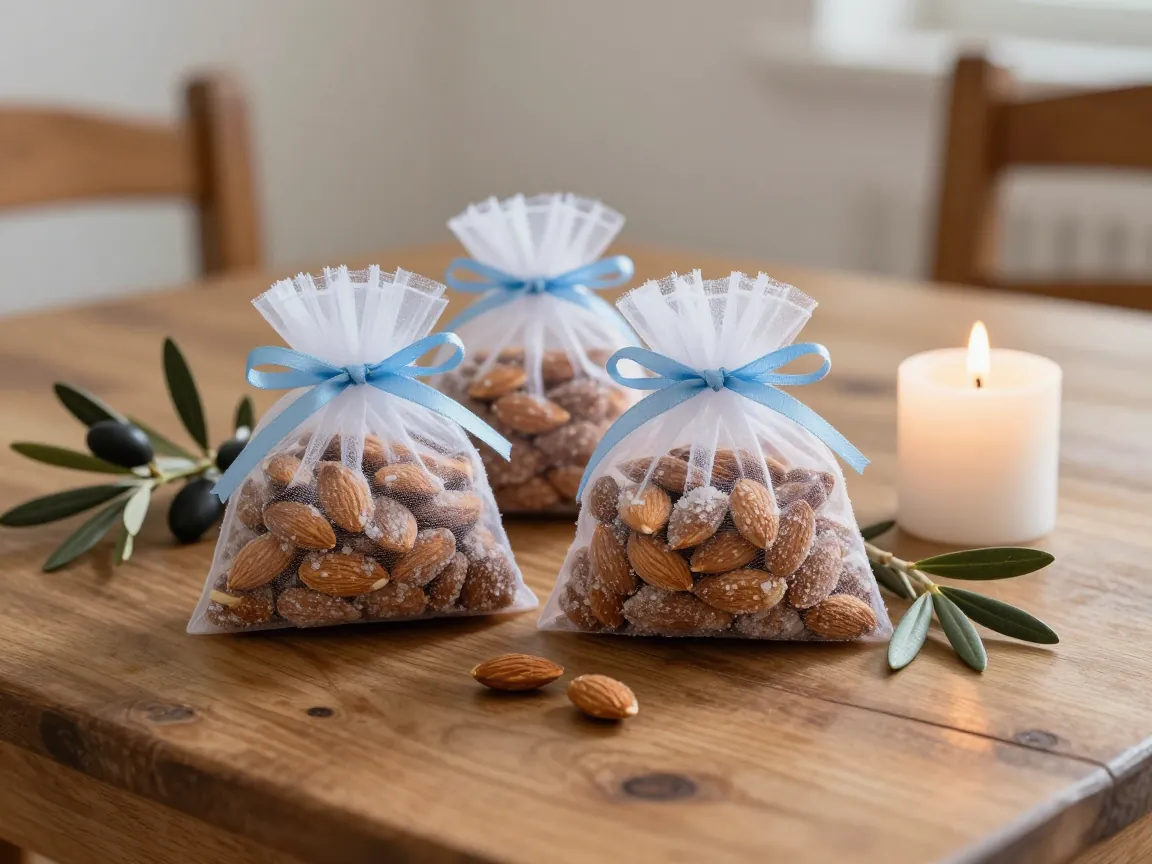
- Sugared almonds (koufeta) in tulle, tied with ribbon in the child's name colours.
- Small olive oil soaps or beeswax candles for an island setting.
- A single larger keepsake per household instead of one per person, which cuts cost and waste.
- A printed card with the child's name, the date and the church.
For the reception budget side of this, our guide to counting adults and children separately in baptism quotes explains why per-head pricing punishes families who invite a lot of young cousins. Favours sit outside that per-head number, so put them in a separate line of the spreadsheet.
The reception venue: what parents confirm, not godparents
Once the ceremony ends, the godparent's job is largely done and the parents' job gets loud. The reception is the parents' booking, the parents' deposit and the parents' final headcount. Confirm, in writing:
- The final number and the deadline for changing it.
- Whether children are counted at full price, half price or not at all.
- Cake policy: brought in, made on site, or a cake-cutting fee.
- Music: live, DJ, or a playlist run by a cousin, and the hour the music must stop.
- Decoration access time, so the godparent's favour table can be set before guests arrive.
- Parking and accessibility for grandparents and for anyone arriving with a pram.
As an example of what a listing tells you and what it doesn't, Kambones 1615 is described in its record as a wedding hall in Naxos, categorized for wedding receptions and similar celebrations. The listing gives an address and a category. It does not state capacity, catering, or baptism experience, so those are questions you put to the venue directly.
Timing the gap between church and table
Greek baptisms often start mid-morning, and the reception follows. The gap is where plans go wrong: photographs, the queue of guests kissing the baby, the drive between parish and venue. Our planning note on leaving room between the ceremony and lunch in Attica covers the Athens-area version of this problem, and the same logic travels to any island or mainland town. Build in slack for the photographer, and tell the venue a realistic arrival window rather than the one you wish were true.
A who-brings-what table you can share
Print this, or paste it into the family group chat so nobody is guessing on the morning.
| Item | Traditionally brought by | Confirm with |
|---|---|---|
| Candle (labatha) | Godparent | Parish, on size and decoration rules |
| Ladopana cloth, towel, sheet | Godparent | Parish |
| Baptismal cross | Godparent | Parish |
| White change of clothes | Godparent | Parents, on size and season |
| Oil and soap | Godparent, in some parishes | Parish |
| Favours (boubounieres) | Godparent pays, parents choose | Reception venue, on a table and setup time |
| Invitations and guest list | Parents | Parish and venue |
| Reception booking and deposit | Parents | Venue, in writing |
| Cake and sweets table | Parents | Venue, on outside food policy |
| Martirika pins | Parents or godparent, decide early | Nobody, just agree |
| Birth certificate and documents | Parents | Parish office and the relevant registry authority |
In some families the godparent also contributes more than the list above, sometimes including part of the reception. If that is happening in your family, write it down before the event, not after. Money discussed in advance is a gift. Money discussed afterwards is a debt.
What to ask the priest and the venue before you buy anything
Ask the parish office, not a search engine:
- Which items must be new and which can be reused within the family?
- Does the priest allow a photographer near the font, and where can the videographer stand?
- What time does the church need cleared for the next service?
- Which documents does the parish require, and who signs them?
Ask the venue:
- What time can we access the space for setup?
- Is there a separate room for the child to rest or be changed?
- Are there steps, and is there a lift?
- What is the cancellation and postponement policy?
Baptism paperwork, parish rules, noise limits and any permissions sit with the parish, the municipality, the consulate or the registry office as applicable. We don't state deadlines or fees here because they change and they vary by place. Confirm current requirements with the competent authority and with the venue before you commit money.
Tell us the numbers and we'll point you at the right rooms
Send us the headcount split between adults and children, the month, and the town or island you're aiming for. A baptism for forty guests in February in Thessaloniki and one for two hundred in July on Naxos need different rooms, different cake sizes and different contingency plans. Give us the brief and we'll match it against venues whose listings actually fit it.
Planning questions
Does the godparent pay for the baptism favours?
In most Greek families the godparent covers the favours, while the parents choose the design and count the guests. Agree the number and the budget early, since favours sit outside the per-head reception price and are easy to under-order.
What should the godparent bring besides the candle?
Traditionally the ladopana cloth, towel and sheet, the baptismal cross, the white change of clothes, and in some parishes the oil and soap. Ask the parish office for its own list, because local custom and the priest's preferences vary.
Who books and pays for the baptism reception in Greece?
The parents. They hold the contract, the deposit and the final headcount, and they confirm cake policy, music hours, setup access and children's pricing in writing with the venue. The godparent's role ends largely when the ceremony does.