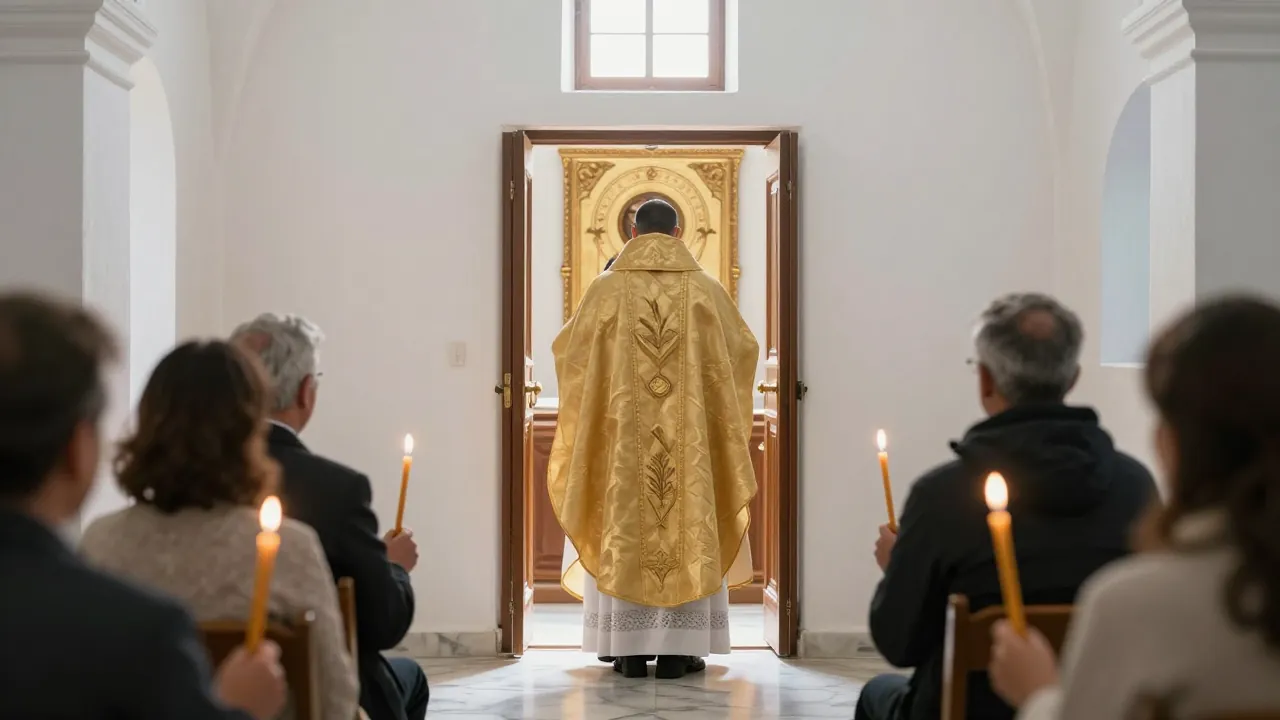
What actually happens during the service
The priest baptizes the child by triple immersion. The Greek Orthodox Archdiocese of America, describing the service of holy baptism, says that at each invocation of the Holy Trinity the priest immerses the child and raises him or her up again. Three immersions, one for each person of the Trinity. The godparent then receives the child from the font, and the child is dressed in white.
Before the immersion comes the renunciation and the creed, usually said by the godparent, followed by the blessing of the water. After it come chrismation, the anointing with holy myrrh, the procession around the font with the priest, the godparent and the candles, and the readings from the epistle and gospel. Ask the parish how long the whole service usually takes there; a full church or a homily can stretch it.
Two practical notes. Churches in Greece can be cold in winter and packed in summer, so tell guests what to wear for the season. And phones go off. Not silent. Off. A baptism is short and the immersion is the moment everyone wants to photograph, so ask the priest in advance whether photography is allowed during the service or only afterwards.
Why the godparent carries most of the logistics
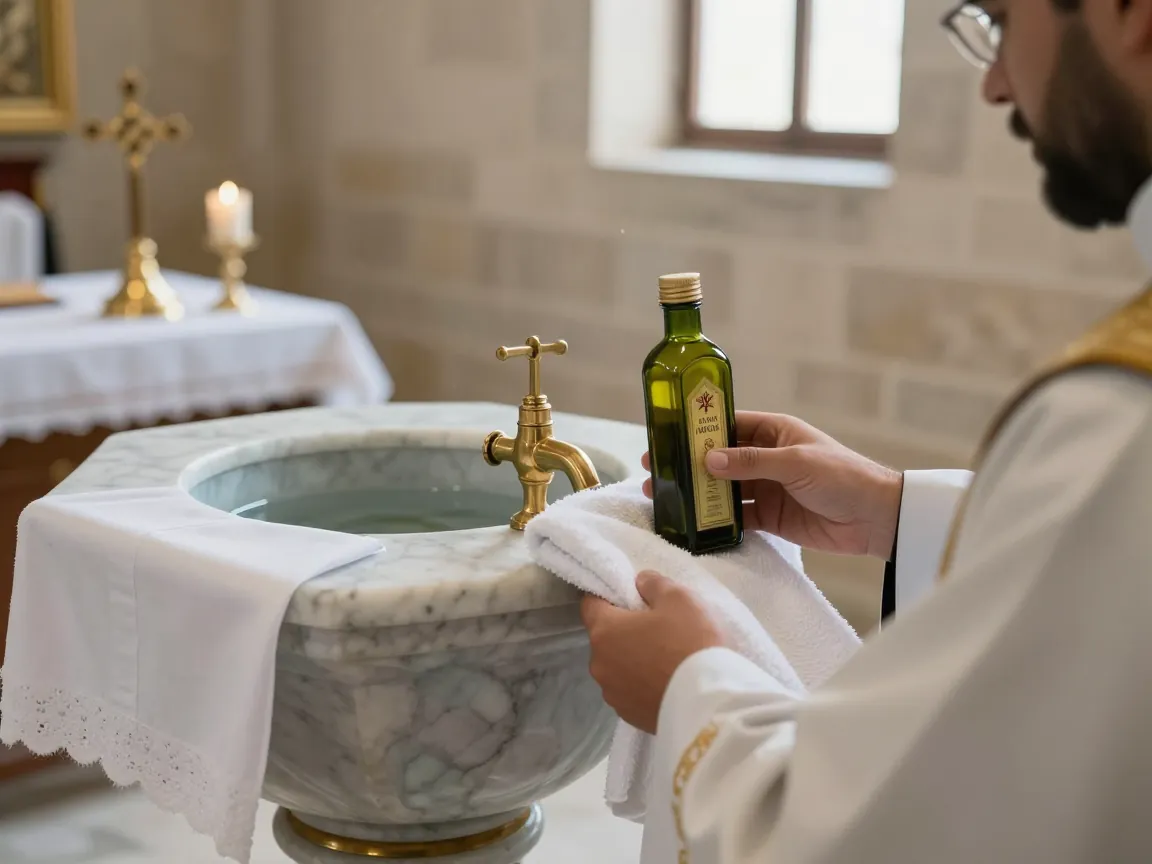
The godparent, the nounos or nouna, holds the child for most of the service, says the creed, and receives the child from the font. In practice the godparent also buys the baptismal set: the white outfit, the candle, the towel, the oil, and often the martyrika, the small pinned favours given to guests. This is the detail first-time guests miss. The martyrika aren't only a keepsake: guests pin them to a lapel or blouse and wear them through the reception.
If you are a guest, ask the parents one question before the day: what time should you be at the church, not the restaurant. Greek invitations often list the church time and the reception time separately, and the gap between them is where guests get lost. Our note on baptism timing in Attica explains why that gap matters more than it looks, especially for a lunch reception.
A guest-information note you can copy
Send this with the invitation, or as a message a week before. It answers the questions guests are too polite to ask.
| Item | What to write |
|---|---|
| Church | Name, address, and the time guests should be seated |
| Service length | One line: roughly one hour, standing and seated |
| Dress | Season-specific, and whether shoulders should be covered |
| Photography | Allowed during the service, after only, or by the photographer only |
| Martyrika | Where to collect them, and that they are worn at the reception |
| Gap | What happens between the church and the meal, and where to wait |
| Reception | Venue name, start time, and whether there is parking |
| Children | Whether children are welcome, and whether there are high chairs |
| Gift | If the family prefers no gifts, say so plainly |
| Contact | One phone number for the day, ideally not the godparent's |
That last row matters. The godparent is holding a baby for an hour and cannot answer the phone. Give guests a second number, perhaps a grandparent's or a cousin's, and say so in the note.
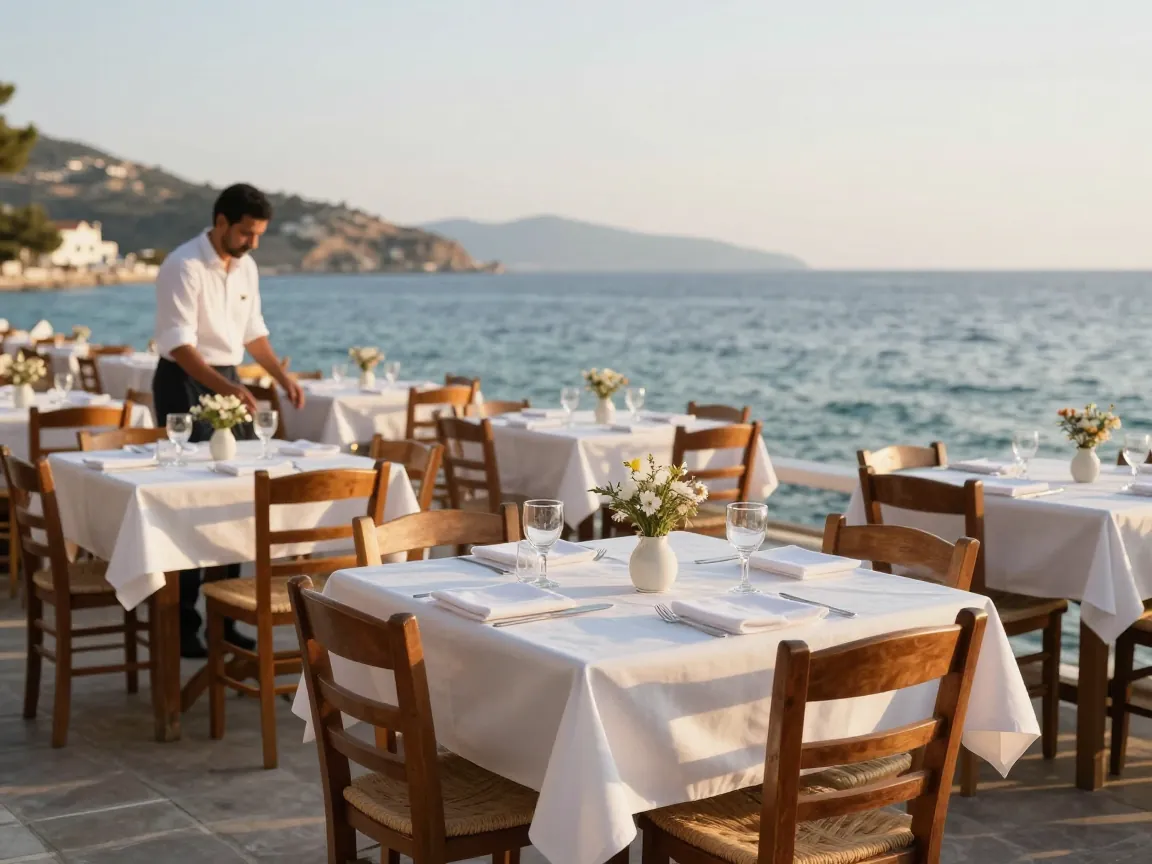
Choosing the reception space, and what to count
Count adults and children separately before you ask any venue for a quote, because children eat from a different menu and sit differently. Our guide to baptism reception quotes walks through why the two numbers change the price. A hall that seats two hundred adults is not the same as a hall that seats one hundred and twenty adults plus eighty children.
As an example of how the listing side reads, To Rebetadiko tou Psyrri on Aischylou Street in the Psyrri district of Athens is a restaurant and music venue with a hall for weddings, baptisms and corporate meetings, and according to its listing it accommodates up to 220 people. The record also says it operates as a mezedopoleio and music stage, open Monday to Saturday from noon to three in the morning and Sunday from noon to one in the morning. A baptism lunch that runs into live rebetiko is one kind of afternoon; a quiet hotel ballroom is another. Both work, and the listing facts are the starting point for the conversation, not a verdict.
In our view, mezedes suit a baptism better than a set menu in most cases. People arrive from church at different times, children eat early and run, and a table that keeps producing small plates absorbs all of that. A plated main course does not. Ask the venue whether the mezedes come out in waves or all at once, because a table covered in plates in the first twenty minutes goes cold before the late arrivals sit down.
When to move guests from the church to the table
We tell parents to build in ninety minutes between the end of the service and the start of the meal, as an example, not a rule. That window covers the photographs at the church, the drive, and the time guests spend finding parking. As examples again: if the reception is a lunch, aim to have people seated by two in the afternoon. If it is a dinner, aim for eight in the evening and expect the godparent to arrive last.
Be warned, though: a gap of three hours tends to lose guests to other plans. Ninety minutes is enough. Anything longer needs a plan: a coffee stop, a park, or a bar within walking distance of the venue.
Church schedules and photography rules depend on the parish, while how late a reception can run, and how loud an outdoor one can be, depends on the venue and on local rules, so confirm current requirements with the parish office and the competent municipal authority before you print anything.
Tell us your headcount, the date and the church, and we will point you to venues whose listings fit those numbers. Both figures, adults and children, please.
Planning questions
How long before the service should guests arrive at the church?
Plan to be seated about twenty minutes before the start. Arriving early means nobody walks in during the blessing of the water. Tell guests the seated time, not the listed start time, and mention whether parking near the church is difficult.
What are martyrika, and should guests wear them?
Martyrika are small pinned favours the godparent gives to guests, usually distributed at the church or the reception. Guests pin them to a lapel or blouse and wear them for the rest of the day. If you are unsure where to collect yours, ask the parents beforehand.
How much time should parents leave between the church and the reception?
Around ninety minutes works for photographs, the drive and parking, as an example. Longer gaps lose guests. If the venue is far from the church or the reception starts much later, arrange a coffee stop or a meeting point and put it in the guest note.