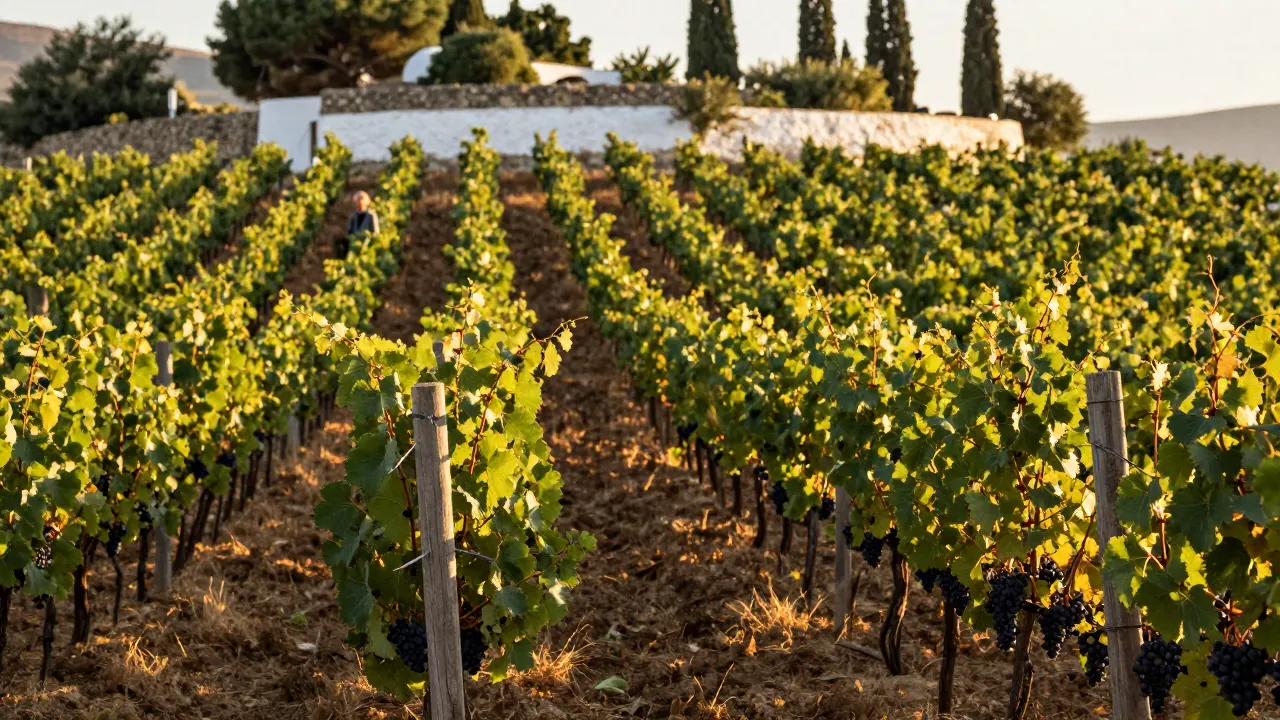
Why nobody can promise you a picking date months ahead
Visit Greece describes September as the traditional wine grape harvest month, a family affair in which relatives, neighbours and friends all help. That word, traditional, is doing real work. The picking day inside September moves with sugar levels, rain and heat, and a winemaker reads the fruit, not the calendar. The temptation is easy to understand: fix a Saturday in March, print it on a save-the-date, book flights. For trygos, we think that's a mistake. A winery that gives you a firm date eight months out is either guessing or describing last year.
Ask instead for a two-week window and a decision point. One workable rhythm, as an example: you hold a block of dates, the winemaker confirms roughly ten days ahead, and you keep one fallback weekend clear. The fallback is not pessimism. It is the whole plan.
What to put in the harvest-day brief you send a winery
The brief below is the one we would send. It fits in one email, and it lets a winery answer with a yes, a no, or a question, rather than a vague maybe. Keep every line factual and short.
| Item | What to write |
|---|---|
| Date window | Two or three candidate dates plus one fallback weekend |
| Group size | Adults and children counted separately, plus total |
| Participation | Watch, pick in the rows, or work the crush, and for how long |
| Tasting | Number of wines poured, seated or standing, and duration |
| Meal | None, picnic, or a served meal, and any dietary needs |
| Non-drinkers | How many, and what they are offered instead |
| Transport | Who drives, vehicle size, and drop-off point at the estate |
| Footwear and sun | What the terrain is like and what the winery recommends |
Two lines in that table deserve extra care. Participation level matters because picking in the rows and standing at the crush are different days physically, and a winery needs to know which one it is staffing. Non-drinkers matter because a harvest group may well include them, and a tasting room that only plans for wine will leave them with water and a chair. For that side of the day, our guide to a wine-tasting plan for non-drinking guests covers the practical questions.
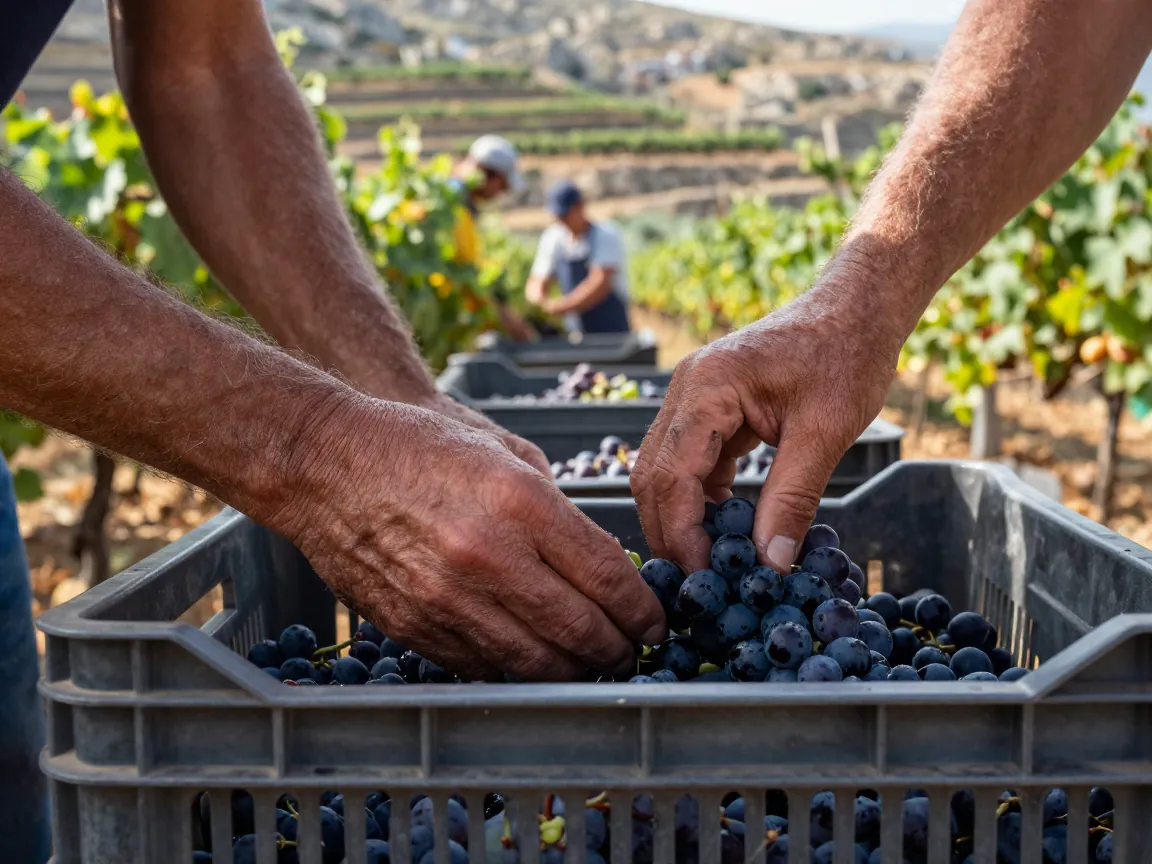
Participation, safety and the terrain of a working vineyard
A working vineyard in September is not a manicured event lawn. There are vines at knee and shoulder height, uneven ground, crates, tractors moving between rows, and wasps around dropped fruit. None of that is a reason to skip it. It is a reason to ask, in the same email, what the winery expects of guests.
Three questions we would always include. Are closed shoes required, and does the winery provide gloves or secateurs? Is there shaded rest and water at the rows, or do guests walk back to the building? And are children allowed in the picking area, or do they stay with an adult near the tasting room? A winery that has hosted harvest groups should be able to answer each in a sentence.
Heat is the other variable. September afternoons in much of Greece are still hot, so we would push for picking early and tasting later. That may also suit the winery, which is usually working its own schedule around the fruit. If your group includes older guests or anyone who cannot stand for long, say so in the brief and ask what the seated option looks like.
Tasting, meals and how the day is sequenced
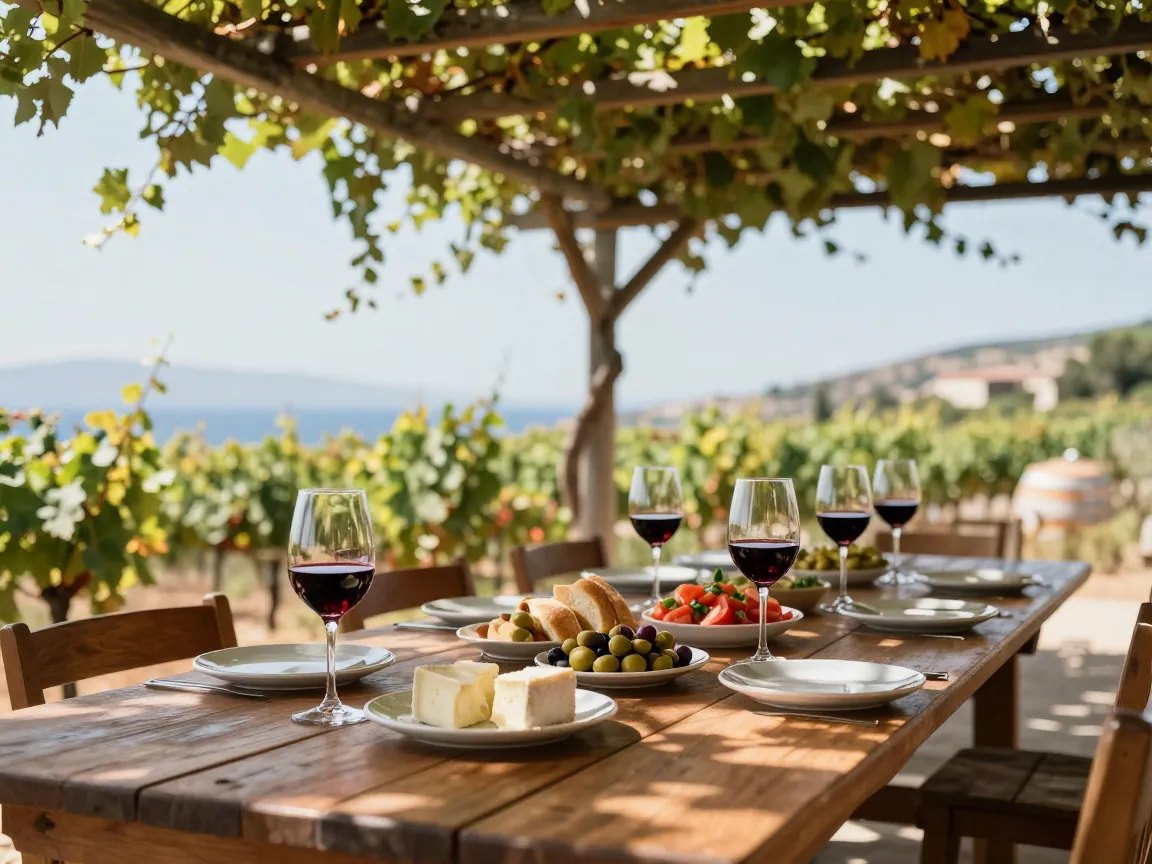
Harvest visits tend to take one of two shapes. The lighter one is pick, then a guided tasting of the estate's wines, perhaps with something simple to eat alongside. The fuller one adds a meal, perhaps at a long table in the cellar or under a pergola. Both can work for a group. What matters is that the sequence and the duration are written down, because a harvest day drifts when the picking runs long.
We would ask for a simple running order: arrival time, when picking starts, when it stops, when the tasting begins, when food is served, and when the group is expected to leave. If there is a meal, ask who prepares it and whether it is cooked on site or brought in. Ask, too, whether the tasting pours are full measures or small tastes, since that changes how you arrange transport. If the group is large enough that a winery needs extra staff, ask when it wants a final headcount.
If the harvest day grows into something more produced, with a seated meal and a programme, treat it as a small event rather than an outing. Our notes on planning a winery event as a production day set out the timing questions that come up once you add tables, speeches or music.
Backup plans when the fruit is early or late
An early harvest can be over before your window opens. A late one can still be hanging when you arrive. Neither is a crisis if you have prepared two alternatives. The first is a tasting-only visit at the same winery, which an estate might offer at short notice if you ask early. The second is a different winery in the same region, which is why shortlisting three rather than one is worth the extra emails.
One caveat applies to all of this. A trygos day is a working day on a farm, and it will not run to a minute-by-minute script. If your group needs a fixed, replicable schedule, a harvest visit is the wrong choice and a tasting room in a quieter month is the right one. If your group wants the real thing, the flexibility is the point.
What to confirm, and with whom
Ask the winery to confirm, in writing: the date window, the participation level, what is provided and what guests bring, the tasting format, the meal arrangement, the non-drinker option and the transport plan. For anything touching local rules, access or land use, the winery and the competent local authority are the ones who confirm current requirements, so build that confirmation into your timeline rather than assuming it. Also check whether the estate asks guests to sign anything on arrival, and whether it carries insurance for visitors in the working areas.
Once your dates, headcount and brief are ready, send them to the wineries you are considering. Our wine tasting venues directory is a reasonable place to widen the shortlist if your first choices are already committed for September.
Planning questions
Can we book a grape harvest day for a fixed date months in advance?
Ask for a date window rather than a single day. Picking follows sugar levels, rain and heat, so winemakers confirm close to the week. Hold two or three candidate dates plus a fallback weekend, and ask the winery when it expects to confirm.
What should our harvest-day brief tell the winery?
Send your date window, group size with children counted separately, participation level, tasting format, meal arrangement, number of non-drinkers and your transport plan. A short, factual brief lets a winery reply with a clear yes, no or follow-up question.
What do non-drinkers get during a harvest visit?
Ask directly in your brief. Some estates may offer juice, water or a non-alcoholic pour alongside the tasting, and a seated alternative for anyone who cannot stand through the picking. Confirm the option in writing so it is planned rather than improvised.