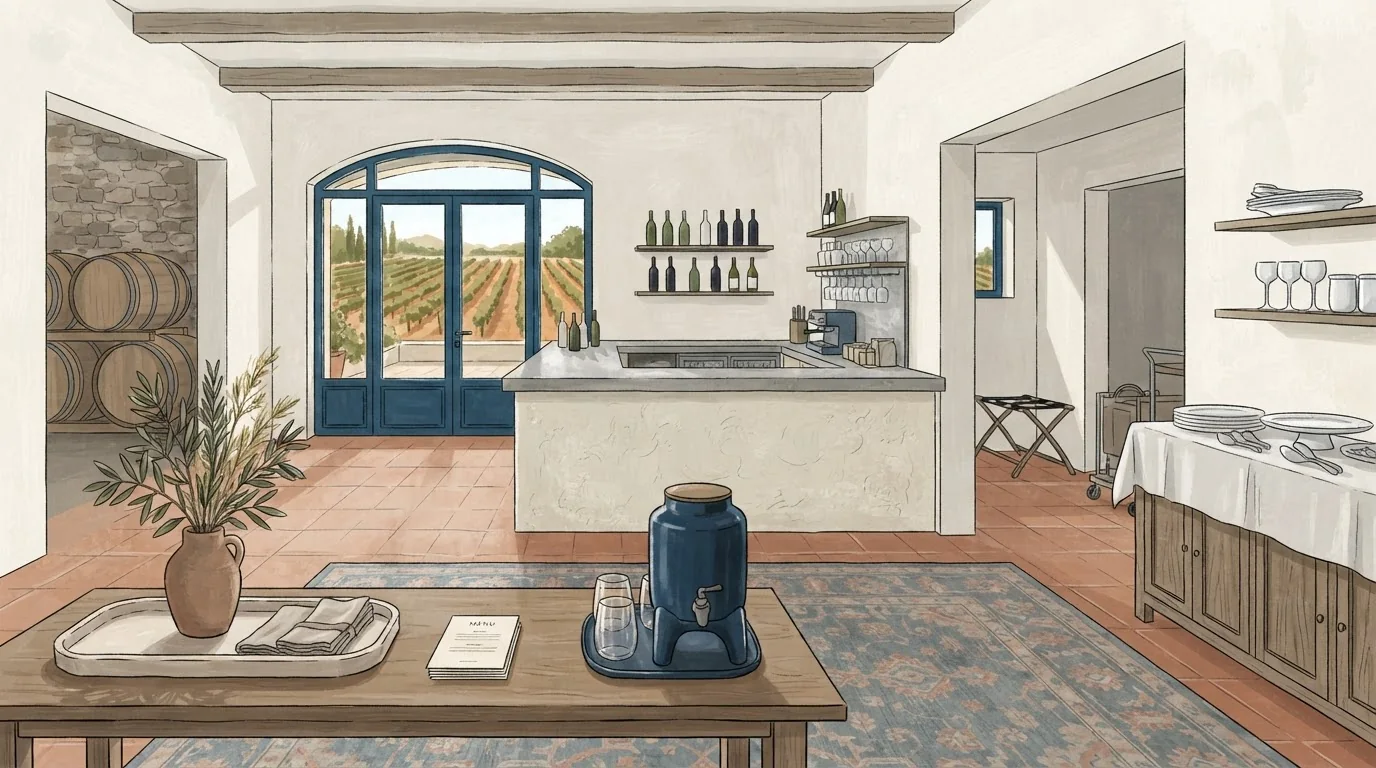
The difference between a tasting and a private event
A winery that welcomes visitors for organized tastings is not automatically available for a private evening. According to Visit Greece, Nemea wineries include public visits and organized tastings, and that tasting access does not establish private-event availability (Visit Greece). That single fact matters more than any photo. Public tasting hours may end before your event begins, or the space may be needed for a tour group the next morning.
Ask directly: is the room you are picturing available for a private hire on your date, and does the winery run production, bottling or deliveries that day? If the answer is vague, assume the space is shared until you have it in writing.
There is a second version of this problem that catches people out. A winery may offer private tastings during the day, seated at a long table with a host, and that is still not the same thing as an evening hire with your own caterer, your own music and a bar running until midnight. Daytime tasting hospitality and evening private events are different products, often handled by different people inside the same business. Ask which one you are actually being quoted for, and get the answer in writing before you build a guest list around it.
Working areas and the production calendar
A winery is a workplace first. Harvest, bottling and shipping can happen on the same day as your event, and those activities bring noise, forklifts, trucks and restricted zones. You are not being difficult by asking which areas are off-limits.
A useful question is not 'can we use the whole property?' but 'which specific rooms and outdoor areas are included in the hire, and which are working areas we should keep guests out of?' Ask for a simple map or a marked-up plan. If the answer is 'we'll figure it out on the day', that is a risk you are accepting.
Timing deserves its own conversation. Ask when the production team starts and finishes, whether the cellar or bottling line will run during your event, and whether any machinery will move through guest areas. If your event runs late, ask who is on site after the daytime staff leave. A venue with no overnight presence needs a different plan for security, equipment and closing up.
Example: a 60-guest evening
This is an illustrative scenario, not a market norm. Suppose you are planning a 60-guest evening in late September, with a welcome drink at 18:30 and dinner at 20:00. If bottling is scheduled for the next morning, the production team may need to set up from 22:00. That does not make the venue wrong. It means your timeline has a hard edge, and your bar and music need to respect it.
Deliveries, load-in and who controls the gate
Catering, rental furniture, a band and a florist all need to arrive. Ask who coordinates the gate, where vehicles park, and whether deliveries can happen during working hours. If the winery has its own caterer or a preferred supplier list, ask what that means in practice: is the supplier required, or simply suggested?
Get the load-in window in writing. Ask whether your suppliers can access the site the day before, and whether there is a secure place for empty crates and equipment overnight. A winery that is mid-harvest may not have spare storage.
Power and water are worth checking too. Ask how many separate circuits are available for a band, a bar and lighting, and whether the winery restricts generator use. If your caterer needs a kitchen, confirm what equipment is actually there rather than assuming a full professional setup. A serving kitchen and a production kitchen are not the same, and the difference changes what your caterer can promise.
Non-drinkers, catering and the tasting itself
A wine-focused event can quietly sideline guests who do not drink. Plan a proper non-alcoholic offer, not just water and a soft drink.
Food matters too. If the winery provides catering, ask what is included and what is extra. If you bring your own caterer, ask about kitchen access, power, water and waste removal.
Think about the tasting format as well. A guided tasting with a host works for a seated group, but it needs a quiet room and a schedule. If your evening is a party, a short tasting early on usually lands better than a long structured session in the middle of dinner. Ask whether the winery provides a host, whether that host is included in the quote, and how long the tasting runs.
Departure transport and the end of the night
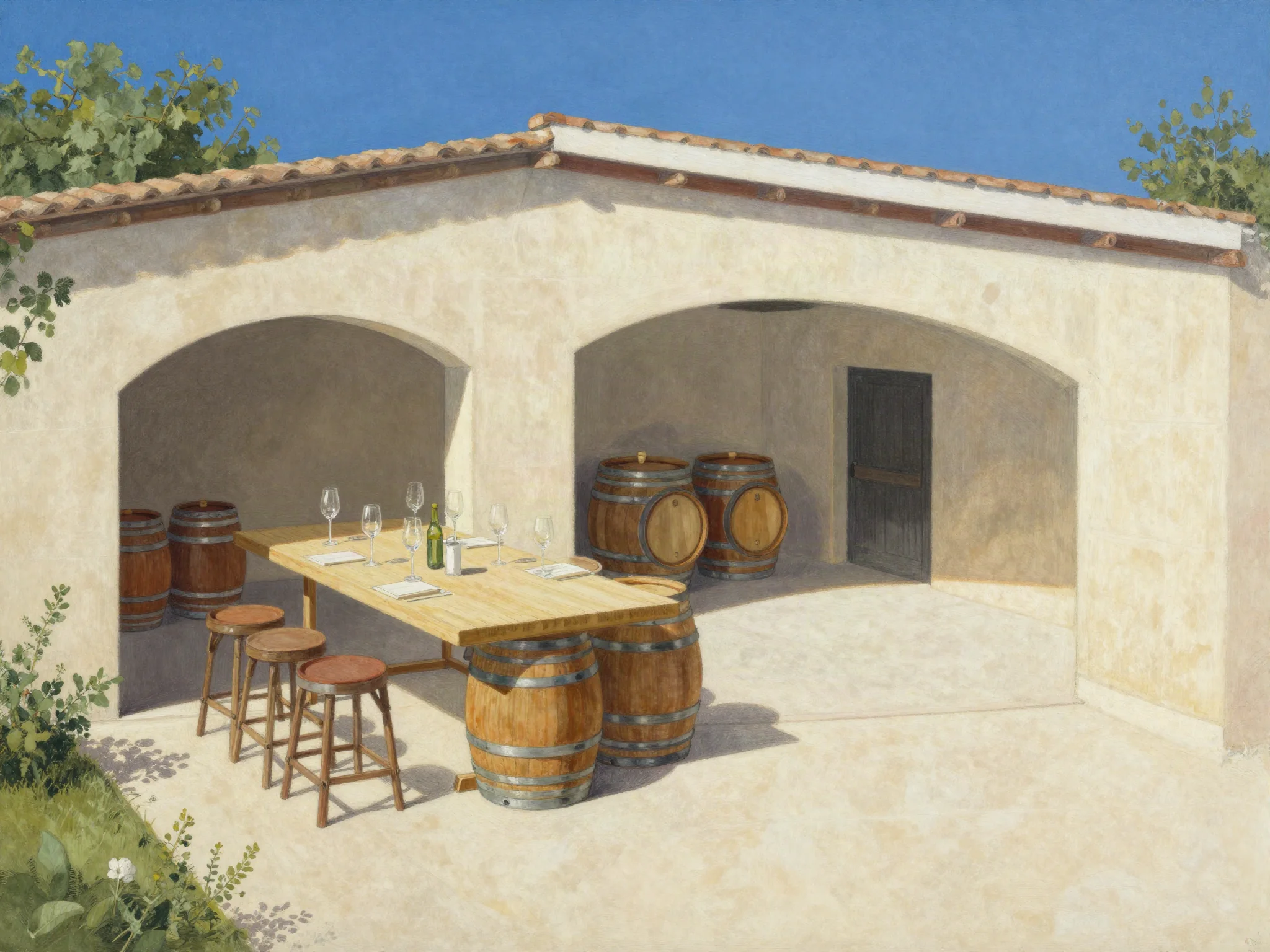
Rural winery roads are often unlit and narrow. Guests who have been drinking should not drive. Book transport in advance, and give drivers a clear meeting point and departure time. Ask the winery where vehicles can wait without blocking production traffic.
Example: a two-bus departure
This is an illustrative scenario. Two buses, 30 seats each, leaving at 23:30. Confirm the pickup point is on the winery's map, that the gate will be open, and that a staff member will be present. If the winery closes its gates at a set time, that time is your real end time, not the time on your invitation.
What a written quote should separate
Ask for a quote that separates the space hire, any staffing, catering, drinks, equipment and transport coordination. Do not accept a single lump sum without a breakdown. Tax as quoted, and ask which amount it applies to. Terms depend on the particular written quote, so compare like with like. If two venues send quotes in different formats, rebuild both into the table below before you decide anything.
| Line item | What to ask | Your note |
|---|---|---|
| Space hire | Which rooms and outdoor areas, and for how many hours? | |
| Working areas | Which zones are off-limits, and who enforces that? | |
| Production activity | Any harvest, bottling or deliveries on the day? | |
| Load-in | Window, gate contact, parking and overnight storage | |
| Power and water | Circuits available, generator rules, kitchen equipment | |
| Catering | In-house, required supplier, or free choice? | |
| Drinks | Included tasting, cash bar, or corkage terms? | |
| Non-drinkers | Alcohol-free options and a separate drinks table? | |
| Staffing | Who is on site during the event and until when? | |
| End time | Hard stop, music curfew and gate closing time | |
| Transport | Pickup point, waiting area and departure time | |
| Quote validity | Deposit, cancellation terms and what is refundable |
The inquiry to send
Send the winery a short, specific message. Include your date, an approximate guest count, and whether you need catering and transport. State clearly that you understand it is a working winery and you want to know which areas and hours are available for private hire. Ask for a written quote with the lines above separated, and ask for a copy of any house rules on noise, access and end time. Until you have that reply, treat the evening as unconfirmed.
A winery can be a wonderful place for a tasting or a dinner. It is also a business with a production schedule. Ask the boring questions early, and the evening has a much better chance of running the way you imagined.
Two useful next steps: A wine-tasting event needs a plan for non-drinkers too and A Peloponnese estate weekend: keep the map honest.
Planning questions
How is a winery's public tasting availability different from a private evening hire?
A winery open for public tastings is not automatically free for a private evening. Public tasting hours may end before your event, or the room may be booked for a tour group the next morning. Ask directly whether your date is available for private hire and get it in writing.
What should I ask about a winery's production activity on my event day?
Ask directly whether harvest, bottling or deliveries are scheduled that day, which specific rooms and outdoor areas are included in the hire, and which zones guests must avoid. Request a simple map or marked-up plan. If the answer is vague, treat the space as shared.