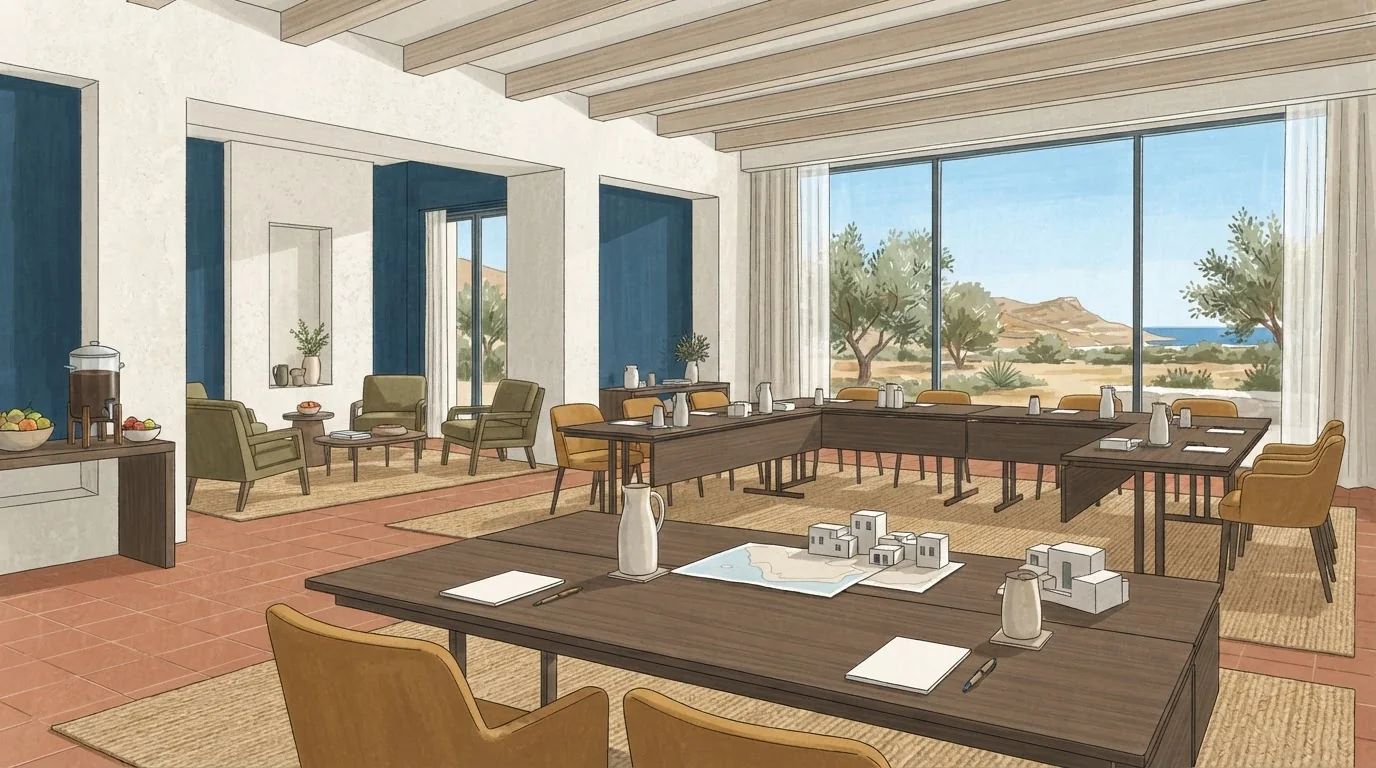
Landing time is not room time
A flight landing is one event. Reaching the meeting room is another. Between them sit immigration, baggage reclaim, a shuttle or taxi, a hotel check-in queue, and the walk from lobby to meeting floor. None of these are fixed. A checked bag can add a long wait. A hand-luggage-only arrival can move fast. A delayed flight shifts everything. Build your plan around a range, not a single clock time.
Athens International Airport is connected to central Athens and Piraeus by Metro Line 3, and timetables must be checked for the actual date, as noted by Athens International Airport. That is the only transport fact you should treat as settled here. Whether the metro, a taxi, or a pre-booked car suits your group depends on luggage, group size, and the hour. Ask each venue what arrival pattern they see most often for meetings like yours, and ask for that in writing alongside the quote.
Build arrival windows, not arrival times
Give every attendee a window: earliest possible room time and latest acceptable room time. A window of 12:30 to 13:15 tells the venue more than "arriving around lunchtime". It also tells you when to start. If the widest window is two hours, a 13:00 sharp start punishes the person with the checked bag and the distant gate.
Example, and only an example: eight attendees, four flights, arrival windows between 11:45 and 14:10. You could book the room from 13:00, run a soft start with coffee and a short briefing document, and begin the formal agenda at 14:15. Nobody is pretending the early arrivals waited patiently. They get a quiet corner, Wi-Fi, and the document. The late arrival walks in during a low-stakes item, not the key decision.
The questions that change the schedule
Ask these before you confirm anything. The answers shape the agenda more than the room layout does.
- What is the earliest time the room can be accessed for setup, separate from the meeting start?
- Is there a luggage storage area near reception, and is it staffed at the hours we need?
- Can early arrivals use a lounge or lobby seating without a separate charge?
- What is the check-in time, and can bags be dropped before rooms are ready?
- Is there a quiet space for calls during the arrival window?
- How does the venue handle a delayed flight that pushes one attendee past the start?
- What is the cancellation or reduction policy if a flight is cancelled?
Get the answers in the written quote, not just in conversation. If a venue cannot confirm luggage storage or early access, treat that as a planning fact, not a deal breaker. It just means the soft start happens somewhere else.
A soft start that earns its place
An optional start activity is not filler. It gives late arrivals a graceful entrance and early arrivals something to do that is not scrolling. Keep it low-stakes and self-contained: a one-page brief on the table, a short welcome from whoever is hosting, a coffee station near the door. No formal introductions until the announced start time. That way, a person arriving at 14:05 is not walking into a round of handshakes they missed.
If the group is small and the agenda is tight, skip the soft start and simply push the formal start later. There is an honest tradeoff: a later start protects the late arrival but costs the early arrivals an hour. Decide which matters more for this meeting, and say so in the invitation. People forgive a later start. They do not forgive being told 13:00 and watching the room sit empty until 14:20.
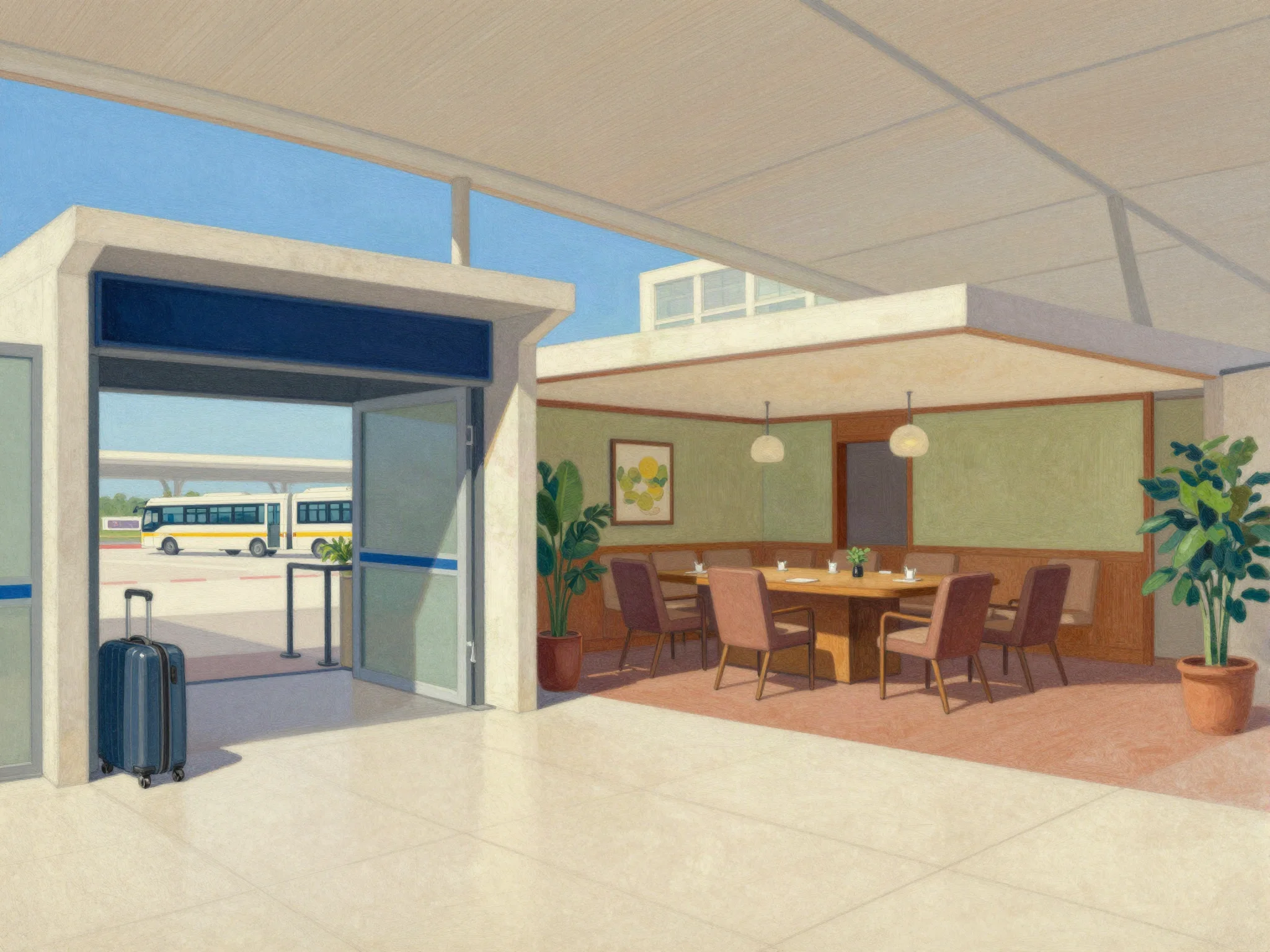
Room setup and the arrival zone
Ask for a setup that keeps the arrival zone seperate from the work zone. A row of chairs near the door, a side table for bags, and a clear path to the main table. If the room is small, this is harder, and you may need to accept that early arrivals will wait in the lobby. That is fine if you tell them where to wait and what to do.
Room costs vary by venue and by what is included. A useful quote needs your date and requirements. Give each venue the same room brief and timing so that you can compare its answer.
What to send to venues
Send one message with the facts a venue needs to answer properly. Include the date, the number of attendees, the arrival windows, whether luggage storage is needed, the earliest access time you want, the formal start time, and the end time. Ask for a written quote with the room, any catering, and any equipment listed separately. Ask what the quote assumes about tax and service, and which amount those apply to. Do not accept a verbal range as a booking.
Use the template below to collect arrival information from your own group before you approach venues. It is deliberately plain. Fill one row per attendee and send the summary, not the raw table, to the venue.
| Attendee | Flight lands | Baggage: cabin or checked | Earliest room time | Latest room time | Needs luggage storage | Notes |
|---|---|---|---|---|---|---|
When you have the rows filled, you can see the real width of the arrival window. If it is wider than the meeting itself, rethink the day. A shorter formal session with a clear soft start often works better than a long session with a disrupted beginning.
If this meeting sits inside a larger event, the same arrival logic applies to the evening. The guest list there is different, but the arrival window problem is the same shape.
What to send next
Once your table is complete, send venues the following in one email: date, attendee count, arrival window, earliest access time, formal start, end time, luggage storage needs, catering needs, equipment needs, and a request for a written quote with tax and service stated separately. Ask them to confirm which amount tax applies to. Ask for the quote to note any assumptions about access, storage, or setup. Then wait for written answers before you compare anything. A venue that answers those questions clearly is easier to plan around, whatever the final number looks like.
Two useful next steps: Athens meeting room hire: turn the day rate into a full brief and A 12-person Athens board meeting needs a table test.
Planning questions
Why should I plan arrival windows instead of exact arrival times?
Because landing time is not room time. Immigration, baggage reclaim, transport, check-in and walking add unpredictable delays. A window gives a realistic range for when each person can be seated, so you can set a start time that doesn't punish anyone.
What is a soft start and why does it help with uneven arrivals?
A soft start is a low-stakes optional activity before the formal agenda, like coffee and a one-page brief. It gives early arrivals something useful to do and lets latecomers slip in without interrupting a key decision or missing introductions.