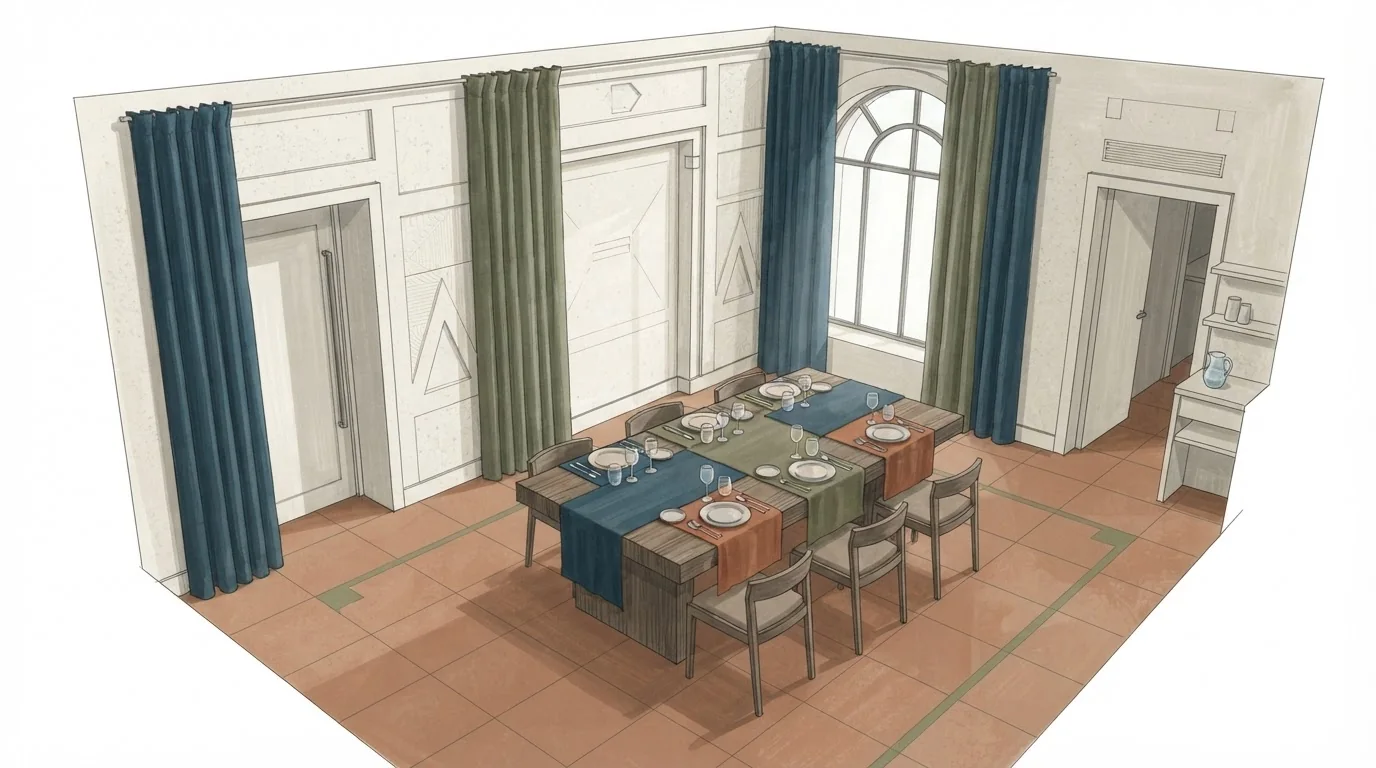
What "private" actually means in an Athens dining room
In Athens, a private dining room can be a glass box, a mezzanine with a low wall, or a historic hall with a proper door. The official Athens convention bureau lists historic, contemporary, coastal and open-air settings among the city's event options, so the physical variety is real. That range is exactly why you can't assume privacy from a single word.
Ask three questions on your first call:
- Does the room have a door that closes, or just a curtain or screen?
- Can other guests see into the room from the main floor or a corridor?
- Do servers or other staff pass through the room to reach another area?
If any answer is vague, ask for a short video walkthrough or a floor plan. A five-minute video of the actual room will tell you more than a photo taken from a flattering angle.
Doors, curtains and shared service routes
A door is the first thing to check. A solid door that closes fully is a good start. A glass door is still a door, but it changes what you can say. If the room has only a curtain, assume sound travels. A curtain blocks sight, not conversation.
Service routes matter just as much. A room that looks private can have a staff corridor running along one wall, or a shared server station just outside. Ask where the waitstaff enter and exit, and whether they use the same door as your guests. If they do, you'll have a stream of people moving behind the speaker all evening.
Also check the ceiling and walls. Openings above or shared ventilation can carry sound. A room with hard surfaces and no soft furnishings will bounce voices. If your discussion includes numbers or names, consider whether you need a room with carpet, curtains or acoustic panels.
The 16-person example: what to measure and ask
Here's a hypothetical scenario. You're booking for 16 people, seated at one long table, with two short presentations. You want no interruptions and no one walking behind the speaker.
Use this checklist. It's written for 16, but the questions work for any size.
| Item | What to ask | Why it matters |
|---|---|---|
| Door type | Does the door close fully? Is it solid or glass? | A glass door still shows expressions and gestures. |
| Curtains or screens | Do they cover all openings? Are they fixed or movable? | A gap at the side defeats the purpose. |
| Service route | Do staff enter through the main guest door? | A shared door means constant movement. |
| Server station | Is there a station inside the room or just outside? | A station just outside means clinking and talking. |
| Adjacent rooms | What is on the other side of each wall? | A neighbouring party can be louder than yours. |
| Ventilation and ceiling | Are there open vents or shared ducts? | Sound travels through shared air paths. |
| Table shape | Can everyone see each other without turning? | A long table can isolate the ends. |
| Lighting | Can you dim or direct lights away from the table? | Bright light makes some people less candid. |
| Technology | Is there a screen or projector? Can it be hidden? | A visible screen signals "presentation," not "conversation." |
| Staff briefing | Can you request a quiet service style? | Staff who know the plan interrupt less. |
| Timing | What happens before and after your slot? | Setup and breakdown can overlap with your time. |
| Backup plan | Is there a second room if the first feels exposed? | You need an option if the room doesn't match the description. |
Fill in the answers for each venue you consider. If a venue can't answer, that's your answer.
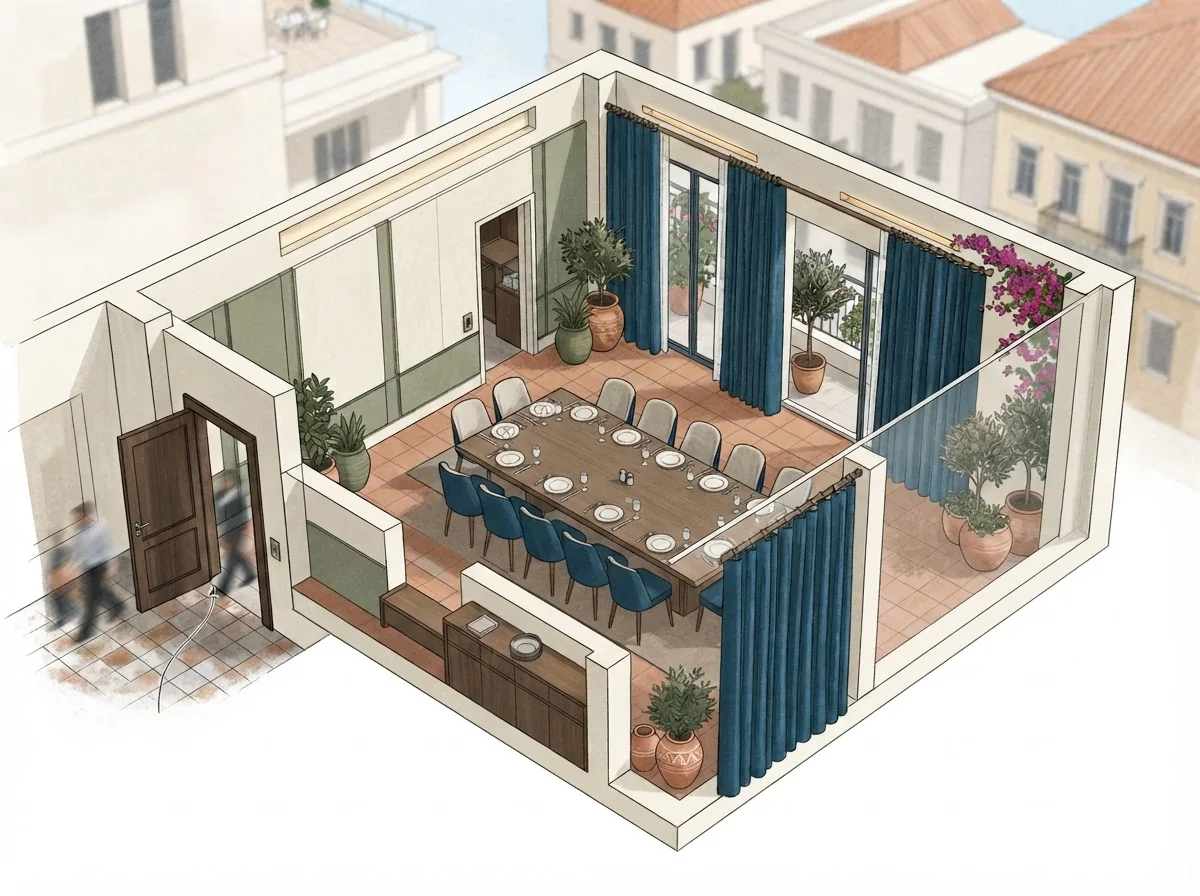
What to ask before you sign anything
Ask for the room name, not just "private dining." Ask for a floor plan with the room highlighted. Ask whether the room has a dedicated entrance or shares one with the main restaurant. Ask if there is a minimum spend for the room, and whether it applies to food and drinks or just food. Ask what happens if your group arrives late or stays longer than planned. Ask if you can visit the room at the same time of day as your event. A lunch room and a dinner room can feel completely different.
If the conversation is confidential, say so plainly. Ask if the venue can assign a single point of contact for the evening. Ask if staff can be briefed to knock before entering. Ask if there's a way to signal that the room should not be disturbed.
When a private room isn't private enough
Sometimes the honest answer is that the room won't work. If the walls are thin, if the door is glass, if the service route crosses the table, you might need a different venue type.
A tradeoff: a room with a solid door and no shared service route often costs more or has a higher minimum spend than a curtained alcove. That's the price of actual privacy. Decide what your conversation is worth before you trade it away for a lower quote.
What to send to venues
When you contact venues, don't just ask "do you have a private room?" Send a short brief with these details:
- Date and time window
- Number of guests (16 in our example)
- Type of event (business dinner, confidential discussion)
- Need for a closing door and no shared service route
- Whether you need AV or a screen
- Your budget range or that you need a quote
- Any dietary requirements
- A request for a floor plan and a photo of the actual room
- A question about the cancellation policy and payment terms
That brief will get you specific answers. It also lets the venue tell you honestly if they can't meet your needs. A quick no is better than a surprise on the night.
Finally, confirm everything in writing. If the sales manager promises a quiet room, ask them to put it in the contract. If they can't, you know how much weight to give the promise.
The source for Athens venue variety is the official convention bureau: This is Athens Convention Bureau: venues.
Two useful next steps: An Athens birthday dinner or a room of your own? and A 12-person Athens board meeting needs a table test.
Planning questions
How can a video walkthrough of the room reveal whether a quiet sentence will stay inside?
It shows the actual door, curtain gaps, service route and any shared server station, which a flattering photo hides. Ask for it when answers about doors, screens or staff movement are vague.
If the room has only a curtain, what does that mean for a confidential conversation?
Assume sound travels. A curtain blocks sight but not conversation, so voices carry to the main floor or corridor. Treat it as unsuitable when names or numbers are discussed, and look for a closing door.