Why Greek island venues need a route conversation, not a yes or no
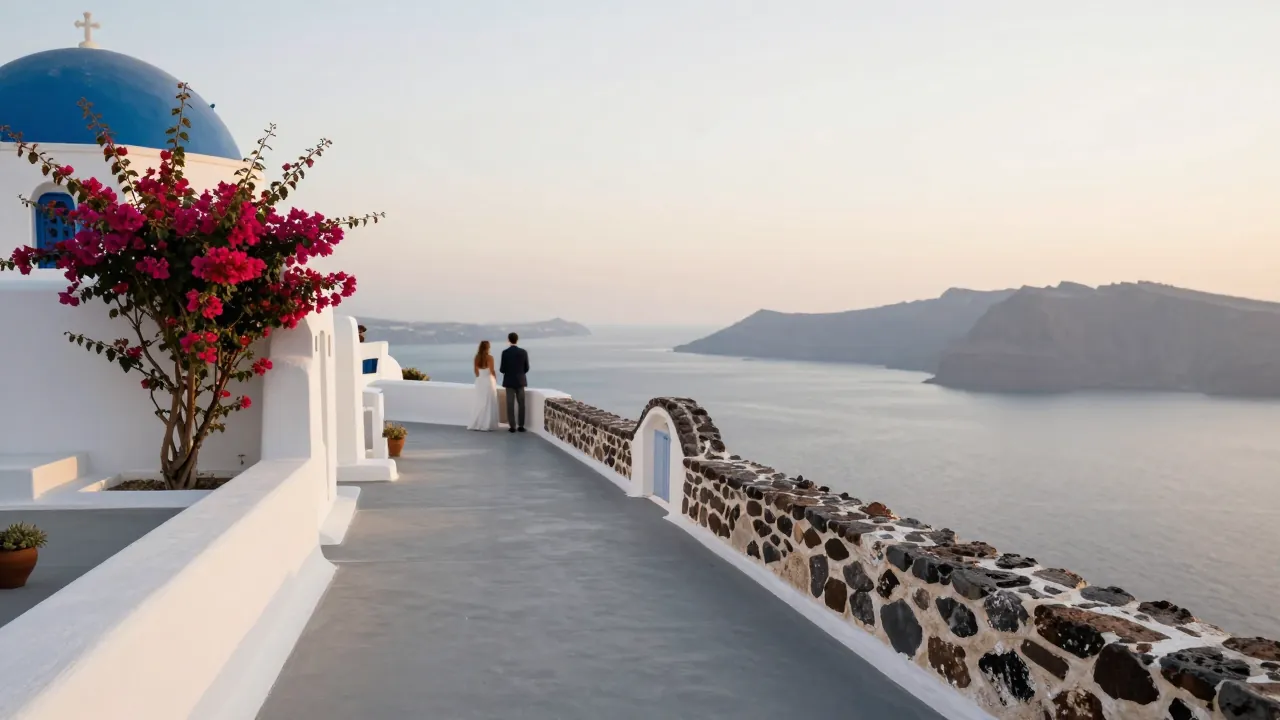
Greek island weddings are rarely single-site events. You've got a hotel, a ceremony location, a reception venue and often a boat transfer, and each one brings its own surface and gradient. The old villages of Santorini, Mykonos and Hydra, and the old towns of Rhodes and Corfu, were built long before anyone planned for wheelchairs. Steps are everywhere. Cobbles are rounded and uneven. Lanes narrow to shoulder width. A venue can be perfectly accessible once you're inside and completely unreachable in practice.
The useful question isn't "is the venue accessible". It's "describe the route from the nearest point a vehicle can stop to the seat my guest will use". That single question changes how venues answer. The City of Athens accessibility project, described in its official accessible routes for Athens, separates mobility and visual-impairment itineraries and gives route-specific information, which is a useful reminder that access is a path, not a property. Our view: any island venue that can't describe its own approach route in plain language probably hasn't hosted many guests with reduced mobility.
What to ask the hotel before you book the block
The hotel is where access either works or fails daily. Ask for photographs of the entrance, the lift, the room door width and the bathroom, taken from standing height, not marketing renders. Ask whether the accessible room has a roll-in shower or a step-in tub, and whether the bathroom door opens inward. If nobody can answer, treat access as unconfirmed.
Ask about the path from the drop-off point to the room. On a slope village, a hotel can be accessible at reception and inaccessible at the pool bar. Ask whether breakfast is served on a terrace with steps, and whether staff will bring it to a ground-floor table. Then ask about the wedding-day transfer from the hotel door to the venue door, because that leg is often the hardest.
Steps, cobbles and the last fifty metres
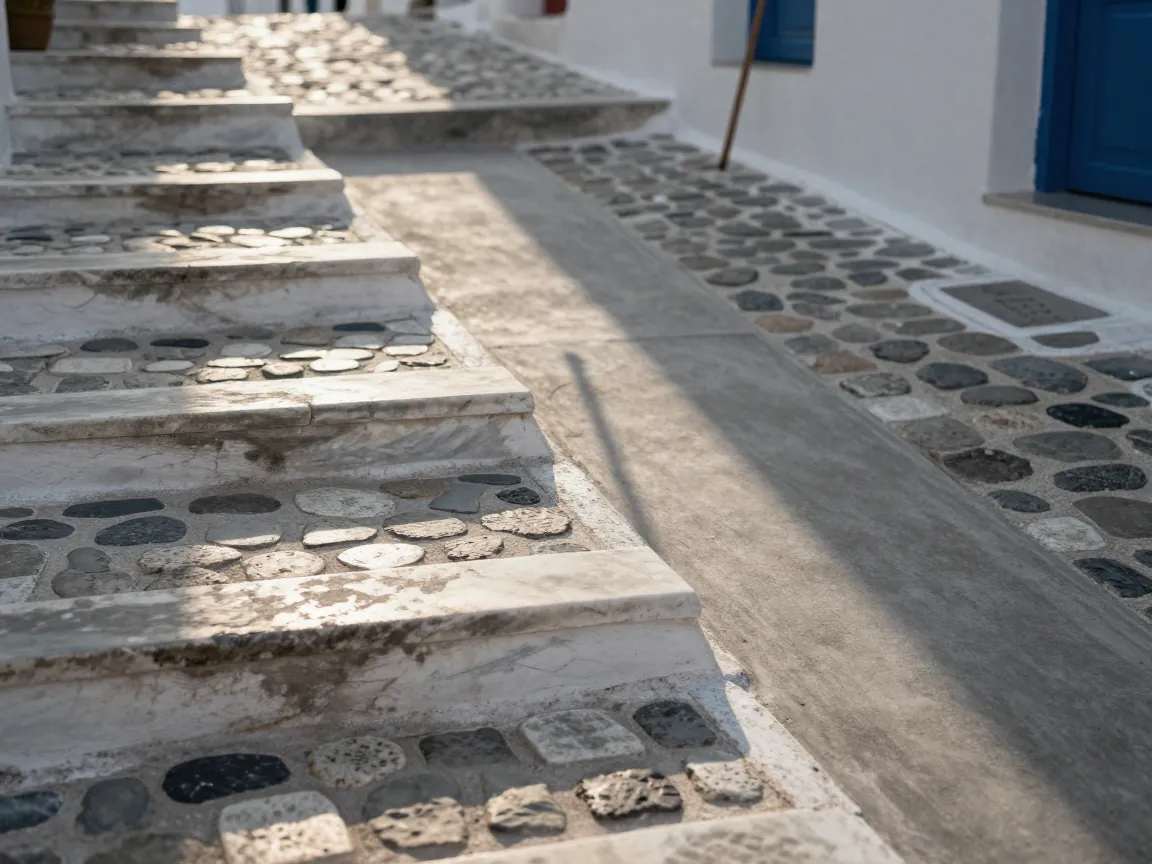
On the islands, access usually breaks down on the final stretch, not the journey. A minibus can reach a square, but the chapel may sit above it. Ask for the number of steps, the presence of a handrail and the condition of the surface. Cobbles are worse than stairs for some guests, because the stones shift and roll underfoot.
Ask whether the ceremony can be moved to a lower terrace, whether a golf buggy or a small van can use a service lane, and whether the venue has staff who'll walk alongside a guest. Then ask the same questions of the reception venue, because the ceremony and the party are often in different places. For a smaller guest list, our guide to a small wedding with the right minimum spend is worth reading before you negotiate, since a compact event can often be relocated to a more accessible terrace without losing the setting.
If the wedding shares the day with a baptism, brief the reception venue on both ceremonies at once. The guide to one celebration with two ceremonies explains why the reception brief has to name the access needs of both guest groups, including older relatives who may not be travelling to the ceremony.
Boat transfers and the example of a yacht reception
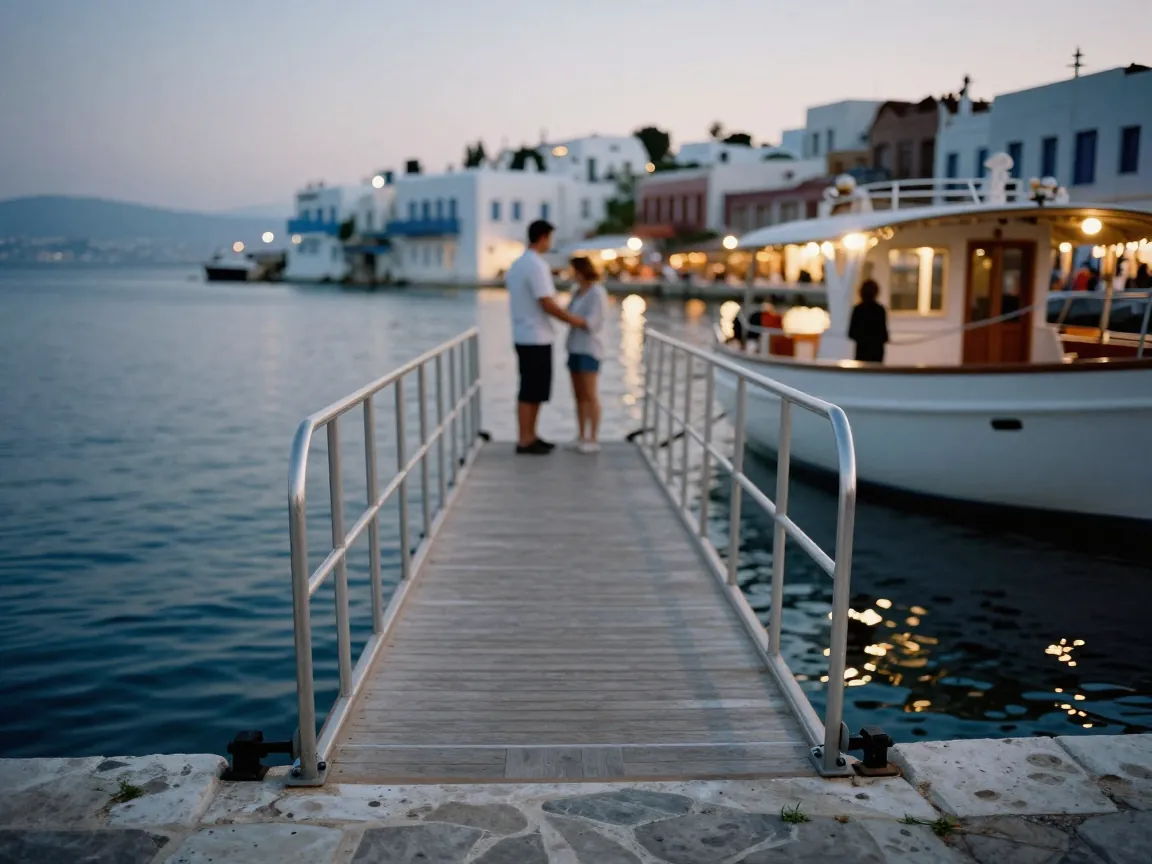
Boats are the part of island wedding planning that surprises people. A tender, the small boat that ferries guests from shore to a larger vessel, may require a step down, a hand held by crew, and a moment of balance. Ask the operator how guests board, whether there's a stable platform, whether a wheelchair can be carried aboard and whether anyone on the crew has experience assisting guests with reduced mobility.
One example in our directory is the Sunset Oia boat, a boat rental and sailing tour operator based in Oia, Santorini. According to its listing, it arranges sailing yacht tours around the island, and its wedding-focused pages describe hosting wedding receptions and wedding parties on board a yacht, with couples celebrating as the Santorini sunset unfolds over the caldera. The listing says the business operates as a tour and charter office rather than a fixed banquet hall, so events take place aboard the vessel. That distinction matters for access: a fixed hall has a door, a boat has a boarding point, and boarding is where you need answers in writing. Ask the operator what the boarding procedure is for a guest with a walking frame, and ask who confirms it on the day.
An accessibility route checklist per guest
Use one copy per guest who needs it, and fill it in with the venue and hotel before you sign anything. The point is to have a single page you can hand to a venue manager, a hotel front desk and a boat crew.
| Item | What to record | Who confirms it |
|---|---|---|
| Vehicle drop-off point | Nearest road access to hotel, ceremony and reception | Hotel and venue, in writing |
| Surface between drop-off and entrance | Flat, stepped, cobbled, gravel or mixed | Venue, with photographs |
| Step count and handrails | Number of steps at each entrance and terrace | Venue, measured not estimated |
| Guest room bathroom | Roll-in shower or step-in tub, door swing | Hotel, with photographs |
| Seating plan position | Seat nearest an accessible route and exit | You, shared with venue |
| Toilet access at the venue | Distance, door width, any steps | Venue, checked on a site visit |
| Boat or tender boarding | Step down or level, crew assistance, wheelchair policy | Operator, in writing |
| Return transfer time | Latest vehicle or boat departure from the venue | You, with the transport provider |
| Emergency plan | Who assists this guest if they need to leave quickly | You and the venue manager |
For permits, beach access rules or noise restrictions, confirm current requirements with the competent authority rather than relying on what a third party tells you.
Where this changes your venue shortlist
Access should narrow your list early, not after you fall in love with a terrace. If two guests need step-free routes, a cliffside venue with a long staircase is out, however good the view. If the boat is the centrepiece, choose an operator who answers boarding questions in detail and put the answer in the contract.
We'd rather lose a dramatic location than spend a wedding day watching a guest wait at the bottom of a staircase. We'll admit the trade-off is real: the most beautiful venues on the islands are often the least accessible. Decide it early, in daylight, with the guest on the call if they want to be.
Tell us your headcount, your date and the access needs of your guests, and we'll point you towards venues whose listings actually address the route.
Planning questions
How do we check if a Santorini venue is reachable for a guest with reduced mobility?
Ask the venue to describe the route from the nearest vehicle drop-off to the guest's seat, with step counts, handrails and surface type. Request photographs. If the answer stays general, treat the venue as unconfirmed and keep looking.
What should we ask a boat operator before a yacht wedding reception?
Ask how guests board, whether there is a step down or level platform, whether a wheelchair can be carried aboard and whether crew assist guests with reduced mobility. Get the boarding procedure confirmed in writing before you sign.
Can a hotel on a Greek island guarantee a step-free room?
Ask for photographs of the room door, bathroom and shower, and the path from reception. Confirm whether the accessible room has a roll-in shower and whether breakfast is served on a stepped terrace. Get these points written into your booking confirmation.