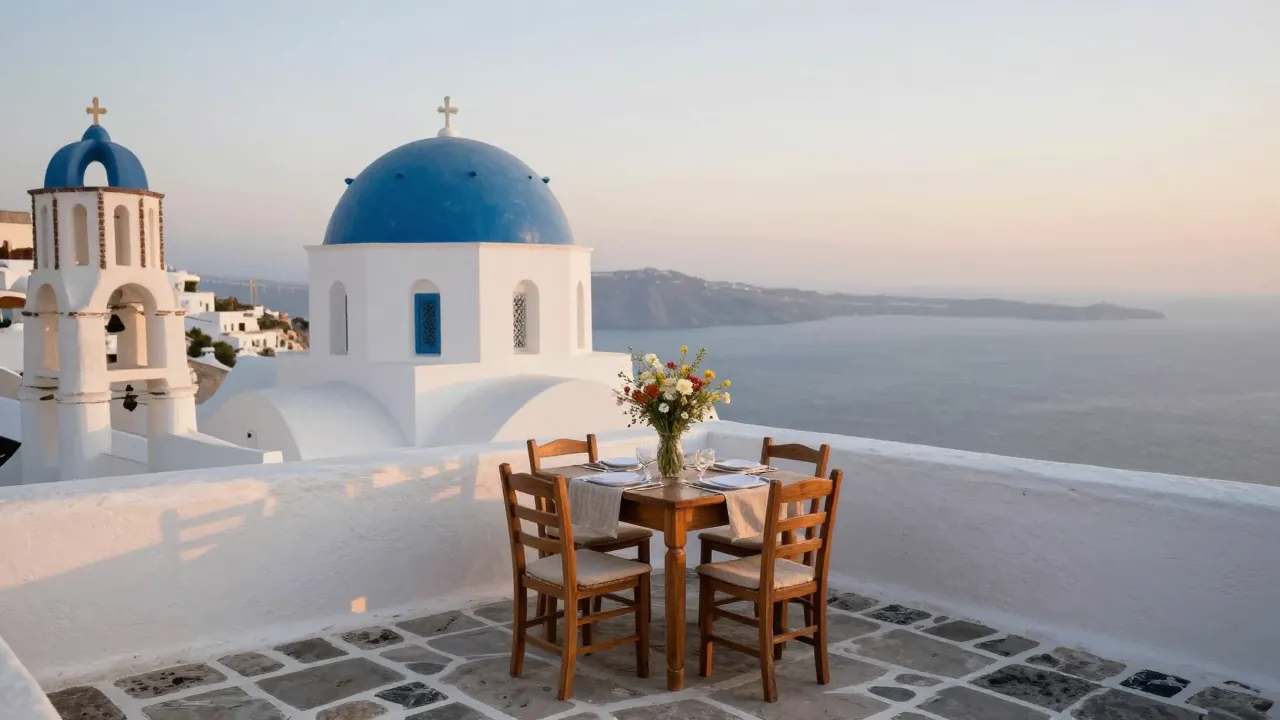
Symbolic ceremony versus legal marriage in Greece
A symbolic vow renewal has no marriage file, no affidavit of no impediment and no registry entry in Greece. The ceremony is arranged between you and a celebrant, and the wording is yours to write.
A legal marriage in Greece is a different process, and we won't set out its steps here because requirements turn on your nationality, your residence and the parish or registry office involved. The plain version: confirm current requirements with the competent authority, meaning the municipality, the parish or your consulate, before you promise anyone a date.
This guide assumes you're in the first category. Couples married at home pick a Greek setting for a second ceremony, invite children and close family, and skip the document chase. Look into the legal route only if you want Greece to recognise the marriage itself.
Choosing the setting and the celebrant
Decide the setting before you approach a celebrant. If an island is on the list, remember that Santorini is a group rather than a single island: Visit Greece lists Thera, Thirasia, Aspronisi, Palea Kameni and Nea Kameni at the southern end of the Cyclades. A hotel rooftop feels different from a beach at sunset, and the celebrant's script should match the room or the view.
Three checks on the setting:
- Ask who holds the ceremony permit, if any, for the exact spot, and get that in writing from the venue or the celebrant.
- Ask what happens to the plan if the wind or the heat turns, because an island terrace in August is not a June garden.
- Ask about access for older guests and small children, including steps and lift access to the ceremony point.
On celebrants, ask for a sample script and a recording or two from past ceremonies. A celebrant who can't show a full script before you pay a deposit is a risk on the day.
S Hotel Boutique Thessaloniki is one city-centre example from the directory: a boutique hotel at 5 Kalapothaki with balcony rooms, archaeological remains on site and a rooftop Meeting Room that can host up to 35 people depending on the layout, according to its listing. Its listing describes the space for business meetings and seminars, so a vow-renewal dinner there would need a direct conversation with the hotel about whether the room suits a private celebration.

What still needs arranging, even without paperwork
Symbolic doesn't mean unplanned. The usual gaps are the same ones that sink legal weddings: timing, weather cover, and who is holding the rings.
Work through this sheet in order:
| Item | What to settle | Who confirms |
|---|---|---|
| Date and time of day | Ceremony hour, dinner start, last guest departure | You, with the venue |
| Celebrant | Script approval, rehearsal slot, fee and cancellation terms | Celebrant contract |
| Venue or setting | Ceremony permit holder, backup indoor space, curfew | Venue in writing |
| Guest list | Headcount, children's ages, seating for older guests | You |
| Photography | Shot list, golden-hour timing, second shooter if needed | Photographer contract |
| Dinner | Menu, dietary needs, cake, drinks package | Venue or caterer |
| Transport | Who moves guests between ceremony and dinner | You |
| Weather backup | Indoor floor plan, umbrellas, a decision deadline | Venue, in writing |
Two rows deserve emphasis. First, the weather decision deadline: set an hour, say 4pm on the day, an example only, by which you either move indoors or commit to the outdoor plan. Second, the children's row. If you're renewing vows with children present, give them a job: ring bearer, reader, or handing out programmes. A child with a role sits still longer.
For island ceremonies, our view is that the backup plan needs as much detail as the main one, and we've written about that in our guide to an island wedding backup floor plan.
The same logic applies to money: transport, hair and extra guests add up on islands, so put a transport line in your budget before you book anything. Our guide to a Santorini wedding budget shows how that line changes the total.
Photography, dinner and the shape of the day
Treat the vow renewal as a short ceremony and a long dinner. That's our recommendation. Plan on a ceremony of perhaps 20 to 30 minutes (an example, not a rule), because the meal is where the evening happens.
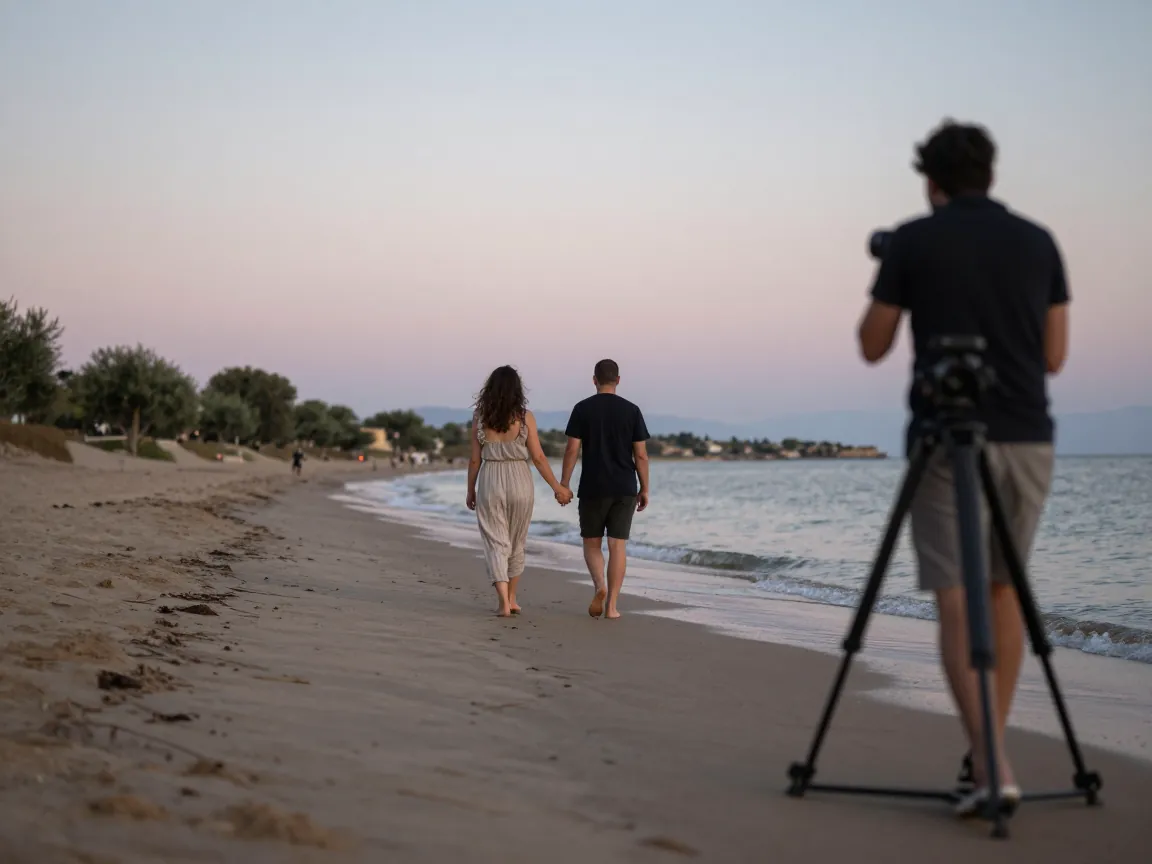
For photography, ask for a shot list built around three moments: the vows, the family group, and the first ten minutes of dinner before people scatter. If you're near the water, check the sunset time for your date before you fix the ceremony hour, because the light won't wait.
For dinner, decide whether you want a seated meal or a standing party, then match the venue. A seated dinner for 20 people, an example only, has different needs from a cocktail reception for 60. Ask the venue what time music must stop and whether that changes on weekends. If any part of the plan touches a beach or an archaeological site, ask the venue or the celebrant who handles permissions there.
Santorini's island-group geography also matters for the schedule: if your ceremony is on one of those islands and dinner is elsewhere, you'll need a boat or a drive between them, and that gap belongs in the schedule.
Sample running order for the day
Here's a running order we'd hand a couple as a starting draft. Adjust the times to your season, and label every number here as an example only.
- 4:00pm, guests arrive, water and shade available
- 4:30pm, ceremony begins, celebrant opens
- 4:50pm, vows and ring exchange, children's reading if planned
- 5:00pm, group photos, drinks served
- 6:00pm, guests move to dinner venue
- 7:00pm, dinner starts, speeches between courses
- 9:30pm, cake, then music
- 11:30pm, last song, transport home
Build one version for the outdoor plan and one for the indoor backup, with the same timings, so a weather call changes the place and not the schedule. Send both to the venue and the photographer before the day.
Questions to put to any venue or celebrant
Ask these in writing before you pay a deposit.
- Who holds the permission for the ceremony spot, and can you show it to me?
- What is the indoor alternative, and by what hour must we decide?
- What time does music end, and is that different on Fridays and Saturdays?
- Is there a lift or step-free route to the ceremony and dinner areas?
- What's included in the hire, and what's quoted separately?
- What are the cancellation terms if travel or weather stops us?
Send the answers to your celebrant too. A celebrant who has seen the venue plan writes a better script, and a venue that knows the ceremony timing protects your dinner hour.
Tell us your headcount, your month and whether children are coming, and we'll point you to venues whose listings match the shape of your day. That's a better start than a venue that looks right in photos and seats the wrong number.
Planning questions
Is a symbolic vow renewal in Greece legally binding?
No. A symbolic ceremony is arranged with a celebrant and has no registry entry in Greece, so it doesn't change your legal marital status. If you need legal recognition in Greece, confirm current requirements with the municipality, parish or your consulate before booking anything.
What should we arrange first for a vow renewal in Greece?
Settle the setting and the celebrant before anything else, since the script and the ceremony hour depend on the space. Then lock the weather backup, the dinner plan and transport, and put every decision in writing before paying deposits.
Do children need a role in the ceremony?
Give them one. A reading, ring carrying or handing out programmes keeps children occupied during a short ceremony. Confirm with the celebrant which roles fit the script, and seat younger children near the aisle so they can move without disrupting the vows.