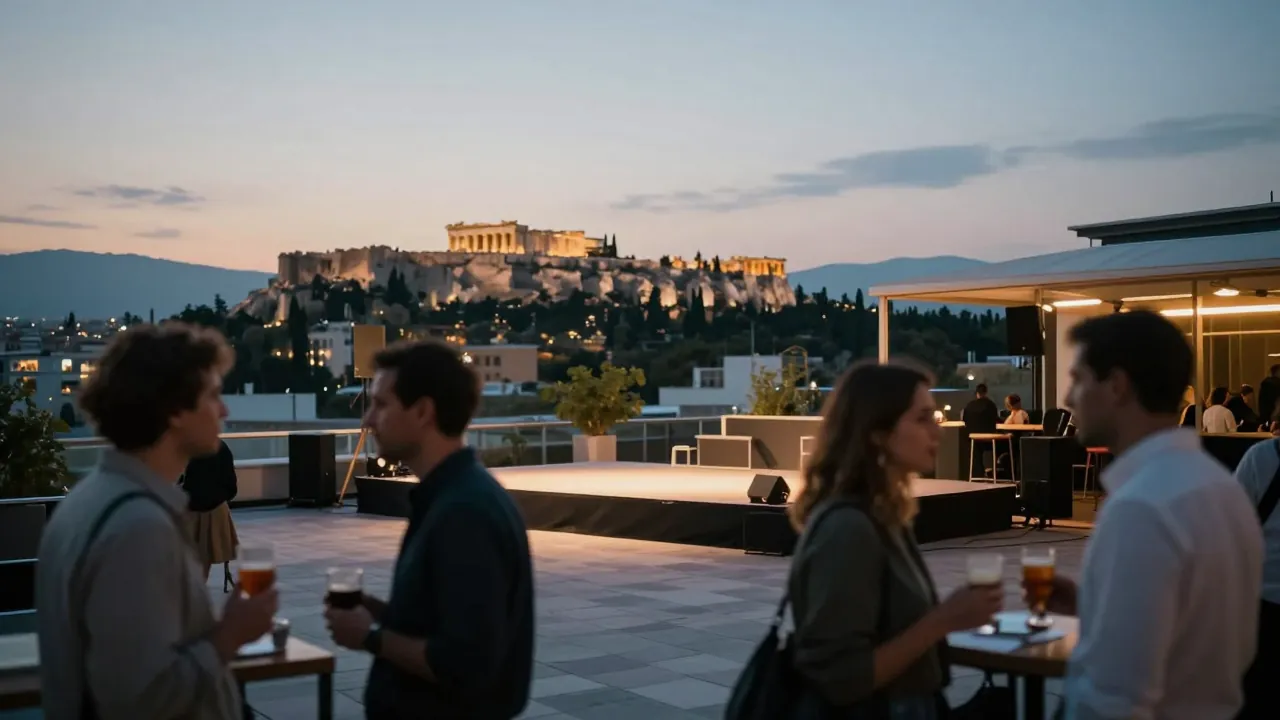
Why the reveal window dictates the venue
Every launch should start with the one moment you can't repeat: the reveal. If it's a projection, you need darkness and dust-free air. If it's a physical reveal, you need one sightline that 120 people can share and no pillar in the middle. If it's a live demo on stage, you need power and a floor that won't flex under the presenter.
That's why we brief venues with the reveal first and the party second. Ask each one where the reveal would happen, what the sightlines are from the back of the room, and whether the space can be blacked out during daylight. In an Athens summer the sun sets late, so early-evening reveals are fighting the light unless the room has real blackout capability. The southern coastline known as the Athens Riviera stretches from Faliro to Sounio, where the Temple of Poseidon stands over the Aegean, as Visit Greece describes in its overview of Attica and the Athens Riviera. In practice, coastal venues are lovely for the demo and reception, but the reveal itself is usually better inside.
For a small press-only launch, say 30 guests as an example, we'd skip the theatrical reveal entirely. At that size, journalists want the product in their hands within minutes of arriving. Save the staging budget for the demo tables.
Press arrivals and the first hour
Press don't arrive as a group. They arrive in ones and twos across a 45-minute window, and each one wants the same three things fast: a name badge, a one-page fact sheet, and a product in hand. Design the entrance around that, not around a red carpet.
Practical layout for the press window:
- A check-in table right by the door, with two staff, not one.
- A quiet corner with seating for radio and podcast interviews. Check whether that corner is far enough from the sound system; ask the venue technical contact to confirm.
- A product handling table where items can be picked up and put down, with a staff member who knows the spec sheet.
- A backdrop that works for phone cameras under the room's actual evening lighting, not the lighting you saw in the daytime site visit.
For the guest-facing part of the same evening, the wider product launch venue brief for Greece covers the format questions we ask before shortlisting.
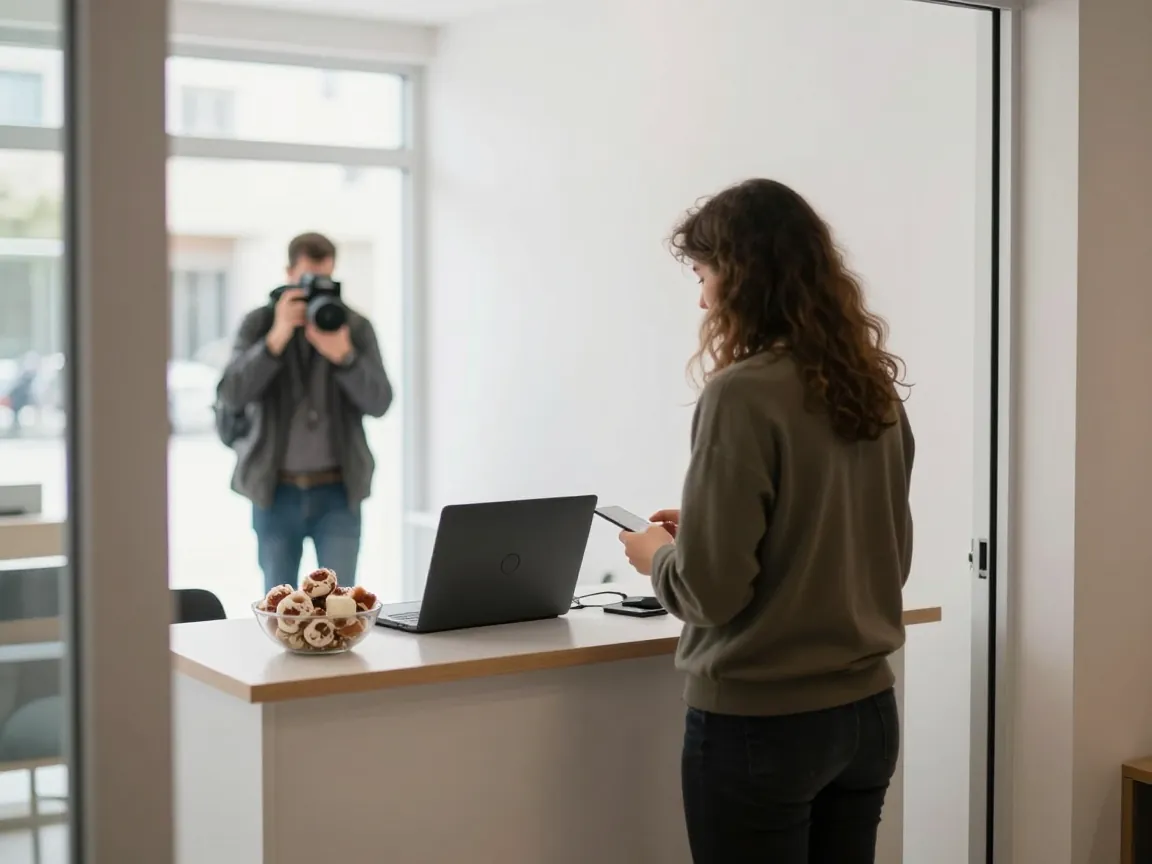
Demo space, crew space and the delivery route
Demo space is where launches quietly fail. You need tables at standing height, enough power points for multiple devices charging at once, and a back-of-house area where empty cases can live unseen. Ask the venue where the production crew can park, unload and store cases, and whether that route uses the same corridor as guests. If it does, you have a collision at exactly the wrong moment. We wrote a separate guide on testing the delivery route before you commit because it's the question planners most easily leave until it's too late.
Questions worth putting in writing to the venue:
- What time can the production crew access the space, and is that time confirmed in the contract or only verbally?
- Which power circuits serve the stage and demo area, and can the venue's technical contact walk the crew through them on site?
- Is there a freight lift or a ground-floor loading point, and what are its dimensions?
- Who is the venue's on-site contact during the event, and can they be reached by phone, not email, on the day?
We also ask about sound limits in the contract rather than by phone. Conditions can differ from one municipality to the next, and venues know what their neighbours tolerate. Ask the venue to state any noise conditions in writing; confirm current requirements with the competent municipality before you sign.
Building the run sheet that holds it together
The run sheet is the artifact that keeps venue, AV and PR from negotiating with each other on the night. Build it in three columns and circulate it 48 hours before load-in, with named owners, not job titles. Real times, real names, one page.
| Time | Venue and production | AV and reveal | PR and guests |
|---|---|---|---|
| 09:00 | Crew access, loading route open | Cases staged back of house | Fact sheets and badges checked |
| 12:00 | Stage and demo tables set | Screens rigged, content tested | Press list confirmed by phone |
| 16:00 | Room dressed, blackout tested | Full run-through of reveal | Photo backdrop lit and tested |
| 18:45 | Doors ready, staff briefed | Cue-to-cue complete | Check-in table staffed by two |
| 19:00 | Press window opens | Demo devices charged | One-to-one interviews begin |
| 20:00 | Reveal | Cue called by AV lead | Phones up, then demo tables |
| 20:30 | Reception and demo | Music at agreed level | Product handling table staffed |
| 22:30 | Load-out begins | Gear struck in order | Departure transport confirmed |
Fill every cell with a name. A run sheet without owners is a wish list.
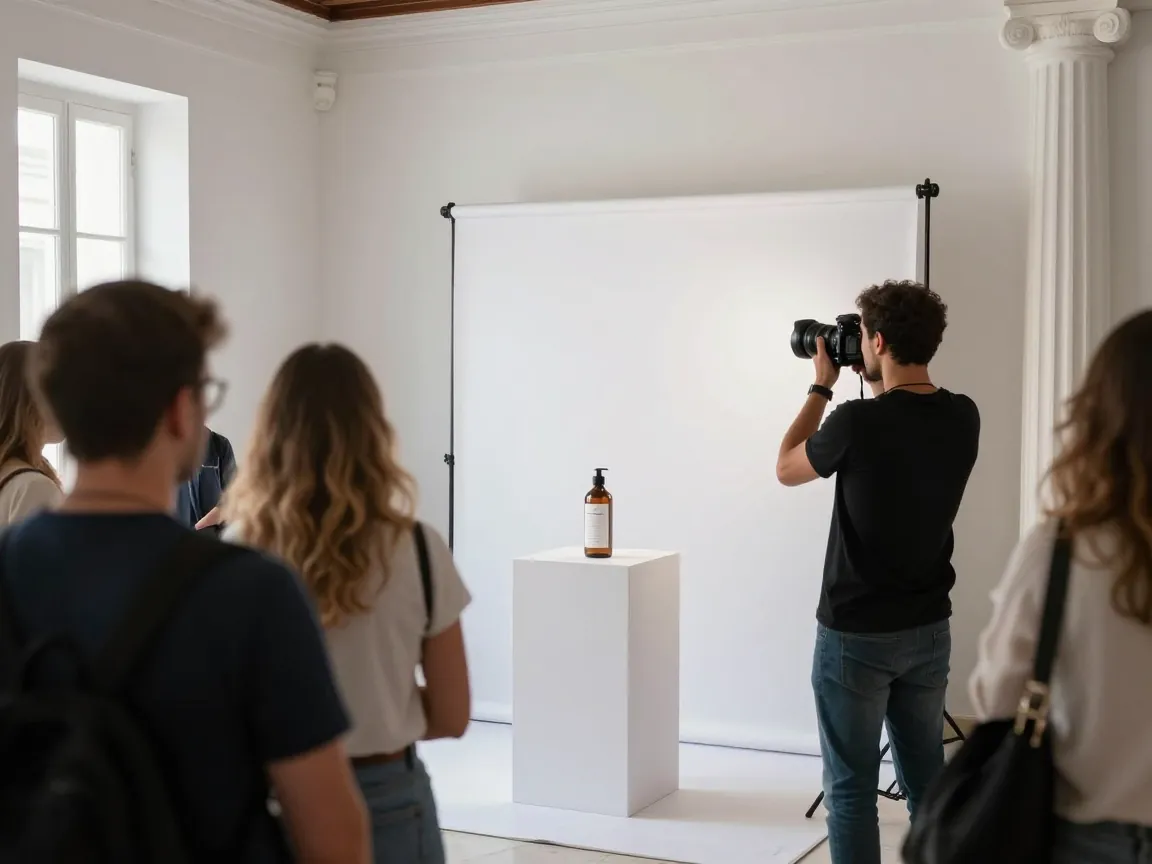
Photo backdrop and the shots journalists actually use
In our view, launch coverage leans on one or two images: the reveal moment and a product close-up with a person's hands in frame. Design for those. A backdrop for portraits needs even light across the full width, a plain surface, and about two metres of standing room in front of it. Test it at the actual event time with the actual room lighting; a backdrop that looked clean at the afternoon site visit can go yellow under evening lamps.
Ask the venue three backdrop questions: where can a backdrop stand without blocking a fire exit or a service door, what's behind it if it's a window, and can it stay up overnight if load-out runs late. If the answer to the last one is no, schedule the strike into the run sheet. The same discipline applies to seasonal moments like the vasilopita cutting, where one timed reveal carries the whole evening.
What to send venues when you ask for availability
Send a short brief: date and time window, guest count as a range, whether you need blackout, whether you need crew access during the day, and whether any part of the event is outdoors. A venue that answers all five in one reply is showing you how its operations team works. Treat a vague reply as information.
Tell us your headcount, your date and what the reveal actually is, and we'll match it against venues whose listings fit that format.
Planning questions
How early should production crews access an Athens launch venue?
Ask for a written access time in the contract, not a verbal promise. A full-day build lets you test blackout, rig screens and walk the reveal before press arrive. Confirm who holds the venue keys and how the crew enters outside office hours.
Do we need blackout capability for an evening reveal in summer?
Yes, if the reveal depends on projection or controlled lighting. Athens summer sunsets run late, so daylight lingers into the press window. Ask whether the room can be fully darkened and test it during a site visit at the same time of day as your event.
How should we handle noise conditions for a launch with amplified sound?
Ask the venue to state any noise conditions in the contract rather than by phone, since conditions can differ by location. Plan the reveal and speeches earlier in the evening, and confirm current requirements with the competent municipality before signing.