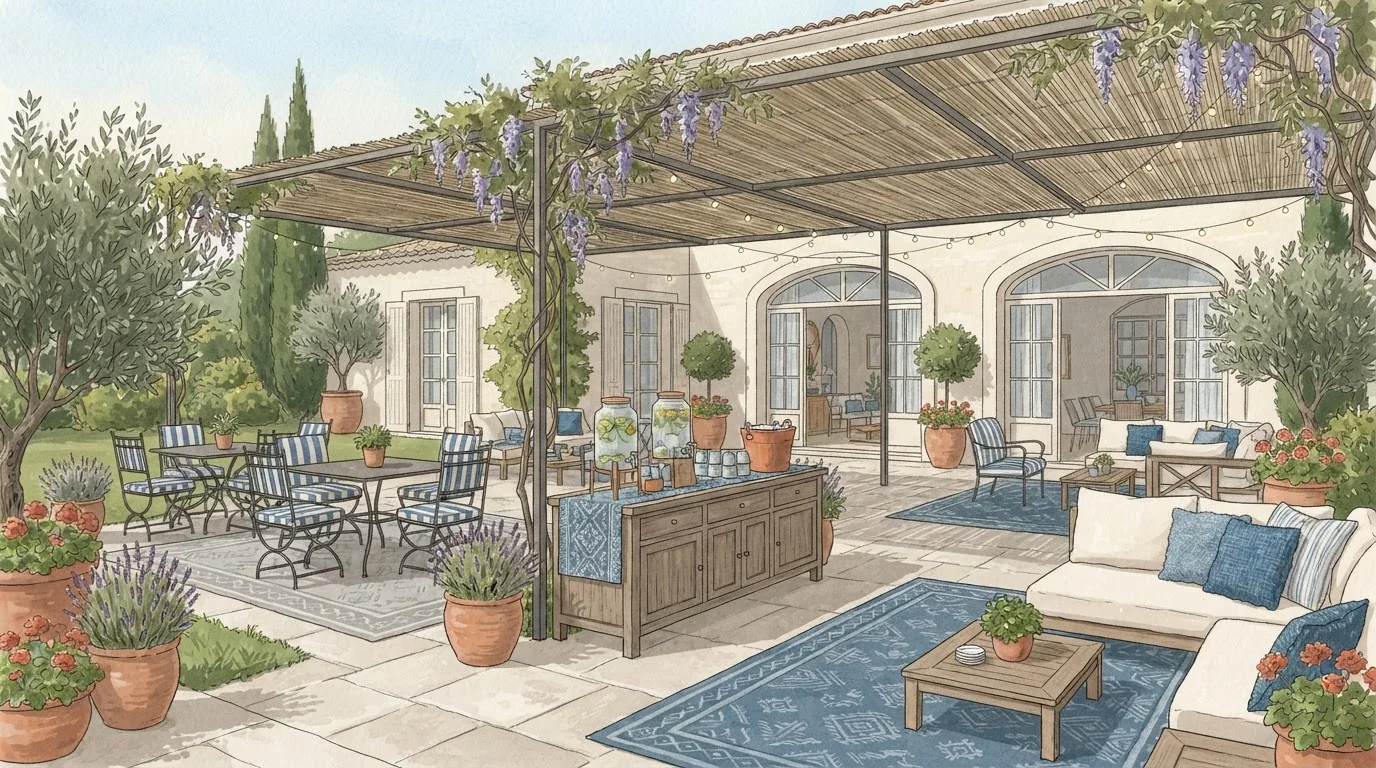
Shade is a placement decision, not a decoration
Shade changes where people stand, where the bar goes and how long anyone stays comfortable. On a site visit, walk the garden at the hours your event will actually run, not at the hour that suits you. Ask what shade exists at 13:00, 16:00 and 19:00, and whether the shade moves as the sun shifts. Then ask what can be added: pergolas, sail shades, umbrellas, tents or a covered terrace. For each option, get in writing who supplies it, who installs it, who removes it, and whether it is included in the quote or billed separately.
A practical test: take the guest count and ask the venue to mark on a plan which tables sit in shade at the start of the event and which will be exposed an hour later. If the answer is vague, that is your answer. Heat is not a styling problem you can solve with a fan and good intentions.
Water service and the drink plan
Water service is the part guests notice only when it fails. Ask how water will be available throughout the event: stationary stations, passed trays, a self-serve point, or bottles on tables. Ask how often it is replenished and who is responsible. If your event includes alcohol, ask what non-alcoholic options are poured alongside it, because a garden party with only one drinks category leaves people managing themselves badly.
This is not medical advice and it is not a weather prediction. It is logistics. Ask the venue to describe its standard setup in writing, then decide whether you need to add a water station near the ceremony or the entrance. Confirm whether the venue supplies glassware, ice and staff for drinks, and whether those appear on the quote as separate lines.
The indoor alternative needs a real trigger
"We can move inside if it rains" is not a plan unless someone defines the trigger and the deadline. Ask what indoor or covered space exists on the same site, how many people it holds for a seated meal, and how much notice the venue needs to switch. Ask who makes the call: you, the venue, or a named coordinator. Ask what changes when you move, including furniture, sound, catering flow and signage.
Get the switch deadline in writing. A deadline is the difference between a backup and a hope. If the indoor space is a different building, ask about the walking route, steps, lighting and whether guests with limited mobility can use it comfortably. If there is no indoor option, say so in your invitation and plan the shade and water more conservatively.
Seating, standing and the shape of the room
Garden parties often mix seated and standing moments, and that mix needs numbers. Ask how many seats are available for a seated meal, how many for a ceremony or speeches, and how many high tables or cocktail tables can be placed. Ask whether seating is fixed or can be rearranged, and how long setup takes. If the guest list has older relatives, pregnant colleagues or anyone who will not stand for three hours, count those seats explicitly rather than assuming people will find a chair.
The point is that the seating count, not the styling, decides which layout actually fits.
Return transport is part of the guest experience
A coastal or rural garden can be lovely and still be hard to leave. Ask about the drop-off and pick-up point, whether vehicles can wait on site, and how guests get from the parking area to the event space. Ask about lighting on paths after dark and whether anyone directs cars out at the end.
If you are arranging coaches or shuttles, ask the venue for a written arrival window and a departure window, because a single narrow slot creates a queue. Ask where the shuttle can stop without blocking residents or other events. If guests will book taxis, ask the venue what it tells guests about pickup locations. None of this requires a weather forecast. It requires one person at the venue who owns the answer.
A verified example of a venue that frames its offer around coastal setting and time-of-day booking inquiries is Ktima48, which describes itself as a coastal venue in Anavyssos with morning, evening and all-day booking inquiries. Use that as a prompt to ask about timing, not as evidence about your own shortlist.
A comfort-and-backup site-visit sheet
Take this to every visit. Fill it in on site, not from memory afterwards. Where a question has no answer, write "not confirmed" and follow up in writing.
| Area | Question to ask | Answer / not confirmed | Who confirmed it |
|---|---|---|---|
| Shade at event hours | What shade exists at 13:00, 16:00 and 19:00, and what can be added? | ||
| Shade ownership | Who supplies, installs and removes added shade, and is it in the quote? | ||
| Water stations | Where is water available, how often is it replenished, and who does it? | ||
| Drinks setup | What glassware, ice and staff are included, and what is billed separately? | ||
| Indoor alternative | What covered space exists, for how many seated guests, and what is the switch deadline? | ||
| Switch trigger | Who decides to move inside, and by what time? | ||
| Seating count | How many seats for a meal, for speeches, and how many high tables? | ||
| Seating flexibility | Can furniture be rearranged, and how long does setup take? | ||
| Access route | What is the drop-off point, the walking route, and the lighting after dark? | ||
| Shuttle window | What arrival and departure windows can the venue confirm in writing? | ||
| Quote clarity | Which items are included, which are separate, and what does tax apply to? |
What to send to suitable venues
Once the sheet is filled, send a short brief rather than a long story. Include the date and the hours you want, the guest count you are planning for, and whether the event is seated, standing or mixed. State that you need a written answer on shade, water service, indoor backup with a switch deadline, seating numbers and return transport. Ask for a written quote that shows what is included and what is separate, with tax as quoted and the amount it applies to. Ask for availability and the quote together, so you can compare responses on the same terms. Then compare the answers side by side. The venue that answers these five points clearly is the one worth a second visit, and the styling conversation can start there.
Two useful next steps: Your island wedding backup needs its own floor plan and Ask about the whole accessible route, not one ramp.
Planning questions
How can we test if a venue's shade plan actually works for our event hours?
Walk the garden at the hours your event runs. Ask what shade exists at the start, middle and end of your event, and whether it moves. Request a plan marking shaded tables at start and after one hour.
What makes an indoor backup plan reliable instead of just hopeful?
Define who decides to move inside and by what time, get the switch deadline in writing, and confirm capacity for a seated meal. Ask what changes in furniture, sound, catering flow and signage.