Why the ceremony end is a planning input, not a fixed number
A baptism is not a wedding. The service often runs shorter than a couple expects, or longer because of photographs, well-wishers and the practical business of getting a baby, a godparent and two sets of grandparents out of a church car park. You do not control the end time, so do not treat it as a fixed number in your schedule. Treat it as a confirmed moment you will learn on the day, and design a reception that absorbs early arrivals and late ones without anyone standing around hungry.
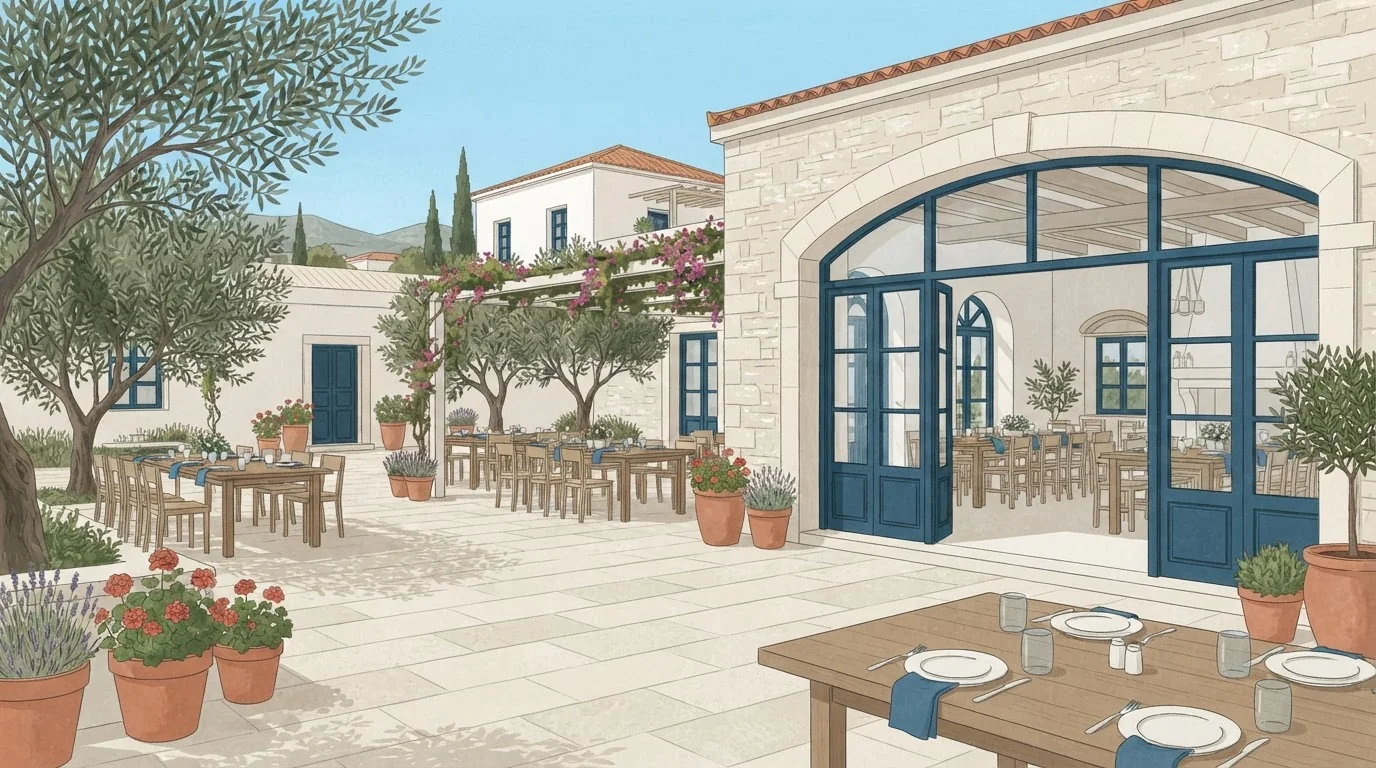
That means telling the venue one thing clearly: guests will arrive in waves, starting after the ceremony finishes. If the venue insists on a single seated start time, ask what happens if the first guests arrive forty minutes early. Is there a shaded area with water? Can they sit? Is there somewhere for a pram and a change bag? A baptism reception in Attica, especially at an event estate, usually has outdoor space that can be opened early. That is the space you are really booking for the gap.
Arrival waves: the flexible sequence that actually works
The useful artifact here is an arrival sequence, not a timetable. Write it as stages that can overlap. You do not need to know the exact ceremony end to make this work; you need to know the order in which things should be available.
| Stage | What is ready | Who it is for | Your action on the day |
|---|---|---|---|
| A. Ceremony ends | Nothing venue-side required | Everyone leaving the church | Send one message to the venue contact: we are leaving |
| B. First arrivals | Shade, water, seating, pram space | Immediate family, older guests, anyone travelling directly | Nothing. Let them sit |
| C. Main arrival wave | Drinks and small bites | Most guests | Confirm the kitchen is not waiting on a single start signal |
| D. Seated lunch | Full table service | Everyone present | Seat late arrivals at a reserved table, not a reshuffle |
| E. Long stay | Coffee, cake, space for children | Guests who stay | Keep one indoor room available if heat or rain turns |
Label these as stages, not times. If you want a working example, not a market norm: suppose the ceremony ends around 12:15. Stage B should be ready by 12:30 and Stage C by 12:45. Stage D can start when the majority of guests are seated, which might be 1:15. That is an example you can adapt, not a rule. The point is to agree what Stage B includes and how it affects the quote and staffing. Ask for it in writing.
Shade, heat and the indoor fallback
Attica in late spring and early autumn can still deliver strong midday sun, and summer afternoons can be genuinely hot. A baptism reception that starts with an hour of standing in direct sun will be remembered for the wrong reason. Ask the venue, in writing, what shade is available at the arrival hour and what indoor space can be used if the weather turns. This is not a request for a guarantee. It is a request for a plan.
If the venue is an event estate with a garden, ask which part of the garden is shaded at the time your guests will actually arrive, not at the time lunch is served. Ask whether the indoor space is available from the same arrival time or only from the seated meal. Ask where prams can be parked out of the sun. If the answers are vague, that is useful information.
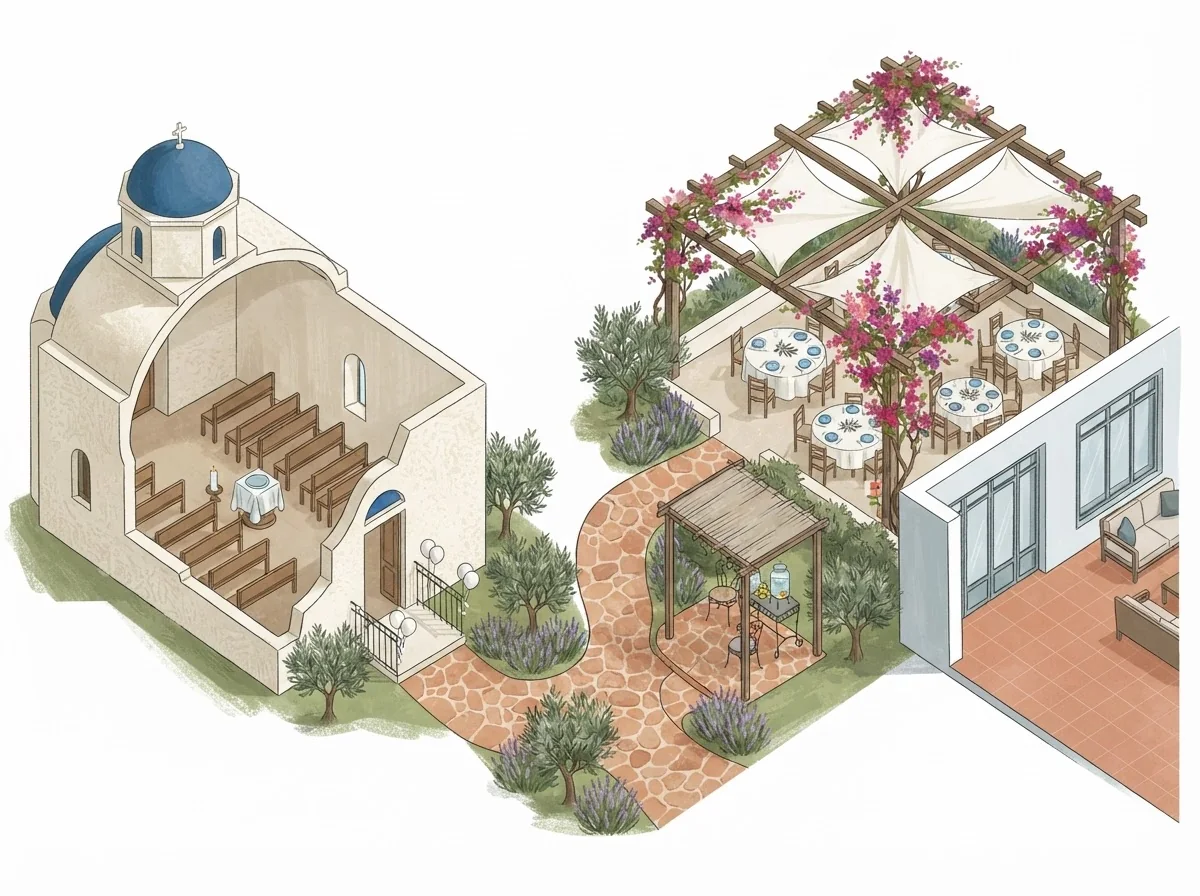
You can see the kind of outdoor and indoor event estate layouts common in Attica in our event estates collection. What matters for your planning is not the look of the space but whether it can absorb an early arrival wave without staff improvising.
Feeding a baby, a godparent and a grandmother at the same time
A baptism reception has three feeding clocks running at once. The baby needs to be fed, changed and possibly put down for a nap. The godparent is often the last to sit because of photographs and greetings. Older guests may need to eat at a predictable time and may not want to stand for an hour.
Build the sequence around those three clocks. Stage B should include something a grandmother can eat and drink without waiting for a full table. Stage C should include something a godparent can grab between photographs. Stage D is the seated lunch, and it should be able to start without the baby being awake, asleep, or in the room.
This is where a flexible arrival sequence beats a fixed schedule. If the baby needs to leave the room at 1pm, the lunch should not depend on the baby being present. If the godparent is still greeting guests at 1pm, the first course should not sit under a heat lamp. Ask the venue how they handle a staggered seating start. Ask whether the kitchen can serve the first course to tables that are full and hold the rest. That is a normal catering question, and the answer tells you a lot about how the day will run.
Questions to put in writing before you sign
A baptism reception in Attica is usually booked on a written quote that may or may not include service, tax as quoted, drinks and staffing. The terms depend on the particular written quote, so do not assume anything is bundled or excluded. Ask directly.
Use this checklist and send it to at least two venues. You are not checking availability here; you are comparing the shape of the offer.
- What time can the first guests arrive if the ceremony runs early?
- What is ready at that time: shade, water, seating, pram space, indoor access?
- Is the seated lunch a fixed start time or can it start when most guests are seated?
- If the ceremony runs late, what is the latest the kitchen can hold the first course?
- Does the quoted price include service, and what is the tax applied to (food, drinks, both)?
- Are drinks charged per person, per hour, or on consumption?
- What is the indoor fallback if it rains or is unusually hot?
- Is there a separate space for the baby to be changed or to nap?
- What is the cancellation or postponement term if the ceremony date changes?
- Can we send one designated contact message on the day to update arrival timing?
What to send to venues now
When you contact venues, send the confirmed ceremony date and location, the approximate number of adult guests and children, the arrival window you expect, and the fact that you want a flexible arrival sequence rather than a single seated start time. Say that you will confirm the ceremony end on the day. Ask for a written quote that separates food, drinks, service and tax as quoted. Ask what is ready at the first arrival stage. That is enough for a venue to give you a useful answer.
One honest tradeoff: a venue that can open early and hold lunch flexibly may charge for the extra staffing or the extra hour. That is a real cost, and it is usually smaller than the cost of an hour of hungry, sunlit guests. Ask what the extra hour costs, in writing, and decide with the number in front of you. Ecali Club lists weddings, baptisms, birthday parties and other social events among its offering (Ecali Club social events), which is a reminder that baptism receptions sit in a broader social-events market, not a separate one.
Send that brief. Then build the arrival sequence around whatever the venue can actually promise, not around the schedule you wish you could control.
Two useful next steps: Baptism reception quotes: count adults and children separately and One celebration, two ceremonies: brief the reception clearly.
Planning questions
Why plan a baptism reception around arrival stages instead of one fixed lunch start time?
Because the ceremony ends when it ends, so a single start time breaks if guests arrive early or late. Stages let shade, water and small bites be ready in waves, absorbing early and late arrivals without anyone standing around hungry.
What should be ready at the first arrival stage for older guests, the godparent and the baby?
Have shade, drinking water, seating and pram space ready for early arrivals. Ask the venue what it can provide, how this affects staffing and the quote, and record the agreed arrival arrangements in writing.