Why the meltemi wind matters more than the temperature number
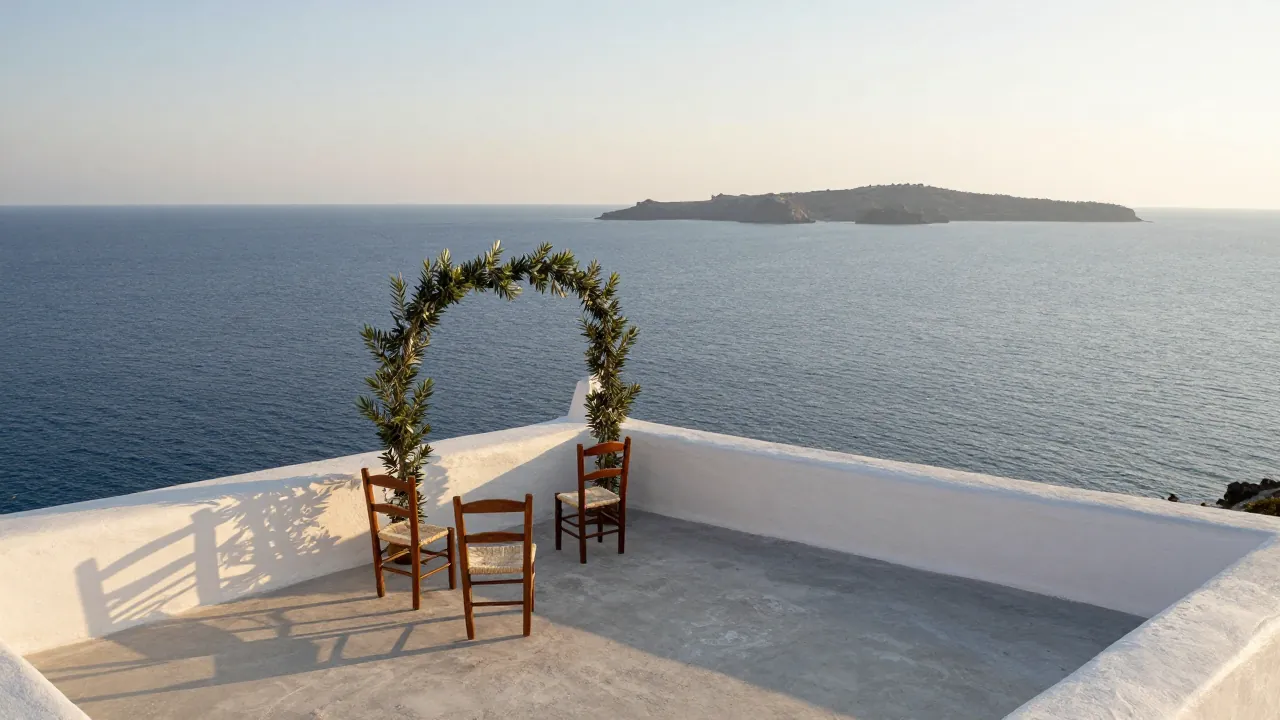
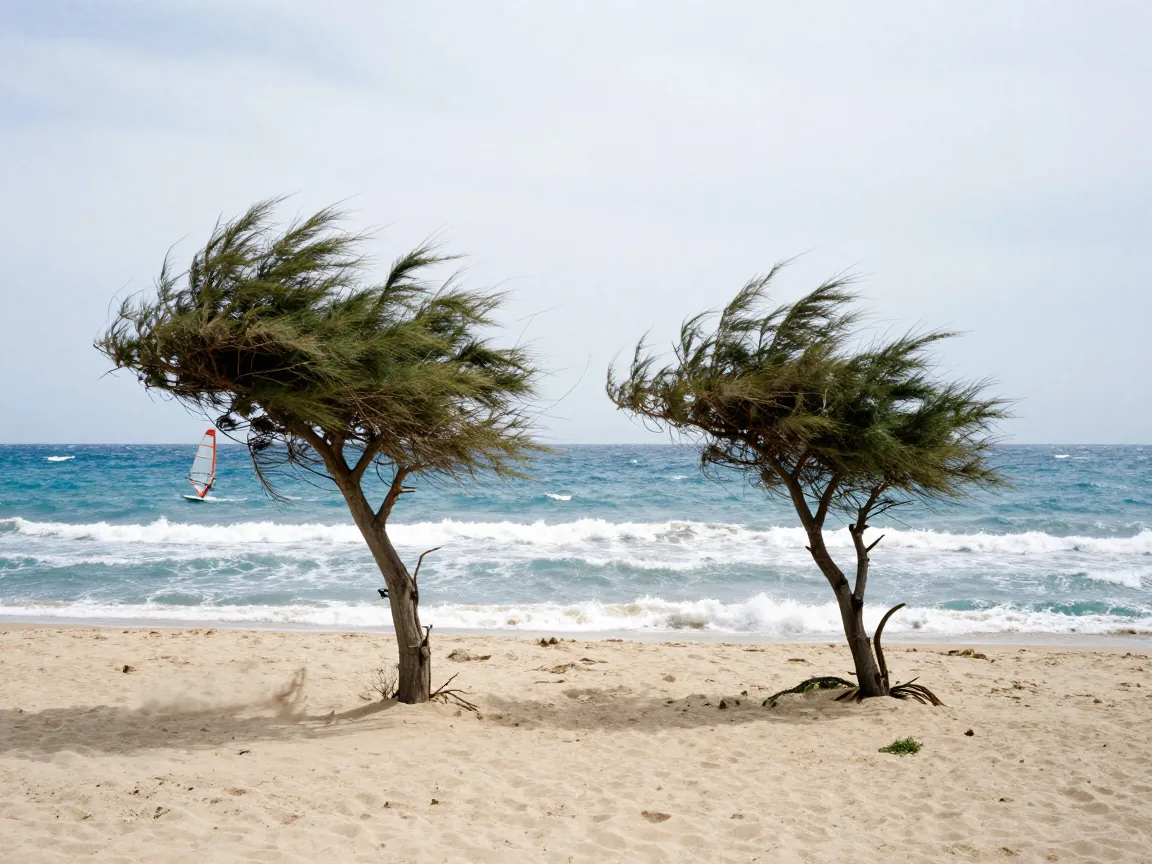
Greece's islands don't share one climate. The Aegean and the Ionian behave differently in the same week of the same month, and even two bays on one island can differ. Visit Greece describes how the strong north east Mediterranean wind called meltemi blows in the Cyclades area and tests mariners' endurance and skills, which tells you something a temperature chart won't: a terrace that faces the open sea is a different venue on a windy evening than on a calm one, whatever the thermometer says.
That distinction changes your questions. For any island you shortlist, ask the venue which direction its ceremony terrace and dining terrace face, and which side of the building guests will use after dark. Ask whether there's a covered or indoor fallback included in the contract or priced separately. If your guest list includes older relatives or small children, an exposed cliff-edge terrace on a windy night is a hard sell, even if the photos would be better. Some couples accept that trade knowingly; we'd rather they accept it in writing.
We don't quote wind statistics, because no single figure covers every island in a given month. Local knowledge beats national averages. The people who can tell you what late June actually feels like on your specific headland are the venue manager, a local planner and the boat or bus operator you'd hire for guest transfers. Ask all three, separately.
Month by month, what you're really choosing
Think of the season as four windows rather than twelve months. Each window trades crowds, prices and transport differently.
May and early June: the sea may still feel cool, tavernas are usually open but not yet full, and you'll often have more choice of venues and suppliers than later in the summer. Some seasonal ferry and flight routes may not have started yet, so check your exact dates. This window suits couples who want warm daytime weather without peak crowds and who don't need every beach club open.
Late June through early September: this is the high season. Expect booking pressure on hotels, transfer vehicles and boats, and expect guest accommodation in popular villages to cost more and sell out sooner. A strong wind matters most if your plan includes a boat transfer to a ceremony beach or a welcome party on a day sailer, so ask the boat operator how they handle a windy day.
Mid September through October: our preferred window for most island weddings, as long as your venue, boats and routes are still running on your dates. The busiest weeks are behind you, and venues may have more flexibility. Ask operators when island-specific routes start thinning, because that varies by island and by year.
November through April: possible for a small civil ceremony and a long lunch, but check what's actually open. Some island hotels, restaurants and boat operators close for the winter, so your shortlist may shrink to places that stay open year-round, and a city hotel with event facilities belongs in that category.
The month-shortlist table we'd fill in with you
Use this as a working document. One column per candidate month, one row per question. Fill it in with the venue and the transport operators directly; don't fill it in from memory or from someone's old blog post.
| Question to ask | Ask whom | What a good answer looks like |
|---|---|---|
| Which way do the ceremony and dining terraces face, and what shelters them? | Venue manager | A specific direction and a specific structure (wall, pergola, indoor room), not "it's usually fine" |
| What's the indoor or covered fallback, and is it in the contract or priced separately? | Venue manager | Named room, named capacity, written into the agreement |
| How do guests reach the venue, and how many vehicles does that take? | Venue and local transfer operator | A vehicle count and a named pickup point |
| Are ferries and flights running on our exact dates, and how many days a week? | Ferry and airline operators, or a local travel agent | Timetables for the specific month, not the summer average |
| What closes on the island in our month, and what stays open? | Venue and local planner | A named list: this taverna, this boat operator, this bakery |
| When do local hotels start taking bookings for our dates, and when do they fill? | Two or three hotels | A booking-opening date and a realistic sell-out window |
| What's the plan if the ceremony boat can't sail on the day? | Boat operator | A stated alternative: road transfer, postponement to the next day, or cancellation terms |
City venues can carry part of a shoulder-season wedding that an island can't. The Imperial Palace | Classical Hotel Thessaloniki listing says the Colombo Conference Hall seats up to 180 people, has natural external lighting and its own entrance separate from the hotel's main entrance. For a November or March celebration, that kind of indoor certainty with accommodation in the same building is worth weighing against an island date that depends on the weather holding.
Transport schedules are a budget line, not an afterthought
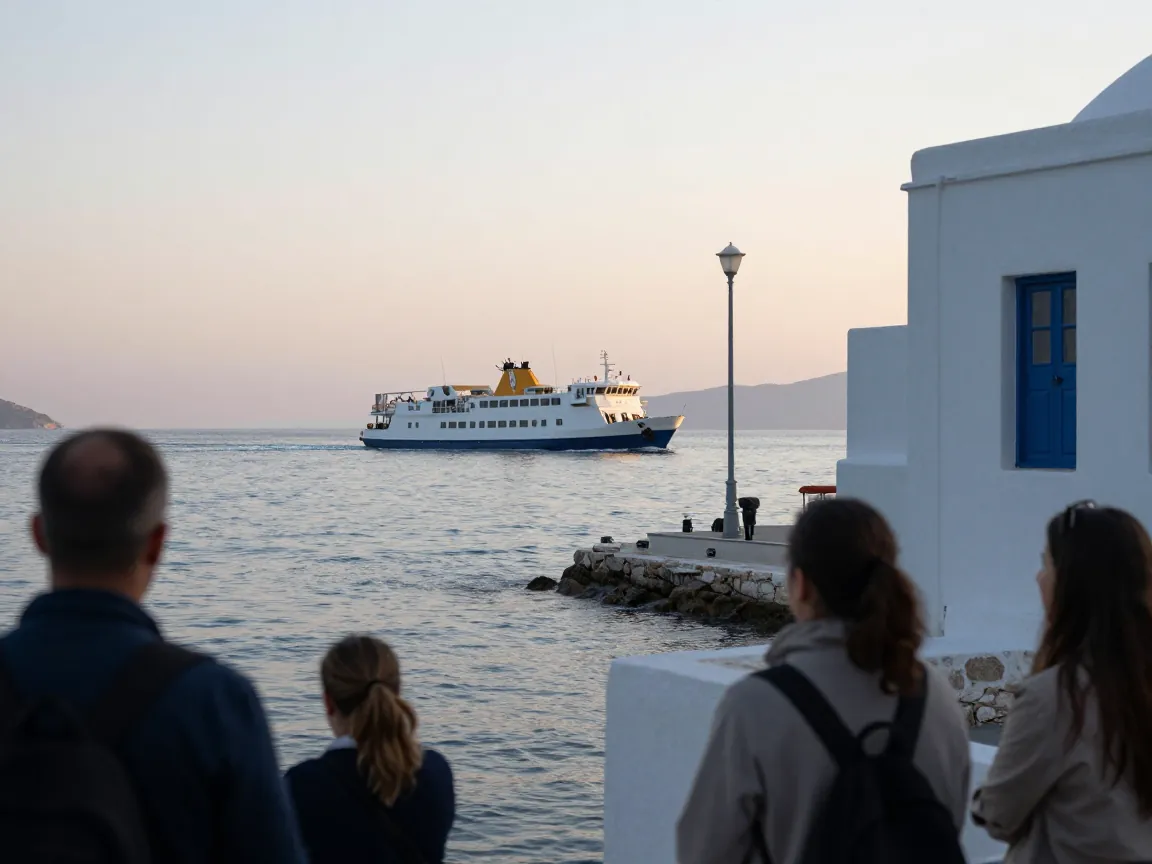
On islands, the wedding date and the transport timetable are the same decision. If your only ferry to the island runs three days a week in your candidate month, your guests aren't choosing a date; the timetable is. Flights follow their own pattern: frequencies can change between high season and its edges, and some connections route through Athens, so check the specific month.
Add the cost of moving people around to the venue shortlist from the beginning. Our guide to Santorini wedding budgets makes the case that a Santorini wedding budget needs a transport line that's easy to forget until quotes arrive, and the same logic applies on any island where guests land at an airport and still need a boat, a bus or a fleet of taxis to reach the ceremony. A month with cheaper accommodation can be the more expensive month once transfers are counted, especially if vehicles are scarce.
Ask each operator for their timetable for your specific dates, not the peak-season version. Ferry and airline schedules are commercial decisions that change year to year, so the only reliable answer comes from the operator or a local agent who books them daily. If a route you need doesn't exist in your month, that's a shortlist problem, not a detail.
Plan the backup for the month, not for the wedding
A weather backup should match the month you chose. A June backup that assumes a calm, warm evening is a different plan from an October backup that assumes the celebration might move indoors at short notice. If you're building that plan, start from your island wedding backup needs its own floor plan, because a backup room that can't seat your headcount, or a marquee with no lighting, isn't a backup.
The month you pick also sets how much backup you need to pay for. Some venues include an indoor room in the standard hire; others charge separately for a covered option. Ask which applies in your month before you sign, and get the fallback room's name and capacity written into the agreement rather than agreed verbally.
We can't tell you the ideal month for your island, because we don't know your guest list, your budget or your venue. A couple with forty guests flying from one city and a flexible schedule has different options from a couple with a hundred and fifty guests arriving from four countries. The month is a negotiation between those constraints, and the venue and operators are the people who can settle it.
Wedding paperwork, permits and any local requirements sit outside this calendar. Confirm current requirements with the competent authority for your case, whether that's the parish, the municipality, the registry office or your consulate, and don't rely on a planning guide for a legal answer.
Send us your headcount, your preferred month or two, and a short brief on how your guests will travel. We'll point you to island and mainland venues whose listings match, and you can put the table above to the venues and operators directly.
Planning questions
Is the meltemi wind a reason to avoid a Cyclades wedding in midsummer?
Not automatically, but it changes your venue questions. Ask which way the ceremony and dining terraces face, what shelters them, and whether a covered fallback is included in the contract or priced separately. Exposed cliff terraces behave differently from sheltered courtyards.
Why does the ferry timetable decide the wedding date on some islands?
Because if your only ferry runs a few days a week in your candidate month, guests cannot arrive when you choose. Ask operators for timetables covering your exact dates, since schedules change year to year and peak-season frequencies rarely apply at the edges.
Should we plan a shoulder-season island wedding instead of a summer one?
It's our preferred window for many couples, because the busiest weeks have passed and venues, hotels and transfers may be under less pressure. Check what closes on your specific island, since some seasonal businesses shut earlier than you expect.