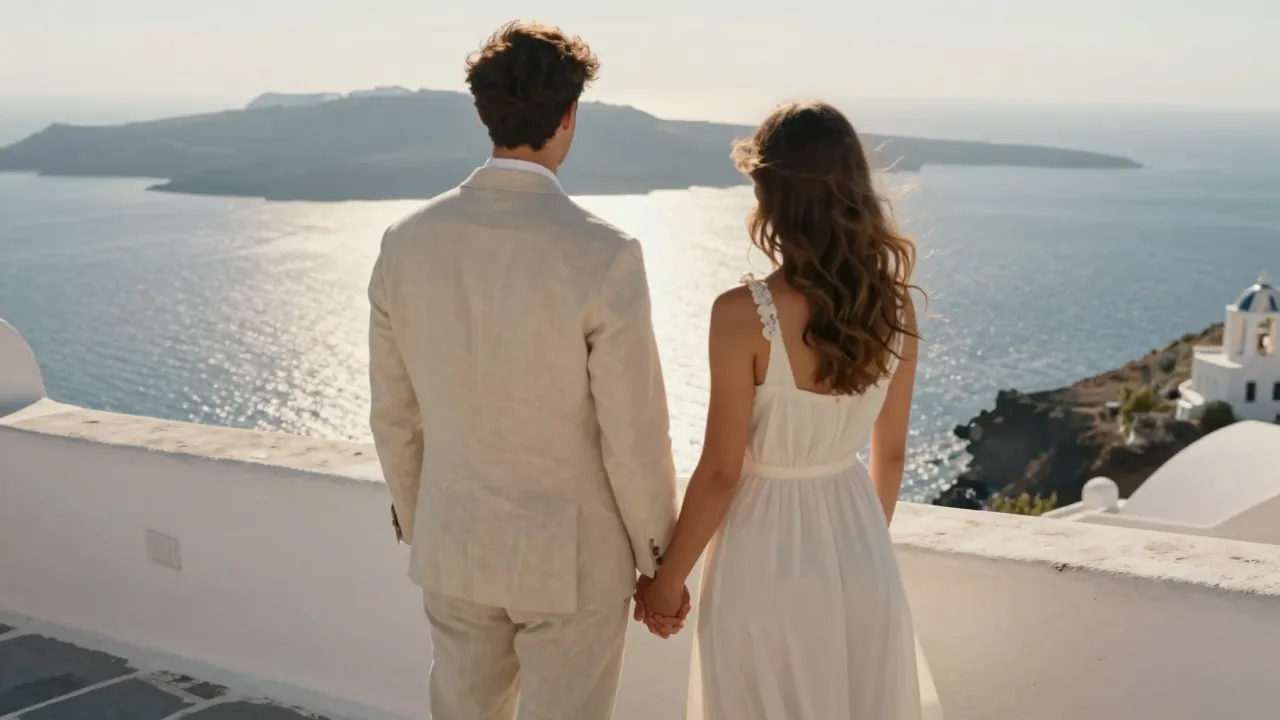
Legal ceremony or symbolic ceremony: the fork in the road
These are two different projects. A legal civil marriage in Greece means the couple presents documents in person at the City Hall (Demarchio) or to the President of the Community where the marriage will take place, as the U.S. Embassy in Athens explains. That is a Greek civil process run by the municipality, not by the venue, so the venue can help with the day but not with the file.
A symbolic ceremony is a blessing or a staged ceremony with no legal effect in Greece. One route is to do the legal part at home first, then fly in for a symbolic ceremony. Another is a civil marriage in Greece with the celebration somewhere else on the trip. Decide which one you're planning before you contact a single venue, because the answer changes the venue brief entirely.
If two ceremonies are on the table, one legal and one celebratory, the reception logistics need their own plan: our guide to combining a wedding and baptism reception covers how to hand a venue two ceremonies without confusing the timeline.
The documents, the parish and the people who confirm them
We don't publish deadlines, fees or document lists as fact here, because they vary by country of origin, by municipality and by year. What we can tell you is who answers the questions.
- Civil marriage: the City Hall (Demarchio) in the municipality where the marriage will take place, or the President of the Community where the marriage will take place.
- Religious ceremony: the parish priest. Whatever guidance you've read at home, the parish in Greece confirms what it will accept.
- Your own paperwork: your consulate or embassy in Greece, and the authority that issues your birth certificate or affidavit at home.
Ask each office the same three questions in writing: which documents, in what language, certified how. Keep the replies. Confirm current requirements with the competent authority before you book anything non-refundable.
Witnesses, guest numbers and what a small venue actually charges for
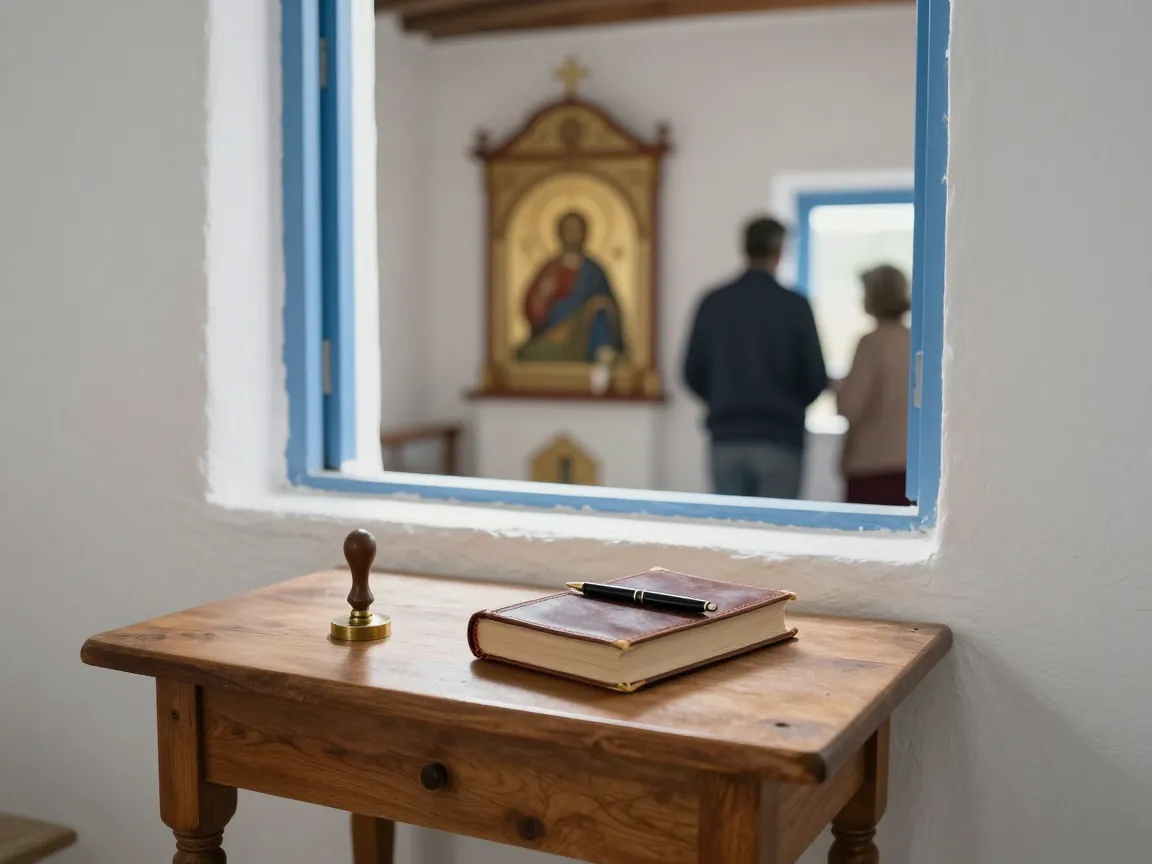
Ask early whether your ceremony needs witnesses, and how many; it's the easiest detail to forget when you're planning for two. If the answer is two witnesses, that means four people in the room, plus a photographer and maybe a planner. Your guest count isn't two. State it as a real number on the brief.
A venue with a minimum spend works differently at this size. The Hemera Holiday Home villa on Santorini, according to its listing, presents itself as a setting for social functions and weddings, available on request with extra venue charges, and hosts small groups for ceremonies, proposals and vow renewals. Its listing mentions a Caldera, Aegean and volcano backdrop and a weddings brochure. That is the listing's description, not our verification. But it shows the shape of a small-venue conversation: event use is on request, venue charges sit on top, and the brochure is where the detail lives.
The real question for any small venue is what the minimum spend buys. A villa that charges per night and adds an event fee is structured differently from a hotel that wants a room block. Both can work for two people. Neither works if you discover the event fee after you've paid the deposit. Before you sign, read our piece on why a small wedding needs the right minimum spend.
Photographers, drone permission and the backup spot
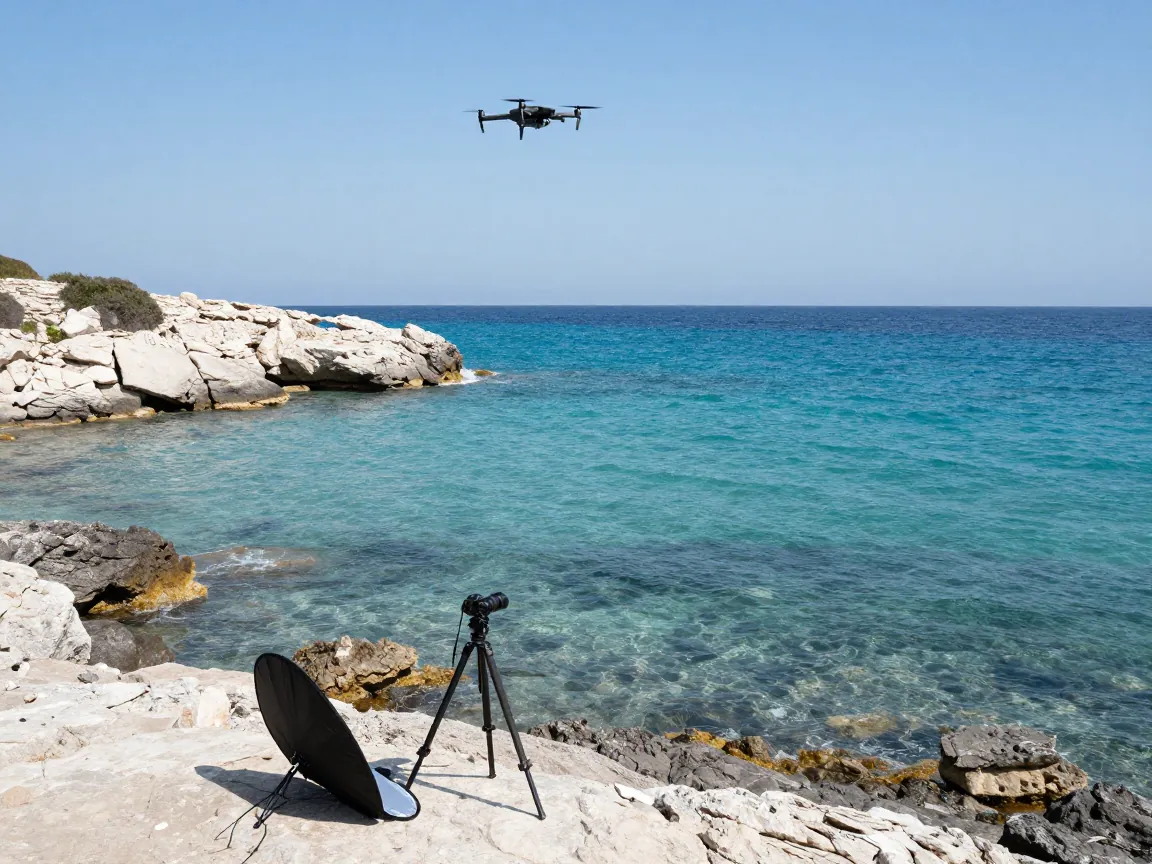
A photographer shooting two people at a caldera viewpoint is still a commercial shoot. Archaeological areas and some beaches may restrict tripods, drones and professional equipment, and any permission may come from a different office depending on the location. We don't quote thresholds or fees because they change. Ask the photographer which locations they've shot recently, and ask who applies for the permit: you, them, or the venue.
Then build the backup. The obvious outdoor risks are wind and heat. Every outdoor plan needs an indoor or covered alternative at the same venue, agreed in writing, with the decision deadline stated. Twelve hours before the ceremony is one example; yours can differ. What matters is that somebody names a time and a person who calls it.
If a site manager or municipality tells you the rules, get the answer in writing and keep it with your documents.
The brief that gets a small venue to answer you
Send this as one email, not five. Venues answer the complete version first.
| Item | Legal column | Practical column |
|---|---|---|
| Ceremony type | Civil at Demarchio, or religious at parish | Symbolic, celebrant arranged by whom |
| Date and time | Registry appointment confirmed? | Ceremony time, sunset window |
| People on site | Couple, any required witnesses, officials | Photographer, celebrant, planner, hair and makeup |
| Space needed | Room for the legal signing | Ceremony spot, dinner table for six, getting-ready room |
| Documents | Which authority holds the file | Who carries certified copies on the day |
| Weather backup | Not applicable | Indoor alternative, decision deadline, who decides |
| Permissions | Registry or parish permission | Photography, drone, site access, décor installation |
| Money | Registry or parish fees | Venue event charge, minimum spend, deposit terms |
Add one line at the bottom: what you need from the venue, and by when. A date and a headcount get replies. A mood board doesn't.
The honest concession: for two people, a full villa buyout is usually the wrong buy. You're paying for beds nobody sleeps in. A restaurant with a private terrace, a small hotel, or a villa that charges an event fee rather than a block of rooms usually fits an elopement budget better. Sometimes the beautiful option is simply the expensive one, and it's fine to say so.
One more thing worth deciding early, before you email anyone: who is allowed to speak during the ceremony, and for how long. A two-person ceremony with a celebrant, a photographer and witnesses can still drag on if nobody agrees a script. Write the running order, share it with everyone on site, and keep a printed copy with the documents. It sounds fussy for an elopement. It saves the day when the wind picks up and the light is going.
If we had to pick one decision to make first, it's legal or symbolic. Everything else on this page, from the venue brief to who carries the documents, follows from that answer.
Planning questions
Do we need witnesses if only the two of us are travelling?
Ask the municipality or parish handling your ceremony whether witnesses are required, and how many. If they are, your real headcount includes them plus any photographer or planner, so put that number on the venue brief.
What should we ask a photographer before choosing a ceremony spot?
Ask which locations they have shot recently and who arranges any permission needed for professional equipment, tripods or drones. Some sites may restrict these. Confirm the rules with the municipality or site manager, and agree a covered backup in case of wind or heat.
How do we brief a small venue so it takes us seriously?
Send one email with the ceremony type, date, time, total people on site including suppliers, the space you need, your weather backup and your budget structure. Ask what the event charge or minimum spend covers. A date and a firm headcount get replies.