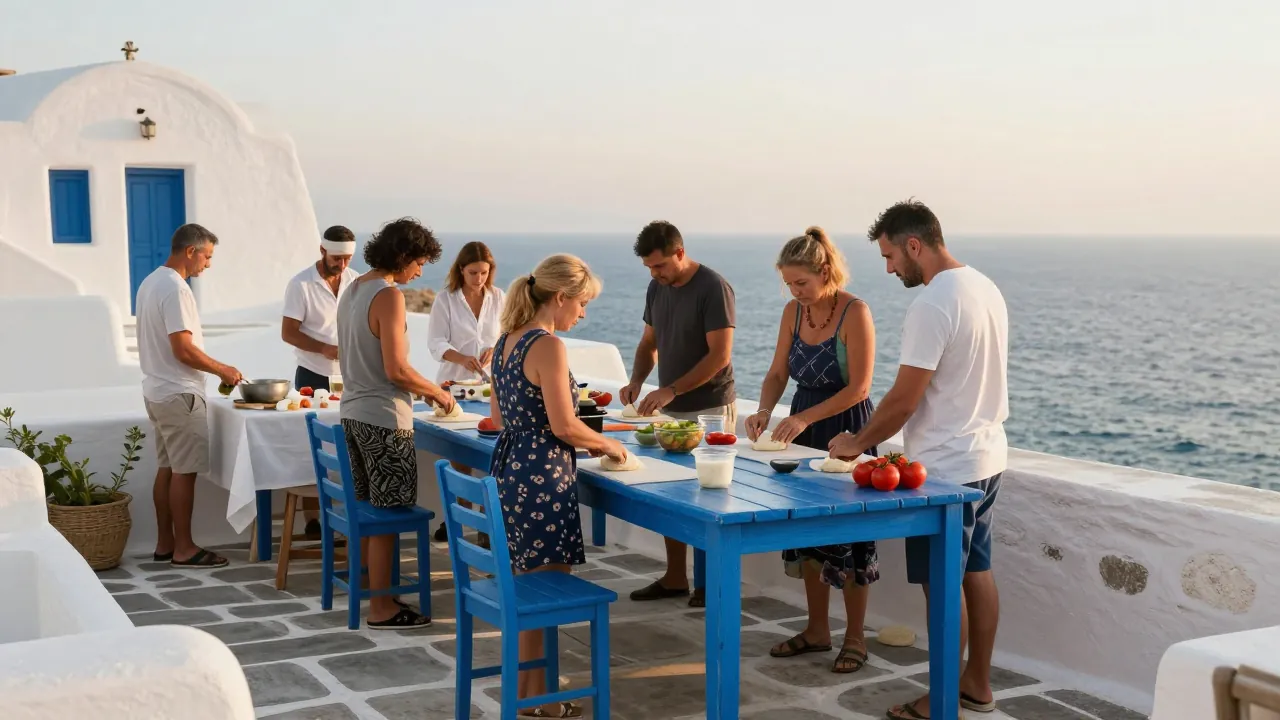
Hands-on stations versus a demonstration, and why it decides everything
A demonstration means one cook at the front, your group seated, plates passed around at the end. It suits larger groups, mixed mobility, and teams where half the room would rather watch. A hands-on class splits people into stations, each with its own board, knife and bowl, and that arrangement caps how many guests each instructor can supervise. Ask the school, in writing, how many guests share one station and how many instructors stand in the room for your numbers. If they answer only in totals, ask again per station.
For a team-building brief, we lean hands-on up to roughly two dozen people, an example only, because shared chopping creates conversation that a seated demonstration doesn't. Above that, ask about a mixed format: two or three hands-on stations plus a demonstration bench, so everyone contributes without crowding the workspace. The listing says what each venue offers, but only the school itself can tell you its station count for your date.
The brief you send, clause by clause
Write the brief as a document the school can price against, not a chat message. Every line below should carry a number or a name.
| Brief line | What to state | Why the school needs it |
|---|---|---|
| Headcount | Exact guests, plus any partners joining later | Sets station count and instructor ratio |
| Format | Hands-on, demonstration or mixed | Determines room layout and staffing |
| Stations | Guests per station, preferred | Decides how many boards and burners |
| Dietaries | Allergies, vegetarian, vegan, no pork, no shellfish, children | Menu and separate boards |
| Start time | Arrival at the venue, not hotel departure | Works backwards to transport |
| Duration | Cooking plus eating time separately | Prevents a rushed dinner |
| Alcohol | Wine with the meal, bartender, or dry event | Licensing and staffing |
| Transport | Pickup point, hotel list, one coach or several | Parking and drop-off space |
| Language | English, Greek, or both, plus a translator if needed | Instructor allocation |
| Room | Indoor, outdoor, or shaded terrace | Weather contingency |
| Payment | Deposit, balance date, cancellation terms | Contract clarity |
| Contact | One named person on your side on the day | Less confusion at arrival |
Dietary needs deserve their own paragraph, not a footnote. Collect allergies in writing from every guest at least a fortnight ahead, an example timeline only, and pass the list to the school as a table with names beside restrictions. Cross-contamination questions belong in the same email: separate boards, separate oil, separate utensils.
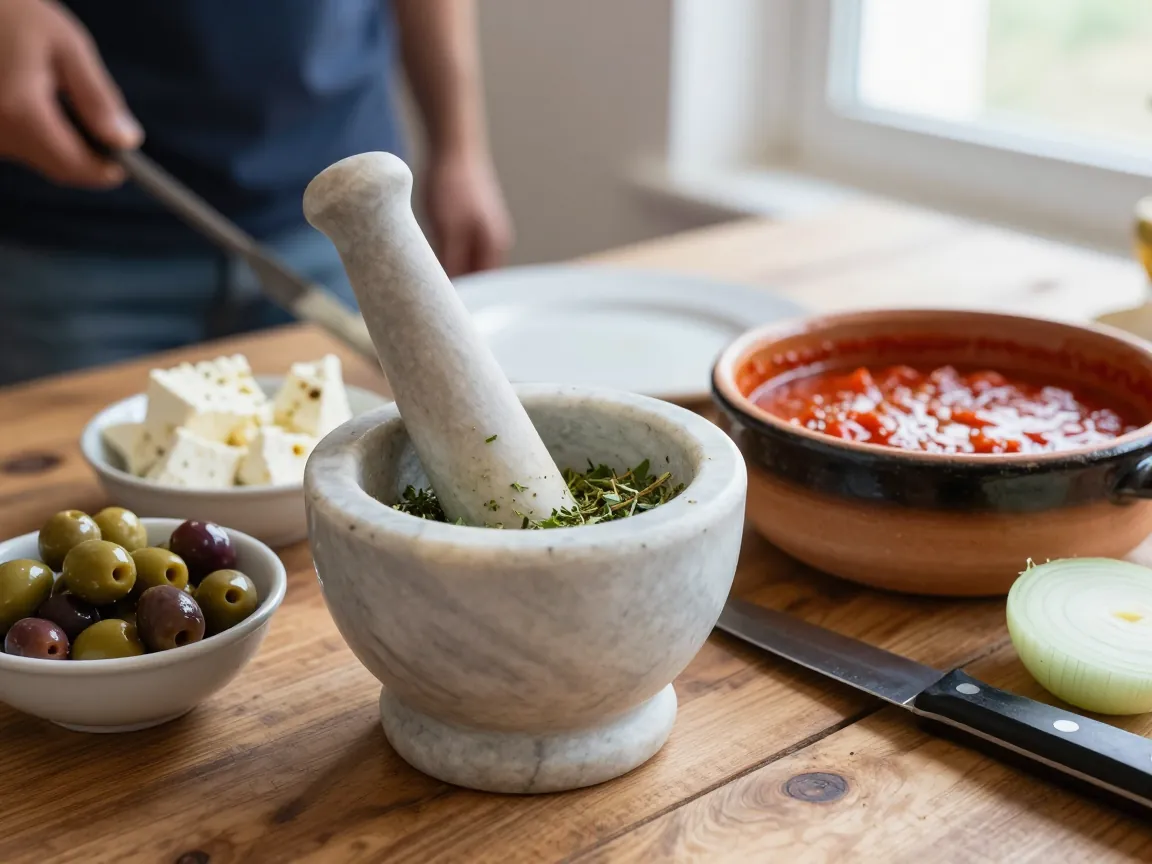
Timing the class around a Mykonos sunset
Mykonos sits in the heart of the Cyclades and carries the name island of the winds, as Visit Greece describes. Wind matters to your plan. An outdoor terrace class in the afternoon can turn into a napkin chase, so ask whether the cooking area is sheltered and where the group eats if the wind picks up. The school will know its own site; we wouldn't book an exposed terrace for a corporate group without a written indoor fallback.
Work backwards from sunset rather than forwards from lunch. A class that starts mid-afternoon gives you chopping, cooking and a seated meal that finishes as the light drops, which is when, in our view, a team wants to be eating, not still dicing. Ask the school for realistic timings: how long the hands-on segment runs, how long the meal takes, and whether the group can stay on after the plates are cleared. If your coach has a fixed return time, tell the school before it quotes, because a tight transfer window is one of the easiest ways for a good class to end badly.
If your company runs other event formats through the year, the seating logic in our guide to Athens company Christmas parties translates well to a long communal table.
The sightline questions in our guide on how a gala dinner room works from the back table apply to any demonstration setup where some guests sit far from the action.
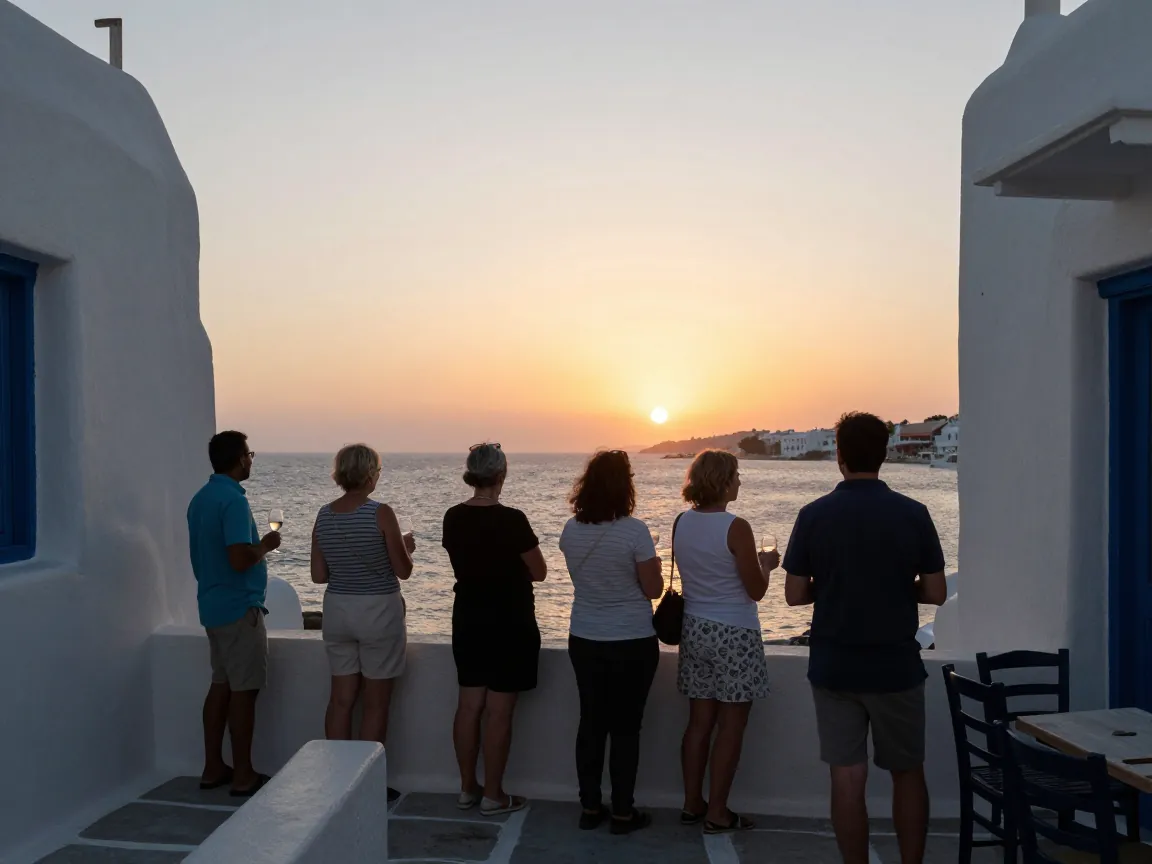
Transport from hotels, and the parking question nobody asks
Taxis booked one by one won't arrive together, and on a busy island that gap can stretch. Ask the school whether it arranges pickups, and if not, book one coach with a named driver and a single pickup point. Send the hotel list to both the school and the transport provider so nobody waits in the wrong lobby. Ask where the coach actually stops at the venue: a drop-off on a narrow lane can mean a walk, and that matters if anyone in the group has mobility limits.
Tell guests in the invitation what to wear: closed shoes, hair tied back, no loose sleeves. Ask the school whether aprons are provided or guests should bring their own. Small logistics like this are what turn a good class into a smooth one.
For groups comparing islands, or for a company running the same programme in more than one location, our South Aegean cooking schools and event venues page shows what else the region offers.
Questions to put to the school before you sign
Send these as a numbered list and ask for answers in writing.
- How many guests per station, and how many instructors for our headcount?
- What's the indoor alternative if the wind picks up?
- Can the menu be adjusted for allergies and vegetarian guests without a separate fee structure?
- What time does the class need to start to finish eating by our target hour?
- Is there a licensed bar, and can we bring our own wine?
- Where does a coach stop, and is there a covered waiting area?
- What's the deposit, the balance date and the cancellation window?
Licensing and local permits are not our territory, and rules can change. If alcohol service or an outdoor setup is part of the plan, confirm current requirements with the competent authority, and ask the venue what it already holds, before you commit.
A cooking class is not for every team, and we'd say so plainly. If half your group would rather be at a beach club, a seated dinner with a short demonstration may land better than three hours of chopping. Ask your people first.
Send us your headcount, your date and a two-line brief, and we'll point you to Mykonos venues whose listings match what you actually need.
Planning questions
How many guests should share one cooking station on Mykonos?
Ask each school directly, since ratios differ and listings do not state them. For teams, we suggest pairing guests at a station so everyone has a task, and requesting enough instructors that no station runs unsupervised during frying or knife work.
When should a corporate cooking class start to finish by sunset?
Work backwards from the meal, not the sunset itself. Ask the school how long cooking and eating each take, then set your arrival so the seated part lands in the cooler evening hours rather than mid-afternoon heat.
Should the company arrange coach transport to a Mykonos cooking class?
Usually yes, because separate taxis are hard to keep together and access to the venue may be tight. Give the school and the coach operator the same hotel list and one pickup point, and ask where the coach can actually stop near the venue entrance.