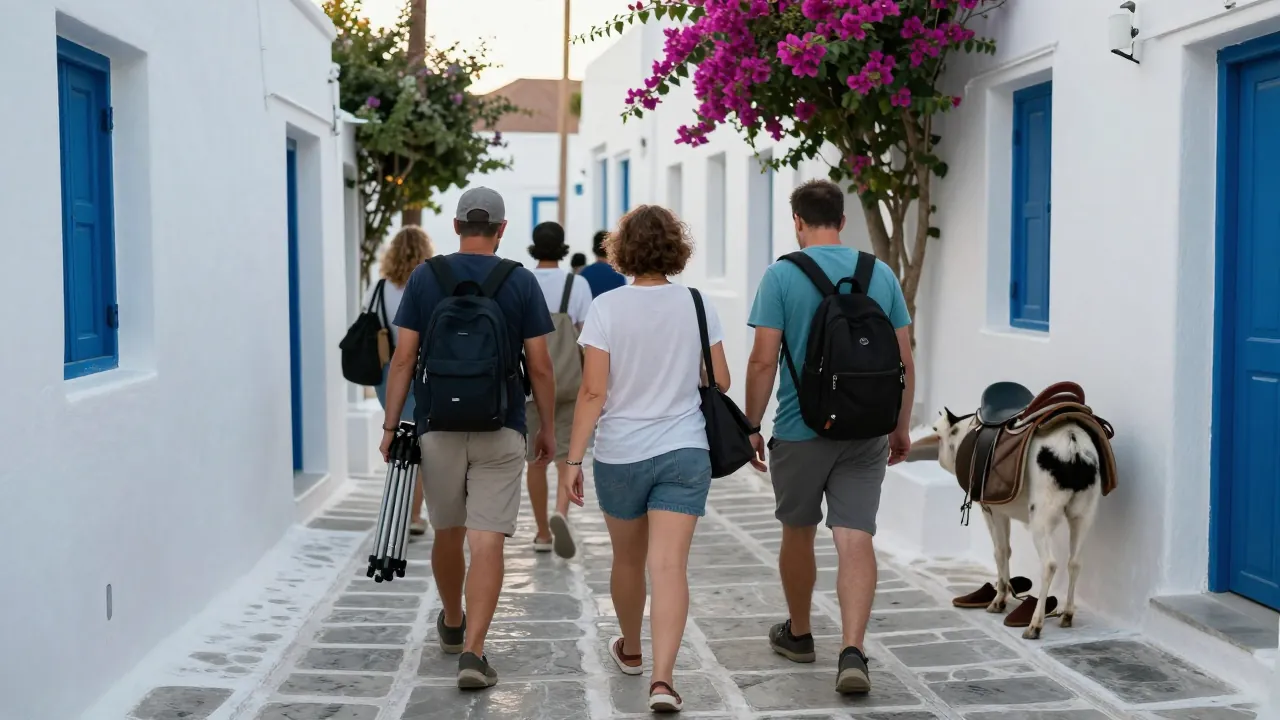
Why Hydra's no-vehicle rule changes the whole plan
Visit Greece states plainly that vehicles are prohibited on the island, with no cars or motorcycles permitted. That single sentence rewrites your logistics. Everything you'd normally throw in a van, from delegate bags to the projector, travels by sea, then by hand or by whatever local carrying arrangement the venue confirms, depending on where it sits relative to the port.
Our view: this is a feature, not a defect, but only if you plan for it honestly. A group that arrives with six hard cases and no carrying arrangement will have a bad first hour. A group that ships two soft bags per person and confirms porterage in advance will walk off the hydrofoil and straight into the offsite.
Ask the venue, in writing, these three things: where the nearest vehicle-free drop point is to the property, who physically carries luggage from the port, and what happens to equipment on the day of arrival if the sea is rough and sailings slip. Get the answers in the contract, not in a WhatsApp thread.
Getting people, luggage and equipment onto the island
Hydra is reached by sea from the Athens coast. Schedules vary by season, operator and weather, so treat timings as something to confirm with your chosen ferry or hydrofoil company and the venue rather than something to assume. We'd build the movement plan backwards from the first working session and add a buffer, because the last thing a leadership group wants is to open a session with half the laptops still in Piraeus.
Equipment is the harder half. Projectors, sound gear and printed materials don't like stairs, and Hydra has plenty of them. Ask each supplier whether they deliver to the port only or to the venue door, and whether that delivery includes the climb. If the answer is port only, budget for local hands. Ask your supplier and the venue how goods deliveries actually reach the property, who pays for the last leg, and get the arrangement in writing.
If your group is weighing a mainland alternative with road access and a different set of logistics, our planning notes on a Halkidiki offsite cover why pinning down the exact location before you book matters just as much there.
A note on the Santorini comparison
If you're comparing island formats, Amaze Suites Santorini is an example of a caldera hotel listing in Imerovigli where the record mentions suites with air conditioning, a private bathroom, some balconies or terraces, an infinity pool and a breakfast menu. The listing mentions intimate weddings, but event facilities and capacities are not detailed, so treat it as a starting point for questions rather than a confirmed fit.
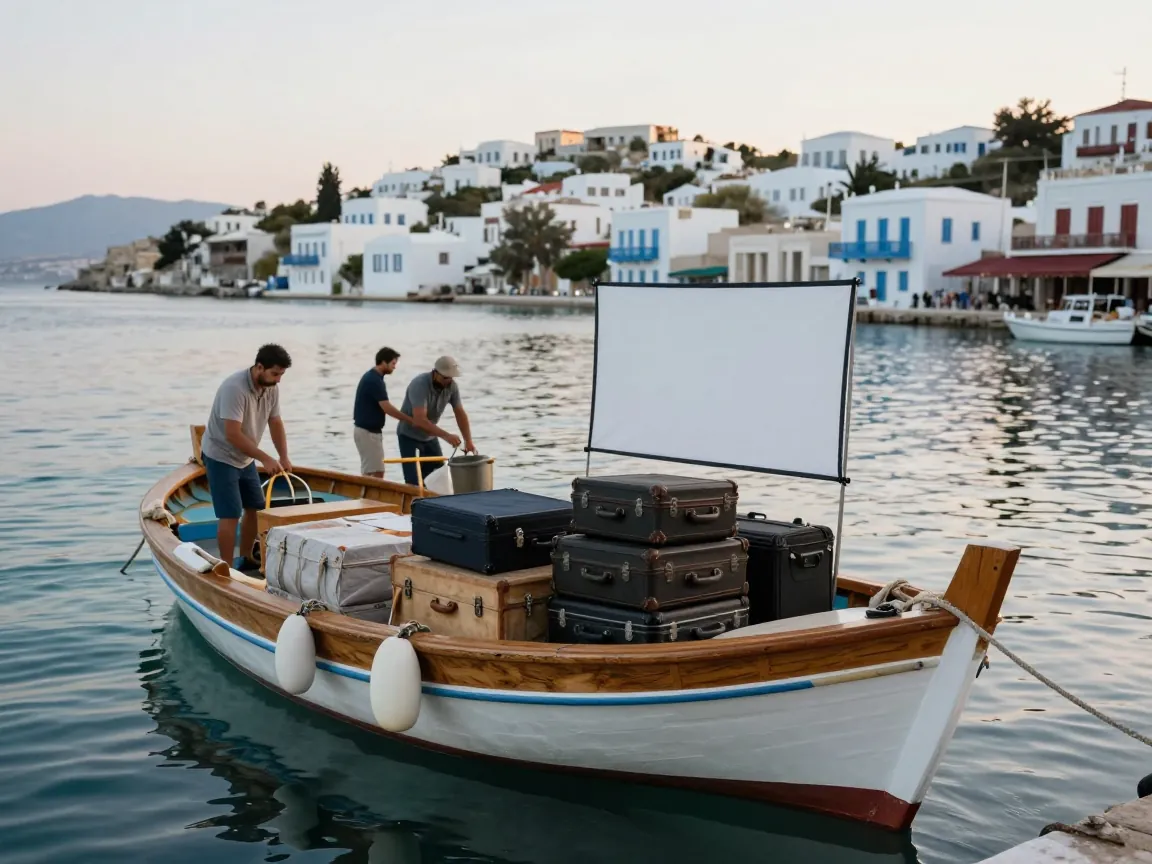
Luggage and equipment movement plan
Use this as a template. Fill every cell with names, times and phone numbers before you travel.
| Stage | What moves | Who owns it | Confirm with | Written proof needed |
|---|---|---|---|---|
| Pre-departure | Delegate bags, laptops, printed packs | Offsite lead | Venue | Bag limit per person, porterage included or not |
| Sea crossing | People and bags | Group lead | Ferry operator | Ticket terms on luggage, weather contingency |
| Port arrival | Bags, equipment cases | Named porter | Venue or local supplier | Time window, cost basis, receipt |
| Final leg | Everything | Venue contact | Venue | Who carries what, stairs or water taxi |
| Return | Same plus anything bought | Offsite lead | Venue | Pickup time, reverse route |
Two rules sit above the table. First, one person owns the plan, not a committee. Second, every delegate carries their own laptop and medication, because those two categories should never be in a shared case that might travel separately.
Accessibility and evening moves without vehicles
A car-free island is quiet at night in a way that changes how a group socialises. Dinner is a walk, not a convoy. For most groups that's part of the appeal, but it also means anyone with mobility limitations needs the route checked in advance, ideally with photographs of the actual path and steps between the venue and the taverna.
Ask the venue directly: what is the walking time to the nearest restaurant, how many steps are involved, and is there a water taxi option for the return leg. Ask too how many passengers each water taxi takes; if the group is bigger than that, split the move or accept a longer walk.
On accessibility more broadly, be specific about needs when you enquire. Ask whether ground-floor rooms exist, whether bathroom doorways accommodate a wheelchair, and whether the property has any lift. Don't assume a small island hotel can adapt; ask, then decide.
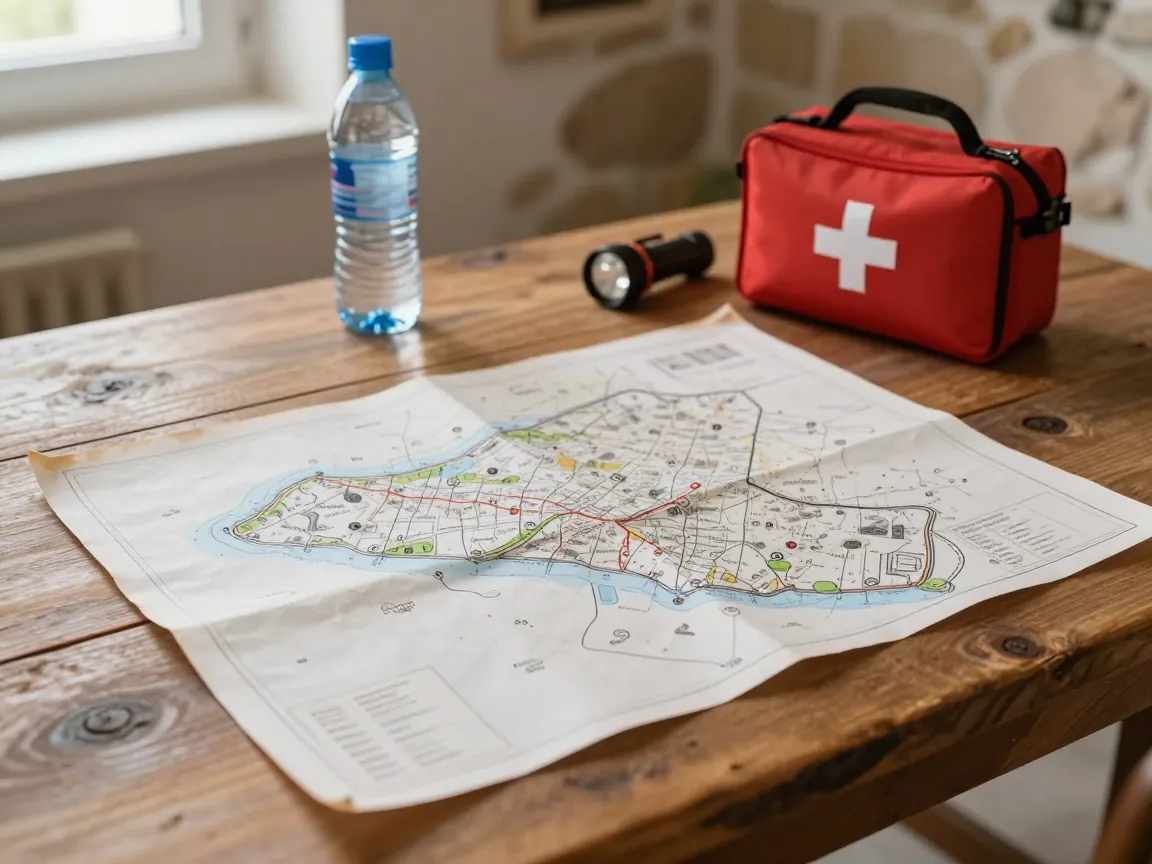
Emergency planning when there are no roads
This is where a car-free island deserves real respect. Medical evacuation, lost passports and sudden departures all run through the port and the sea, and weather can interrupt both. Your plan should name, in writing, the nearest medical facility, the fastest route off the island, and the local contact who can arrange priority transport.
Ask the venue what its own procedure is for medical emergencies and after-hours departures. We won't state timelines here because they change and they're local, so confirm current arrangements with the competent authority, such as the municipality or the port authority.
For session design, a car-free setting also rewards a tighter room layout. Our notes on training room layouts apply directly: fewer breakout spaces, better sightlines, and a room that works for eight people rather than eighty.
What to ask before you commit
Before signing, get written answers to these. Which port does the venue use for arrivals, and at what times of day is porterage available. What is included in the room rate and what is charged separately for luggage handling. What happens if the sea crossing is cancelled on arrival day. Who is the named emergency contact on the island, with a phone number that works outside office hours. And what the venue's own policy is on equipment left in public areas overnight.
Tell us your headcount, your dates and a short brief on what the group needs to achieve, and we'll match you with venues and charter options that fit a car-free island properly.
Planning questions
How does a car-free island change luggage handling for a small leadership group?
Everything moves by sea, then by hand or whatever local carrying the venue arranges. Confirm in writing who carries bags from the port to the venue, whether porterage is included, and what happens if sailings are delayed by weather.
What should we confirm about accessibility before booking a Hydra offsite?
Ask for photographs of the actual walking route, the number of steps between venue and restaurants, whether ground-floor rooms exist, and whether a water taxi can cover the return leg after dinner.
How should we plan for emergencies on an island with no vehicles?
Name the nearest medical facility, the fastest sea route off the island, and an after-hours local contact. Confirm current procedures with the municipality, port authority or your consulate, since arrangements change.