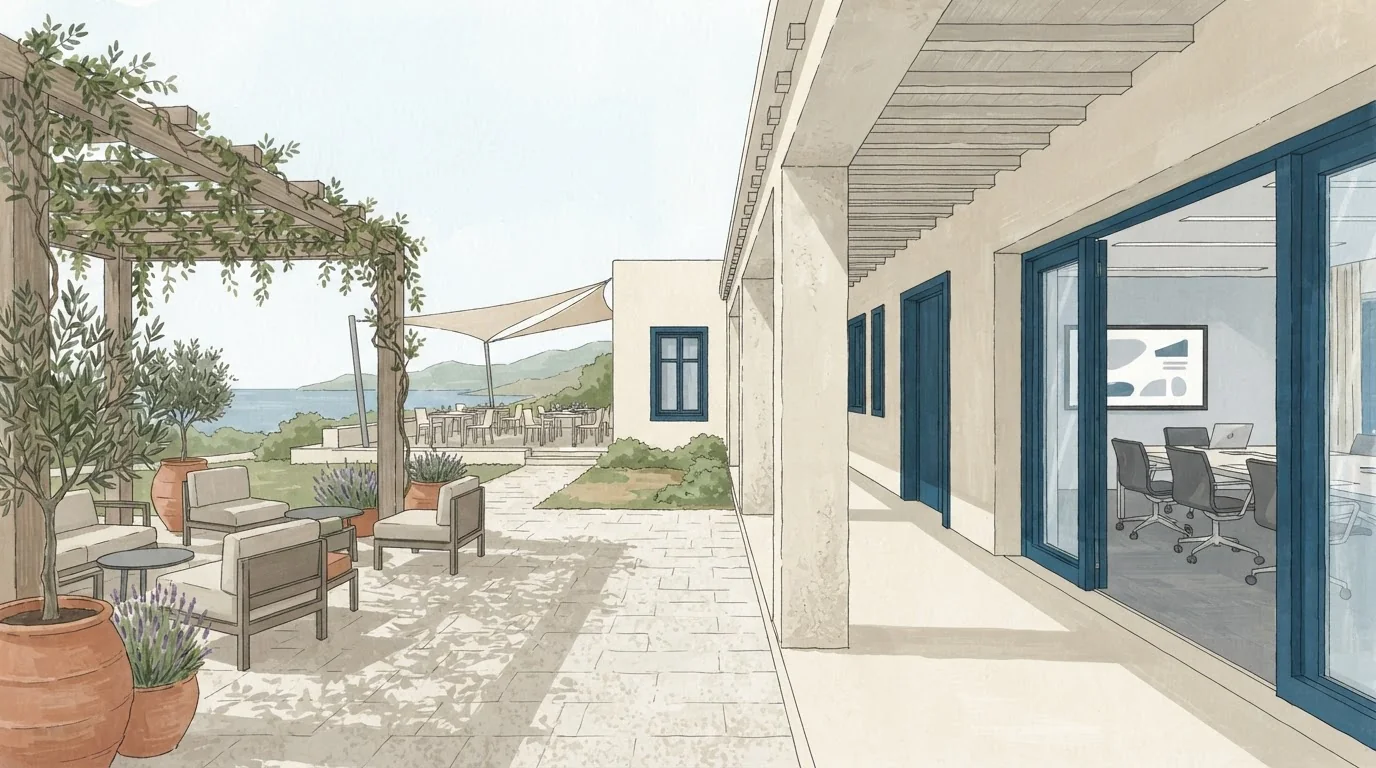
A regional name is not an address
Before anything else, look at the corporate event venues to see how a brief for this kind of trip is usually structured.
"Halkidiki" fits on a slide. It does not fit a room block. Start with a real scenario: an executive team of 18 flies into Thessaloniki, wants two working days and one long dinner, and asks you to compare a single resort that can host everything with a resort plus a separate dinner venue. The decision changes your transfers, your deposits and your evening.
Then narrow the map.
Halkidiki lies east of Thessaloniki, and its destination guide distinguishes Kassandra and Sithonia, alongside coastal resorts and guest houses (Visit Greece: Halkidiki). That single fact is the reason this article exists: Kassandra and Sithonia are different places with different road approaches, and a quote that says "Halkidiki" has not yet answered your question.
Choose the peninsula before the property
Kassandra and Sithonia sit on different legs of the same region. Choosing between them is a decision about arrival day, not about scenery.
Ask yourself what the first afternoon looks like. If half the group lands at different times, a property closer to the airport side of the region buys you a calmer start. If the group arrives together and the offsite is really about two uninterrupted days, the extra road time may be acceptable because nobody is waiting on a late flight.
There is no universal answer here. The tradeoff is honest: a calmer arrival usually means less separation from the mainland, while a deeper position on either peninsula usually means a longer first and last transfer. Decide which one your agenda can absorb.
Use the resort venues page to shortlist property types, then check each candidate against the peninsula question. A resort on the wrong leg is a logistics problem you cannot fix with a nicer meeting room.
One property or a separate dinner venue
This is the core comparison, and it drives the budget.
Same-property meetings mean the meeting room, the coffee breaks, the bedrooms and the dinner are all in one place. Nobody needs a coach at 19:30. If a session runs long, dinner simply starts later. The cost is that the evening is whatever that property offers, and the group never really leaves.
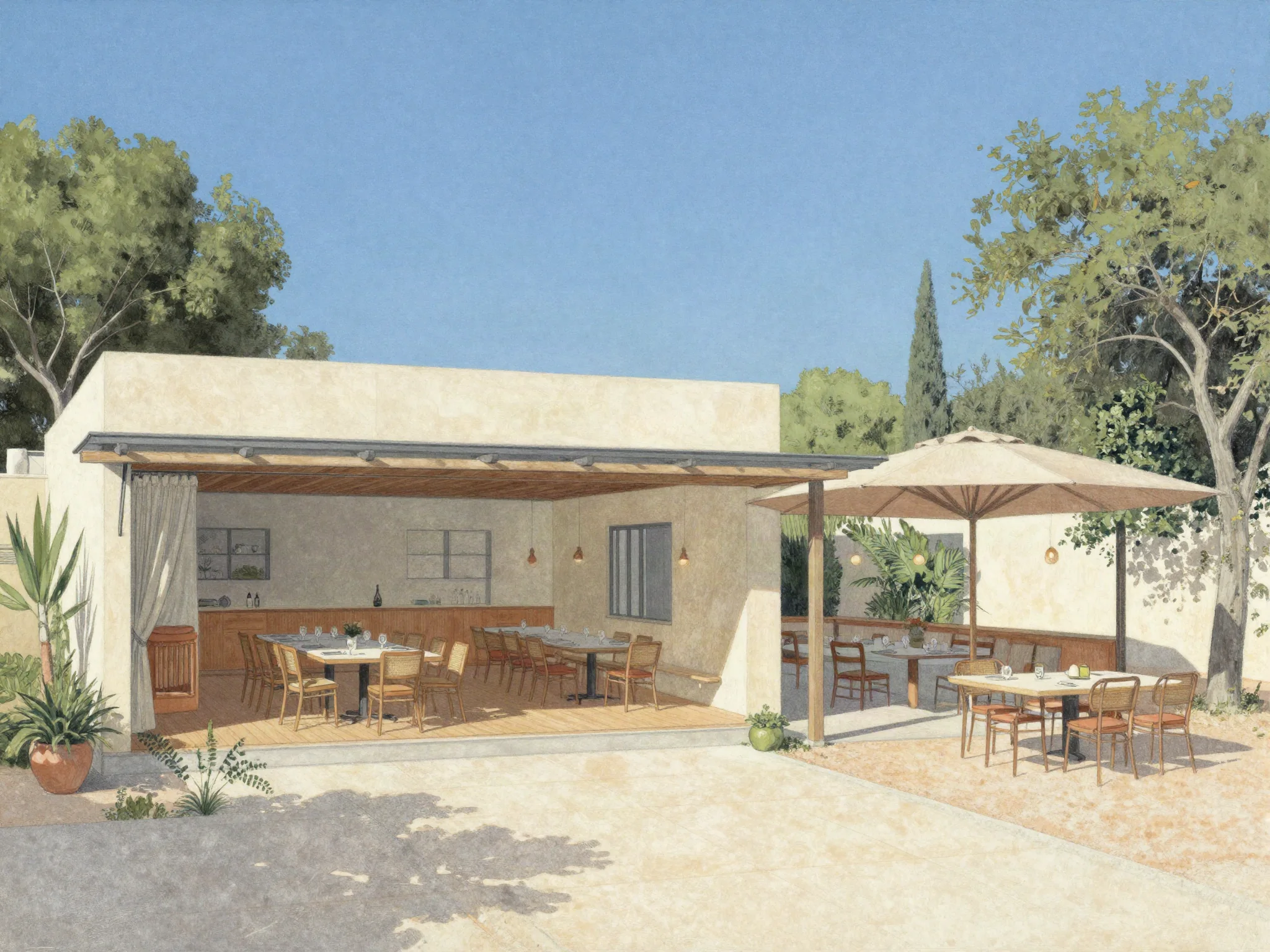
A separate dinner venue gives you a change of scene and a reason for people to talk to someone new on the drive. It also adds a coach movement, a second supplier, a second deposit and a second set of terms. One late session and the whole evening shifts.
Neither option is automatically cheaper. Total cost decides. Add the coach, the second deposit, the extra coordination time and the risk of a delayed departure, then compare that against what the single property charges for its own dinner. Terms depend on the particular written quote, so ask both versions in writing before you lean either way.
The location-and-transfer brief
Fill this in before you contact anyone. It is the document that turns "Halkidiki" into a comparable set of options.
| Field | What to write | Why it matters |
|---|---|---|
| Peninsula | Kassandra or Sithonia | Sets the road approach and the arrival day |
| Arrival point | Airport or other | Drives the transfer plan |
| Arrival spread | Earliest and latest landing time | Shows whether you need multiple shuttles |
| Group size | Exact headcount | Caps room blocks and coach size |
| Meeting days | Dates and daily hours | Tests whether the room is free when you need it |
| Dinner model | On property or separate | Changes supplier count and deposit count |
| Coach need | Yes or no, and how many movements | Adds cost and coordination |
| Accessibility | Any step-free or other requirements | Must be confirmed in writing |
| Catering | Meals, breaks, dietary needs | Ask who handles each one |
| Quote basis | Per person, per room, per day | Forces like-for-like comparison |
| Tax | As quoted, and which amount it applies to | Prevents two quotes looking equal when they are not |
| Decision date | When you must confirm | Keeps the shortlist moving |
| Single point of contact | Name and role | Avoids split answers |
A blank field is a question you have not asked yet.
Questions that separate two similar quotes
Once two properties look close, the differences hide in the details. Ask these of each one.
- Which peninsula is the property actually on, and what is the road approach from the arrival point?
- Is the meeting room exclusively ours for the booked hours, and what happens if a session runs late?
- Are the bedrooms held in one block, and until when?
- What is included in the quoted amount, and what is invoiced separately?
- Does the quote assume a coach movement we have not planned?
- If dinner is off property, who owns the timing between the two venues?
- What is the cancellation position for each element separately?
Write the answers next to each other. The quote that reads better in isolation often loses once the second supplier and the coach are added.
Where the budget actually moves
Executive offsites rarely fail on the meeting room. They fail on the number of movements and the number of suppliers.
Every separate venue adds a contract, a deposit, a contact person and a schedule dependency. Every additional shuttle movement adds a driver, a window and a buffer. Those items are easy to underestimate because they do not appear in the headline rate.
Keep the supporting quote beside each entry.
As an example, not a market norm, a group of 18 with one coach movement each evening across three nights faces three separate timing risks. A group of 18 that dines on property faces none of them. That is the arithmetic to run, not a preference.
What to send to venues
Send one short message with the brief above attached or pasted in full, and ask for availability and a written quote together. Include:
- Exact dates, arrival spread and departure spread.
- Group size and room requirements.
- Meeting hours per day and any late-session risk.
- Dinner model you want priced: on property, separate, or both versions.
- Coach movements you expect.
- Accessibility and catering requirements.
- The quote basis you want used, with tax as quoted and the amount it applies to.
- Your decision date and single point of contact.
Ask each venue to confirm, in writing, which peninsula it is on and whether the dinner is inside the same contract. Those two answers tell you more than any brochure, and they are the only way to compare Halkidiki options honestly.
Ask the coordinator to return your location brief with the exact addresses filled in, rather than a regional description. Save the pickup point and the entrance as well as the building name. Before sending the programme to the team, check that every transfer refers to the same version of the room and hotel list.
Two useful next steps: Keep the room block and the event-space quote together and A Pelion retreat: keep the working day close together.
Planning questions
Which peninsula should I choose, and how does that affect arrival day?
Map the actual property and arrival points before choosing a peninsula. Ask transport providers for route and timing estimates for your dates, then compare the time available for work, meals and rest in each proposed base.
How do I compare a single property with a separate dinner venue?
Ask both versions in writing. Add the coach, second deposit, extra coordination and delay risk, then compare with what the single property charges for its own dinner. Total cost decides, not preference.