Mountain base or coast: two different working days
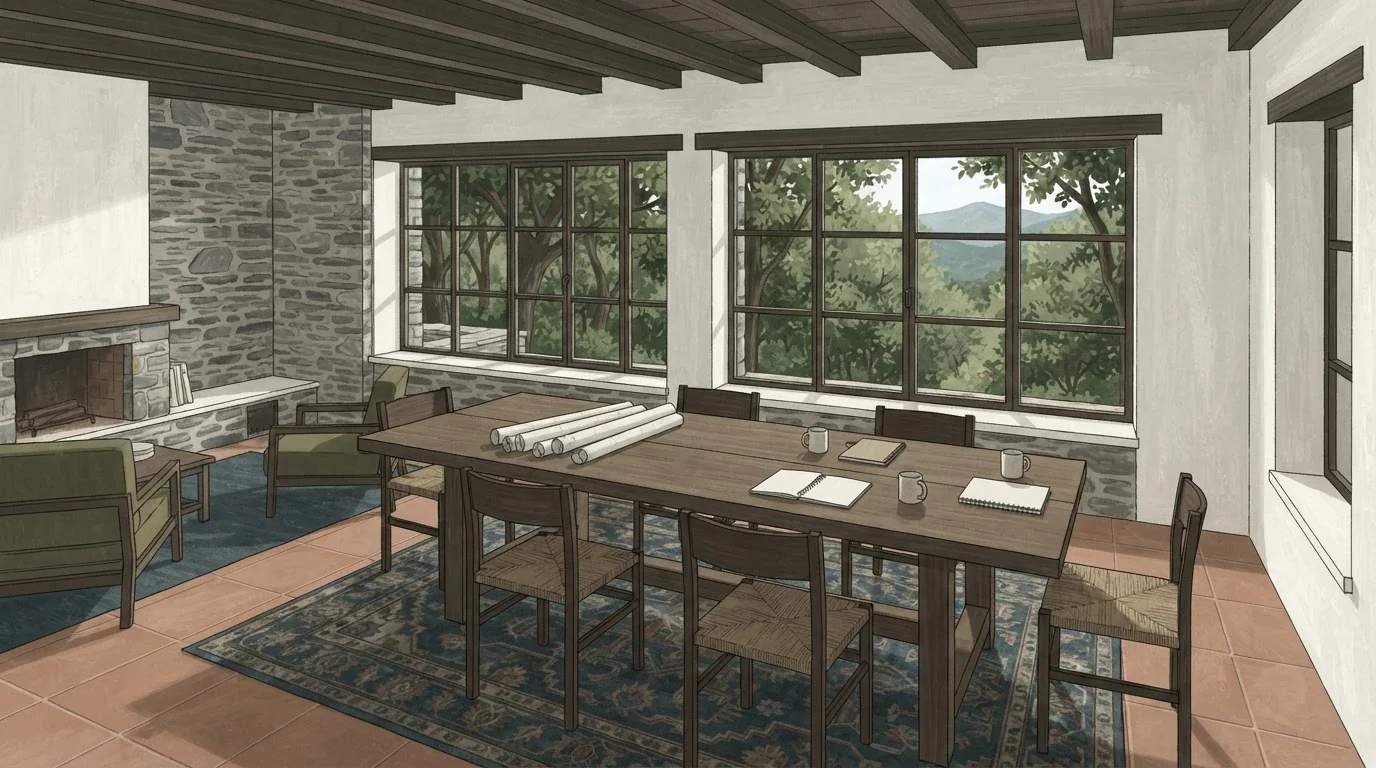
A mountain base puts the meeting room and the accommodation in the same village or a short walk apart. Mornings start on time because nobody is waiting for a shuttle. The tradeoff is that the sea is a separate trip, not a step outside. A coastal base reverses that: swimming and open horizon are immediate, but the village streets, chestnut paths and mountain tavernas become a half-day excursion. Pelion's destination guide names Makrinitsa, Portaria and Tsagarada and describes both mountain and coastal settings (Visit Greece: Mount Pelion). That confirms the split, not which side suits your agenda.
Neither base is automatically better. Decide what the working day needs. If your sessions run long and your team arrives from different directions, keep logistics low and the meeting room near the rooms. If the retreat is mostly about resetting after a heavy quarter, a coast base with one clear meeting block may work harder for you. See our mountain lodges collection for the kind of property that fits a compact working day.
Ask for exact addresses, not area names
"Portaria area" is not an address. Ask every venue for the street or settlement name of the accommodation, the meeting room and the dining space. Then ask whether they are in the same building, the same plot or a drive apart. This single answer decides your day. If the meeting room is 10 minutes uphill from the rooms, that is 20 minutes of walking per session change, multiplied by every break. Over six sessions that is a real cost in attention, not just time.
Ask for the arrival access too. Does the road reach the door, or does the last stretch involve steps, a narrow lane or a transfer to a smaller vehicle? Ask what happens with luggage and with anyone who cannot manage a slope. Ask where a coach or minibus can stop and whether that stopping point is legal and practical. You do not need to know the local traffic code to ask the question. You need the venue to describe the final approach in plain words.
Keep the two-day agenda honest
A retreat agenda fails when it assumes travel is free. Build the meetings first, then place travel around them. Here is an example agenda for a hypothetical 18-person team, with no fixed travel times because those depend on your actual addresses and transport. Treat the timings as placeholders.
| Day / time | Block | What happens | Note |
|---|---|---|---|
| Day 1, morning | Arrival window | People arrive, drop bags, coffee | Keep this loose; late arrivals are normal |
| Day 1, late morning | Session 1 | Welcome, quarter review, one decision | Meeting room must be ready before arrival |
| Day 1, midday | Lunch | Shared table, no agenda | Same building or next door |
| Day 1, afternoon | Session 2 | Workshop in pairs or small groups | Breakout space matters more than room size |
| Day 1, late afternoon | Optional activity | Walk, swim or village time, choose one | Offer a low-effort alternative |
| Day 1, evening | Dinner | Team dinner, short toast, early finish | Ask about dietary needs in advance |
| Day 2, morning | Session 3 | Decisions and owners, written down | End before checkout pressure starts |
| Day 2, midday | Closing lunch | Feedback, next steps, departures | Keep bags accessible |
Two sessions per day plus one optional activity is usually enough. Three heavy sessions plus a long excursion is a coach tour with laptops.
The activity question: offer two, not one
A single compulsory hike excludes people. A single spa afternoon bores people who wanted the mountain. Offer one active option and one low-effort option, both clearly described. For a mountain base, that might be a marked path walk and a village coffee stop. For a coastal base, a swim and a shaded table. Ask the venue what it can actually arrange on the dates you want, with a named meeting point and a return time. Do not accept "we can organise something" as a plan.
Ask whether the activity needs a guide, a permit or a minimum number of people. Ask what happens if it rains. Ask whether the alternative option still runs if only three people choose it. These are normal questions and the answers separate a venue that hosts groups from one that hopes for the best.
Budget the retreat without inventing numbers
You cannot compare quotes until every line is visible. Ask for accommodation, meeting room hire, meals, activity, transport and any equipment as separate lines. Ask whether tax is included and on which amount. Use the same discipline here.
| Quote line | Unit to ask for | What to confirm in writing |
|---|---|---|
| Accommodation | Per room per night | Room type, occupancy, breakfast included or not |
| Meeting room | Per day or per session | Hours, setup, included equipment, breakout space |
| Meals | Per person per meal | Set menu or choice, drinks, dietary options |
| Activity | Per person or per group | Guide, equipment, minimum numbers, weather plan |
| Transport | Per vehicle or per trip | Pickup points, waiting time, return leg |
| Extras | Per item | Projector, flipchart, extension leads, coffee breaks |
If a quote arrives as one total, send it back with the table. A venue that cannot break it down is telling you something about the planning conversation ahead.
What to send when you ask
Write one short message you can send to several suitable venues. Include your dates, your guest count, your base preference and the fact that the meeting room and accommodation must be close together. State whether you need the coast or the mountain, and whether you will accept a short drive between them. Ask for the exact addresses of the rooms, the meeting space and the dining area. Ask for arrival access notes and for two activity options with a low-effort alternative. Ask for a written quote with the lines above separated and tax stated as quoted. Ask what deposit and cancellation terms apply. Ask for availability and the quote together, so you can compare like with like. Then compare the total cost of each plan, not the headline rate, and choose the base that protects your working day.
Send the accommodation and meeting addresses as separate fields, even when the same operator manages both. Ask the host to mark the entrance for each. A shared property name can hide two different arrival points. This small check also makes it easier to give drivers and late arrivals instructions that match the actual programme.
Two useful next steps: A Halkidiki offsite starts with a precise location and Keep the room block and the event-space quote together.
Planning questions
How do I decide between a mountain and coastal base for a retreat?
Decide based on your working day: if sessions run long and arrivals are scattered, keep logistics low and the meeting room near the rooms. If the retreat is mainly about resetting, a coast base with one clear meeting block may work better.
What should I ask a venue about activity options to avoid excluding people?
Ask for two activity options: one active and one low-effort, both clearly described. Confirm if a guide, permit or minimum numbers are needed, what happens if it rains, and whether the alternative runs for only three people.