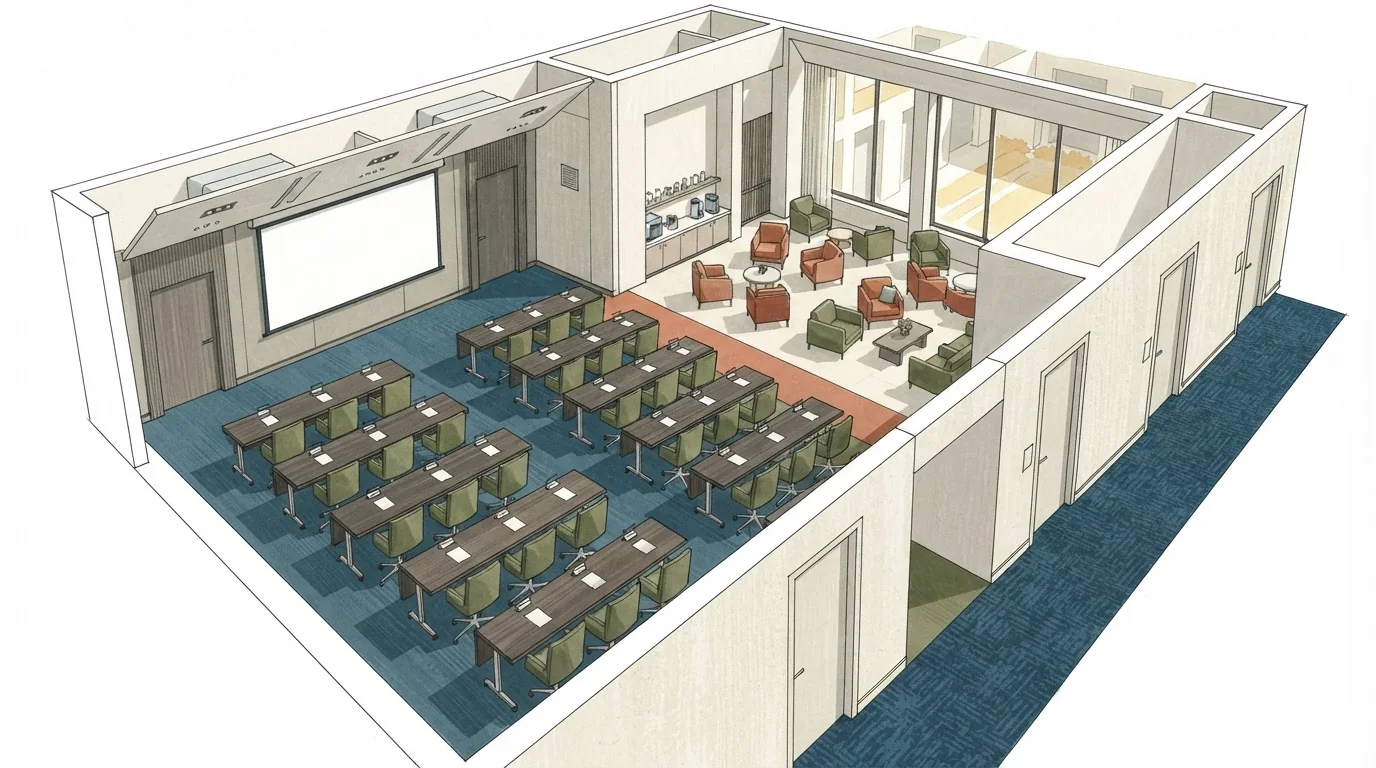
A hotel room block and a meeting-space contract may have separate release and cancellation terms. The goal is not to become a contract lawyer. The goal is to ask plain-language questions early, get written answers, and avoid discovering the gap after your registration numbers are locked.
Why the two contracts can move at different speeds
A hotel often sells bedrooms and event space from different departments or under different revenue rules. The bedroom block protects the hotel from unsold rooms. The event-space contract protects the meeting room, the setup, the food and beverage minimum, and the staff hours. Those two risks do not rise and fall together, so the release dates and cancellation dates are often different.
That is not automatically a problem. It is a problem when you assume one date applies to both. If your registration closes late, or if your speakers confirm late, a bedroom release date can hit before you have final numbers. If your event-space cancellation deadline is earlier, you may be committed to the room even if the meeting space is still flexible.
Ask for both timelines on one page. If the venue cannot produce that, copy the relevant dates into your own sheet and send it back for confirmation. A written reply that says "yes, those are the dates" is more useful than a phone call you cannot forward to your finance team.
The questions that produce a clear answer
Legal language is not the goal here. Plain questions are. Ask each one in writing and keep the replies.
- What is the release date for the bedroom block, and does it change if we add rooms later?
- What is the cancellation date for the event space, and does it change if we reduce the programme?
- If we release bedrooms early, does the event-space price or the food and beverage minimum change?
- If we cancel the event space, what happens to the bedroom block?
- Which amount does any cancellation charge apply to: the bedrooms, the space, the food and beverage, or all three?
- Is tax as quoted included in each figure, and does it apply to the same base?
- Who confirms a change, and by when, in writing?
For a conference, add one more: what happens to the bedroom block if the event programme shifts by one day? A one-day shift sounds small. It can move both deadlines.

A rooming-list timeline with dates left blank
Use this as a working table. Fill the dates from each written quote, not from memory. If a date is missing, leave it blank and ask again. The point is to see the two tracks side by side before you sign anything.
| Item | Bedroom block | Event space |
|---|---|---|
| Quote reference | ||
| Rooms or space held | ||
| Release date | ||
| Cancellation date | ||
| Reduction deadline | ||
| Deposit due | ||
| Balance due | ||
| Tax as quoted applies to | ||
| Rooming-list first draft due | ||
| Rooming-list final names due | ||
| On-site contact | ||
| Written confirmation received |
Two extra rows help more than they look: "What changes if we add 10 rooms?" and "What changes if we drop 10 rooms?" Those are the two moves that most often reset a release date or a price. Get the answer in writing before you need it.
Where the two tracks usually touch
The bedroom block and the event space meet at the rooming list. That list is not just names. It is the document that triggers the final room count, the final food and beverage count, and sometimes the final space setup. If the rooming list is late, the hotel may treat unsold rooms as released, even if your event-space contract is still active.
Here is a simple example, not a market norm: you have 120 attendees, 80 need bedrooms, and your registration closes 21 days before arrival. If the bedroom release date is 30 days before arrival, you are making a room commitment before you know your final numbers. That is a real tradeoff. Holding more rooms early may protect the block. Holding fewer rooms may reduce your exposure. Neither is free, and the right answer depends on your registration pattern.
Ask the venue which date they treat as the trigger for the rooming list. Ask whether a preliminary list is allowed and when the final list is due. Ask whether name changes after the final list are handled as a new booking.
What to send to venues
Do not ask for availability alone. Ask for availability and a written quote together, with the two timelines on one page. That saves a round of email and gives you something your committee can read.
Send this in your first message:
- Event name, dates, and whether the dates are fixed or flexible.
- Estimated attendees, and how many need bedrooms.
- The bedroom nights you expect, by date, even if the numbers are rough.
- The meeting-space format: theatre, classroom, boardroom, or exhibition.
- Your registration close date and your rooming-list close date.
- A request for the release date, the cancellation date, and the reduction deadline for both the bedrooms and the space.
- A request that tax as quoted be identified and that you be told which amount it applies to.
- A request for a single contact who can confirm changes in writing.
For context on the region, the Visit Greece guide to Halkidiki places it east of Thessaloniki and distinguishes Kassandra and Sithonia. That is useful for narrowing a shortlist. It is not evidence of any venue's availability, capacity, or terms.
Then compare the written timelines. The venue that answers both questions clearly is usually the one worth a site visit.
When you write to venues, keep one sentence in your own notes: "I will not treat a bedroom release date and an event-space cancellation date as the same date until the venue confirms it in writing." That single line prevents most of the confusion this article is about.
Keep room and meeting-space changes in the same update email. Ask each supplier to acknowledge only the items it controls, so a changed bedroom count is not mistaken for approval of a different meeting layout.
Two useful next steps: Choose a Thessaloniki conference base around the programme and A Halkidiki offsite starts with a precise location.
Planning questions
How can I see the bedroom release and event-space cancellation timelines side by side?
Ask the venue for both timelines on one page. If they cannot provide it, copy the dates into your own sheet and send it back for written confirmation. Then compare them before signing.
What happens to the bedroom block if the event programme shifts by one day?
A one-day shift can move both the bedroom release date and the event-space cancellation deadline. Ask the venue in writing what changes, so you are not caught by a deadline moving unexpectedly.