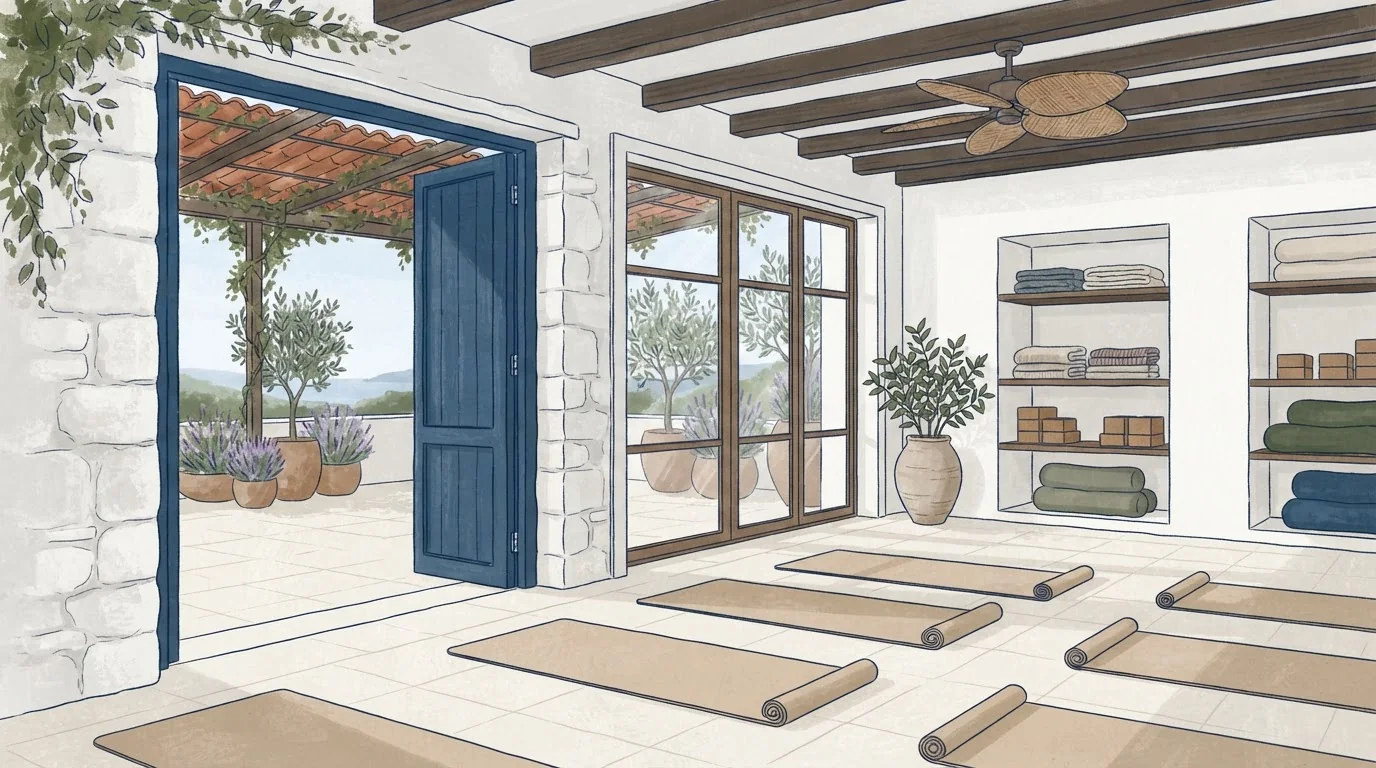
Start with the mat area, not the view
Ask for the usable mat area in square metres, not the total terrace size. As a hypothetical example, a terrace of 80 square metres with planters, a dining table and a narrow path might leave 20 square metres of flat, dry, level floor. For a group, you need enough space for each mat plus arm room. Ask your instructor to lay out the actual mats and demonstrate the movements planned for this group. Check the remaining space around furniture and access routes with the venue. A generic area-per-person estimate does not establish that a room works for your practice.
Ask these questions before you commit:
- Is the floor flat, or does it slope for drainage?
- Is it stone, tile, timber or grass? Grass stays damp after rain.
- Is there shade? A west-facing terrace can be unusable at 4pm in summer.
- Is there wind protection? On a mountain slope, morning wind is real.
- Where do students leave bags and shoes so the mat area stays clear?
Privacy is a scheduling question
A terrace can be private at 7am and shared at 6pm. Ask what else happens in that space during your dates: meals, other groups, staff access, deliveries. If the indoor backup room is also the dining room, your 6am practice competes with breakfast setup. Get the venue to confirm times when the space is exclusively yours, and write those times into the agreement.
Temperature control, in both directions
Pelion is a mountain and a coast in one region. The Visit Greece destination guide for Mount Pelion names Makrinitsa, Portaria and Tsagarada among its villages and describes mountain and coastal settings. That range is the planning point: a morning at higher altitude can be cool and damp while the coast is warm.
Ask how the indoor space is heated or cooled, and how quickly it reaches a workable temperature. A room that takes an hour to warm up is not a 6am backup. Ask whether there are ceiling fans, portable heaters, opening windows, blackout blinds or shutters. Ask where the sun hits the indoor floor during practice hours. If the only indoor option is a glass conservatory, it may be cold at dawn and hot at noon.
The wet-day alternative has to be a real room
A covered corridor is not an indoor studio. A dining room with chairs stacked to one side is a compromise, not a plan. Before booking, ask for the dimensions of the indoor alternative, the floor surface, and whether furniture can be cleared before your session. Confirm who moves it, and when.
If you are running a retreat, the daily rhythm matters more than any single hall. You may want a short morning session, a longer afternoon workshop and a quiet evening practice. That is three different room requirements in one day. A single backup room rarely fits all three.
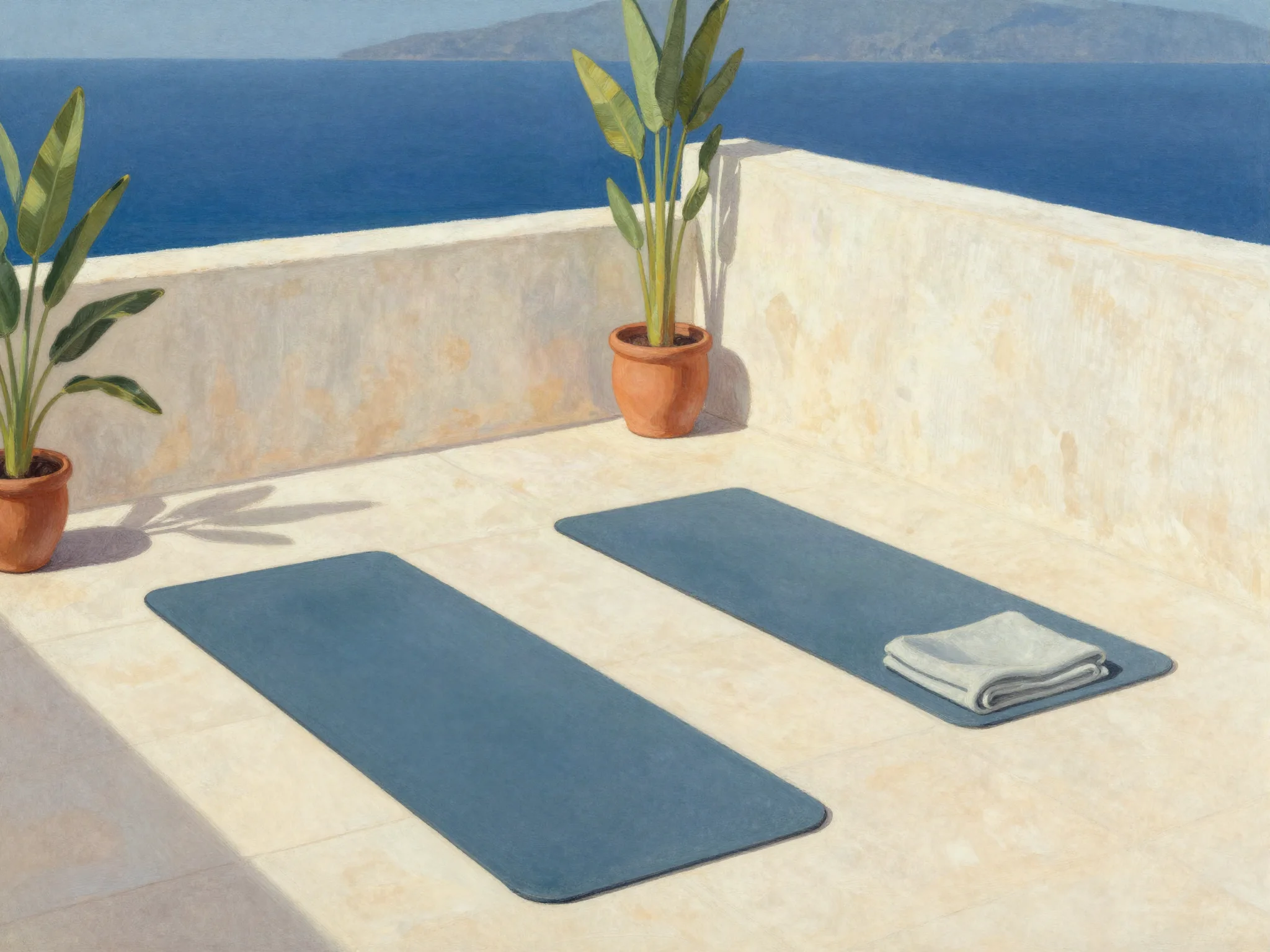
Build a daily-use space schedule
This is the artifact that saves the retreat. Fill it in with the venue before you sign anything. One row per session, every day of the retreat. If two sessions want the same room at the same time, you have found the conflict while it is still cheap to fix.
| Day | Time | Session | First-choice space | Wet-day space | Furniture moved? | Who sets up | Temperature check | Exclusive use confirmed? |
|---|---|---|---|---|---|---|---|---|
| Example: Day 1 | 07:00-08:15 | Morning practice | Terrace | Indoor hall | Yes, chairs to side room | Venue staff | Heat on by 06:30 | Yes |
| Example: Day 1 | 17:00-18:30 | Restorative | Indoor hall | Same hall | No | Group | Windows open | Yes |
| Day 2 | ||||||||
| Day 3 |
Add a second small table for weather decisions. Who checks the forecast, and at what hour? What is the cut-off for moving a session indoors? A 6am decision made at 6am is a bad decision. Agree on a 9pm check the night before and a 6am confirmation.
Ask about the rest of the property
Mat space is the core, but a retreat day has gaps. Ask about a quiet room for one-to-one conversations, a covered place to eat, and a dry route between sleeping rooms and practice space. Ask whether the venue has any other groups booked during your dates, and how shared areas are divided.
If the venue is a retreat centre rather than a hotel, ask who is on site overnight and who handles a broken heater or a blocked drain. Ask for a written contact and a response time. Ask whether the kitchen can handle your group's dietary needs, and whether meal times can shift if a session runs long.
For groups that also travel together outside the practice room, the logistics of moving people around a mountain region are worth planning early.
What to send to venues
Write one email, not five. Keep it short and specific so the venue can answer with real numbers.
- Dates and number of nights.
- Number of guests, and how many need single rooms.
- Number of practice sessions per day, with times and approximate duration.
- Style of practice, and whether you need wall space, props or a sound system.
- Required mat area for the group, and whether you need a flat floor.
- Indoor alternative requirements: dimensions, floor, heating, cooling, furniture clearance.
- Meals: how many, what dietary needs, and whether the dining space can be separate from practice space.
- Privacy: times when each space must be exclusively yours.
- Accessibility needs within the group.
- Your budget range, with a clear note on what it must cover.
- A request for a written quote that separates venue, accommodation, meals and any extras, with tax as quoted and the amount it applies to.
Ask for availability and a written quote together. If a venue says yes to the dates but cannot describe the wet-day room, that is useful information. Keep looking, or adjust the plan before you take deposits. The terrace will still be there on the good days.
Ask the host to photograph the indoor alternative with its normal furniture still visible. Then request a plan showing what will move before your group arrives and where it will go. A room described as flexible is useful only if its preparation is agreed. Record who resets the room when another activity follows the session.
Two useful next steps: A Pelion retreat: keep the working day close together and Ask about the whole accessible route, not one ramp.
Planning questions
How can I check a terrace's usable mat area rather than trusting its total size?
Ask for the usable mat area in square metres, not the total terrace size. Have your instructor lay out the actual mats and demonstrate the planned movements, then check the remaining space around furniture and access routes with the venue.
When should we decide to move a session indoors because of weather?
Agree who checks the forecast the evening before and who confirms the space before practice begins. Set a clear decision deadline that gives the team time to prepare the indoor room.