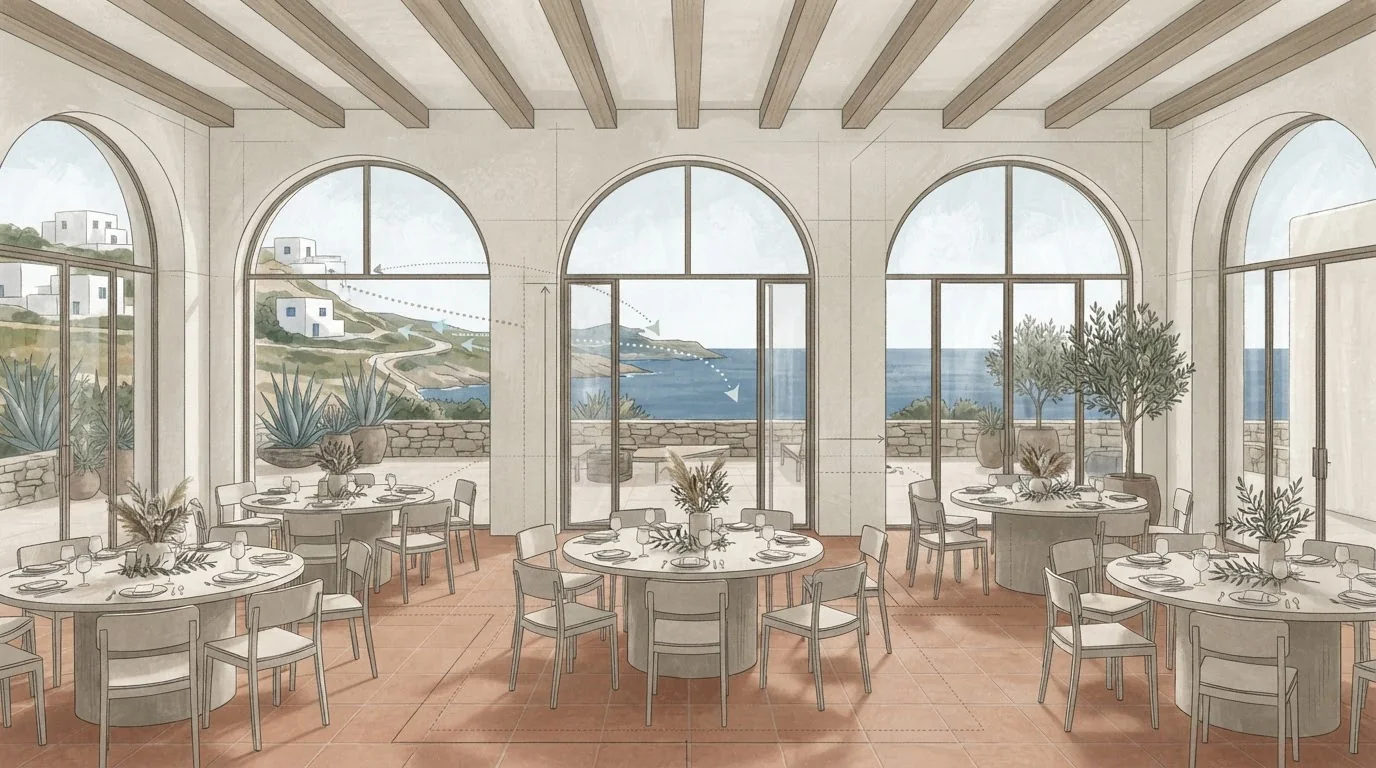
Why a single transport line misleads
A venue quote for transport often assumes one pickup and one drop. That works when everyone stays in the same place. It stops working the moment guests book their own rooms across different villages or along the same caldera edge. Each additional pickup point adds a stop, a wait, a phone call and a return leg. None of those are dramatic on their own. Together they change the vehicle count and the schedule. Ask any hotel or planner for a written quote that lists pickup points, vehicle type, waiting time and the hour the last guest is returned. Treat the total as an estimate until those lines are filled in. Our collection of hotels is a starting point for conversations, not a claim about any specific property.
A single coach might look tidy on paper. It also forces everyone into one departure time, which rarely suits a group that booked its own flights. That is the honest tradeoff: fewer vehicles means less flexibility, more vehicles means more coordination. Neither is automatically cheaper. Only the written quote and the total hours tell you that.
Map the guest map before the venue quote
Before you ask for prices, build a simple guest map. List every booking you know about, even the ones still tentative. Group guests by area, not by hotel name. Two hotels on the same road can share a pickup point. Three villas on a footpath with steps may need separate handling. Mark any property with stair access, a narrow lane or a pedestrian-only approach. Mark who needs a seat, who uses a wheelchair, who has a stroller, and who will likely leave early. This is not admin for its own sake. It is the difference between one coach and a fleet of small vehicles. It also tells you where to ask about step-free access before you sign anything.
Keep the map in one file you can update. When a guest changes hotels, that file should change too. Rebuild it once a week in the final month, and send the current version with every quote request so nobody works from an old list.
Pickup points, steps and the late return
Pickup points should be legal, lit and reachable by the vehicle you are quoting. A picturesque square may be closed to traffic. A hotel entrance may sit at the top of a stepped lane. Ask each property where a vehicle can actually stop, and ask whether a staff member can walk guests to that point. For late returns, the question is not just the hour. It is who is responsible for counting guests, who has the driver's number, and what happens to the last three people who want to stay out. A shuttle that runs until the ceremony ends is not the same as one that runs until the last guest leaves. Decide which one you are paying for.
Island weather can change the plan at short notice, so keep a wet-weather version of the pickup map. Ask each venue whether a covered waiting spot exists near the pickup, and whether a driver can wait there rather than circling.
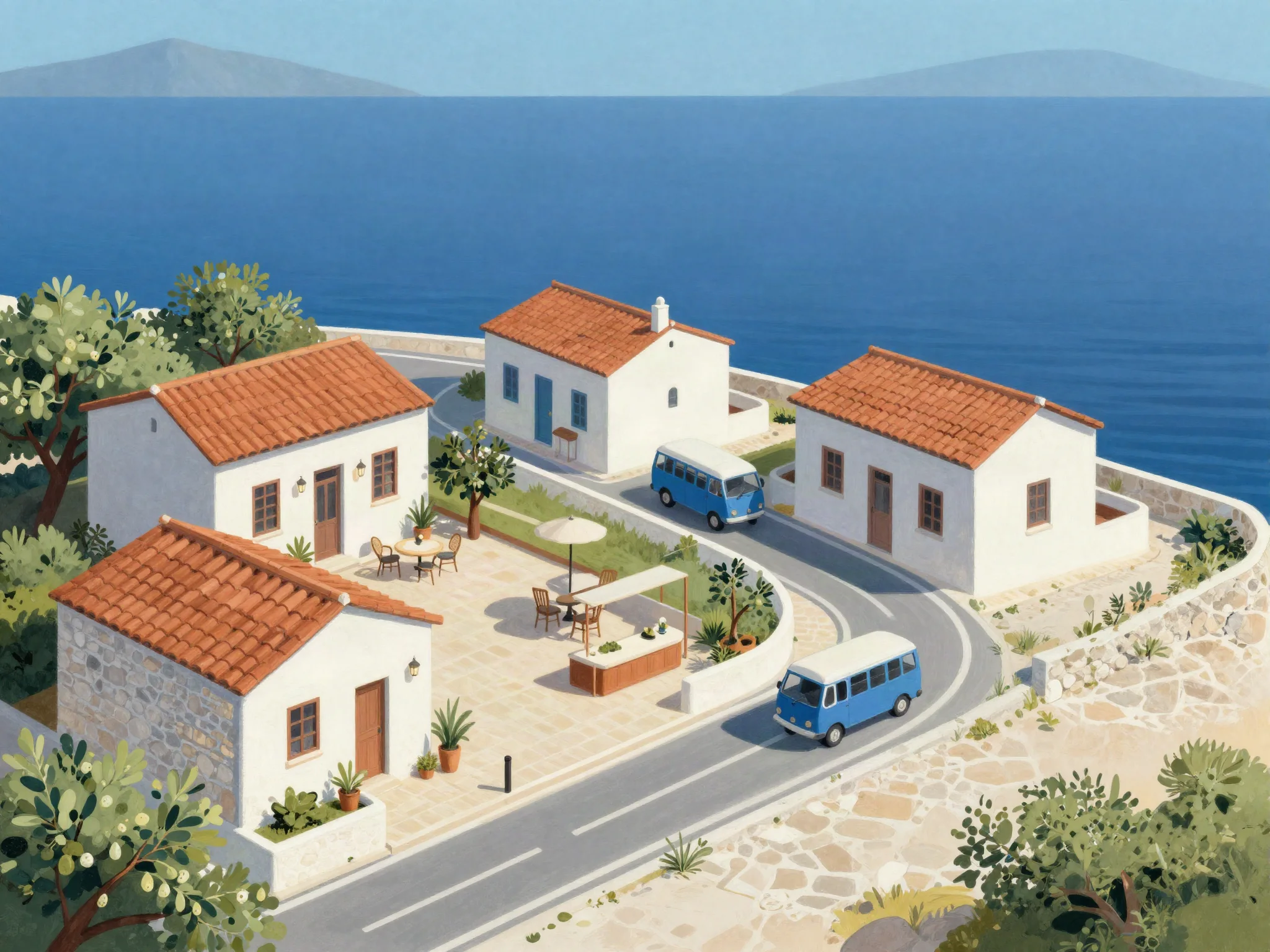
A 40-guest arrival and departure worksheet (hypothetical example)
The table below is an example for a 40-guest wedding, not a market norm. Fill it in with your own details and send it as the brief. It gives a transport company enough to quote accurately and shows you where the gaps are.
| Field | Arrival example | Departure example |
|---|---|---|
| Guest count | 40 | 40 |
| Pickup points | 6 hotels, 1 shared square | 6 hotels, 1 shared square |
| First pickup | [time to agree] | [time to agree] |
| Last pickup | [time to agree] | [time to agree] |
| Ceremony start | [time to agree] | n/a |
| Return window | n/a | [time to agree] |
| Vehicles requested | [number to agree] | [number to agree] |
| Step access notes | List properties with stairs | List properties with stairs |
| Accessible seats | [number to agree] | [number to agree] |
| Waiting time | [minutes to agree] | [minutes to agree] |
| Contact on the day | [name and number] | [name and number] |
| Wet-weather plan | [alternative pickup] | [alternative drop] |
Use blank fields until a supplier fills them in. Do not assume a coach fits every lane, and do not assume small vehicles are cheaper. Total-cost arithmetic decides that, not the size of the group. If your guest list is still moving, ask for a quote with two vehicle options and a clear hourly rate for extra waiting. Confirm what happens if a pickup runs late. Confirm whether tolls, parking or permits appear as separate lines. Tax is quoted separately in many places, so ask which amount it applies to.
Build the worksheet around decisions, not wishes. A row that says [time to agree] is a question. A row that says 6 hotels is a fact you can defend when someone asks why the quote changed. Add a second sheet for guest names by pickup point, so the person counting on the night has a list rather than a memory.
What to send venues, and what to ask next
Send one page, not a story. Include the guest count, the pickup areas, the number of accessible seats, the latest return hour you can accept, and your wet-weather alternative. Ask for a written quote that breaks out vehicles, waiting time, late-return surcharge and tax as quoted. Ask whether the same driver covers both arrival and departure, and who guests call if a pickup is missed. Ask what the cancellation terms are, and how far ahead the vehicle count can be reduced without penalty. The goal is not the cheapest line. It is a line you can read, compare and defend when the plan changes.
When you contact suitable venues, send the worksheet above with your dates, the number of guests, your pickup areas, any step-access needs, your latest acceptable return hour, and the name of the person managing transport on the day. That single message saves a week of back-and-forth.
Two useful next steps: Your island wedding backup needs its own floor plan and Keep the room block and the event-space quote together.
Planning questions
How does splitting guests across different properties change the transport brief?
Each additional pickup point adds a stop, wait, phone call and return leg, which changes vehicle count and schedule. Ask for a written quote listing pickup points, vehicle type, waiting time and the return hour of the last guest.
What should I mark on the guest map before requesting a quote?
Mark properties with stair access, narrow lanes or pedestrian-only approaches, and note who needs a seat, uses a wheelchair, has a stroller or will leave early. Group guests by area, not hotel name, so two hotels on the same road can share a pickup point.