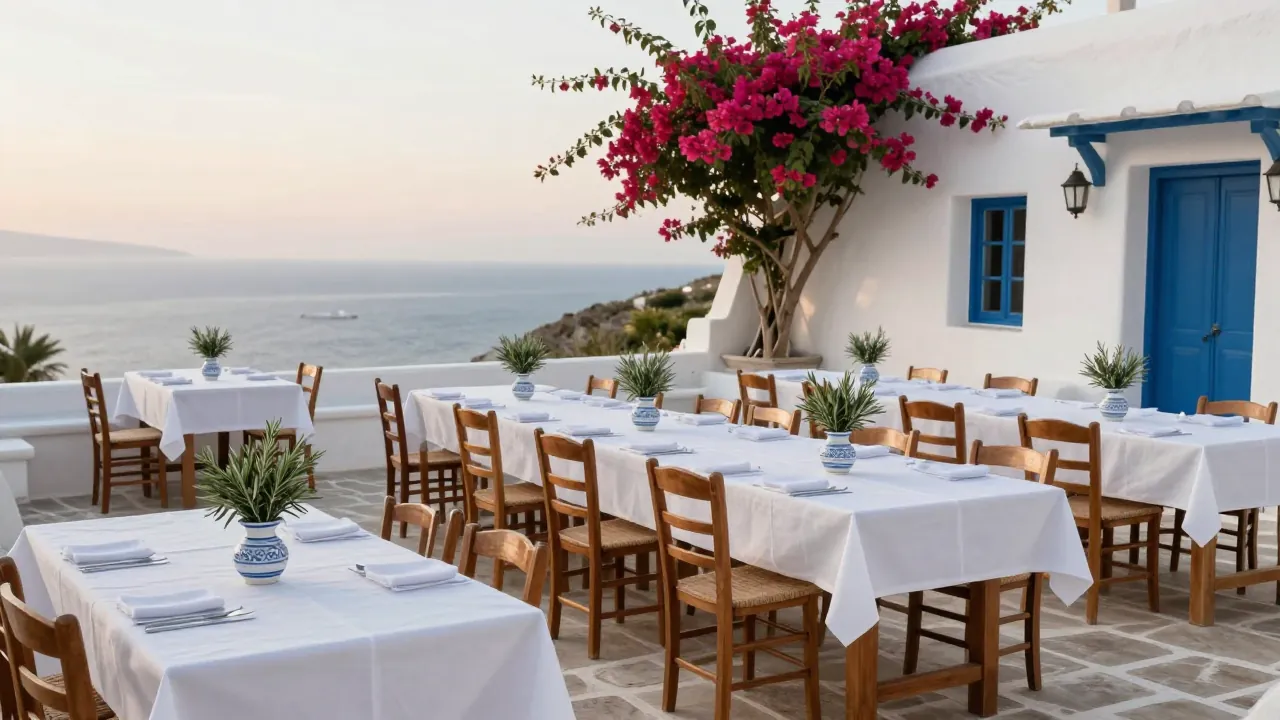
Space: where the entertainer sets up, and who owns that corner
Ask the venue for a floor plan with the table layout drawn in, not a capacity number in an email. You need to see where the children's area sits relative to the closest table of grandparents, the bar, the kitchen door and the toilets. Children's corners sometimes end up near the entrance because it's leftover space, and that's where you get children running through arriving guests during the toast.
Agree three things in writing. First, the exact zone and its boundary, whether that's a marked floor area inside or a terrace outside. Second, the time window the venue will hold that zone free, because staff will otherwise reset it for dessert. Third, what furniture stays: low tables, chairs sized for small children, a power socket that isn't behind the bar.
If the venue is itself a children's space, the calculation changes. Terra Familia - Multipurpose Venue in Pylaia, Thessaloniki, according to its listing, is a children's play center with an outdoor playground and both indoor and outdoor areas. A venue like that already carries the play equipment, so your brief becomes about timeslots and supervision rather than bringing in structures. The listing describes event organization as available and opening hours as weekday evenings with extended weekend hours, so those are the points to confirm for your own date rather than assume.
Write the zone into the contract, not into a WhatsApp thread with the coordinator. Verbal arrangements dissolve the moment a manager changes shift.
Supervision: the line between entertainer and venue staff
This question is easy to skip, and it matters most. Who is responsible for a seven-year-old who walks out of the activity area and into the car park?
Our view is blunt: neither the entertainer nor the venue should be treated as free childcare. The entertainer runs activities for the group. The venue controls the building. Neither replaces a parent who knows the child. Put it in the brief in one sentence and get both sides to sign it: during the activity slot, the entertainer leads and the venue provides the space, and parents remain responsible for their own children.
Planet Physics describes separate activity spaces for children and designated areas for accompanying parents, and that's the layout worth copying regardless of what entertainment you book. Parents sit close, drink their coffee, and can see. Children get a defined patch that isn't the whole hall.
Ask the venue two practical questions. Is there a member of staff on the floor during the reception who can point a lost child towards the right table? And is there a staffed exit near the children's zone? Don't ask for a number of staff per child; a venue is unlikely to commit to that for a private party, and it isn't their role.
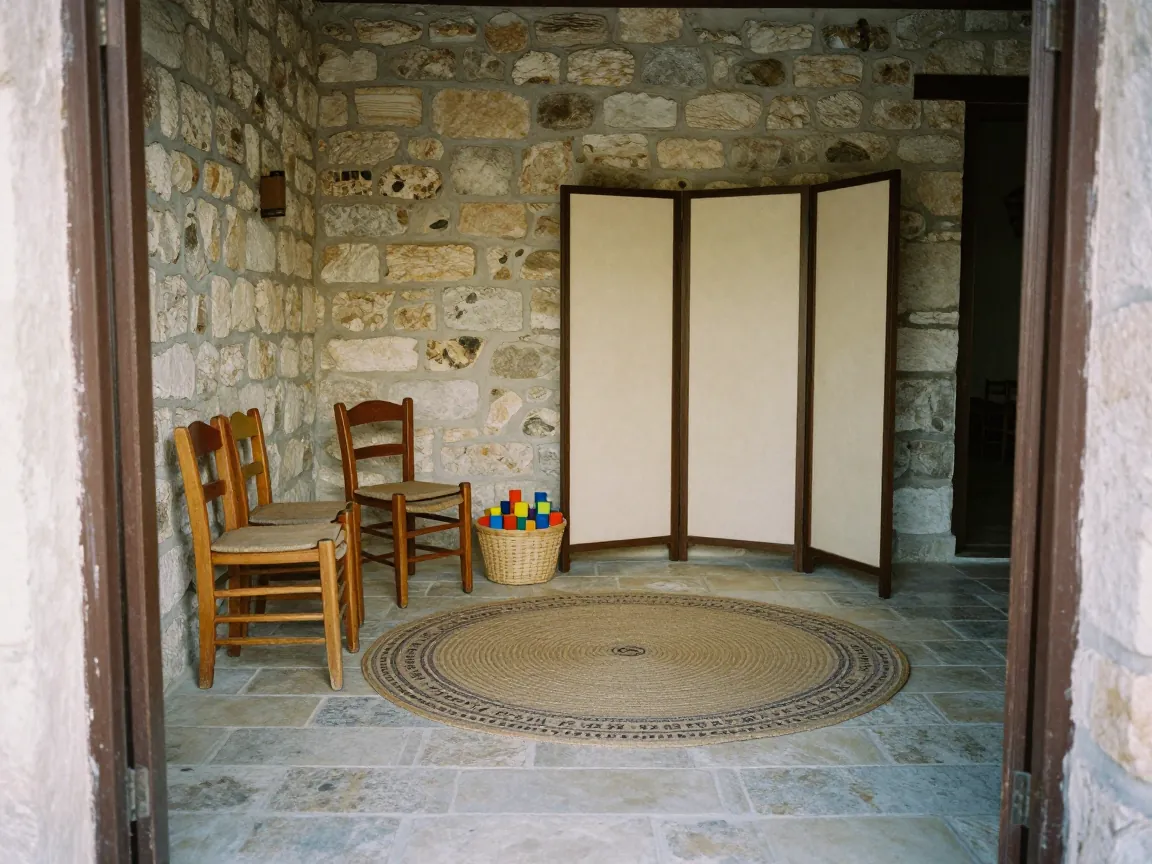
Sound: one microphone, two rooms, no negotiation mid-toast
The entertainer needs sound. The speeches need quiet. These two facts collide at exactly the wrong moment.
Agree a sound plan with the venue before you agree one with the entertainer, because the venue owns the room and the neighbours. Ask: does the space have a built-in system, is there a sound limit, and is there a time after which amplified music has to stop? Confirm current requirements with the competent authority, the municipality for noise rules, and don't accept a number from anyone who isn't the venue or the municipality.
Then brief the entertainer against that plan. A children's activity slot with a wireless speaker works in almost any room. A competitive games session with a PA and a whistle does not sit under a speech. Ask the entertainer to bring everything self-contained: their own speaker, their own microphone if needed, batteries, and a backup for whatever needs power.
Timing and sound are the same decision. Which brings us to the meal.
Timing against the meal: two short slots beat one long one
In our view, a single two-hour children's programme across a seated lunch tends to fail. Children leave the table before the main course and the entertainer runs out of material by dessert.
Two slots work better. Slot one runs while guests arrive and the adults settle, roughly the first hour, and it absorbs the energy children bring from the church. Slot two runs after the meal, when the tables break up and parents are standing anyway. Between them the children eat. This also lets you release the entertainer for a break or pay for a shorter booking.
The ceremony-to-reception gap matters here, and we've written separately about leaving room between the ceremony and lunch in Attica, because a long gap with hungry children is its own problem. If your gap runs past an hour, slot one effectively starts in transit.
Ask the venue whether the children's food comes out before the adults' plates. Many will do it if you ask at the briefing stage and not on the day. Ask, too, where children eat if the activity zone is separate: at their own low tables in the zone, or at their parents' table. Both work; the wrong answer is deciding it at the table.
Younger siblings and the guest rules
A baptism guest list is really a family list, and family lists include a two-year-old and a twelve-year-old under the same invitation. One programme can't serve both, and this is where a children's party budget question sneaks into a baptism.
Decide the age band you're entertaining. Say four to nine, an example only, and everything outside it needs a different answer: toddlers stay with a parent in a soft corner, older children get a table and a job, like handing out the favours. Write the band into the brief so the entertainer plans for it rather than discovering it on the day.
If you're setting rules about which children are invited at all, our piece on building a children's party budget from the guest rules applies to baptisms too: the count drives the cost, and the count is a decision, not a discovery. Siblings of the godparent's family are the classic edge case. Decide before the invitations go out.
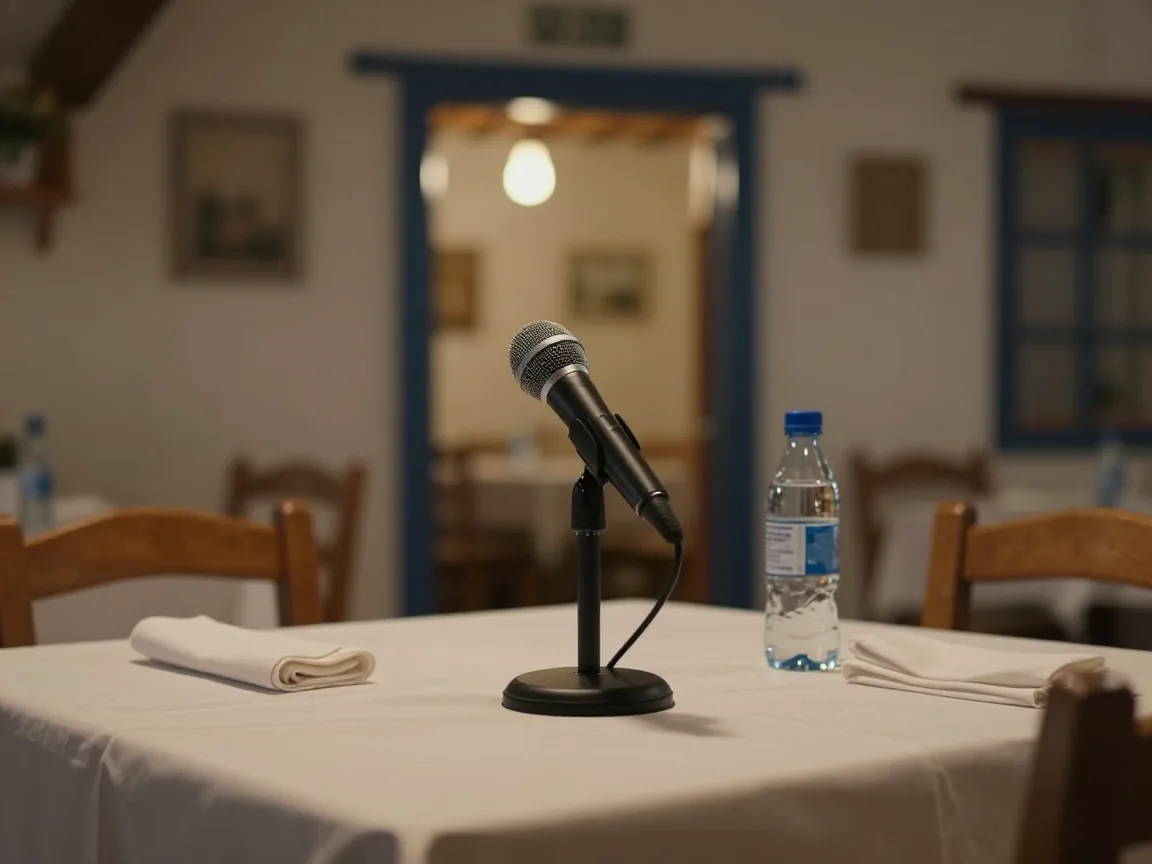
The entertainment brief: venue column and entertainer column
Fill this in and send it to both sides. One page, two columns, no ambiguity.
| Item | Venue column | Entertainer column |
|---|---|---|
| Activity zone | Exact area, indoor or outdoor, boundary marked | Confirms setup footprint and what they bring |
| Setup window | Time the zone is free from other use | Arrival time, setup duration |
| Slot times | Times the room is available | Start and end of each slot |
| Furniture | Tables, chairs, power socket location | What they need moved or provided |
| Sound | Built-in system, limits, cut-off time | Own speaker, own mic, backup power |
| Supervision | Floor staff on duty, staffed exit | Ratio they work to, sign-in method |
| Children's food | Serving time, where children eat | Break timed around it |
| Age band | Any venue restrictions on age | Programme planned for the band |
| Pack-down | Time the zone must be clear | Time they leave |
If you only pin down two rows, make them sound and pack-down, in writing.
What we'd ask before signing anything
Ask the venue whether the children's zone can be written into the contract with a time window, and whether the entertainer counts as a supplier who needs approval. Some venues want supplier details in advance for insurance and access reasons; that's normal and it's better raised early.
Ask the entertainer for their setup time, their ratio, and what they do if a child doesn't want to join. A good one has an answer about the shy child, not just the games list.
One last point: there's no arrangement that lets you stop parenting during your own child's baptism. The brief exists to remove confusion, not responsibility.
Send us your headcount, your date and the age range of the children coming, and we'll point you to venues whose rooms and rules can actually hold that plan.
Planning questions
Who is responsible for supervising children during the entertainment at a baptism reception?
Treat neither the entertainer nor the venue as childcare. The entertainer leads activities for the group, the venue controls the building, and parents stay responsible for their own children. Write that sentence into the brief and have both sides acknowledge it before the day.
Should the children's entertainment run during the meal or between courses?
Split it into two short slots. Run the first while guests arrive and adults settle, pause for the meal so children eat, then run the second once tables break up. A single long programme across a seated lunch usually runs out of material before dessert.
What sound details should we settle with the venue before briefing the entertainer?
Ask whether the room has a built-in system, whether there is a sound limit, and whether amplified music must stop at a certain hour. Then tell the entertainer to bring self-contained equipment. Confirm current noise requirements with the municipality, not with other guests.