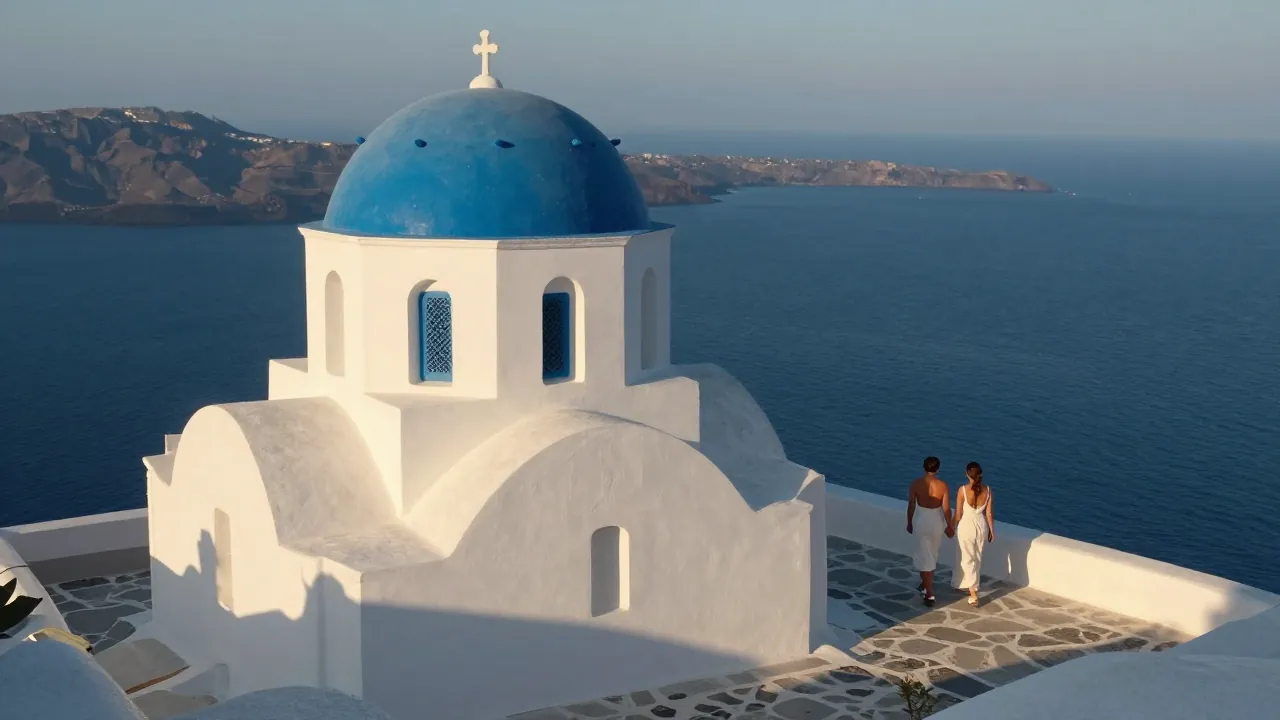
Why the parish calendar outranks your ideal date
In Greek Orthodox practice, marriage is not celebrated on every day of the year. The Greek Orthodox Archdiocese of America publishes instructions for clergy that list days without weddings, including December 13 to 25, Great Lent and Holy Week, Pascha, Pentecost, and August 1 to 15 for the Dormition Fast and Feast. That is a foreign archdiocese's guidance. The parish in Greece you actually book with has the final word, so confirm locally with the parish priest and, where relevant, the metropolis. If you're civil-married already and planning a church service, or marrying in an estate chapel rather than a parish church, the same calendar logic applies; our guide to chapel questions at an estate covers who answers what.
Our caveat: in practice, the Orthodox calendar is not one calendar. A date blocked in one parish can be available in another, and a priest may allow a service on a day the general list restricts, or refuse one it seems to permit. Local custom, the bishop's instructions and the parish's own schedule all intervene. No blog, including this one, can clear a date for you. Treat any general list as a starting point for a conversation, never as a decision.
The periods that do the most damage to a venue hold
The fasting and feast periods are where venue availability collides with church availability. In a typical year the pressure points look like this.
| Period | Rough position in the year | What it means for planning |
|---|---|---|
| Dormition Fast and Feast | First half of August, through the fifteenth | Strong candidate for a "no" from the parish; peak island demand |
| Great Lent and Holy Week | Roughly seven weeks before Pascha | Weddings are not celebrated; move the whole plan |
| Pascha | Movable, spring | Listed as a day without weddings; ask early about nearby dates |
| Pentecost | Fifty days after Pascha | Listed as a day without weddings |
| December 13 to 25 | Mid to late December | Christmas period; check before committing |
| Other fasts | Ask the parish for this year's dates | Not on the published list; practice varies |
None of those positions is a legal deadline and none is fixed from year to year. Pascha moves, so Lent, Holy Week and Pentecost move with it. Write the dates in pencil until the parish confirms. If your candidates cluster around a movable feast, ask the parish for the current year's dates rather than working from last year's notes.
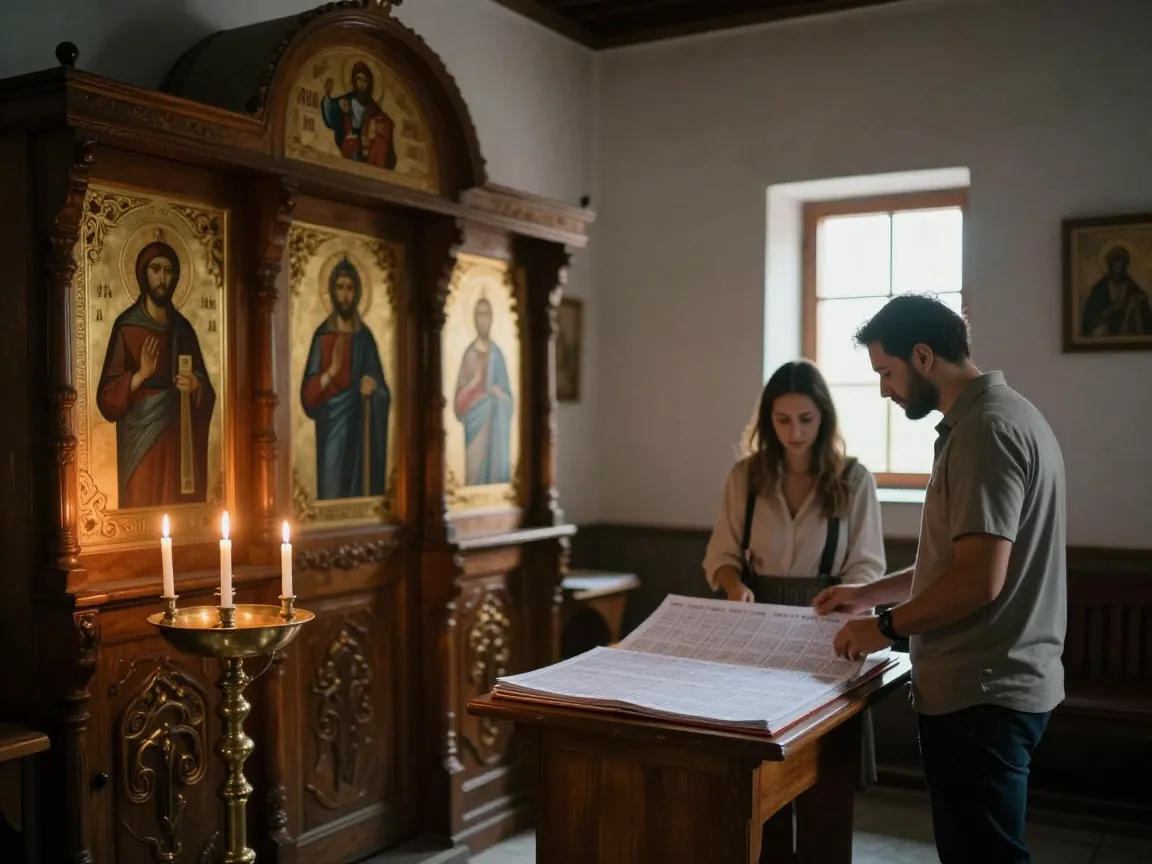
What to ask the parish, in order
Call or visit the parish office before you tour a single venue. Ask, in this order:
- Is our candidate date available for a wedding in this church?
- Which dates near it are also available, in case we need a fallback?
- What documents does the parish require from us, and from our koumbaros or koumbara?
- Is there a civil marriage certificate or registry step we must complete first, and where?
- If we're not resident in Greece, what does the consulate need to certify, and does the parish accept it?
- What time of day can the service start, and how long does the church stay available to us?
- Is there a parish fee or an offering expected, and what does it cover?
Get answers two and three in writing if you can, even by email. If you're using an estate chapel, the same list goes to the priest responsible for it, not to the venue's events manager. Mixing up the two is an easy way to lose weeks.

Building the date-screening worksheet
Run every candidate date through the same grid before you pay a deposit. One date per row, one worksheet per couple. Do not collapse this into a chat thread.
| Candidate date | Parish answer | Venue hold | Guest travel notes |
|---|---|---|---|
| Example: Aug 29 | |||
| Example: Sep 20 | |||
Fill it like this. In the parish answer column write only yes, no or pending, plus the name of the person who told you. In the venue hold column write the expiry date of any hold, because holds can lapse without warning. In the guest travel notes column flag anything the date does to flights: high season, ferry schedules, school holidays, whether key relatives can actually get there. A date the parish allows but half the guest list can't reach is a bad date. When you compare reception quotes, do it against a date that already reads "yes" in column two; our breakdown of Greek wedding venue costs explains how to compare whole quotes rather than headline figures.
A Paros example makes the sequencing concrete. Palmtree Events Paros is listed on the Paroikia-Pounta provincial road as a villa used for weddings, baptisms and parties, with event management and arrangements forming part of its offering, and listed hours of open around the clock every day. Those are listing details, not a claim about your date. The listing says nothing about which days it can host a wedding, and neither can we. Ask the parish first, then ask the venue whether it can hold your confirmed date.
Bring the parish a shortlist of three dates
Bring the parish a shortlist, not a single date. In our view the workable pattern is three candidates: your first choice, a date two to four weeks away from it, and one date in a different month entirely. That way a fast period or a booked church doesn't restart the whole search.
Then hold the venue question open until the parish answers. If a venue pressures you to pay to secure a peak-season Saturday before your date is confirmed, that's information about the venue. If a parish won't give you a clear answer until a later meeting, that's not unusual. Book the civil paperwork and the photographer on confirmed dates only.
Confirm current requirements and available dates with the competent authority, meaning the parish, the metropolis, the municipality or the consulate as applicable, because rules and local practice change. Ask the parish office how far ahead they take bookings, and whether they keep a waiting list for the dates you want, because a shortlist only helps if you know when to present it.
Once the parish has said yes to at least one date, send us your headcount, your candidate dates and a short brief, and suitable venues across Greece can tell you what they can actually hold.
Planning questions
Should we book the venue before the parish confirms our date?
No. Ask the parish first and get a clear yes or no for each candidate date. A venue hold can lapse or be released, but a church date that turns out to be unavailable forces you to restart the search entirely.
Why do August dates need extra checking?
The Dormition Fast and Feast in the first half of August appear on published lists of days without weddings, and island demand peaks at the same time. Confirm the exact dates with your parish before holding a venue.
How many candidate dates should we bring to the parish?
Bring three: your first choice, one a few weeks either side, and one in a different month. This keeps the plan moving if a fasting period or an existing booking rules out your preferred day.